REVIEW · HANOI
3-Days in Sapa with Overnight at 4 Star Hotel & Bungalow
Book on Viator →Operated by Best Vietnam Tours · Bookable on Viator
Sapa is a smart break from Hanoi. This 3-day package gives you two different sleeping styles—a 4-star Sapa hotel plus an overnight hill-tribe bungalow—and it keeps things moving without losing time for your own wandering. I like that the long transfer is handled by an air-conditioned bus with pickup, and I also like how the days are built around local villages like Cat Cat and Ta Van instead of only big-name viewpoints. One possible drawback: the 4-star hotel option (often listed as The View Sapa) can be hit-or-miss, especially when it comes to room comfort like heating.
You’ll spend enough time in Sapa to slow down, not just zip through. The trekking pieces focus on manageable walking tied to real local settings (rice terraces, streams, and family-run village meals), and meals like breakfast and lunch are included so you’re not constantly budgeting day to day. The main thing to consider is physical pace and cold weather planning—this isn’t an all-day hike, but you still need moderate fitness.
This tour fits best if you want an efficient, guided route with meaningful village time and at least one night in a local setting. If you’re extremely picky about hotel room quality, I’d treat the hotel portion as the part to verify before you commit.
In This Review
- Key highlights you should know before you go
- Price and logistics: what $114 really buys you
- Day 1 in Sapa: transfer day that still includes a real village visit
- Cat Cat village: not just a photo stop
- Day 2: rice terraces, Muong Hoa Stream, and the Ta Van bungalow night
- Rice terraces + Muong Hoa Stream trek
- Ta Van lunch and homestay check-in
- The bungalow night: why it matters
- Day 3 cooking class in Giang Ta Chai and a calmer return to Hanoi
- Cooking class: pho and nem cuốn
- Midday reset in Sapa town
- Back to Hanoi: two rest stops, late evening arrival
- What meals and tickets are included (and what to budget for)
- The comfort factor: AC bus is reliable, hotel quality needs a sanity check
- Who this Sapa tour fits best
- Should you book this 3-day Sapa package?
- FAQ
- What’s included in the price of this Sapa tour?
- What kind of lodging do I get?
- How long is the tour?
- Is pickup offered from Hanoi?
- Are there any extra charges I should expect?
- What’s the cancellation policy?
Key highlights you should know before you go
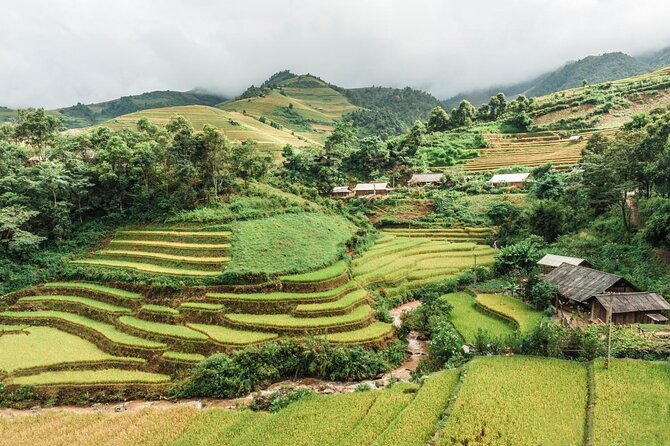
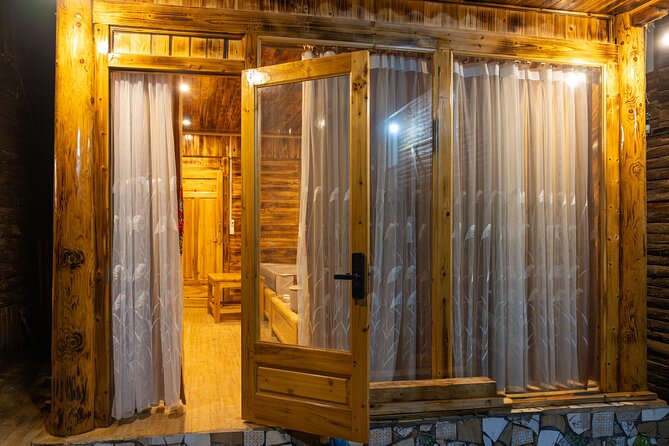
- Two-night setup with a bungalow stay: one night in Sapa town at a 4-star hotel, one night in a hill tribe village bungalow in Ta Van.
- Cat Cat village with local context: a guided visit in a deep valley setting near Fansipan.
- Village meals you can’t replicate at a food stall: lunch with family dishes in Ta Van is part of the plan.
- Cooking class morning in Giang Ta Chai: learn to make foods like pho and nem cuốn, then eat what you help create.
- Small group size (max 15): easier guide attention and less chaos during treks and transfers.
- Transport included both directions: air-conditioned bus from Hanoi to Sapa and back with rest stops and bottled water.
Price and logistics: what $114 really buys you
At $114 per person for a 3-day Sapa trip, you’re paying for more than “a bus + a hotel.” You’re buying a full structure: pickup in Hanoi, round-trip transport with comfort upgrades (air-con, assigned seats), guides, entry tickets for the sites on the schedule, and a bundle of meals. That matters in Vietnam’s north, because Sapa isn’t just scenic—it’s also logistical. Distances, weather, and getting the right timing for villages all add up.
This package is also priced with a specific rhythm in mind: one full day for trekking and a second day that starts with a cooking class and ends with an easy-ish afternoon in Sapa before heading back to Hanoi. If you try to DIY this route, you’ll likely spend time coordinating transport, guide time, and the bungalow/village stay. Even if you get lucky with a similar cost, it’s harder to make it feel smooth.
A big practical note: there’s a $45 public holiday surcharge that’s paid onsite if your dates fall on a public holiday. There’s also a $15 family surcharge for the child-car option. So the best value is on non-holiday dates and with the adult plan structure.
You can also read our reviews of more tours and experiences in Hanoi.


Day 1 in Sapa: transfer day that still includes a real village visit
Your day starts in Hanoi Old Quarter. Pickup is at 30 P. Lý Thái Tổ, then you head out by modern air-conditioned bus toward Sapa. The schedule builds in rest stops on the way—one in Lao Cai city is timed so you’re not just stuck in traffic for hours.
By about 1:00 pm, you reach Sapa town. There’s a short waiting window at the bus station area (about 30 minutes), then you move on to your first village stop.
Cat Cat village: not just a photo stop
Around 2:30 pm, you walk into Cat Cat village, home to Black H’mong communities. The setting is at the foot of Fansipan Peak, down in a valley area. A guide comes with you and explains daily life details and how the village works in practice.
Cat Cat is one of those places where you’ll get more out of the visit if you slow your pace. Look for the small changes: the way paths are used, where people spend time, and how the valley setting shapes daily routines. Even if you’ve seen mountain villages before, Cat Cat feels like a first “real Sapa moment” because you’re not immediately jumping into a long trek.
What to watch for: Your arrival is early afternoon, so you may still have that travel-tired feeling. Keep your first day light—good shoes, a warm layer, and a willingness to take it at a human pace.
Day 2: rice terraces, Muong Hoa Stream, and the Ta Van bungalow night
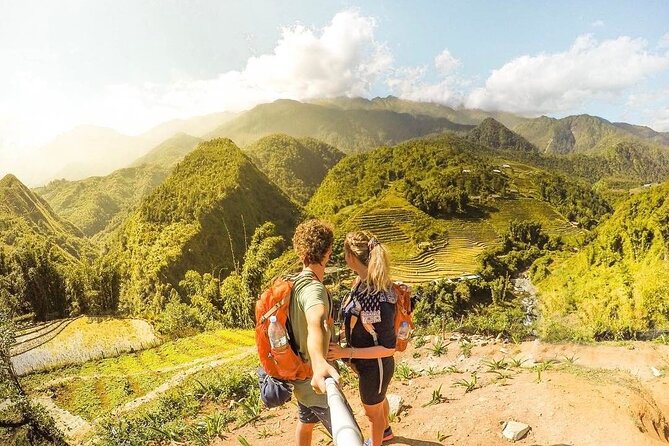
Day 2 starts with breakfast at the hotel in Sapa town. Then you check out and start the day trekking. This part is built for people with moderate fitness: enough walking to feel like Sapa, not the kind of day that leaves you wrecked.
Rice terraces + Muong Hoa Stream trek
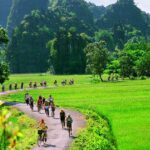
From roughly 8:30 to 10:00, you trek through rice terraces and follow along Muong Hoa Stream. The tour doesn’t sell this as a marathon. Instead, it’s a guided walk through the signature Sapa terrain, with the stream setting giving you natural breaks in the experience.
If you care about photos, this is the time window where you’ll get the most “Sapa look” without running into the late-day crowds. If you care about the lived-in feel, this is also when you’ll notice how paths connect fields and homes.


Ta Van lunch and homestay check-in
By 12:00–13:30, you have lunch prepared with family dishes in Ta Van Village. This is one of the most valuable parts of the whole package because it turns food into a social moment, not just a meal. You get the basics of Vietnamese cooking in a family setting, and that context helps you understand the region better.
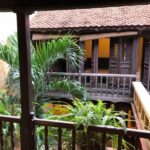
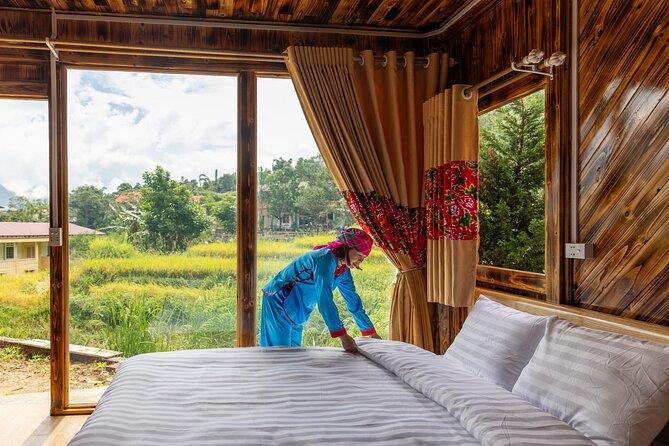
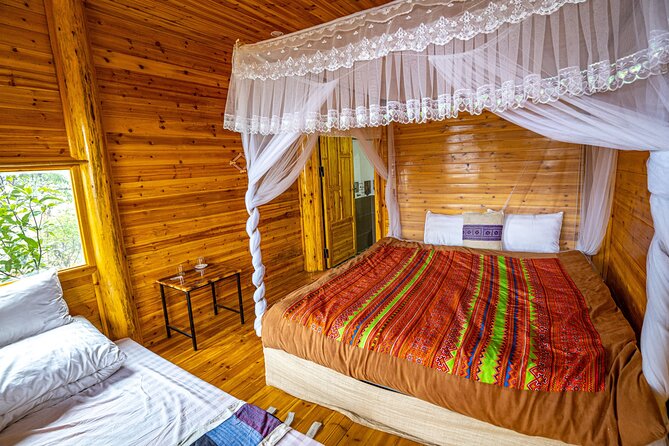
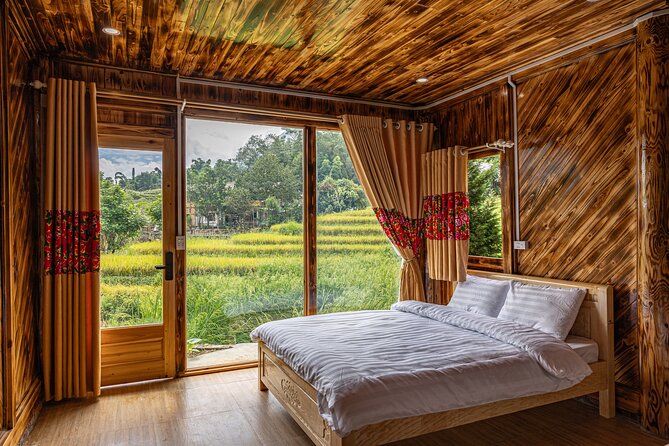
In the late afternoon, you check in at the bamboo/bungalow-style lodging in Ta Van (part of the experience includes meeting the family and learning about daily life). This is where Sapa stops being only scenery and becomes routine—how people live, what the space is like, and how the community organizes time.
The bungalow night: why it matters
Staying in the village overnight is the difference between “tourist Sapa” and something more grounded. Even if your bungalow isn’t fancy by city standards, you gain two things:
- you’re awake for morning and evening village rhythms
- you’re not racing back to town right after you eat
What to watch for: Village lodging is typically simpler than a city hotel. Pack a warm layer for evening and expect basic facilities. The tour plan does mention a shower option later on Day 3 for the hotel, but it doesn’t promise a full suite of amenities for the bungalow night—so plan like you’re going rural for a night.
Day 3 cooking class in Giang Ta Chai and a calmer return to Hanoi
Day 3 starts early—around 7:00 am you can join a cooking class in Giang Ta Chai Village. This is one of the smartest “morning activities” in any Sapa itinerary, because it turns time into learning instead of just walking.
Cooking class: pho and nem cuốn
You’ll learn how to make Vietnamese foods like pho and nem cuốn. You’re not just watching; the format is set up so you participate. Then you move into breakfast prepared by the family before starting the next trek.
This is one of those experiences that pays off later. After you’ve made the food yourself, it’s easier to recognize flavors and techniques when you eat again in Vietnam (and even back home).
Midday reset in Sapa town
After trekking, you return to Sapa town for a relaxing window around 1:30–2:45 pm. There’s time to unwind, and if you want, the plan includes the option to use the hotel’s public bathroom for a shower.
That timing is deliberate. It’s long enough to freshen up before regrouping, but not so long that you lose the day to planning.
Back to Hanoi: two rest stops, late evening arrival
Around 3:00–4:00 pm, you meet the group and begin the bus ride back to Hanoi. The route includes two rest stops. You arrive in Hanoi Old Quarter around 9:45–10:00 pm.
What to watch for: This is a full-day time shift. Even if you aren’t trekking much at the end, the return schedule is still tiring. Plan for a normal evening back in Hanoi—don’t stack other commitments immediately after arrival.
What meals and tickets are included (and what to budget for)
This tour includes breakfast and lunch, and it also lists dinner as included for two evenings. It includes entrance tickets to the indicated sites. It also provides two bottles of water per person on the Hanoi–Sapa–Hanoi bus segments.
What’s not included is just as important:
- beverages
- travel insurance
- VAT/personal expenses
- public holiday surcharge if your dates qualify
For real-world budgeting, you should assume you’ll still want snacks and drinks during free time. The “included meals” take care of the big-ticket costs, but the mountains make hydration and warm drinks feel necessary.
The comfort factor: AC bus is reliable, hotel quality needs a sanity check
The transport is a clear strength. This is built around a comfortable, air-conditioned bus and pickup from a fixed point in Hanoi. That reduces the stress of arranging your own rides, and it’s usually the difference between a trip that feels easy and one that feels like work.
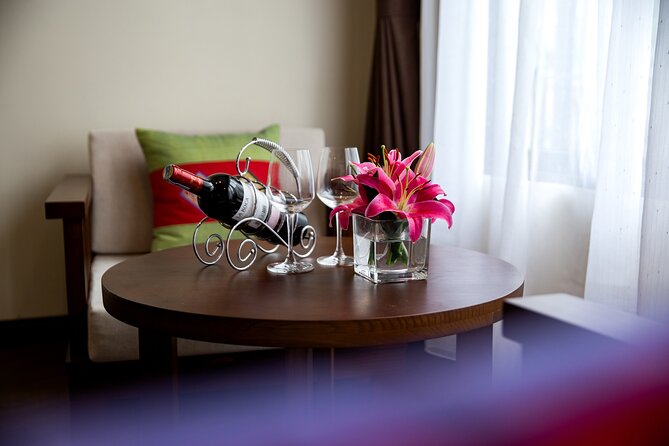
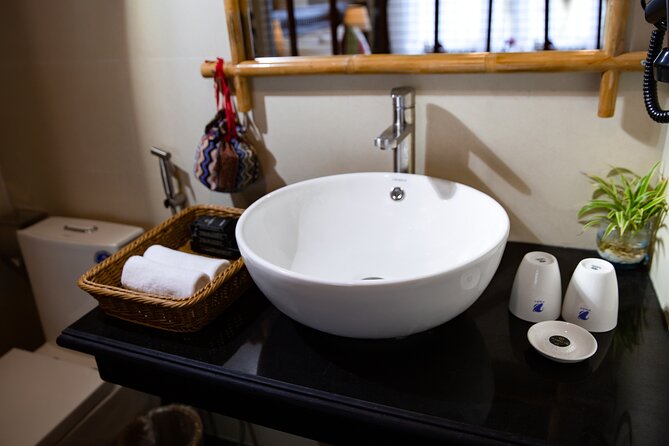
The part you should scrutinize is the 4-star hotel. The tour description names it as 4-star in Sapa town, but one downside flagged in the experience details you shared is that The View Sapa can disappoint when it comes to room comfort—specifically warmth. The room may have A/C and a heating unit, but the effectiveness isn’t always what people expect.
How to handle that as a smart traveler:
- if you’re booking near cooler months, pack warm layers and be ready to rely more on clothing than the heating unit
- ask the operator (before you go) whether specific room types are available, if that option exists
- don’t treat the hotel as your comfort anchor for cold nights—treat it as a place to rest and reset
The bungalow night is likely simpler, but at least it’s part of the charm. The hotel is where expectations often get higher, so it’s the right place to set your expectations carefully.
Who this Sapa tour fits best
You’ll love this tour if you want:
- an organized route with guided village time
- a mix of trekking + cultural activities (like the cooking class)
- an overnight stay that actually connects you to village life (Ta Van bungalow night)
- a group experience that stays small enough to feel manageable (max 15)
This tour may not be ideal if:
- you only want very easy walking and zero planning around weather
- you’re extremely sensitive to hotel-room comfort and want no surprises
Should you book this 3-day Sapa package?
I’d book it if you want a structured Sapa experience that still leaves room to breathe, and you’re happy trading some luxury for authenticity—especially the bungalow night and the family-based food moments. At $114, the value feels fair because the big costs are already handled: transport, guide, key village entries, and a bundle of meals.
I’d think twice and confirm details if your top priority is hotel comfort above everything else, particularly warmth in your room. The transport and the village rhythm are strengths; the hotel portion is the one place you should make sure your expectations match what’s actually provided.
If you do book, pack warm layers, plan for a long return day, and treat Day 2 and Day 3 as the core of what you’re really paying for.
FAQ
What’s included in the price of this Sapa tour?
The package includes round-trip air-conditioned bus transport between Hanoi and Sapa, English-speaking tour guidance, entrance tickets to the listed sites, water bottles on the bus, and meals (breakfast and lunch are included, and dinner is also listed as included).
What kind of lodging do I get?
You get two overnights: one night at a 4-star hotel in Sapa town and one night at a bungalow in Ta Van hill tribe village.
How long is the tour?
It runs for about 3 days with pickup in Hanoi and a late-evening arrival back in Hanoi Old Quarter.
Is pickup offered from Hanoi?
Yes. Pickup is at 30 P. Lý Thái Tổ in Hanoi, and you return there at the end of the trip.
Are there any extra charges I should expect?
Yes. A $45 surcharge applies if your travel date is on a public holiday (paid onsite). There’s also a $15 family surcharge for the children traveling by car option.
What’s the cancellation policy?
You can cancel for a full refund up to 24 hours before the experience starts. If you cancel less than 24 hours before the start time, the amount paid is not refunded.