REVIEW · HO CHI MINH CITY
From Ho Chi Minh: Cu Chi Tunnels Tour morning or afternoon
Book on GetYourGuide →Operated by Enni tour · Bookable on GetYourGuide
Cu Chi’s tunnels are small enough to stop you. This 5–6 hour tour from Ho Chi Minh City pairs a real sense of wartime ingenuity with hands-on crawling through narrow, hand-dug tunnels. I also like the practical touch of tasting tapioca with hot pandanus tea, a snack that connects the history to what people actually ate.
One heads-up: the tunnel crawl is tight and dark, even if some areas are widened for visitors. If you’re claustrophobic, short on stamina, or have mobility concerns, you’ll want to plan carefully before going in.
In This Review
- Key Highlights at a Glance
- From Ho Chi Minh City Pickup to Cu Chi: How the Day Really Moves
- The Documentary Film: Context Before You Crawl
- Crawling Through Cu Chi: The Reality Check (And Why It’s Worth It)
- Wartime Food Break: Tapioca and Pandus Tea
- Optional Shooting Range: A Controlled Taste of Adrenaline
- Rubber Tree Plantation Stop: From War Memory to Everyday Economy
- Countryside Wet Market: Real People, Real Snacks (Not a Scripted Stage)
- Price and Value: Is $26 a Good Deal?
- Tour Logistics That Matter: Timing, Language, and Tour Style
- Who Should Book This Cu Chi Tunnels Tour
- Should You Book This Cu Chi Tunnels Tour?
- FAQ
- How long is the Cu Chi Tunnels tour from Ho Chi Minh City?
- Does the tour include hotel pickup in Ho Chi Minh City?
- What language guides are available?
- What food is included during the tour?
- Is lunch included?
- Can I actually crawl through the tunnels?
- Is there an optional shooting range?
- What should I bring with me?
- How much does it cost?
- FAQ
- Is free cancellation available?
- Can I reserve now and pay later?
Key Highlights at a Glance
- Hotel pickup with AC car in Ho Chi Minh City, so you lose less time to logistics
- A guided history walkthrough plus a short documentary film in multiple languages
- Crawl through preserved tunnels that show the original cramped scale
- Tapioca and hot pandanus tea snack linked to wartime rations
- Optional supervised shooting range with AK47 or MK16 (if you want the extra thrill)
- Rubber plantation + countryside wet market stops that feel more local than souvenir stops
From Ho Chi Minh City Pickup to Cu Chi: How the Day Really Moves

Your tour starts with a convenient hotel pickup in Ho Chi Minh City. That matters here because travel time and road traffic can eat your day. You’ll ride in a good quality AC car, which is a relief in Vietnam’s heat.
Once you arrive, you’ll meet your guide and get the big picture fast: what the tunnels were used for and why the Viet Cong built an underground network in the first place. The tour is designed so you don’t just see tunnels—you understand what the site meant during the Vietnam War.
You’ll typically have some waiting-free rhythm too: you learn first, then you watch a short documentary film, then you go in for the crawl.
A few more Ho Chi Minh City tours and experiences worth a look


The Documentary Film: Context Before You Crawl
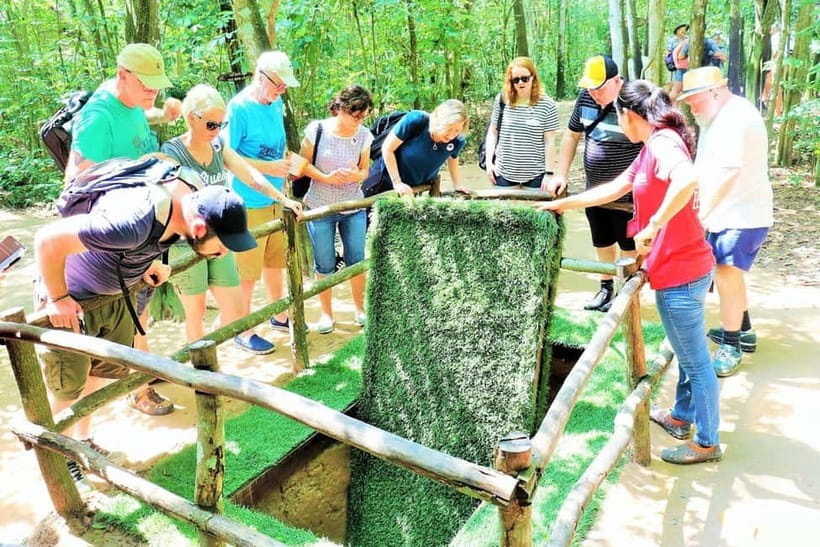
This tour doesn’t throw you into the tunnels without framing the story. You’ll watch a short documentary film about the Cu Chi Tunnels during the war. The film is available in multiple languages, which is a big deal if you’re not fluent in English.
What I like about this step is how it changes the crawl from a stunt into something meaningful. Before you crawl, you get a mental map for what you’re looking at: hiding spaces, supply routes, and living quarters connected through an intricate system.
Then your guide ties it together with on-site explanations, so you know what you’re seeing instead of just counting turns and squeezing through holes.
Crawling Through Cu Chi: The Reality Check (And Why It’s Worth It)
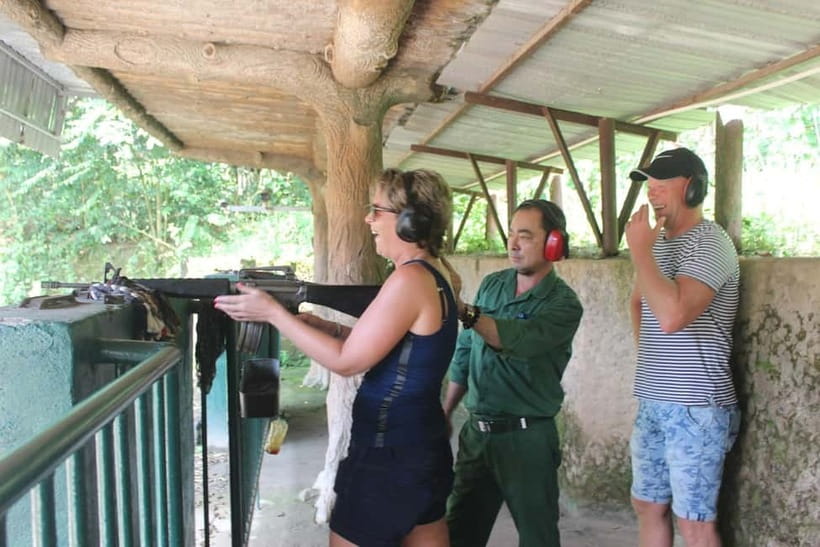
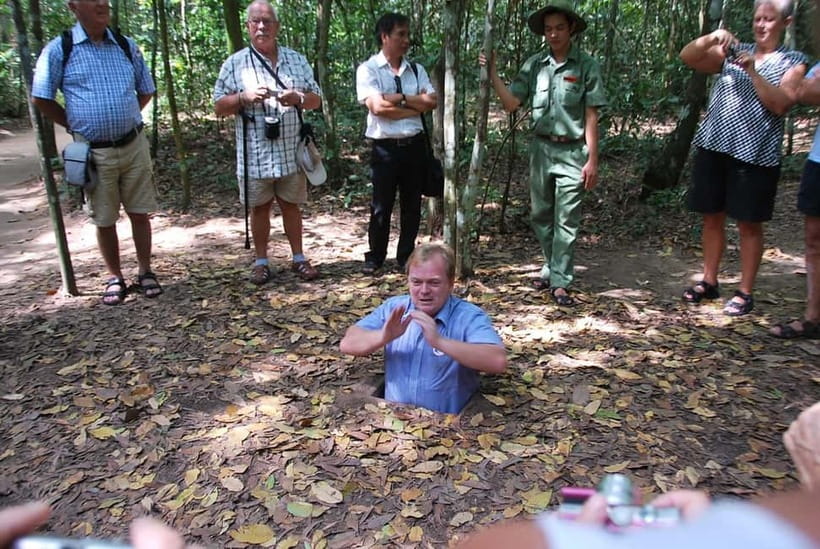
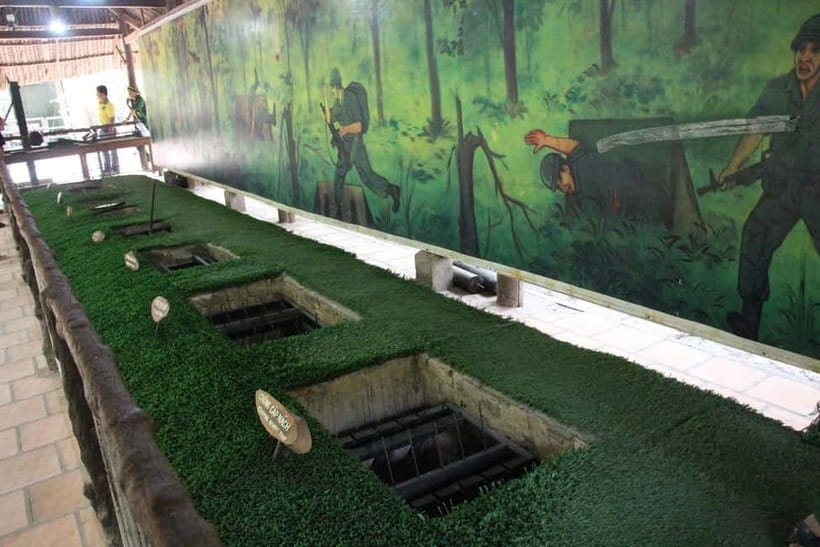
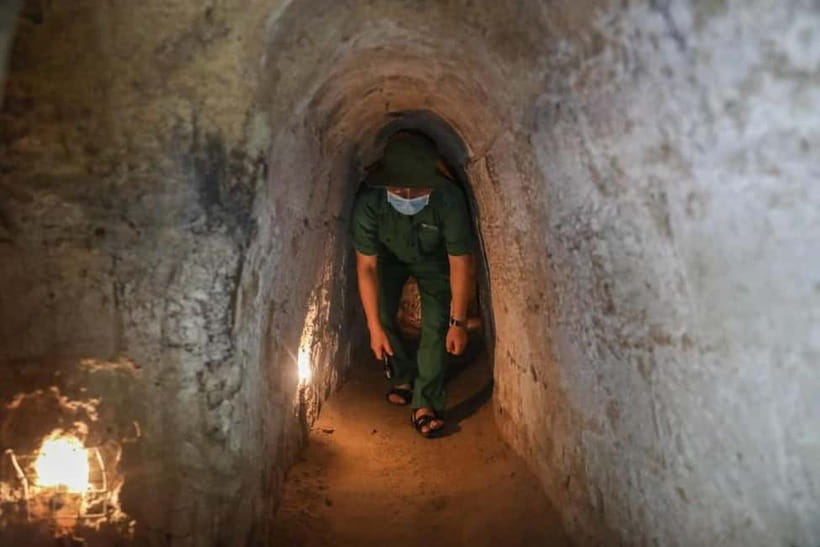
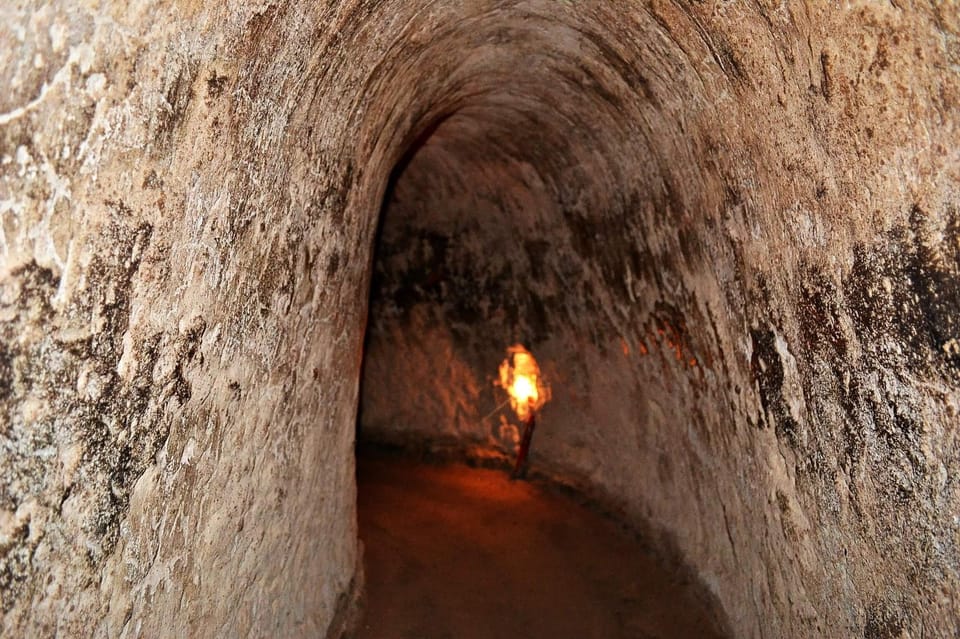
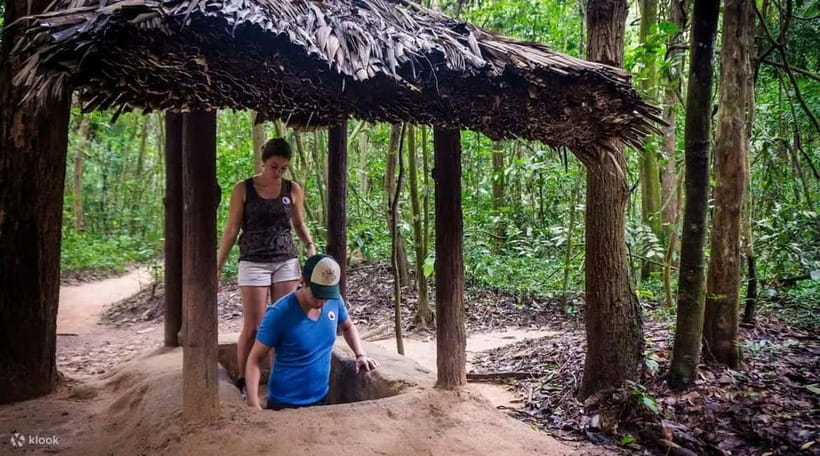
The main event is the tunnel crawl. You follow your guide into the passageways that were painstakingly dug by hand, forming a network that stretched over 250 kilometers. The best part is that the tunnels are preserved to show their original cramped size, though some sections are widened a bit for visitor comfort.
Here’s the reality of it: you’ll be moving slowly, ducking low, and feeling the dark and tight air close in. It’s not about speed. It’s about understanding the physical problem the tunnel solved—moving and hiding with stealth when the surface was too dangerous.
I also appreciate that the experience is guided. You’re not wandering blindly. Your guide helps you get oriented and makes sure you’re prepared for what comes next, so you can focus on the experience rather than guessing.
Practical tip: wear comfortable shoes you can move in without worrying about slip-and-scuff. You’ll be on uneven ground and you’ll want your footing to feel secure.
Wartime Food Break: Tapioca and Pandus Tea
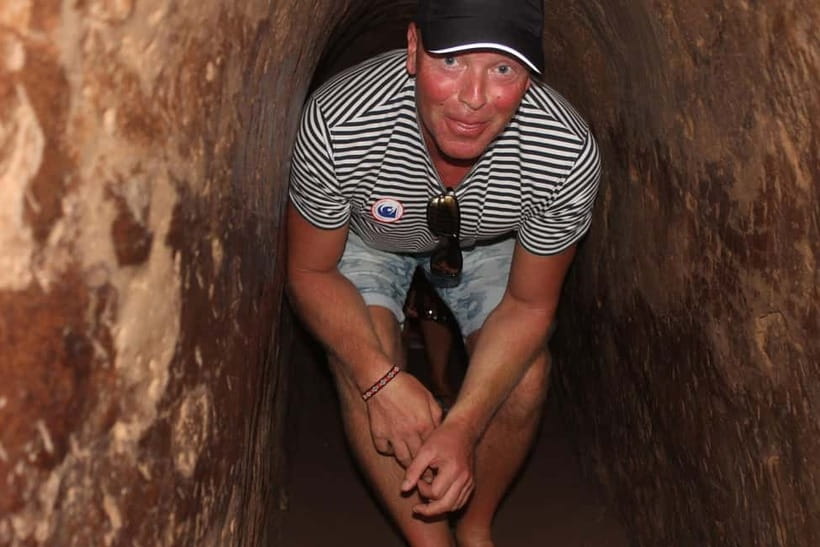
One of the most memorable parts isn’t the tunnels—it’s the snack. During the tour, you’ll taste a light wartime-style meal: boiled tapioca served with hot pandanus tea.
This is simple food, but it carries weight because it’s presented as what soldiers ate during wartime. You’ll usually get it as a break between the history talking and the hands-on crawling (or later as part of the flow).
I like that this isn’t a token tasting. It’s treated as part of the story. And honestly, it’s also just nice to reset your energy after being underground.
If you’re the type who likes to understand a place through everyday life, this food stop is a strong value-add.
Optional Shooting Range: A Controlled Taste of Adrenaline
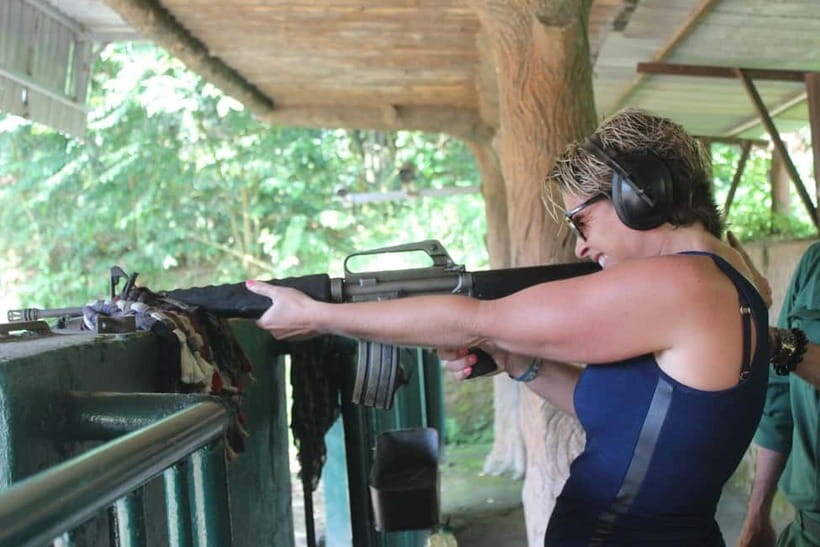
Some tours stop at the tunnels. This one also offers an optional supervised shooting range. If you choose it, you can try firing an AK47 or MK16 rifle under strict safety guidelines.
This part is great for people who want one more hands-on element. But keep your expectations realistic: it’s not a war movie. It’s a supervised, controlled activity.
Also, since it’s clearly described as optional, you’ll want to decide based on your comfort level and interest. If your goal is history and culture, you can skip it and spend more time on the core experience.





Rubber Tree Plantation Stop: From War Memory to Everyday Economy
On the way back, the tour doesn’t end inside the historical site. You’ll stop at a rubber tree plantation, where your guide explains how rubber is harvested and processed.
This stop adds something that many war-focused excursions miss: the shift from past to present. Rubber is part of Vietnam’s economy today, and hearing the basics of harvesting gives you a sense of how the landscape supports livelihoods now, not just how it shaped conflicts back then.
It’s a shorter, practical stop, but it gives you a mental palette cleanser after the tunnel experience.
What to watch for: pay attention to how the guide connects production steps to the plant itself. It’s quick learning, not a lecture.
Countryside Wet Market: Real People, Real Snacks (Not a Scripted Stage)
Next comes a countryside wet market, where locals gather to sell fresh produce, tropical fruits, and other goods. This is one of the more human parts of the itinerary because it’s not just about looking—it’s about interacting.
You may have the chance to sample some exotic fruit, and you’ll likely chat with vendors who are friendly and chatty. The vibe here is casual and lively in a way that feels more like local life than tourist theater.
I like markets on tours because they’re good at revealing how people live day to day. And after hours of history, a fruit-and-conversation stop can make your day feel complete.
Price and Value: Is $26 a Good Deal?
At $26 per person for a 5–6 hour tour, the value is mostly about what’s included—not just the headline price.
You get:
- Good quality AC car and hotel pickup in Ho Chi Minh City
- An English-speaking tour guide (other languages are available, but there’s a surcharge for non-English)
- A bottle drink and tissue
- A light snack at the tunnels (tapioca and hot tea)
- Entrance fee to the Cu Chi Tunnels
- Lunch only if you choose a private tour
So you’re not paying extra for the basics like the entrance fee or the guided portion. You’re also not stuck doing everything yourself. For many people, that’s what makes the tour worth it.
What could affect cost is what you add. The shooting range is optional, and it’s not listed as included. Also, the price note says taxes and possible holiday surcharges are not included. Still, even with those caveats, $26 is a solid entry price for a guided, full-morning-or-afternoon experience.
Tour Logistics That Matter: Timing, Language, and Tour Style
This tour runs either in the morning or the afternoon, with start times depending on availability. That flexibility is helpful because Cu Chi can feel like a long day if you only have one window in Ho Chi Minh City.
Language options include English, Japanese, Chinese, French, Italian, and German. If you’re not booking in English, double-check the language and any guide surcharge mentioned in your details.
Group style is also worth noting: a private group option is available, and that’s the route if you want lunch included along with the other inclusions. Private also tends to feel more comfortable if you want the guide’s pace to match your energy level.
One more real-world note: the tunnels require effort. Even though some sections are widened, you’re still crawling through the preserved scale of the site. Plan for a hands-and-knees kind of movement.
Who Should Book This Cu Chi Tunnels Tour
This is a strong choice if you want:
- A guided visit that explains the Vietnam War context before you go underground
- A hands-on experience that goes beyond photos
- A tour that adds real-life Vietnam stops afterward (rubber plantation and a wet market)
- A food element that isn’t just sweets and selfies
It’s especially good for curious first-timers who like learning through action and small moments—like the tapioca-and-tea break.
You might want to reconsider if you:
- Are extremely claustrophobic (the tunnels are preserved to show original size)
- Have mobility limits that make crawling difficult
- Prefer history that stays on the surface and doesn’t ask you to physically participate
If you do have mobility needs, the good news is that at least one guide experience highlighted helpers for a wheelchair. That said, I’d still message ahead so the team knows what to plan for in your case.
Should You Book This Cu Chi Tunnels Tour?
I’d book this tour if you want a balanced day: history that gets explained, a crawl that makes the story physical, and then a couple of countryside stops that remind you Vietnam exists beyond war sites.
The best reasons are the combination. You’re not just watching a documentary or just walking around. You’re crawling through hand-dug tunnels, then tasting a ration-style snack, then seeing how people earn a living through rubber and produce at a wet market.
The main trade-off is comfort. The tunnel is tight, dark, and physically demanding, even with visitor-friendly adjustments. If you can handle that, you’ll get a memorable, grounded experience for your time.
If you’re in Ho Chi Minh City and you’re choosing one Cu Chi option, this one feels like a practical, well-rounded route—guided, included essentials covered, and long enough to feel substantial without turning into an all-day slog.
FAQ
How long is the Cu Chi Tunnels tour from Ho Chi Minh City?
The duration is listed as 5–6 hours, depending on the starting time available.
Does the tour include hotel pickup in Ho Chi Minh City?
Yes. Your journey begins with convenient hotel pickup in Ho Chi Minh City, using an AC car.
What language guides are available?
English-speaking guides are available, and other languages listed include Japanese, Chinese, French, Italian, and German (with a surcharge for other languages).
What food is included during the tour?
At the Cu Chi Tunnels, you’ll have a light snack of boiled tapioca served with hot pandanus tea. The tour also includes a bottle drink.
Is lunch included?
Lunch is included if you choose a private tour. It’s not stated as included for standard group tours.
Can I actually crawl through the tunnels?
Yes. The tour includes the opportunity to crawl through the narrow tunnels that were dug by hand.
Is there an optional shooting range?
Yes. There is an optional supervised shooting range where you can try firing an AK47 or MK16 rifle.
What should I bring with me?
Bring comfortable shoes, a camera, and water.
How much does it cost?
The price is listed as $26 per person. Taxes are not included.
FAQ
Is free cancellation available?
Yes, you can cancel up to 24 hours in advance for a full refund.
Can I reserve now and pay later?
Yes, the tour offers reserve now & pay later, so you can book your spot and pay nothing today.