REVIEW · HOI AN
DISCOVER the Skills of sericulture & weaving, HOI AN SILK VILLAGE
Book on Viator →Operated by Hoi An Silk Tours · Bookable on Viator
Silk starts with living worms. This Hoi An stop turns sericulture into something you can actually see and follow. You’ll watch how silk thread becomes fabric, while the story connects local craftsmanship to older Cham weaving traditions and the way Hoi An’s silk once traveled far beyond Vietnam via the Silk Sea Road.
What I like most is the step-by-step flow: from selecting mulberry leaves to unraveling cocoons and weaving on wooden looms. I also like the practical angle on shopping at the end, because you’ll learn how to tell pure silk from look-alikes instead of guessing in a store.
One consideration: it’s a purpose-built silk complex, not a stroll through an open-air artisan neighborhood. If you’re expecting lots of outdoor sights or wandering time, plan for a mainly indoor, instruction-led visit, and keep an eye on weather since the tour requires good conditions.
In This Review
- Key highlights at a glance
- Why Hoi An’s Silk Village feels different than a craft stop
- The 3-hour flow, and how to use it wisely
- Traditional House: sericulture history and the basic production logic
- Cham Culture stop: mulberry trees and old weaving methods
- Vietnamese mulberry garden: where silk “begins” in real life
- Silkworm breeding house: the lifecycle explained in plain terms
- Unraveling House: turning cocoons into usable thread
- Cuu Dien House: early 20th-century handicraft silk
- Cham Textile House: short and long wooden looms
- The Hoi An Silk Village exhibition: pure silk vs fake silk
- Restaurant lunch or dinner: local meal after the craft work
- Price and value: what $31.05 buys you
- Tips for getting the most out of your tour
- Who should book this silk tour in Hoi An
- Should you book Hoi An Silk Village?
- FAQ
- How long is the Hoi An silk tour?
- What is included in the ticket price?
- Is this tour guided, and what languages are offered?
- Will I have lunch or dinner during the tour?
- Where do I meet for the tour?
- Is the tour private?
- What if the weather is bad?
- Can I get a full refund if I cancel?
Key highlights at a glance
- From worm to fabric, in clear stages: you’ll see how cocoon thread becomes cloth, not just the finished products
- Cham culture meets silk craft: Cham mulberry trees and weaving approaches linked to older periods
- Hands-on chances: feeding, threading, and weaving-style activities show up during the tour
- You learn to spot fake silk: the exhibition-style portion is built for real-world buying
- A meal is included: local food comes after the demonstrations, so you’re not hungry mid-tour
Why Hoi An’s Silk Village feels different than a craft stop
Hoi An has plenty of things to shop for, but this tour has a stronger “how it’s made” backbone than the usual souvenir route. The core idea is simple: you start with the raw material and the living process, then you work through the steps that turn it into luxury fabric.
That structure matters. When you understand why the mulberry leaves are handled a certain way, or why cocoons are processed to create continuous thread, silk stops being a fancy word and becomes a real production craft. Even if you don’t buy anything, you leave with a mental model that makes every silk item you see in Hoi An more readable.
Also, the tour is built around multiple houses/rooms, each with a different focus. That’s why it doesn’t blur into one long museum walk. You get history, living demonstrations, and hands-on making-style stations, all in a logical chain.
You can also read our reviews of more tours and experiences in Hoi An.


The 3-hour flow, and how to use it wisely
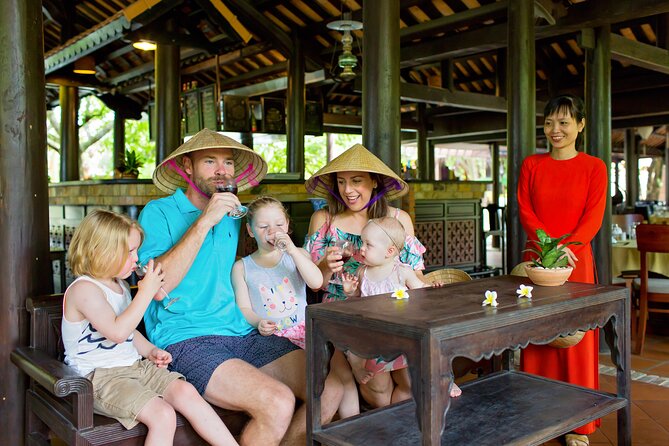
The experience runs for about 3 hours and is guided in English or French. It’s a private tour, meaning it’s just your group, not a mixed crowd. That usually makes it easier to ask questions when something catches your eye—especially around the difference between production steps and finished fabric quality.
Time-wise, plan for a pace that includes stops, explanations, and short chances to participate. Some activities may feel more like watching with prompts, while others are more hands-on. The best strategy is to treat the tour like a workshop tour: listen first, then try the steps they offer, then circle back with questions at the end when you can compare what you saw to what you might want to buy.
You’ll also get bottled water, plus a meal with a local specialty at the on-site restaurant. Eating after you’ve toured the process is a nice rhythm break, and it keeps the tour from feeling like a “pay and run” stop.
Traditional House: sericulture history and the basic production logic
The Traditional House is where the story starts to make sense. You’ll learn about Hoi An’s role in silk production and how sericulture (raising silkworms for silk) connected to weaving. The tour also frames silk as an export product that moved by the Silk Sea Road to reach Europe and Asia.
From a practical standpoint, this part matters because it sets expectations for the rest of the visit. You’re not just being shown rooms; you’re building a chain of cause and effect:
- mulberry leaves feed silkworms
- silkworms form cocoons
- cocoon processing creates usable thread
- weaving turns thread into patterns and cloth
Once you have that chain in your head, the later stations land with more meaning.
Cham Culture stop: mulberry trees and old weaving methods
One of the more memorable parts of the route is the Cham culture section. You’ll see a collection of Cham mulberry trees and learn about weaving processes connected to the 5th century through the mid-15th century.
Even if you’re not a history buff, this stop is valuable because it shows silk weaving isn’t a single-technique tradition. The Cham references remind you that craft develops in cultures, not in isolation. It also helps explain why certain textile techniques and approaches can look distinct in patterns and structure.
Think of it as context you can carry into the next room. When you later see looms and weaving results, you’ll recognize that you’re not only looking at “pretty fabric”—you’re looking at a set of techniques with a lineage.
Vietnamese mulberry garden: where silk “begins” in real life
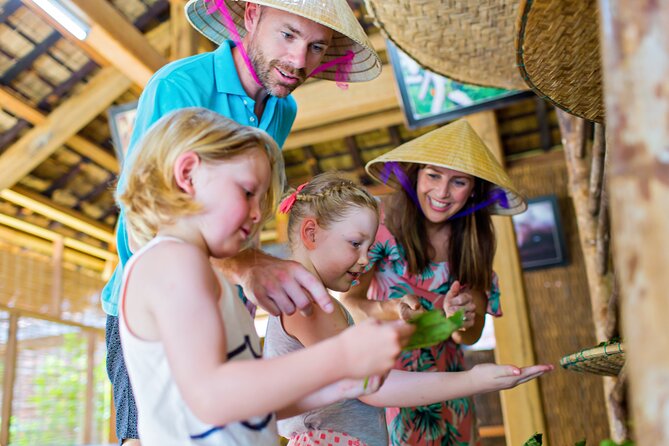
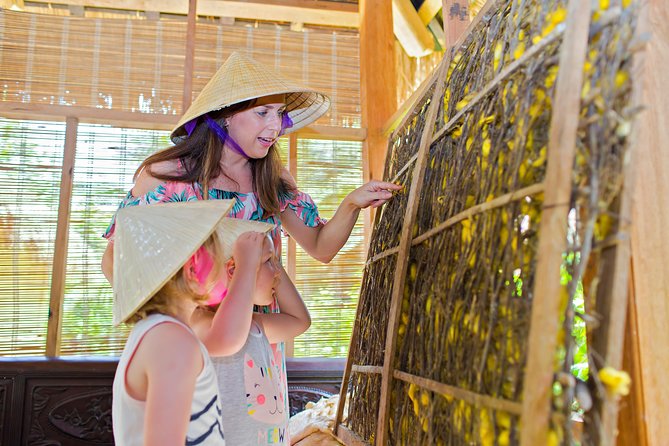
The mulberry garden is one of the tour stops that feels most grounded. You’ll learn how to get the best mulberry leaves, how they’re cut into small pieces, and how silkworms are fed by hand.
This is the part where you learn that silk is not a vending-machine product. Quality starts earlier than most people expect. When leaf selection and handling come up in the tour, it’s basically teaching you what raw-material discipline looks like in a craft setting.
If you like details (and most craft lovers do), this section rewards you. You’ll leave understanding why silk production depends on careful daily work, not just a loom and a good pattern.




Silkworm breeding house: the lifecycle explained in plain terms
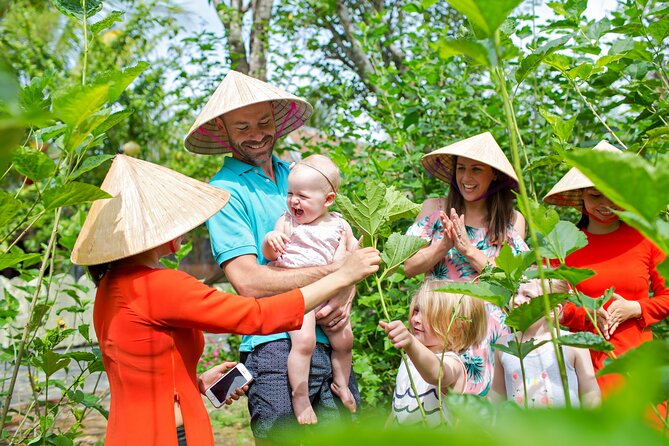
Next comes the Silkworm breeding house, where you learn about the silkworm lifecycle. This is where the tour shifts from plants and preparation into the living core of the process.
In the breeding house, the focus is on helping you understand what silkworms do over time—so when you see cocoons later, you connect them to stages instead of treating them as a finished “thing.”
This is also a great stop for families and anyone who wants something more than lectures. The silkworm element makes the tour feel alive, and it tends to keep attention from drifting.
Unraveling House: turning cocoons into usable thread

The Unraveling House is where you go from living-craft to the precision work that creates silk thread from cocoon fibers.
You’ll see how to get silk thread from the cocoon, which is the key step that makes weaving possible. Without that stage, you don’t have a continuous thread system you can work on looms.
What I like here is the “translation” aspect. The tour explains the logic behind the process, not just the final output. By the time you reach later weaving demonstrations, the thread stage has already trained your eye to notice how craftsmanship becomes structured fabric.
Cuu Dien House: early 20th-century handicraft silk
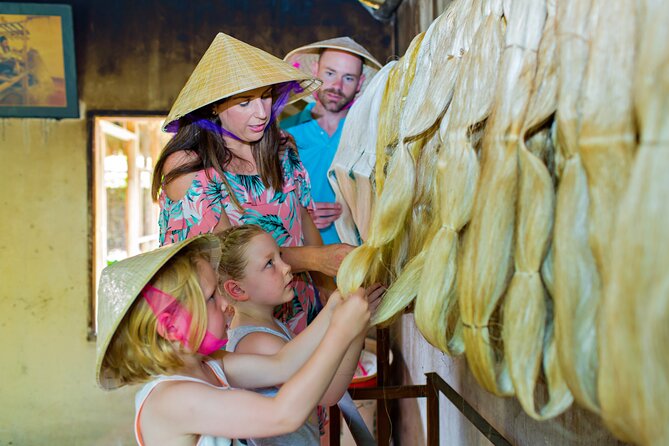
The Cuu Dien House focuses on pure handicraft silk preserved from the beginning of the 20th century. This stop is a helpful reminder that silk weaving isn’t only about modern boutique items. It’s also about older methods being kept alive.
If you’re shopping later, this is the part that can change your shopping mindset. Instead of grabbing the first silk item you see, you’re more likely to ask what technique or style it connects to—and whether it’s actually “handcrafted silk” in the way the tour means it.
Cham Textile House: short and long wooden looms
This is the weaving-heavy stop, and it’s where the craft turns into something visual and patterned.
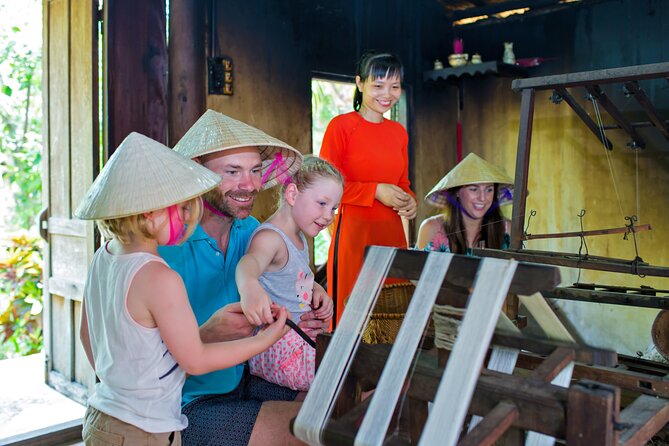
You’ll learn the weaving process of Cham People using short and long wooden looms. The tour uses the looms to explain how different loom types affect weaving outcomes and the look of the resulting textiles.
If you get hands-on participation during the tour (and many people do, including threading steps and weaving-style practice), this is typically where it clicks hardest. You see how hard it is to make something look effortless. That’s also why the tour tends to convert non-buyers into thoughtful buyers—because you understand what goes into each piece.
The Hoi An Silk Village exhibition: pure silk vs fake silk
One of the most praised parts of this experience is the built-in education on real silk vs fake silk. You’ll see an exhibition portion designed to help you understand differences between pure silk fabric and imitations.
This part is not just “be careful.” It’s more like learning how silk identification works in practice, so you can shop with less guesswork. After you’ve watched the production steps, it’s easier to spot why certain fabrics feel or behave differently—and what to question when something seems too perfect or too cheap.
I also like that the tour framing nudges you toward checking quality rather than being pressured into buying immediately.
Restaurant lunch or dinner: local meal after the craft work
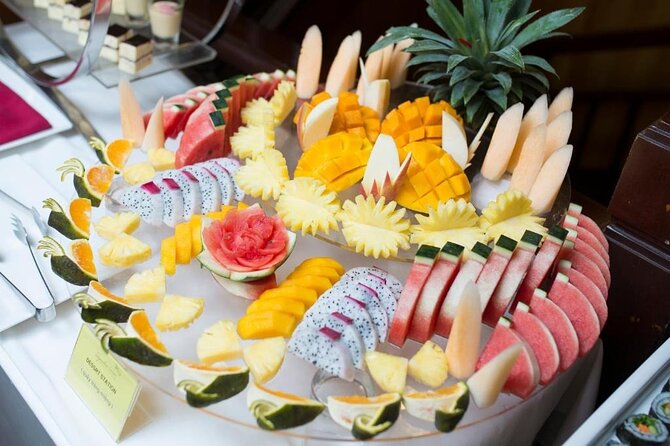
After the demonstrations, you’ll enjoy lunch or dinner at the on-site Hoi An Silk Village Restaurant. Including food is smart here because your brain has been busy for hours, and you’re likely to want downtime that still feels part of the experience.
One small detail that stands out from the overall vibe: the setting is pleasant. People also mention a fresh mulberry juice during the tour experience, which fits the theme perfectly. If offered, it’s a nice touch and a reminder that mulberry isn’t just “for feeding worms,” it’s also part of the local food story.
Price and value: what $31.05 buys you
At $31.05 per person for a roughly 3-hour guided visit, the value comes from combining several things that are often separated on other tours: guided interpretation, entrance, and a meal.
You’re not paying just for a photo stop. You’re paying for:
- a guided route through multiple craft-focused rooms
- explanation of silk production steps, including living stages
- a meal with a local specialty
- bottled water
That mix matters in Hoi An, where you can easily spend money on shorter stops that don’t teach you much beyond shop layouts. Here, the educational portion is the product, and the meal simply rounds out the experience.
Tips for getting the most out of your tour
Here’s how I’d approach it so you get real value instead of passive sightseeing.
- Ask about the “why” behind each step. When someone explains mulberry leaf preparation or cocoon thread use, follow up with what it changes in the fabric.
- Try the hands-on parts if they offer them. People often appreciate the chance to feed worms, thread silk, and practice weaving steps like threading bobbins and working toward patterned weaving.
- If you plan to buy silk, treat the end exhibition as your checklist. Don’t buy before you’ve learned what to look for.
- If you’re traveling with kids, lean into the lifecycle station. The silkworm parts make it easier for younger visitors to stay engaged.
Guides like Thu and Thư Moen are specifically praised for clear guidance through the full process, and that can make a big difference. A silk tour lives or dies on explanation, not just visuals.
Who should book this silk tour in Hoi An
This tour is a great fit if you:
- want a hands-on craft experience without needing prior textile knowledge
- like behind-the-scenes learning (how something is made, not just what it looks like)
- enjoy cultural context, including Cham influences
- want help shopping smarter for silk items
It may feel less ideal if you:
- want a mostly outdoor day or lots of free wandering
- prefer architecture or scenic viewpoints over demonstrations
- hate structured tours (because this is designed as a guided route through stations)
If you’re the kind of traveler who loves learning one specific craft deeply, this one checks that box.
Should you book Hoi An Silk Village?
Yes, if you want a craft tour that earns its place. The strength here is the full chain of silk production, from mulberry and silkworm lifecycle through unraveling and weaving, wrapped in cultural context and a practical silk-quality lesson at the end.
Book it especially if you’re curious about how silk becomes fabric and you don’t want to leave the workshop area with only vague impressions. The included meal is a bonus that keeps the experience feeling complete rather than rushed.
FAQ
How long is the Hoi An silk tour?
The tour lasts about 3 hours.
What is included in the ticket price?
Your ticket includes an English or French-speaking guide, entrance fee, bottled water, and a meal with a local specialty.
Is this tour guided, and what languages are offered?
Yes. The tour includes an English or French-speaking guide.
Will I have lunch or dinner during the tour?
Yes. The experience includes lunch or dinner at the on-site restaurant after the silk tour.
Where do I meet for the tour?
You start at Silk Village Hoi An – The Tourist at 28 Nguyễn Tất Thành, Phường Cẩm Phổ, Hội An, Quảng Nam, Vietnam, and the tour ends back at the meeting point.
Is the tour private?
Yes. It’s private, meaning only your group participates.
What if the weather is bad?
The experience requires good weather. If it’s canceled due to poor weather, you’ll be offered another date or a full refund.
Can I get a full refund if I cancel?
You can cancel for a full refund if you cancel at least 24 hours before the experience’s start time. If you cancel less than 24 hours before, the amount paid is not refunded.