REVIEW · DA NANG
Da Nang “The Ao Dai” Show: Timeless Vietnamese Elegance
Book on GetYourGuide →Operated by Vietnam TravelMART · Bookable on GetYourGuide
Ao Dai on stage is pure Vietnam. This Da Nang show strings together dynasties, folk life, and modern style in about an hour, using costumes as the main language. You don’t need to be a Vietnam history buff to follow it.
I really like two things right away: the costume craftsmanship and the way the story is easy to track with English narration on the sides of the stage. The royal scenes alone cover multiple ranks, and the later segments connect those court looks to everyday Vietnamese life.
One heads-up: this is a one-performance show, so the story moves quickly. If you crave deep, chapter-by-chapter history, you’ll want to do a little self-guided reading afterward.
In This Review
- Key things to know before you go
- Da Nang Ao Dai Show at Culture House of Ngu Hanh Son: What $17 Buys You
- Getting There and Timing: Check-In, Seats, and the 15-Minute Rule
- What the Show Actually Does: Vietnam’s Story Through Ao Dai (Court to Everyday)
- Nguyen Dynasty Royal Palace: Tim b r e of the Royal Palace on Stage
- 300 Years of Ancient Ao Dai: Old Market Life and Trade From the 17th to 19th Centuries
- Weddings, Lotus Dance, and the White Ao Dai School Uniform
- Traditional Vietnamese Wedding
- Lotus Dance
- White Ao Dai School Uniform and Dong Khanh
- The Final Ao Dai Show: Where Royal Court Meets Modern Vietnam
- How to Follow the Story Without Stress: English Narrative on Stage
- Who This Show Is Best For (And When It Might Not Fit)
- Should You Book the Da Nang Ao Dai Show?
- FAQ
- Where is the meeting point for the Da Nang Ao Dai Show?
- How much is the Da Nang Ao Dai Show and how long is it?
- What’s included with the ticket price?
- Is the show explained in English?
- How early should I arrive?
- Is the venue wheelchair accessible?
- Can I cancel or pay later?
Key things to know before you go
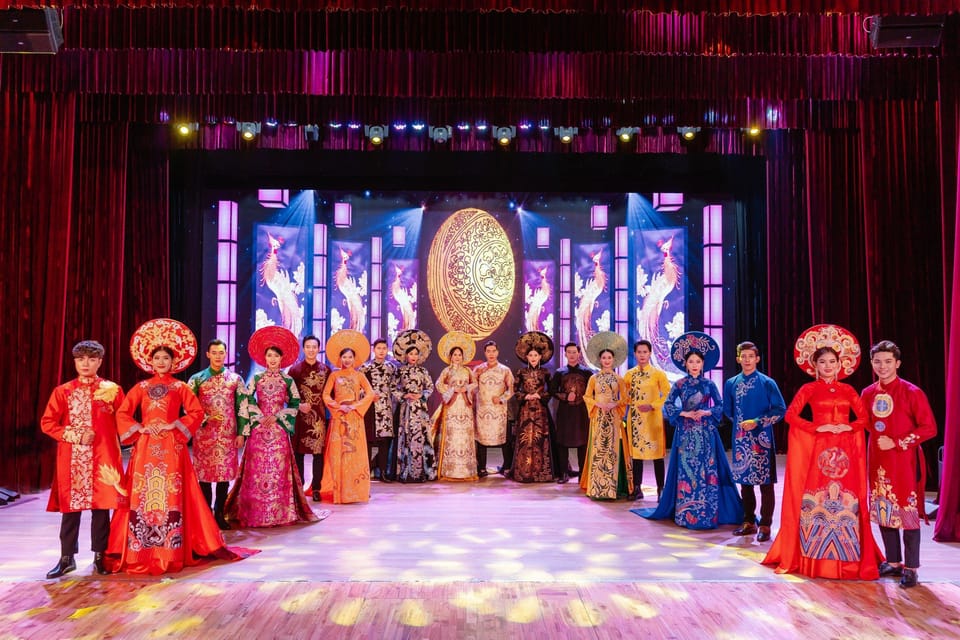
- 300 years of Ao Dai told through staged scenes, from court elegance to street life
- Nguyen Dynasty Royal Palace performance featuring Kings, mandarins, empress dowagers, and maidens
- Traditional wedding + lotus dance linked to Vietnam’s national flower
- Dong Khanh school uniform moment using the iconic white Ao Dai
- English narrative displayed on both sides of the stage to keep you oriented
- Refreshments and a small gift included with your ticket
Da Nang Ao Dai Show at Culture House of Ngu Hanh Son: What $17 Buys You
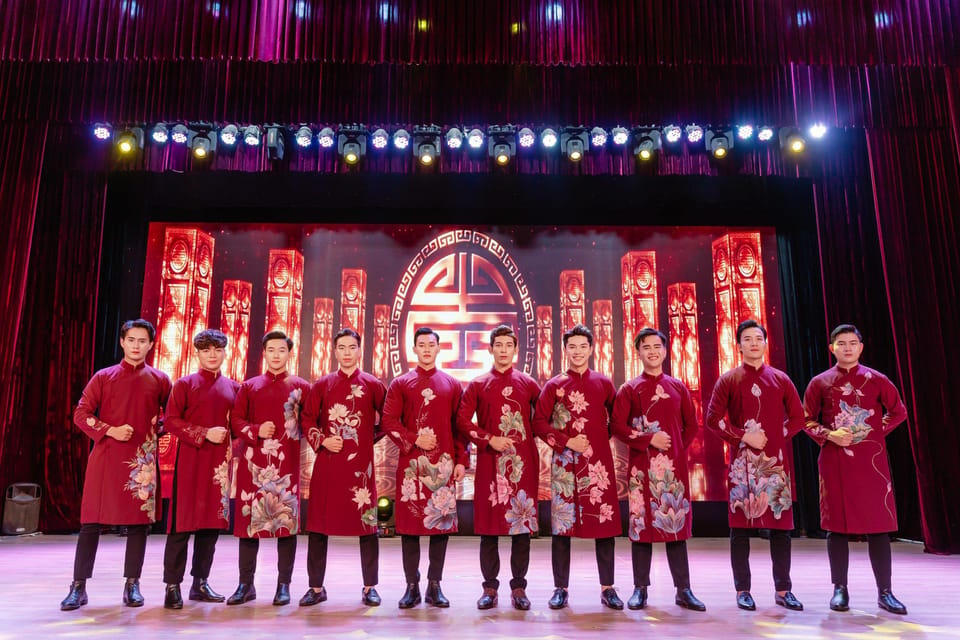
The Da Nang “The Ao Dai” Show is built like a cultural timeline you can watch, not a stuffy lecture. For about $17 per person, you get entrance to the show, refreshments, and a small gift—so it feels less like you’re paying only for seats and more like you’re buying an experience.
The core idea is simple and smart: Ao Dai is not frozen in time. It’s shown as something that evolves with Vietnam—royal court influence, folk traditions, and modern culture all sharing the same stage. The show’s framing starts with major dynasties and then keeps pulling the thread forward into more recent styles.
It’s also conveniently located at the Culture House of Ngu Hanh Son District, which makes it a straightforward evening plan when you’re already in Da Nang.
If you’re traveling as a couple, it works because you can enjoy the visuals (color, motion, costume details) while still getting enough story to feel you learned something. If you’re traveling with kids, it helps that the show is staged with clear scenes: you’re rarely left guessing what’s happening.
A few more Da Nang tours and experiences worth a look


Getting There and Timing: Check-In, Seats, and the 15-Minute Rule
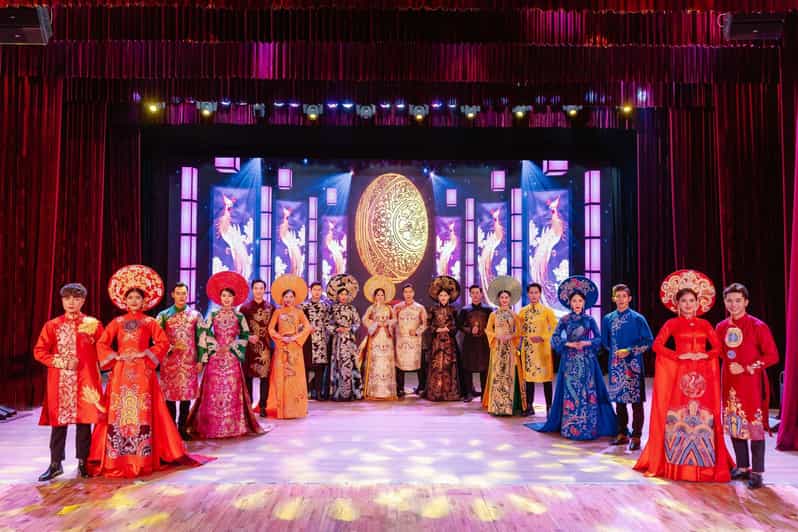
You meet at the Culture House of Ngu Hanh Son District. The host or greeter speaks English, and the venue is wheelchair accessible, which is a reassuring combo for anyone who doesn’t want to struggle with logistics.
Plan to arrive at least 15 minutes before the show time. When you get there, you’ll need to show your name and booking number to access the entrance. I like this kind of process because it keeps the start time stable and reduces chaos right before the lights change.
Seating is another practical piece. There’s a strong emphasis on organization, including the fact that good seats can be kept even if you’re a bit late—but don’t treat that like a strategy. If you want the easiest sightlines, show up early, get checked in, and take your place before the first scene.
Also note: transportation is not included. In Da Nang, that usually just means you’re deciding how to get there—Grab/taxi, hotel car, or a short local ride—then you focus on the show.
What the Show Actually Does: Vietnam’s Story Through Ao Dai (Court to Everyday)
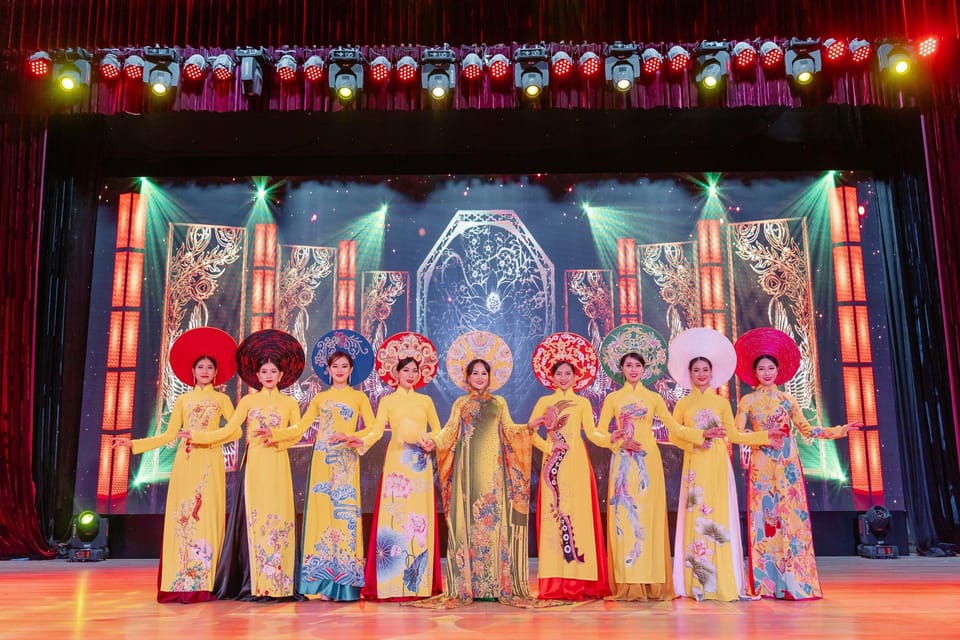
The show tells Vietnam’s cultural story by using Ao Dai as a visual map. It spans dynasties and key social moments, while also explaining how the national dress developed over nearly 300 years. The show specifically points to Ao Dai becoming a national dress under the Nguyen Dynasty, and it keeps returning to that link between identity and clothing.
What makes this structure work is that it doesn’t treat Ao Dai like it’s only for formal ceremonies. You see it in royal court scenes and also in more ordinary life references. That matters because Vietnamese history isn’t only palaces and wars—it’s also trade, education, weddings, and daily dignity.
The program also mixes tradition and modern culture. You can think of it as two layers happening at once:
- The costumes show the past.
- The performance style helps the story feel accessible in the present.
And if you like little personal touches, you may even catch playful references that connect to visiting countries, which gives the experience a slightly interactive feel without turning it into a quiz show.
Nguyen Dynasty Royal Palace: Tim b r e of the Royal Palace on Stage
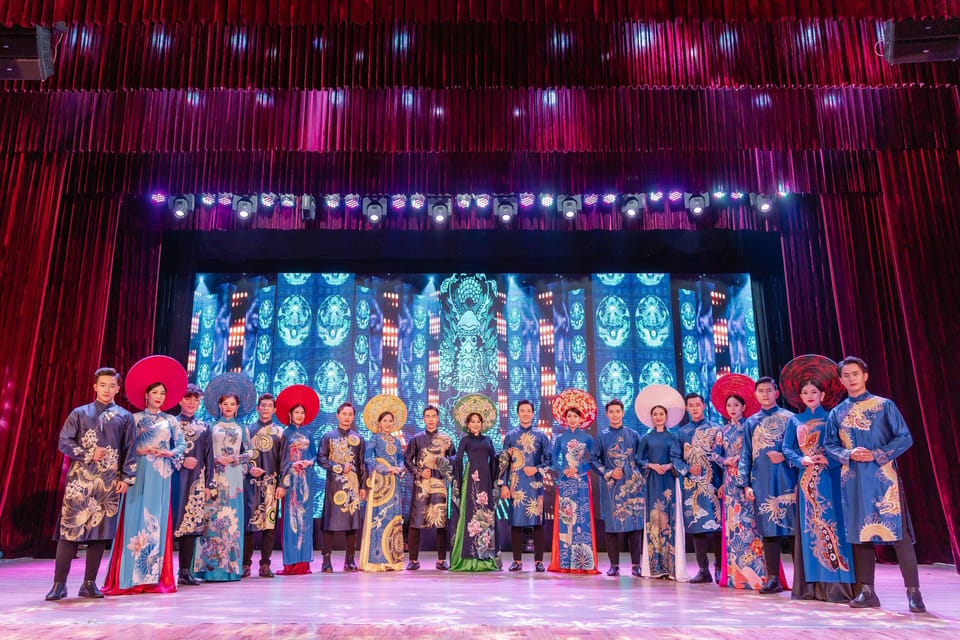
One of the show’s strongest segments is the Nguyen Dynasty performance, framed as the Timbre of the Royal Palace. This portion focuses on dignity and majesty, and it does that with character-specific royal costumes.
You’ll see multiple roles represented through costume and staging: Kings, mandarins, empress dowagers, and maidens. That’s useful for your understanding because it shows that court life had structure. Clothing wasn’t just style—it signaled rank and social function.
Even if you don’t know names of emperors or exact dates, you can still read the roles. The performance design makes hierarchy visible. That’s the kind of “history teaching” I like: it works through visuals first, then story.
If you’re someone who enjoys costume design, this is where you’ll want to sit still and watch carefully. The differences in color, layers, and presentation are the show’s main tool for making a historical class system understandable in a short time.
300 Years of Ancient Ao Dai: Old Market Life and Trade From the 17th to 19th Centuries
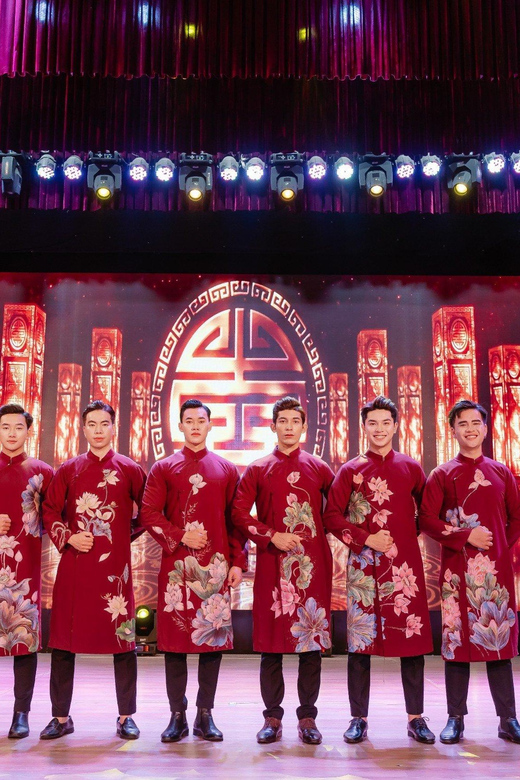
Next comes a replica of an Old Market scene, designed to represent rustic life and trade from roughly the 17th to 19th centuries. This segment is a smart pivot because it shifts from palace rank to public life.
The costumes here are styled as older Ao Dai, and the mood changes. The people look simple, humble, and reverent—an emotional contrast to the royal scenes. That difference matters. Vietnam’s cultural evolution isn’t just about who held power; it’s also about how everyday Vietnamese people lived and dressed as society changed.
In this part, you’re basically being shown a social timeline:
- court elegance and official identity
- then trade and daily community life
- and then the idea that cultural clothing kept adapting
If you’re expecting a silent fashion show, you might be surprised—in a good way. Scenes have meaning. The Old Market isn’t just pretty costumes; it’s there to give context for how Ao Dai moved from official influence into everyday Vietnamese life.






Weddings, Lotus Dance, and the White Ao Dai School Uniform
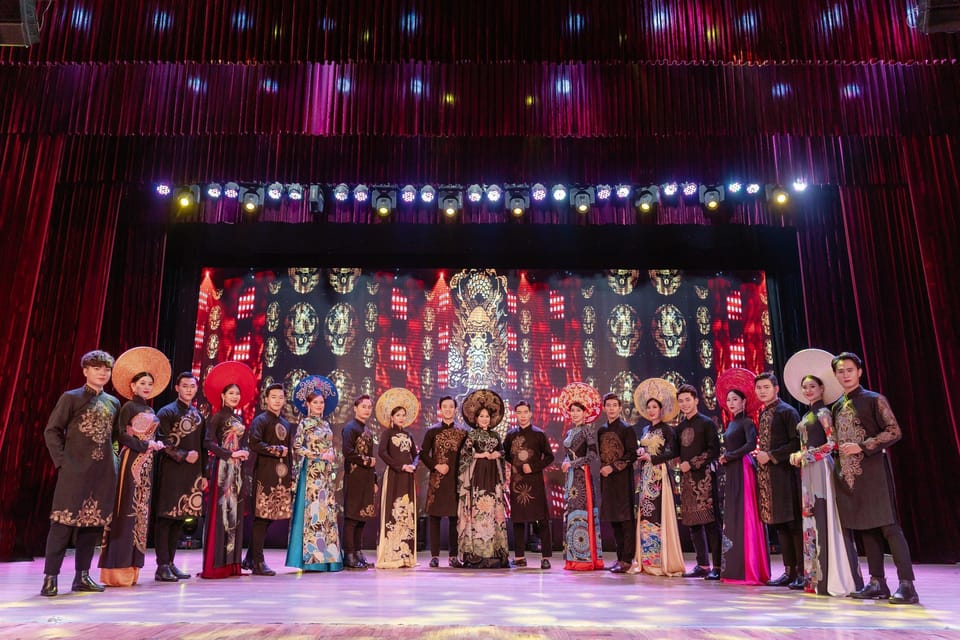
Some shows do “history” and forget “human moments.” This one tries to include both.
Traditional Vietnamese Wedding
You get a dedicated Traditional Wedding performance that highlights ritual standards in both past and present. Wedding scenes are powerful because they naturally connect clothing to identity, family expectations, and social rules. For you, it’s also an easy way to understand what the show is saying: Vietnamese culture isn’t only royal—it’s also family life.
Lotus Dance
The Lotus Dance draws directly from Vietnam’s national flower. The choreography blends traditional and contemporary movement, which helps the symbolism land without needing a lot of background knowledge.
Here’s what I like about this segment as a viewer: lotus symbolism is universal enough to grasp quickly, but the performance style keeps it feeling culturally specific. It’s not just decorative. The dance is meant to show purity and elegance through motion and music.
White Ao Dai School Uniform and Dong Khanh
Then comes the White Ao Dai Vietnamese School Uniform segment, linked to Dong Khanh, described as the inaugural girls’ school in Vietnam. This part is more than a costume moment. It frames white Ao Dai as tied to education values—simplicity, elegance, politeness, humility, and delicate communication—and also references childcare and family care.
I find that detail valuable because it shifts your thinking. Ao Dai isn’t only for celebrations or the court. It can also represent learning, responsibility, and self-improvement.
If you’re traveling with teens or you’re a parent, this is often the segment that feels the most relatable—because it’s about young people becoming capable and respected.
The Final Ao Dai Show: Where Royal Court Meets Modern Vietnam
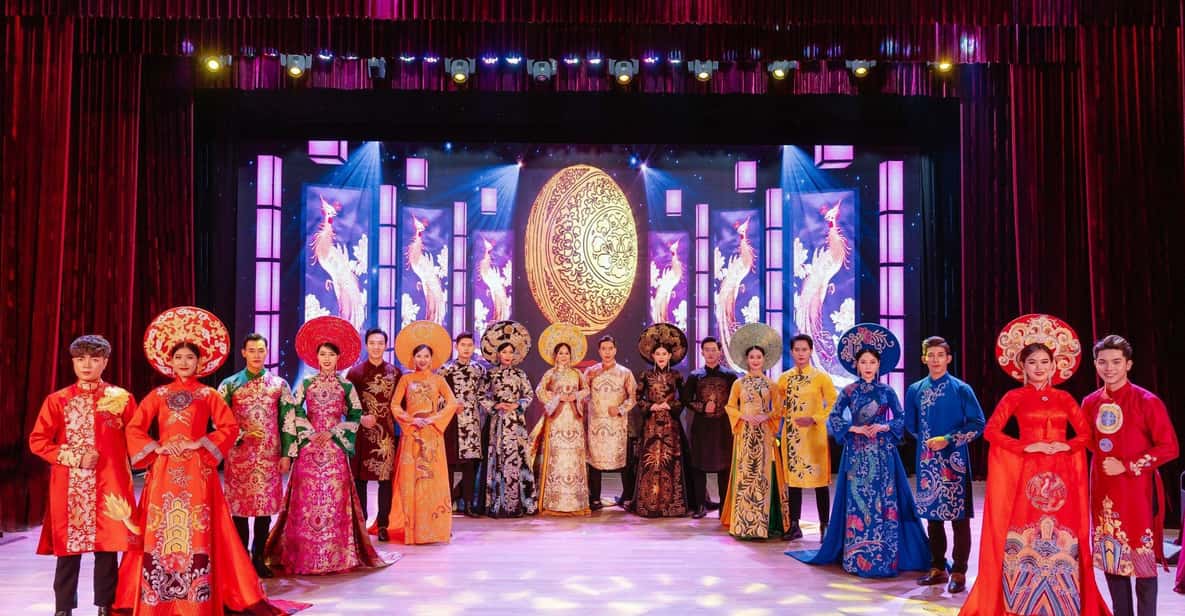
The ending segment is the Ao Dai Show, which ties everything together. It narrates Vietnamese history and culture from ancient times to the present, specifically bridging the gap between the royal court and ordinary people while blending traditional and modern aspects.
This is the part that helps the whole experience click. Earlier scenes can feel like separate snapshots, but the final storyline makes them part of one bigger concept: Ao Dai changes with Vietnam while still keeping its identity.
If you’re only going to remember one thing from the show, I’d make it this. Ao Dai is presented as a cultural evolution rather than a costume locked in a museum box. That’s why the show works even for short visits—Da Nang doesn’t require you to spend hours reading.
Also, the final pacing is designed to leave you with an image in your mind: a sense of continuity. The past doesn’t disappear; it reshapes what people wear and how they express themselves today.
How to Follow the Story Without Stress: English Narrative on Stage
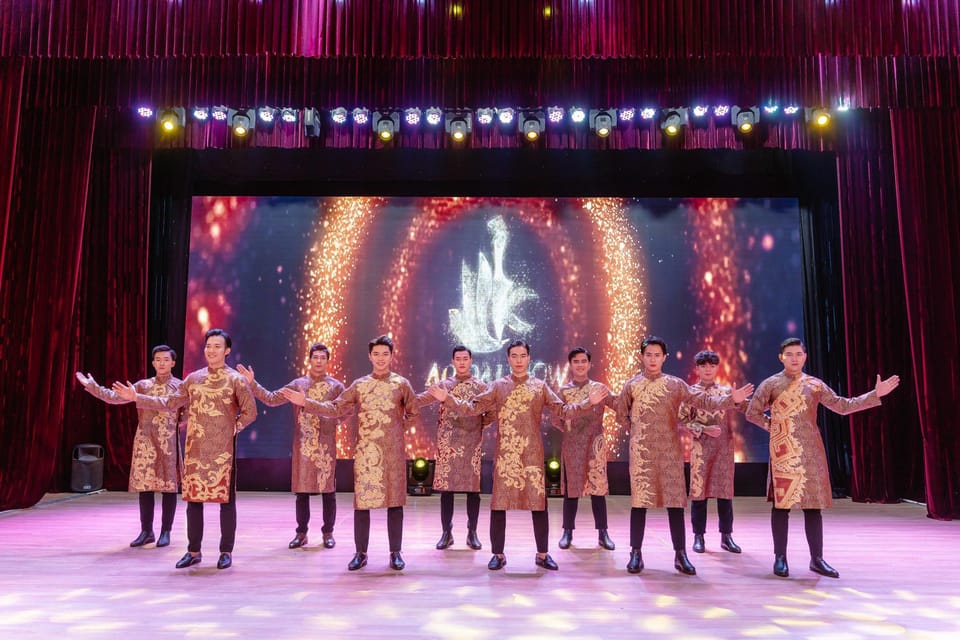
Even when the costumes are gorgeous, the show only lands if you can follow what’s going on. Good news here: English narrative is displayed on both sides of the stage, so you don’t have to crane your neck toward one screen or rely on perfect listening.
This is a big deal for your comfort. If you’re in the “I’ll watch the action, but I need context” category, you’re covered. If you’re traveling with someone who prefers the visuals and doesn’t want history notes shoved in their face, you’re both happy.
The English support also makes it easier if you’re arriving without planning. You don’t need prep-work. Just show up, find your seat, and let the stage storytelling do the job.
Who This Show Is Best For (And When It Might Not Fit)
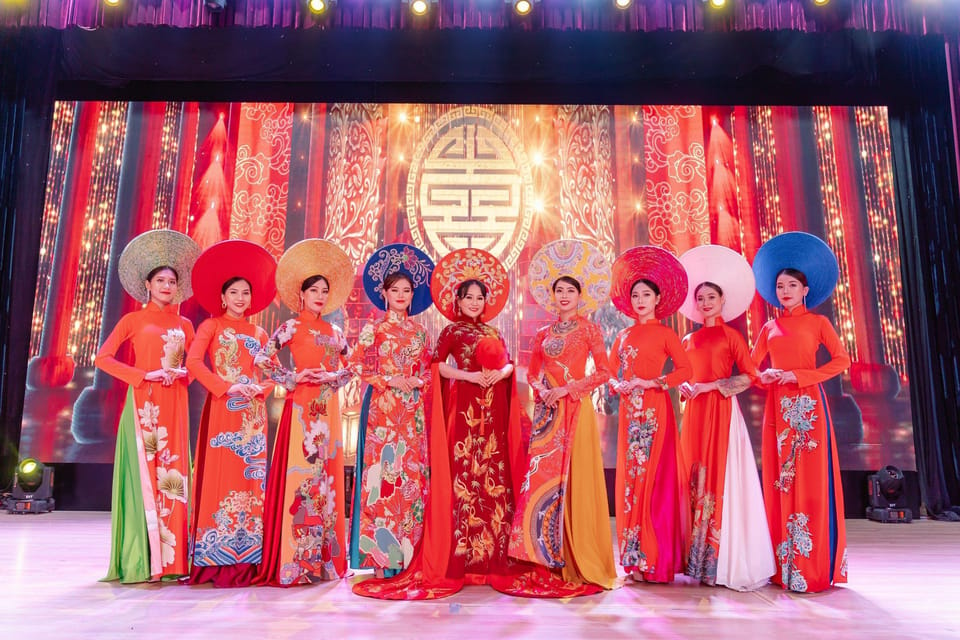
This show is a great fit if you want culture that’s easy to understand and good to look at. It’s also a strong choice for couples, because you get a shared activity that isn’t limited to one person’s interest. The costume variety carries the visual fun, and the storyline keeps it grounded.
It also works for groups. You can enjoy it from different angles—costume fans focus on details, history-minded viewers focus on scenes and the timeline, and everyone else enjoys the performance and music.
You might consider skipping or adjusting expectations if you’re looking for a deep lecture or a museum-style presentation. This is one performance, about an hour, so the story is necessarily condensed. Think of it as a culture highlight you watch, not a course you study.
Finally, if you’re short on time in Da Nang, the show is still a sensible choice because it’s self-contained. You’re not chasing multiple sites. You arrive, enjoy the program, and you’re done.
Should You Book the Da Nang Ao Dai Show?
I’d book it if you want an hour of Vietnam you can understand fast. For about $17, you’re getting more than a costume parade: you’re getting a staged cultural story that connects the Nguyen Dynasty, weddings, education, market life, and symbolism like the lotus.
If you’re the kind of traveler who likes things well organized and doesn’t want to fight logistics, this is also a safe bet. English narration on stage helps everyone follow, and the check-in process is straightforward with a clear requirement to arrive early.
One final tip: show up 15 minutes early and take your time before the first scene. If you do that, you set yourself up to enjoy the costumes and the story at the same time.
If your only goal is the fastest possible photography and you don’t care about story, you might feel it’s a bit more “performance” than “free roaming.” But for most people doing Da Nang, it’s a smart, value-driven evening.
FAQ
Where is the meeting point for the Da Nang Ao Dai Show?
The meeting point is at the Culture House of Ngu Hanh Son District.
How much is the Da Nang Ao Dai Show and how long is it?
The price is $17 per person, and the activity is listed as lasting 1 day. The performance itself is about an hour.
What’s included with the ticket price?
Your ticket includes the entrance, refreshments, and a small gift.
Is the show explained in English?
Yes. English is available, including English narration displayed on the stage sides and an English host or greeter.
How early should I arrive?
Please arrive at least 15 minutes before the show time. You’ll need to show your name and booking number for entrance access.
Is the venue wheelchair accessible?
Yes, the venue is wheelchair accessible.
Can I cancel or pay later?
Free cancellation is available up to 24 hours in advance for a full refund, and you can reserve now and pay later.