REVIEW · HOI AN
Countryside and Villages Tour By Motorbike
Book on Viator →Operated by Hoi An Adventure · Bookable on Viator
A scooter day in the countryside beats museum days. This tour gives you a close-up look at village life around Hoi An, with traditional stops like Thanh Ha pottery and Tra Que vegetables, plus lunch and coffee along the way. I also like that you can choose to ride as a passenger or drive your own scooter, and you get an English-speaking local guide who keeps things smooth.
The only real drawback to think about is the motorbike part. Even with experienced guidance and a small group, you’ll still be spending much of the time on the road, in sun and possible bugs, so come prepared.
In This Review
- Key highlights worth getting excited about
- Why a motorbike villages tour works so well near Hoi An
- Price and what you truly get for $51
- How the day runs: pickup, an active ride, and a tight loop
- Stop 1 at Hoi An Adventure: your back-roads orientation moment
- Stop 2: Thanh Ha Pottery Village and the real studio setup
- Stop 3: Kim Bong Carpentry Village (and the ferry-crossing feel)
- Stop 4: Tra Que Vegetable Village—herbs, herbs, and more herbs
- Stop 5: Cua Dai Bridge for big views and golden photo angles
- Riding comfort, safety, and your options as a driver or passenger
- Who this tour is best for (and who might skip it)
- My decision guide: should you book this countryside and villages tour?
- FAQ
- How long is the countryside and villages motorbike tour?
- Where does the tour start and where does it end?
- How much does the tour cost?
- Can I ride as a passenger or drive the scooter myself?
- What’s included in the price?
- Are village entrance tickets included?
- What food and drinks will I get?
- How big is the group?
- What should I bring?
- What is the cancellation policy?
Key highlights worth getting excited about

- Choose your riding style: passenger or you can drive yourself for the same price
- Village craft with real context: Thanh Ha pottery and Kim Bong carpentry are done right in working communities
- Farm-to-table energy: Tra Que vegetable fields and herbs show how food actually grows here
- Lunch and coffee included: no awkward budgeting mid-tour
- Big photo views without the hike: Cua Dai Bridge gives dramatic river and coastline angles
- Small group feel: about 5 people, with a private setup for your group
Why a motorbike villages tour works so well near Hoi An
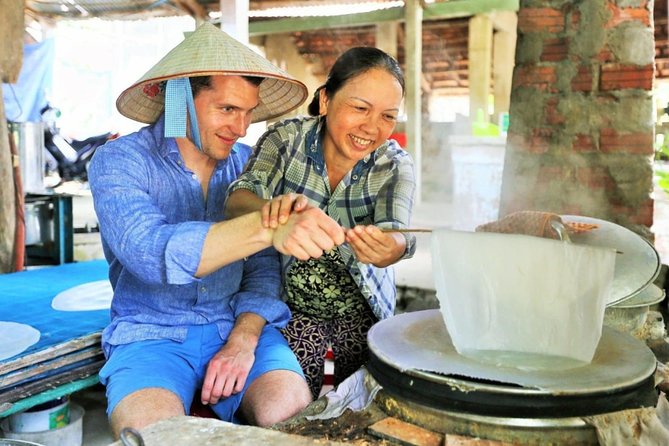
Hoi An is easy to fall into as a pretty old-town loop. This kind of tour helps you get your bearings fast for the region: you see how the city connects to rivers, rice fields, gardens, and craft villages. Instead of just hearing that Vietnam is rural beyond the tourist center, you get practical visuals—what people grow, what they build, and how daily life is organized.
What makes it especially smart is the pacing. You don’t do one long, boring stretch of road for hours at a time and then rush through one stop. The day is built around multiple stops where you can look, ask questions, and move on—so the ride feels like part of the experience, not the whole experience.
And if you like when a guide can add texture, the guide team here has a strong reputation for that. In past rides, names like Truong, and also Thomas and Thai, show up alongside the same theme: friendly, patient guidance and safe driving that lets you focus on the scenery instead of worrying about traffic.
You can also read our reviews of more tours and experiences in Hoi An.



Price and what you truly get for $51
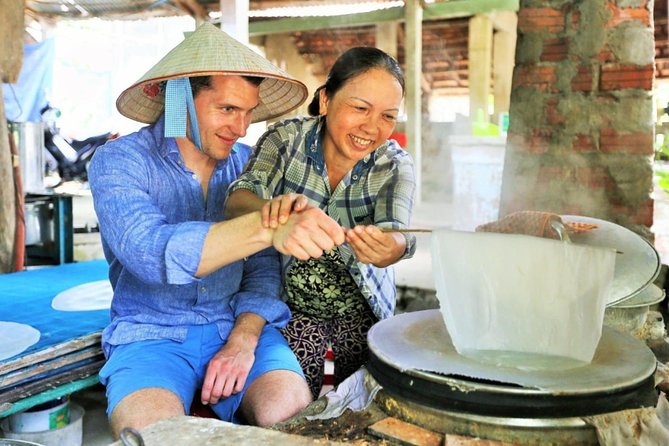
At $51 for about 4 hours, this tour is priced like a bargain when you consider what’s included. You get a motorbike setup, an English-speaking guide, coffee/tea, light lunch and lunch, plus bottled water. That alone matters—because food costs add up quickly in Hoi An once you start hopping between stops.
Then there’s the other side of value: admissions are built into the day at key cultural stops. The schedule includes admission tickets for the main village visits, while the bridge photo stop is free. So you’re not constantly paying small extras to keep the momentum going.
Also, you’re not stuck with a rigid bus-tour rhythm. The tour includes a small group size (around 5 people) and a private feel for your group, which is exactly what you want if you’re the type who asks a few questions and likes to move at a human pace.
How the day runs: pickup, an active ride, and a tight loop
The tour starts at the Japanese Covered Bridge area in Hoi An. It ends back at the same meeting point, so you don’t have to figure out a second transport plan after you’re done.
Timing is roughly 4 hours, and that’s important: it’s long enough to feel like you escaped the city, but short enough that you’re not losing your whole day to roads and waiting. The route is structured with a first ride-orientation stop (you get going with an experienced local guide), then a sequence of village visits, and finally a scenic break at Cua Dai Bridge for photos.
One more practical point: the tour notes that you can ride yourself with the same price by scooter. That makes this option handy if you want more control over your pace and the “hands-on” feel of a motorbike day.
Stop 1 at Hoi An Adventure: your back-roads orientation moment
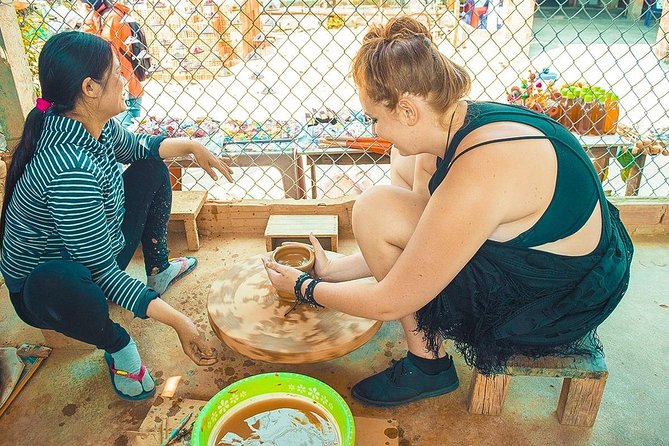
The day kicks off with the most hands-on part: riding through the countryside around Hoi An with an experienced, friendly guide. This is where you learn what kind of route you’ll be on for the rest of the tour—small roads, real village surroundings, and the sense that you’re moving through everyday life rather than a curated scenic strip.
Riding as a passenger is often the easiest way to enjoy this kind of tour, because you can look around the whole time. But if you’re comfortable on a scooter, you also have the option to drive yourself, which can make the day feel more personal.
From prior feedback, what people seem to love here is the “safe-driving” quality. The guide team’s approach has been praised for competence and calm pacing—so you can keep your mind on the scenery.
Stop 2: Thanh Ha Pottery Village and the real studio setup

Thanh Ha Pottery Village is described like a living museum, but the key word is living. You’re not just seeing finished goods; you’re seeing the craft in action in a community where pottery-making is long-established.
The standout detail here is the traditional process. Pottery has been made for over 400 years, and many villagers still use a two-man pottery wheel. That’s the kind of thing you’ll only really understand by being there—watching the teamwork and the rhythm behind the work.
A quick note on how this stop feels in practice: pottery villages can be more than “look and leave.” You might find yourself wanting to ask questions about materials, firing, and design. If that’s your style, bring curiosity. If you just want the highlights, keep your time focused on watching the working spaces and not getting stuck in a sales maze.
Also, since crafting is a local industry, your guide may help with practical things like navigating what’s fairly priced. In one past ride, Truong helped with negotiating local item prices, which is useful if you plan to buy something you’ll actually use.






Stop 3: Kim Bong Carpentry Village (and the ferry-crossing feel)
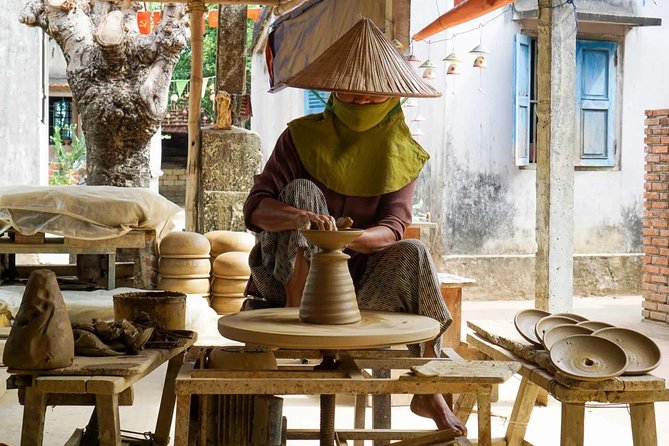
Kim Bong Carpentry Village is linked to Cam Kim lands, and the tour description highlights a ferry connection from Hoian Ancient Town to the Cam Kim island commune. Even if you don’t spend a long time on the water, it adds variety to the day and breaks the “only-on-roads” pattern.
This village is rooted in craft tradition dating back to the late 15th century, and the focus is on carpentry—so you’re likely to see woodworking methods that look different from what most people encounter at home. Think joinery, tools, and the way wood is shaped for practical use, not just display.
One practical consideration: carpentry villages can be physically interesting but visually detailed. That means you’ll enjoy it most if you like slow looking—watching techniques and asking how things are made—rather than rushing from one photo point to the next.
Stop 4: Tra Que Vegetable Village—herbs, herbs, and more herbs
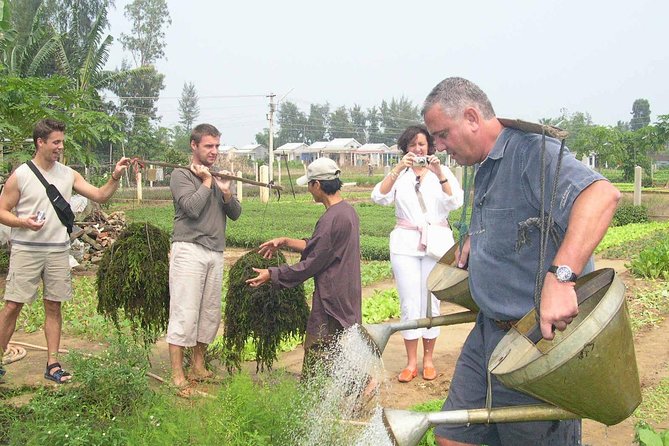
If you’re expecting a stop that feels like a scenic garden, Tra Que does deliver a green setting, but it’s also about production. The villagers specialize in planting vegetables like lettuce, water spinach, cabbage, and also herbs such as basil, coriander, and fish lettuce.
What makes this stop meaningful is that it’s framed around flavor and contribution. The tour info connects Tra Que farming to the flavors that show up in Hoi An’s food culture—so you’re not just watching plants; you’re learning where the tastes come from.
This is also a stop that often works well for mixed travel groups. If you’re with someone who doesn’t care about pottery but does care about food, this is your peace offering. And if you care about culture but also like eating, this is where the day becomes more than sightseeing.
Come prepared for sun and bugs here, because open-air farming areas don’t do you favors. Sunscreen and mosquito spray are listed for a reason.
Stop 5: Cua Dai Bridge for big views and golden photo angles

The day finishes with a scenic moment at Cua Dai Bridge. The tour describes it as an excellent spot for photos because you get a higher perspective over the water, with views in multiple directions—river, mountains, and coastline.
This is a good “reset stop.” You’ve spent time watching people work in villages, and now you switch to scenery. It’s also a place where you can take a breath, stretch, and look for how the rural landscape connects to the broader region around Hoi An.
If you’re chasing the classic golden-hour vibe, this is the kind of stop that can pay off. Even outside perfect light, it’s still useful because it gives scale—you finally see how large the waterways and farmland feel from above.
Riding comfort, safety, and your options as a driver or passenger
You get two ways to participate: ride as a passenger or ride yourself with the same price. That choice changes the whole feel of the day.
If you ride as a passenger, your job is basically to sit back, look around, and enjoy the countryside. That’s usually best if you’re new to scooter travel, or if you want to minimize stress and maximize sightseeing time.
If you drive yourself, the payoff is control. You’ll be more aware of your surroundings, and you’ll feel more connected to the route. The tradeoff is attention. You’ll want to focus on road conditions rather than constantly turning for photos.
Either way, the tour is run with an English-speaking guide and uses experienced local drivers. Past reviews specifically mention safe driving and competent guides like Thomas and Thai, which is exactly the kind of detail that matters when you’re traveling on two wheels in real traffic.
Practical tip: wear sun protection and consider light clothing you won’t mind getting sweaty. The tour recommends sun cream, mosquito spray, and sunglasses—follow that list. It’s not dramatic, it’s just smart.
Who this tour is best for (and who might skip it)
This is ideal for first-time Hoi An visitors who want a quick but real introduction to the surrounding villages. It’s also a strong match if you’re craft- or food-minded. Watching pottery, seeing carpentry rooted in older methods, and then walking through a vegetable-herb village ties the day together in a way that feels coherent, not random.
It’s also a good choice if you’re traveling with a group of mixed interests, because the stops cover multiple angles: culture, making things, and how food is grown.
Who should think twice? If you hate scooters or you’re uncomfortable riding for long stretches, the motorbike component could be a dealbreaker. This isn’t a walk-only day; the movement is the point.
My decision guide: should you book this countryside and villages tour?
Yes, if you want a high-value half-day that gets you out of the old-town bubble. For $51, you’re getting transportation by scooter, guide support in English, coffee/tea, lunch, bottled water, plus village admissions that help keep the day feeling complete.
Also say yes if you like learning through seeing. This tour is built around working village environments—pottery wheels, carpentry craft areas, and vegetable-herb farming—not just scenic stops.
I’d skip it if you’re only in Hoi An for a very relaxed day and you’re not interested in the countryside at all. In that case, you might prefer staying in town where everything is walkable.
If you want the countryside version of Hoi An without wasting time figuring things out, this is one of the easiest ways to do it.
FAQ
How long is the countryside and villages motorbike tour?
The tour runs for about 4 hours.
Where does the tour start and where does it end?
It starts at the Japanese Covered-Bridge area in Hoi An and ends back at the same meeting point.
How much does the tour cost?
The price is $51.
Can I ride as a passenger or drive the scooter myself?
You can choose. The tour notes you can ride yourself with the same price by scooter, or ride as a passenger.
What’s included in the price?
Included items are motorbike with driver, an English-speaking tour guide, coffee and/or tea, light lunch, lunch, and bottled water. Admissions are included for the listed village stops.
Are village entrance tickets included?
Admission tickets are included for the major village stops listed (with the bridge stop described as free).
What food and drinks will I get?
You’ll get coffee and/or tea plus light lunch and lunch, and bottled water. Alcoholic drinks are not included (they are available to purchase).
How big is the group?
The tour is described as a small group of about 5 participants, and it’s set up as a private activity for your group.
What should I bring?
Bring sun cream, mosquito spray, and sunglasses.
What is the cancellation policy?
There is free cancellation up to 24 hours in advance for a full refund.
If you want, tell me your comfort level on scooters (first time vs. experienced) and your travel dates, and I’ll help you decide the best way to do the riding choice for this tour.