REVIEW · HO CHI MINH CITY
City Tour By Motorbike w/ War Museum & Reunification Palace
Book on GetYourGuide →Operated by Saigon Adventure Travel · Bookable on GetYourGuide
Motorbike history in Saigon sounds intense. This half-day ride stitches together the city’s Vietnam War story and its French-colonial backbone, with a local guide explaining how it all connects.
Two things I really like: the careful scooter driving (you feel looked after in traffic), and the way the route groups standout sights like Notre-Dame Basilica, the Central Post Office, and the Opera House so you can see a lot without burning daylight stuck in lineups.
One drawback to think about: dress code. You’ll need knees and shoulders covered, and this is a scooter tour, so comfy clothes matter more than you’d think.
In This Review
- Key highlights you’ll feel right away
- Why this Saigon tour works so well by scooter
- Notre-Dame Basilica, Central Post Office, and City Hall: French Saigon in one sweep
- Opera House and Nguyen Hue Walking Street: contrast for the afternoon brain
- War Remnants Museum: the facts you can see, explained in human terms
- Reunification Palace: walking through a turning point
- Jade Emperor Pagoda: the quiet contrast that makes the day feel balanced
- Ben Thanh Market: history outside, shopping inside
- Price and value: what $28 buys in real terms
- Who should book this scooter-and-war-history tour
- Should you book? My straight answer
- FAQ
- How long is the City Tour By Motorbike with War Museum and Reunification Palace?
- What does the tour cost?
- What’s included in the price?
- Which main places will we visit?
- Are there entrance fees covered for the museum and palace?
- What languages is the guide available in?
- Where does pickup happen?
- Do I need to follow a dress code?
- Is a private tour option available?
- Can I cancel, and is pay later possible?
Key highlights you’ll feel right away
- War Remnants Museum + Reunification Palace are covered by entrance fees in the tour price
- French-colonial architecture loop: Notre-Dame Basilica, Central Post Office, City Hall/People’s Committee, and the Opera House
- Scooter route time-saving: a fast way to hit major stops in just 4 hours
- Local explanations from English-speaking guides like Brandon, Johnny, Tris, Thu, Nhi, and Zayne
- Kumquat juice + market time so the tour has a real taste of day-to-day Saigon
Why this Saigon tour works so well by scooter
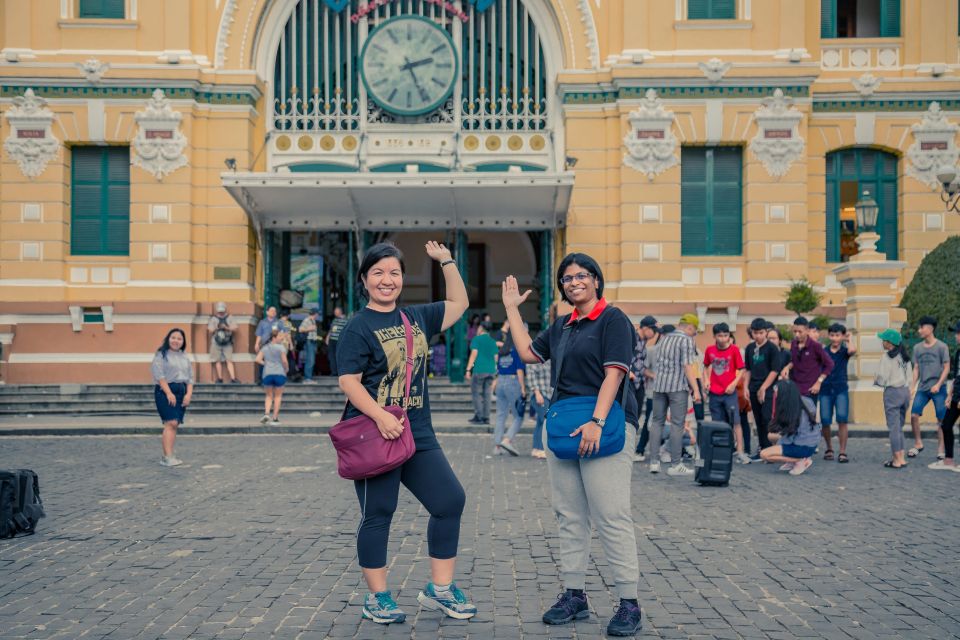
Saigon (Ho Chi Minh City) is a city you feel before you fully understand it. The motorbike setup turns that into a big advantage. In four hours, you get to cover central landmarks and major history sites without the usual slowdown that comes from trying to hop between locations on your own.
The other reason this tour clicks is the balance. You’re not only moving through famous buildings. You’re also getting a guided narrative about Vietnam’s turbulent past, told through stops that were built for different eras and different powers. That makes the War Remnants Museum and Reunification Palace feel less like isolated attractions and more like parts of one story you can walk through.
Finally, there’s a practical comfort factor. Many guide-driver pairings are praised for safe, careful driving. One review specifically highlights the guide’s skill at slow-speed maneuvering with a pillion passenger. In plain terms: you’re not just along for the ride. You’re riding with someone who’s done this in Saigon traffic for real.
You can also read our reviews of more city tours in Ho Chi Minh City



Notre-Dame Basilica, Central Post Office, and City Hall: French Saigon in one sweep
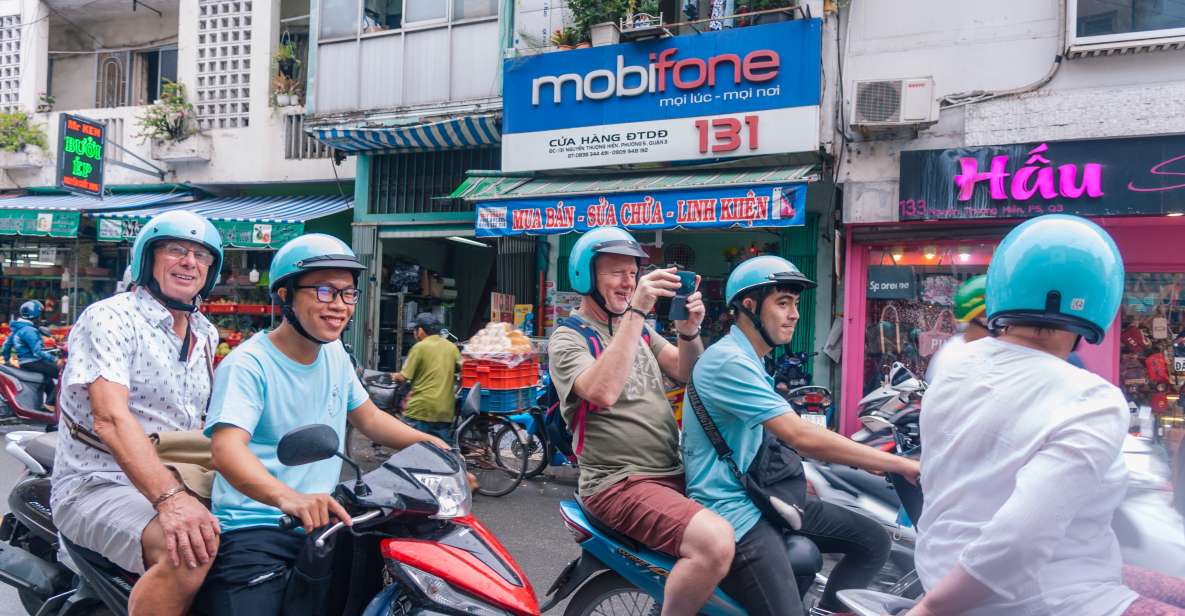
Your tour opens (and repeatedly reinforces) the French footprint on the city center. You’ll see the French architecture most visitors only notice from the outside, but with enough context to understand what you’re looking at.
Saigon Notre-Dame Basilica (Cathedral Notre-Dame) is the kind of landmark where first impressions are easy. It’s large, recognizable, and visually dramatic. What makes it more interesting on this tour is the time frame behind it. It was constructed by French colonists between 1863 and 1880, after they initially named it the Church of Saigon. When you stand there, it helps you connect the building to the colonial era instead of treating it like just another pretty stop.
Next comes the Central Post Office, built from 1886 to 1891. It mixes Gothic, Renaissance, and French colonial elements, and it’s the sort of building that rewards slow glances: you’ll see layers of style instead of one flat look. Even if you don’t go inside for long, just pairing the post office with Notre-Dame makes the colonial theme click.
Then you get City Hall / Ho Chi Minh City People’s Committee. This is the administrative side of the same era and the same city core. On your guide’s explanation, it starts to make sense why French Saigon centered so much power and infrastructure around this zone.
One small drawback: these stops are close enough to compare styles quickly, but that also means you’ll want to keep your camera ready and your eyes open. If you show up tired or dressed for pure sightseeing (instead of also for scooter riding), you might feel rushed.
Opera House and Nguyen Hue Walking Street: contrast for the afternoon brain
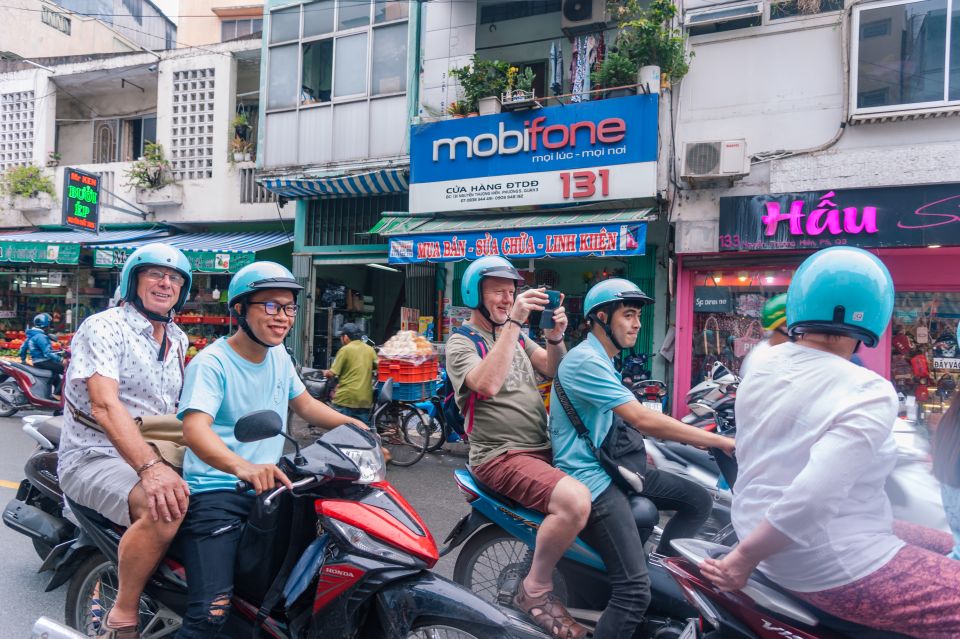
After the big-stone monuments, you’ll transition toward the city’s modern pulse. The Opera House is worth a pause because it’s another “big European-style” marker—this time not only religious or administrative, but cultural. It helps you see how the French influence wasn’t one-purpose. It shaped public life: religion, mail, government, and entertainment.
Then Nguyen Hue Walking Street gives you contrast. This is where Saigon stops feeling like a museum of the past and starts acting like a living city. You’re still in the same half-day window, but the atmosphere changes. That matters, because war-related sites can feel heavy. A lighter street moment helps you reset without losing the tour’s momentum.
If you’re the type who likes snapping photos, this part of the route is often where you’ll feel most spontaneous. And if you’re not, it still works because it gives you a sensory break while you stay close to the route.
War Remnants Museum: the facts you can see, explained in human terms

The War Remnants Museum is the emotional center of the tour. You’ll see countless artifacts, photographs, and pictures documenting the second Indochina war. Even without understanding everything at first glance, the sheer mix of material pulls you toward what mattered most at the time: people, consequences, and the way conflict was recorded and lived.
What I find valuable here is that you’re not walking through silently. Your guide brings in local perspective, and that helps you interpret what you’re seeing. One recurring theme from guide feedback is that questions are welcomed and answered with real energy. If you’re curious—why certain images are framed the way they are, or how people talk about the period now—this is where that conversation pays off.
Practical tip: plan to spend a bit more time in the exhibits than you think you need. War museums often move fast visually, but the emotional weight can slow you down. If you try to speed through, you may miss connections your guide is pointing out.
Also, note what’s included: entrance fees for the War Remnants Museum are covered. That’s a real value point, because museums like this often become an extra cost if you’re piecing everything together yourself.
Reunification Palace: walking through a turning point
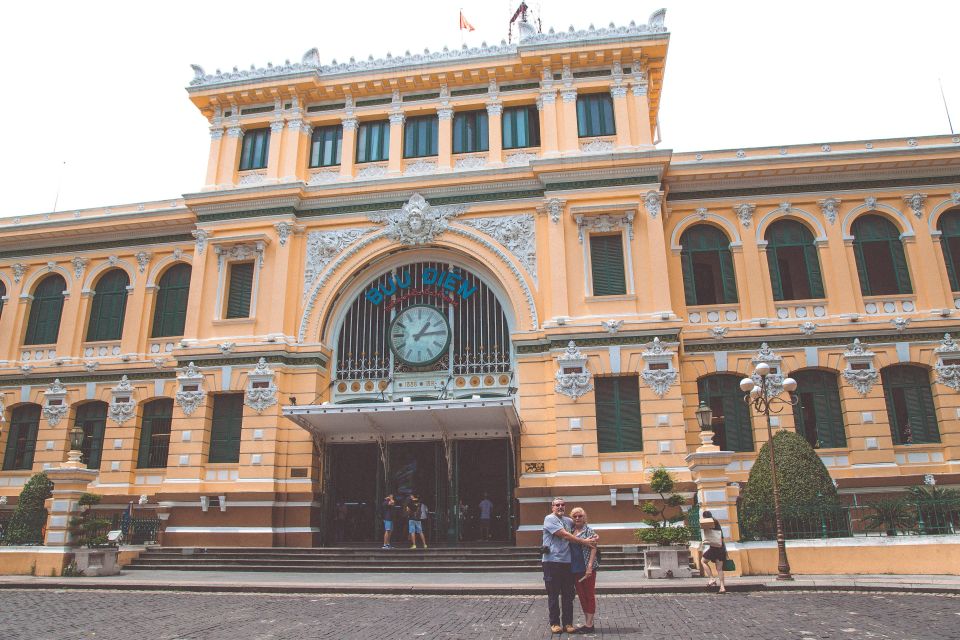
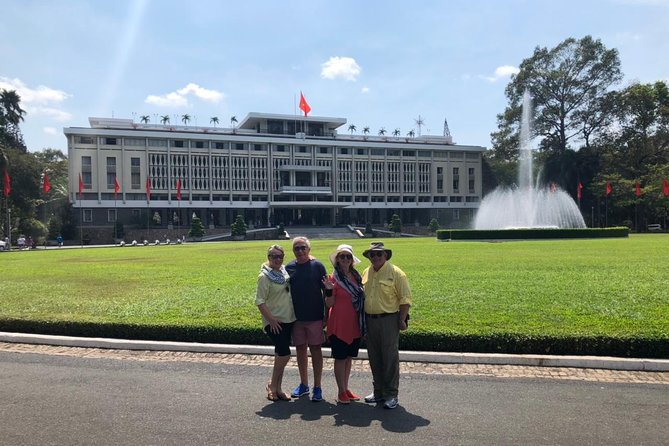
Then comes the big one: Reunification Palace. This was the residence of the President of the Republic of Vietnam until April 30, 1975. That date is more than a historical caption when you’re standing in the space. It turns the building into a timeline you can pace.
This stop works well after the War Remnants Museum because it shifts from documenting conflict to showing what authority and decision-making looked like on the ground. You can almost feel the change in the air when you move between rooms and corridors that were tied to power.
A practical advantage: entrance fees for Reunification Palace are included too. If you want the highlights without a lot of ticket juggling, this tour simplifies your day.
Possible drawback: if you’re very sensitive to graphic or emotionally heavy material, you may want to mentally prepare for the museum portion first. The palace is not presented as a gore attraction, but the entire day is framed by the war era, so your mindset matters.
You can also read our reviews of more museum experiences in Ho Chi Minh City






Jade Emperor Pagoda: the quiet contrast that makes the day feel balanced
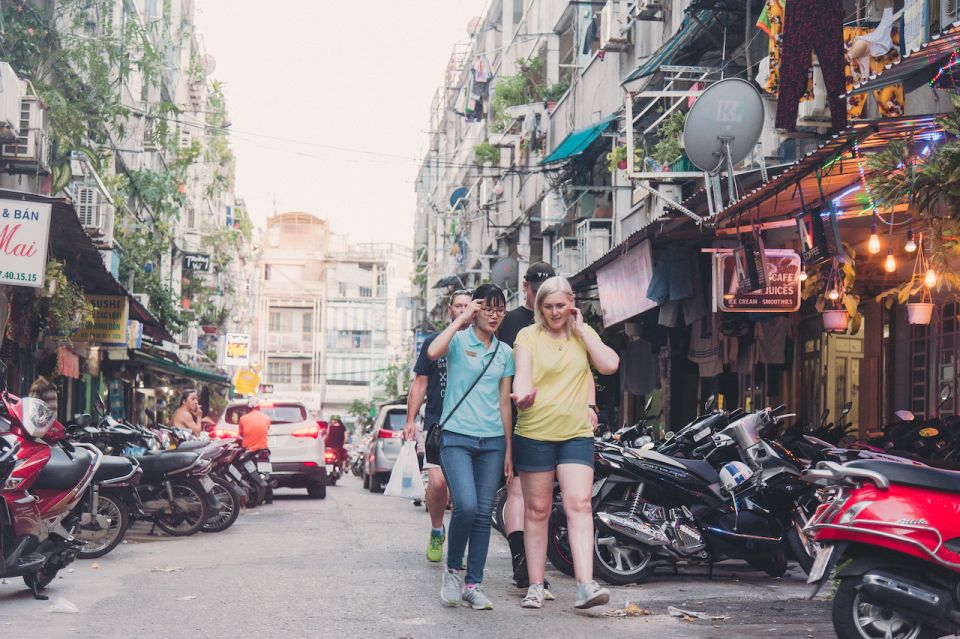
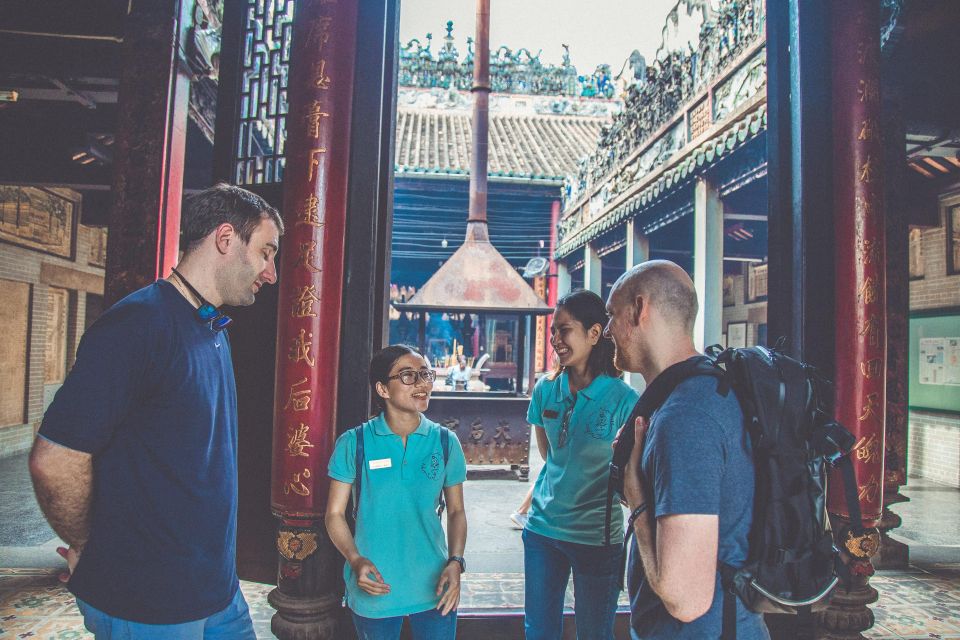
Between the war landmarks, you’ll visit Jade Emperor Pagoda. This is a different kind of Saigon experience—spiritual, cultural, and visually distinct from the museums and government buildings.
It’s also where the tour’s pace becomes important. After visiting places filled with politics and conflict, a pagoda stop can bring your attention back to ritual details and everyday religious life. Even if you’re not a temple expert, the setting helps you reset your brain.
One important consideration: the tour includes guidance that you must cover knees and shoulders to enter temples and pagodas. Also, shorts, short skirts, and sleeveless shirts are not allowed. If you’re traveling in the heat, it’s easy to show up underdressed for comfort. This is the moment where comfort and rules clash, so bring light layers that still keep your skin covered.
Ben Thanh Market: history outside, shopping inside
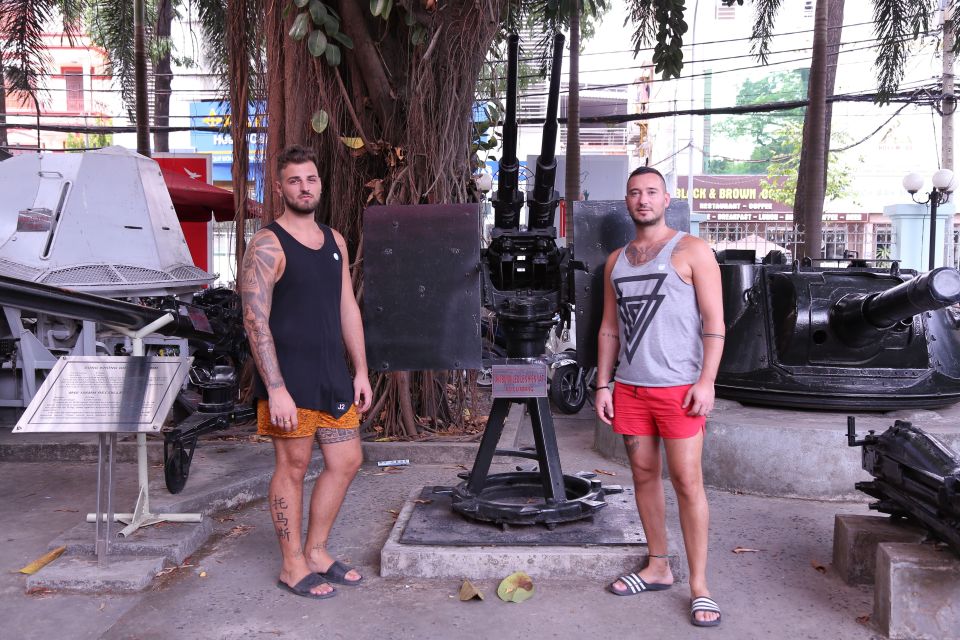
End your sightseeing loop with Ben Thanh Market, one of the oldest markets in Ho Chi Minh City. It appeared before the French invaded Saigon (the former name of Ho Chi Minh City), built at the beginning of the 17th century for small traders trading goods on the Ben Nghe River’s bank near the harbor by Gia Dinh Citadel.
That background matters because Ben Thanh isn’t just a place to buy stuff. It’s a commercial landmark tied to how trade worked before colonial influence fully reshaped the city. When you connect that origin story to what you see today, the market feels less like a tourist-only stop.
Here’s what you can do with your time: use it to browse, pick up small gifts, or grab snacks. The tour price includes Kumquat juice, which is a nice touch, but Ben Thanh is also where you might want to spend extra money on whatever catches your eye.
A small practical note: markets can be busy and loud. If you’re trying to shop quietly or take photos without crowds, go with flexible expectations. This is more of an energetic stop than a slow photography session.
Price and value: what $28 buys in real terms

At $28 per person for a 4-hour half-day, this tour earns its keep because it bundles several cost and time pieces together.
You’re paying for:
- an English-speaking tour guide
- a scooter with driver
- entrance fees for the War Remnants Museum and Reunification Palace
- Kumquat juice
That combo is the key value. Two paid-entry attractions are included, and the scooter transport reduces the friction of getting between major sites across central Saigon.
What you should budget for separately: personal expenses. In practice, that usually means snacks, water beyond what’s included, shopping at Ben Thanh, and any optional adds that aren’t part of the included stops.
Pickup is optional, but it matters for convenience. The tour notes pickup in district 1 and district 3. If you’re elsewhere, there’s either an extra charge or you’ll use the meeting point at Cyclo Resto, 133 Nguyễn Du, Phường Bến Thành, Quận 1.
Who should book this scooter-and-war-history tour

This experience is a strong fit if:
- you want the major Saigon highlights in a short window
- you like getting a local narrative, not just reading plaques
- you’re comfortable on a scooter and value safe, careful driving
It’s also ideal for first-time visitors who feel overwhelmed by how much Saigon packs into one area. The route is built around recognizable landmarks—French architecture, major history sites, then a market and street moment—so you leave with a layered picture of the city instead of a single-theme day.
If you hate scooters or don’t feel safe on them, this may be less enjoyable, even though the drivers are described as careful. You’ll get less out of the experience if the ride itself becomes the stress.
Should you book? My straight answer
Yes, book it if you want a high-impact Saigon half-day that mixes colonial architecture, war-era context, and a taste of present-day city life—without making you plan tickets and transport across multiple stops.
I’d think twice if you:
- can’t follow the dress code (knees and shoulders covered)
- prefer walking over riding
- want a lighter day with no war focus
If your priority is seeing the must-see sites and understanding the links between them, this $28 scooter tour is a practical way to do it in 4 hours, with entrances handled and a guide to translate what you’re looking at.
FAQ
How long is the City Tour By Motorbike with War Museum and Reunification Palace?
It runs for about 4 hours.
What does the tour cost?
The price is listed at $28 per person.
What’s included in the price?
The tour includes an English-speaking tour guide, a scooter with driver, entrance fees (War Museum and Reunification Palace), and kumquat juice.
Which main places will we visit?
You’ll visit Reunification Palace, War Remnants Museum, Saigon Notre-Dame Basilica, Saigon Central Post Office, City Hall (People’s Committee), the Opera House, Jade Emperor Pagoda, Ben Thanh Market, and Nguyen Hue Walking Street.
Are there entrance fees covered for the museum and palace?
Yes. Entrance fees are included for the War Museum and Reunification Palace.
What languages is the guide available in?
The live tour guide is available in English and Vietnamese.
Where does pickup happen?
Pickup is optional only in district 1 and district 3. For other districts there may be an extra charge, or you can meet at Cyclo Resto at 133 Nguyễn Du, Phường Bến Thành, Quận 1.
Do I need to follow a dress code?
Yes. Shorts, short skirts, and sleeveless shirts are not allowed, and you must cover your knees and shoulders to enter temples and pagodas.
Is a private tour option available?
Yes, a private tour option is available.
Can I cancel, and is pay later possible?
You can cancel up to 24 hours in advance for a full refund, and you can reserve now and pay later.