REVIEW · HA GIANG
6 Day Tour in Ha Giang Loop Ban Gioc Waterfall Motorbike
Book on Viator →Operated by Ha Giang Adventure · Bookable on Viator
Bigger views start with smaller nerves. This 6-day Ha Giang Loop to Ban Gioc is built around a self-ridden motorbike experience, guided by local road-knowing teams, plus cultural stops with real people and real food. I especially like that you get early help to build confidence on the bike, not just a handoff and good luck. And I like that the route doesn’t treat Ban Gioc like a quick stop; it gives you time for the caves, pagoda area, and local craft before you head back.
The main drawback is that the trip is ride-your-own-balance reality. You’ll want a valid Vietnamese-accepted license to drive, and conditions matter; one rougher night can happen, so it’s smart to plan for basic lodging and occasional gear quirks.
In This Review
- Key things to know before you go
- Motorbike license, safety gear, and how the riding works
- Day 1: Ha Giang training, Quan Ba Heaven Gate, and sleeping with the Dzao in Nam Dam and Mun
- Day 2: Lung Khuy Cave, Lung Tam hemp cloth, and the Dong Van Geopark power day
- Day 3: Ma Pi Leng Pass, Tu San Abyss Alley, and the Bao Lac feel-good finish
- Day 4: Bao Lac waterfall walk, Khau Coc Cha Dragon’s Stairway, and Pac Bo Cave
- Day 5: Heaven’s Gate Angel Eye, Tra Linh border town, and Ban Gioc/Detian Falls at full power
- Day 6: Pagoda at Phật Tích Trúc Lâm Bản Giốc, Nguom Ngao Cave, and forging your own knife at Phuc Sen
- Price and value: what $470 includes, and what costs extra
- Accommodation and food: simple and generally clean, with one caution night
- Who this tour fits best, and who should choose another option
- Should you book the Ha Giang Loop to Ban Gioc?
Key things to know before you go
- Max 6 riders means you’re not lost in a huge bus shuffle, and the pace stays personal.
- Safety kit is included: helmet, gloves, knee and elbow pads, reflective vest, poncho, first-aid kit, and more.
- Skill practice on Day 1 helps a lot if you’re new to Vietnamese motorbikes or just want your first day to feel calmer.
- Homestays with real roles: you can hike, help with dinner, and meet hosts like Pay and her family.
- The “core hits” are scheduled well: Ma Pi Leng, Tu San Abyss Alley, Bao Lac, and then Ban Gioc and Detian Falls.
- Weather is not optional: the experience runs on good conditions, or dates get changed.
Motorbike license, safety gear, and how the riding works
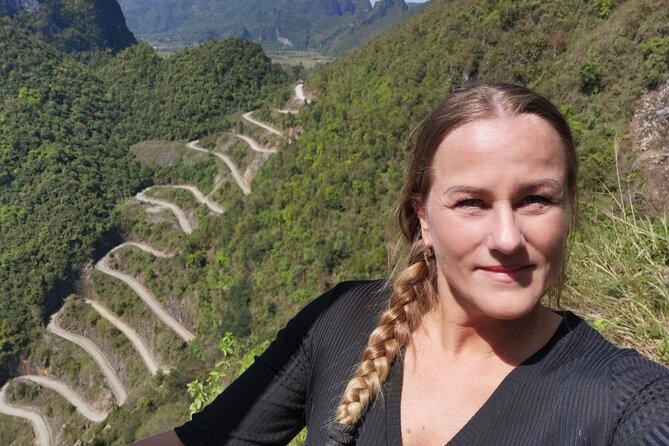
This is a self-ridden motorbike tour, so your ability to ride matters as much as your enthusiasm. The operator notes that you need a relevant license valid under Vietnamese jurisdiction. If you’re unsure what counts, ask before you book so there’s no last-minute disappointment.
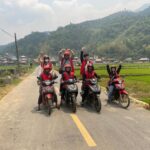
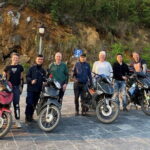
Good news: the tour includes a full safety setup. You get helmet, gloves, knee pads, elbow pads, a reflective vest, a poncho, a first-aid kit, and even a cover for your backpack. They also provide a semi-automatic bike, plus luggage-tying gear and minor repair help if you have issues like a flat tire.
Two more options matter for how you want to experience the loop:
- A shared car tour runs every Friday (so you can skip riding if you prefer).
- If you don’t want to drive, you can ride on the back of the team for an added fee.
If your goal is maximum comfort, the car option may fit you better. If your goal is independence and full-sight speed, riding is the point.
A few more Ha Giang tours and experiences worth a look
Day 1: Ha Giang training, Quan Ba Heaven Gate, and sleeping with the Dzao in Nam Dam and Mun
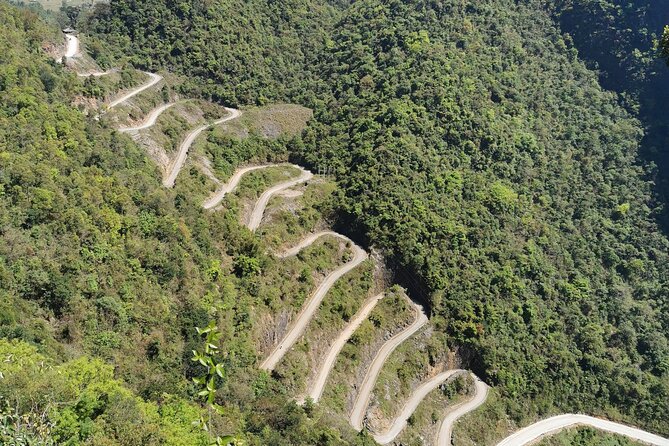
The day starts at 9:00 am with your guide meeting you, then hands-on bike confidence time. This is more useful than it sounds. Ha Giang roads are twisty and real-world, so the first hours are about learning how the group rides together—stopping points, spacing, and how to handle turns without white-knuckling everything.
After that, lunch and a motorbike briefing set you up to head toward Nam Dam village with a local guide. You’re not just dropped into scenery; you’re learning your way through it.
Your key stops help you get a feel for the region fast:
- Quan Ba Heaven Gate: a 45 km drive packed with traditional villages, valleys, and mountain roads carved along steep sides. You’ll make picture stops and rest stops (yes, your “bum” gets a break).
- Fairy Bosom hills in Quan Ba: it’s one of those named spots that feels fun to say out loud and easy to photograph.
- A UNESCO-recognized geopark area: the operator frames it as a recognized geological zone, so you’ll have context instead of just “pretty rocks.”
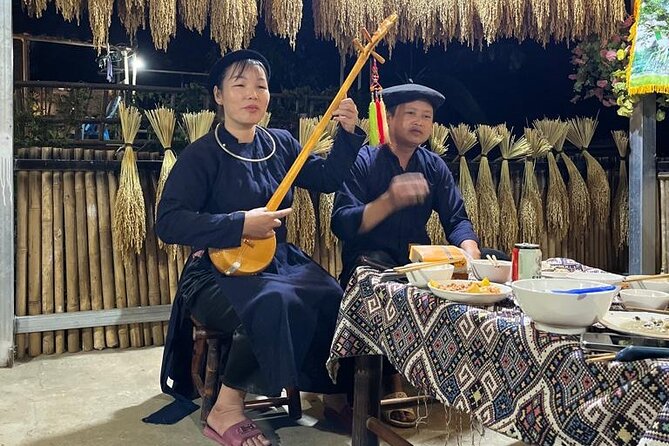
You’ll sleep at Nam Dam with a host family. In the evening, you can hike, help with dinner, or relax. Dinner includes local rice or corn wine—often called happy water—so don’t be surprised if your night turns social.
Then you shift to Mun homestay, hosted by a Dzao family with Pay as a named host. This is where the loop starts to feel human: shared meals, shared stories, and an evening that’s less “tour bus experience” and more “you were invited.”
Day 2: Lung Khuy Cave, Lung Tam hemp cloth, and the Dong Van Geopark power day
Day 2 moves from homestay calm to mountain action. After breakfast, you pack up the bikes and head for your first big nature hit: Lung Khuy Cave. The climb to the cave gives you a viewpoint reward, then you get some time for exploring underground. It’s the kind of stop that changes the pace from road-and-sky to sound-and-stone.
Next you reach Lung Tam, a hemp linen making village. The tour watches the process from A-Z. You may even get a chance to roll out cloth by hand. It sounds simple until you try it; balance and strength show up fast.
Then comes Yen Minh, a valley town where you stop for lunch time. It’s free time in the most useful sense: recharge, refuel, and reset before the karst heart of the region.
The day’s centerpiece is Dong Van Karst Plateau Geopark. This is where you really see why this region matters geologically. After lunch you continue into a sequence of iconic stops:
- Chợ Đồng Van weekly market timing matters for some departures. For Friday departures, the schedule is arranged so you catch the Sunday market experience in either Dong Van or Meo Vac. If you care about living culture, this timing is a big plus.
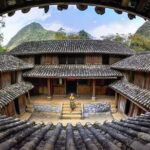
- Dinh Vua Mèo (Mansion of the opium king): an architectural stop that adds an old-power layer to the scenery.
- Lung Cu Flag Tower: the northernmost point of Vietnam. On clear days, you can see across toward China, and the border feeling turns from abstract to real.
You end the day in Dong Van town, checking into a hotel for the night. That means fewer sleep surprises than a homestay setup, and it’s a welcome reset after a long ride.
Day 3: Ma Pi Leng Pass, Tu San Abyss Alley, and the Bao Lac feel-good finish
If you love big road days, this is the one. Day 3 is built around Ma Pi Leng Pass, often described as epic by motorbike people for a reason. You’ll stop often for photos, because the views are the kind you want to pause for, not just pass through.
You’ll also do a hike on top of the pass for about four hours. That’s important: it’s not only a scenic drive. You get to earn your photos with walking and time to look around without the bike humming under you.
Then you head to Tu San Abyss Alley, also called the mystic Tu San Abyss Alley between Meo Vac and Dong Van district. The tour frames it as an alley of huge cliffs and a long stretch, created over millions of years. Even if you don’t nerd out on geology, it’s one of those places where your brain keeps trying to scale the depth and fails.
After that, you pass through Meo Vac for lunch, then continue toward Bao Lac. One of the reasons this works as a stop is the 90 km ride after lunch that many riders talk about as memorable. The day closes with a homestay night in Bao Lac—simple, rural, and closer to how locals live than a standardized hotel route.
Day 4: Bao Lac waterfall walk, Khau Coc Cha Dragon’s Stairway, and Pac Bo Cave
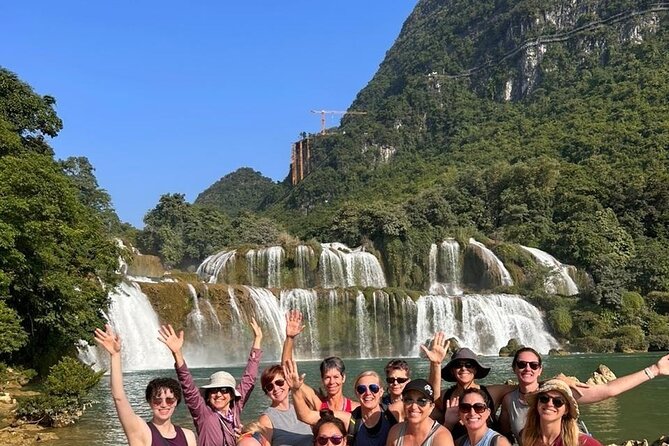
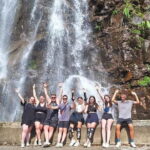
Day 4 starts with a morning walk near Bao Lac National Park. The tour notes this park protects evergreen tropical moist forest ecosystems, plus limestone karst areas. You’ll walk to a waterfall and relax before you start riding again. This is your “move but don’t rush” morning, and it helps break up the intensity of the earlier days.
Then you tackle Khau Coc Cha Mountain Pass, known for the 14 consecutive switchbacks—nicknamed Dragon’s Stairway. Switchbacks like this can feel like a staircase designed by a dramatic mountain god. It’s a lunch stop too, which matters because you’ll arrive more comfortable than if the day is only riding.
Your afternoon and history stop is Pac Bo Cave. This is the place linked to Ho Chi Minh re-entering Vietnam in 1941 after being absent for 30 years, starting the struggle for independence. The tour’s location framing makes it feel more like “place where history happened” rather than “museum stop,” especially since it’s in a scenic setting.
You sleep at accommodation at Pac Bo for the night. After four days of riding and walking, you’ll probably appreciate the slower rhythm of a day that ends with a meaningful stop rather than another endless road.
Day 5: Heaven’s Gate Angel Eye, Tra Linh border town, and Ban Gioc/Detian Falls at full power
Day 5 brings you toward Cao Bang and the Ban Gioc region. The first named area is Heaven’s Gate, also called Angel Eye mountain. It’s described as still quite unknown compared to the headline sites. Even the surrounding valley is part of the appeal: Thang Hen Lake, villages, mountains, and rice fields in Tuyet Tinh Coc.
Then you pass through Tra Linh, the border town between Vietnam and China. The tour doesn’t build it into a long stop, but passing through is useful because it gives the area a real geographic context before you reach the water feature.
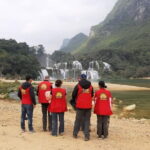
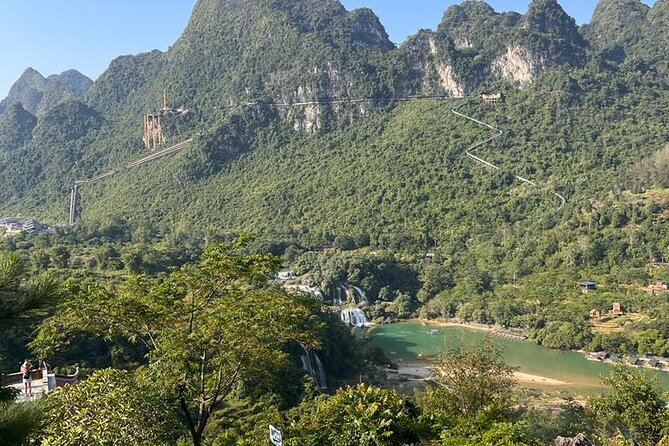
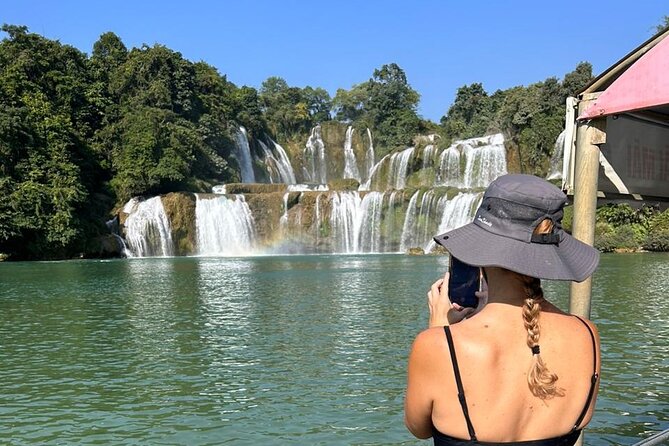
Then it’s the moment you came for: Ban Gioc Waterfall and Detian Falls in the same broader system. The tour describes the falls as about 30 meters high and 300 meters across, and calls Ban Gioc the widest waterfall in Vietnam. It sits on the Quay Son River, described as jade-blue water passing rice fields and bamboo groves, surrounded by limestone pinnacles.
Here’s the practical value: even though viral drone videos made it famous, it’s still relatively off-the-beaten-path. Outside weekends and holidays, you’re more likely to see it with a calm pace instead of constant crowd movement.
At roughly an hour on-site, you’ll have time to watch water flow, get your photos, and step back to take in the full width. The tour’s guiding style matters here. A calm guide helps you understand what you’re seeing and where to look.
Day 6: Pagoda at Phật Tích Trúc Lâm Bản Giốc, Nguom Ngao Cave, and forging your own knife at Phuc Sen
You end the loop with cultural and craft stops rather than more driving-only days.
First is Chùa Phật Tích Trúc Lâm Bản Giốc, noted as the first pagoda to be started at Vietnam’s northern border position in the Dam Thuy, Trung Khanh, Cao Bang area. It’s a quiet counterpoint to all the roads and cliffs you’ve already seen.
Next, Nguom Ngao Cave, also known as Tiger Cave. The tour explains it’s about 5 kilometers from Ban Gioc, discovered in 1921, opened to tourists in 1996, and recognized as a national-level scenic landscape in 1998. The meaning matters too: Nguom Ngao is described in the Tay language as tiger-related, tied to stories of tigers and local protection of the area.
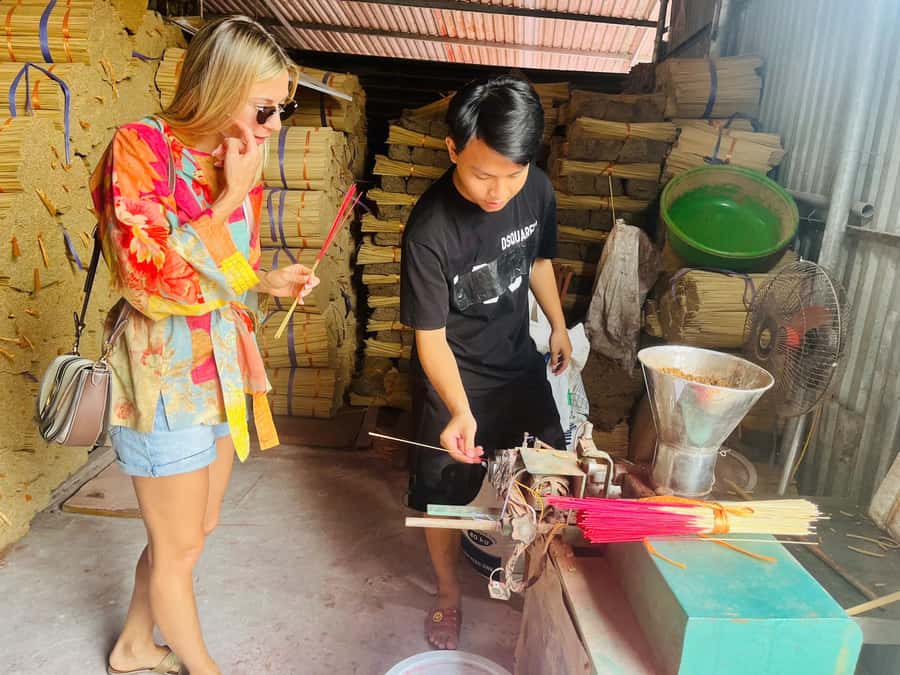
Then you head to Phuc Sen Forging Village, famous for traditional forging tools associated with Nung people. The tour even includes time to visit a blacksmith workshop where you can make your own knife. That’s the kind of “I have a thing that proves I was here” souvenir that feels more personal than a mass-market shop bag.
You ride back toward Cao Bang city, arriving around 2:00 pm. If you’re catching the transfer back to Hanoi, the van drop is around 9:00 pm in the Hanoi center.
Price and value: what $470 includes, and what costs extra
At $470 per person, you’re paying for a lot of structure: a guided self-ride setup, fuel, safety gear, and multiple days of meals and lodging. You also get English-, Vietnamese-, Dzao-, and Hmong-speaking guides, which matters because you’re not only learning roads—you’re learning people and explanations.
Included items that affect real value:
- Semi-automatic motorbike + safety equipment
- Gasoline/petrol
- 5 nights accommodation
- Minor motorbike repairs (like a flat tire)
- Gear for securing luggage
- Water and happy water
- All fees and taxes
- Meals: breakfast (5), lunch (6), dinner (5)
Not included:
- Personal travel insurance
- Tips for guides
- Beer
- Snacks and juices
If you compare it to doing this route independently, the savings usually come from three places: the guides who know how to time stops, the included bike and repairs support, and the meal/lodging coordination in remote areas. If you’re the kind of traveler who gets decision-fatigue, this “everything arranged” support is a real bargain.
Accommodation and food: simple and generally clean, with one caution night
Lodging on this route is a mix: host-family nights and guest accommodations, plus a hotel in Dong Van. The vibe is basic rather than fancy, and that’s normal for this style of trip.
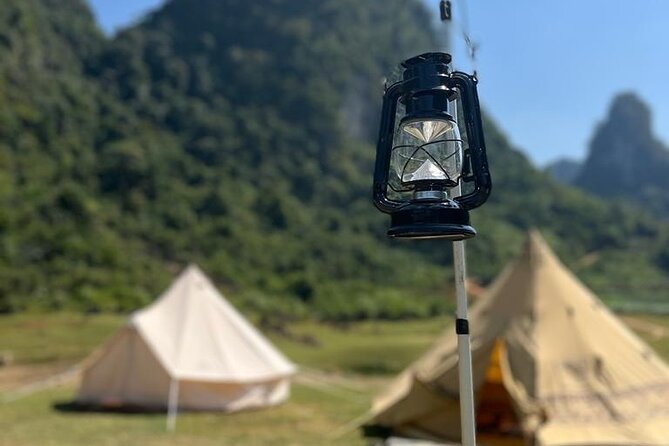
One key caution comes from the reality of outdoor or tent-style nights. In at least one late stop, there’s a note about a tent with water inside and a zipper that wouldn’t close. That doesn’t mean every night is like that, but it does mean you should pack for worst-case weather: a dry bag for key items, a compact rain layer, and something to keep your sleeping setup as protected as possible.
On food, you’re not stuck with only one option. Dinner includes local rice or corn wine (happy water), and meals are part of the package. That said, if you’re picky about sanitation standards, you’ll still want to bring your own small habits: hand wipes and a water/food routine you trust.
Who this tour fits best, and who should choose another option
This tour fits best if you:
- want to ride a motorbike through Ha Giang and Cao Bang without micromanaging roads
- enjoy caves, passes, and cultural stops more than just one scenic viewpoint
- like homestays and village interaction
- feel comfortable with moderate physical effort (there are climbs and a four-hour hike)
You might want a different plan if you:
- don’t have a valid license and don’t want the car alternative
- hate basic lodging unpredictability
- expect nightlife and big-city amenities (this is rural and road-focused)
Should you book the Ha Giang Loop to Ban Gioc?
I’d book this if your priority is the combo: confidence-building bike days + iconic passes + a Ban Gioc finale that still feels off-the-beaten-path. The safety gear, small group size, and guide explanations make it easier to enjoy the ride instead of constantly managing risk.
But book with your eyes open. Expect simple accommodations, plan for weather, and pack like you might get caught with wet gear at least once. If you want maximum comfort, consider the Friday shared car option so you can still see everything without the riding burden.
If you’re ready for a real road journey through northern Vietnam, this route has the right mix of effort and reward.