REVIEW · HO CHI MINH CITY
1-Day Cai Rang Floating Market-Biking & Cu Chi Tunnel Trip
Book on Viator →Operated by Hana Tourist Vietnam · Bookable on Viator
Cai Rang before sunrise is a travel cheat code. I love how the day is built around the Mekong at its most lively, with long-pole boats, floating houses, and quick chances to hop between viewpoints. I also like that the plan feeds you well—breakfast and lunch are included—so you can focus on the experience instead of hunt-and-pay mode. One thing to consider: this is a long, early day, and Cu Chi tunnels involve crouching and crawling that may not suit claustrophobia.
You’ll get picked up at 4:30 AM and spend about 13–14 hours total. The payoff is a rare mix: floating-market food culture, a relaxed bike moment through village roads and waterways, and a historically heavy visit to the Cu Chi tunnel system.
In This Review
- Key highlights you’ll actually feel during the day
- 4:30 AM start and a small-group ride out of Ho Chi Minh City
- Cai Rang Floating Market: long poles, stilt houses, and why it’s special
- What you can do at Cai Rang without turning it into a food frenzy
- Breakfast on the water: drinks and dishes you’ll remember
- The bike ride through the village: slower pace, real scenery
- Ben Dinh / Cu Chi tunnels: crawl, crouch, and learn what people endured
- Your guide matters: clear explanations and the right tone for history
- Price and value: what $205 covers (and what you’ll add)
- Who should book this tour, and who should think twice
- Should you book this 1-day Cai Rang and Cu Chi combo?
- FAQ
- What time does the tour start?
- How long is the experience?
- How much does the tour cost?
- What’s included in the price?
- Do I need to pay for the floating market or tunnel entrances?
- Is the tour group small?
- Does the tour include a bike ride?
- Is lunch provided?
- Is the shooting range included at Cu Chi?
Key highlights you’ll actually feel during the day
- 4:30 AM departure: Cai Rang is best when the river activity is just getting going.
- Long-pole boat trading at Cai Rang: vendors raise goods on poles for easy spotting from far away.
- Food-court boat stops: you can sit down for drinks and dishes like ca phe sua da and bun rieu.
- Leisurely biking through village scenery: rice paddies and small waterways come into view at a slower pace.
- Cu Chi tunnel access: you’ll learn about wartime shelters and experience the tunnel conditions (crouch/crawl).
- Small group size (max 10): easier questions for your English-speaking guide, less waiting around.
4:30 AM start and a small-group ride out of Ho Chi Minh City
This is one of those tours where the timing matters as much as the destinations. You’re picked up at 4:30 AM, then you head out by minivan or car with an English-speaking guide. The drive time is built into the total day, so you’re not left guessing how long you’ll be on the road.
The small-group setup (max 10 travelers) helps. You’re more likely to get a smoother flow at busy spots like Cai Rang, and it’s easier to ask for quick context before you move on. It also tends to make the later history portion feel less rushed, which matters at Cu Chi.
You can also read our reviews of more cycling tours in Ho Chi Minh City

Cai Rang Floating Market: long poles, stilt houses, and why it’s special
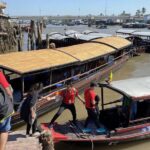
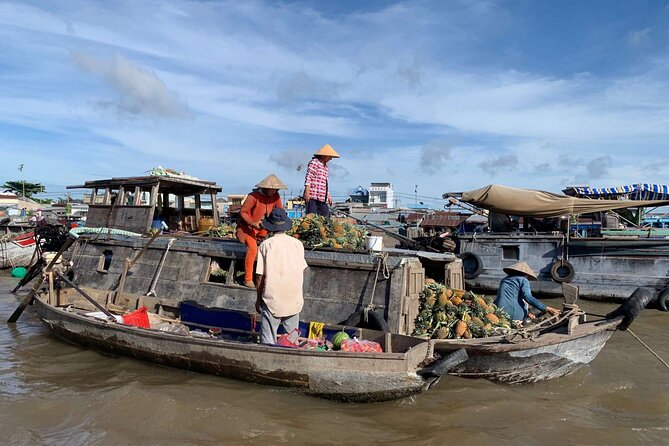
Cai Rang is one of the big Mekong floating markets, and it has cultural weight too—it was recognized as a national intangible cultural heritage in 2016. When you arrive early, you’re not dealing with the later-day crowds that can blur the details. Instead, you get the core visual: boats of different sizes and colors lining up along the shoreline, with vendors showing goods from the tops of long poles.
You’ll also pass houses built on stilts over the water. It’s one of those scenes that makes you instantly understand how daily life and the river are tied together here. If you’re the type who likes learning from what you see, Cai Rang delivers fast: you can visually track how people sell, buy, and share space on the water.
Practical tip: have your camera ready, but also keep one hand free. You’ll likely spend time shifting viewpoints along the shore and floating docking areas.
What you can do at Cai Rang without turning it into a food frenzy
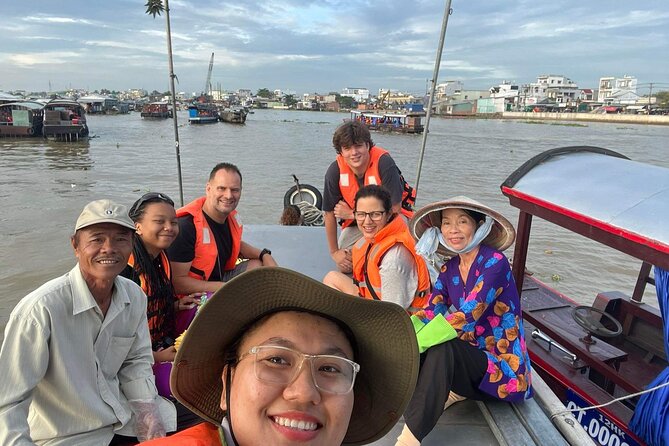
Your time at Cai Rang isn’t just a quick drive-by. You’ll have time for a few minutes of exploring, then opportunities to interact with the boats and floating food areas.
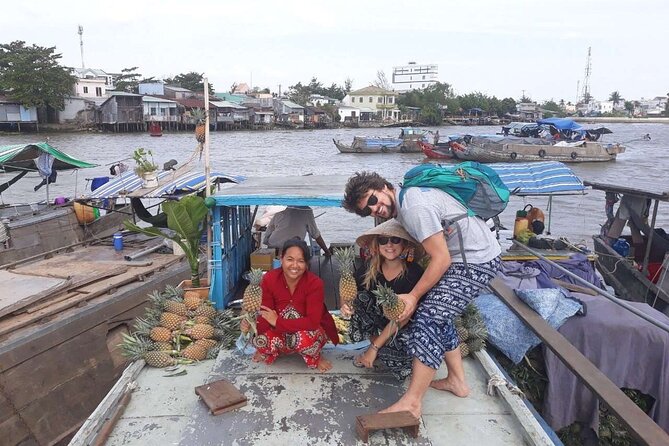
A neat feature is that you can sometimes stop by the side of a food-court boat and even climb on or ask the driver to pause at floating huts along the shore. That little flexibility changes the feel of the market. You’re not only watching from a distance—you’re close enough to see the rhythms of boarding, ordering, and moving along.
If you want souvenirs, this is also the kind of place where you’ll notice food-first buying habits. But the real value is the way the market shows “how it works,” not just what’s for sale.
Breakfast on the water: drinks and dishes you’ll remember
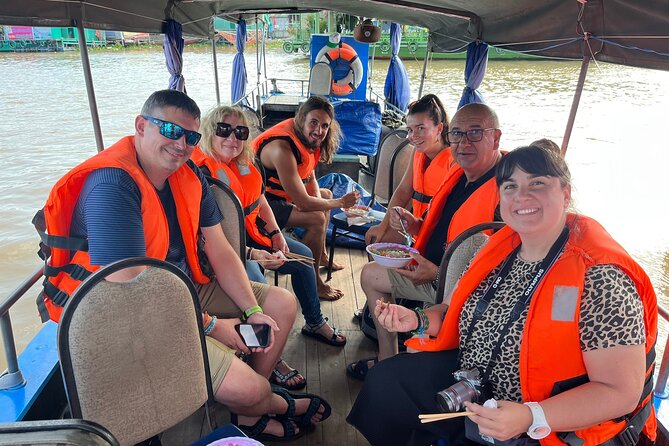
One of the best things about this tour is that breakfast is not an afterthought. You’ll have a meal on a boat setting, which keeps the day from feeling like a nonstop transit schedule.
On the menu, you might see classics such as ca phe sua da (iced coffee with condensed milk) and bun rieu (a rice vermicelli soup with crab-meat mixture made using freshwater mini crabs, plus pork). This is the kind of food that tastes best when you’re not rushing. The boat environment adds something simple but real: you’re eating while the river life continues around you.
There’s also mention of a chance to experience making Hu Tieu (and/or a rice-noodle demonstration). Even if it’s short, it’s a useful skill peek into how everyday dishes come together in the Mekong Delta.
What I’d plan for: go easy at first. Cai Rang food can be tempting, and you still have a long day coming. The included big lunch later helps you avoid energy crashes.
The bike ride through the village: slower pace, real scenery
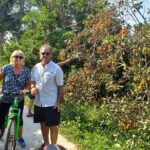
After the floating market, you’ll get a leisurely bike ride through the village. The key word here is leisurely. This isn’t framed as a workout day—it’s a chance to see the region at a human speed.
While you’re pedaling, you’ll likely get views of rice paddies, waterways, and smaller local scenes that don’t show up as clearly from a boat or minivan window. This portion balances the heavy history stop later. It also gives you a break from constantly looking up at boats.
Practical move: wear something comfortable for sun and humidity, and bring a small layer if you get wind on the water. Even without exact distance details, expect you’ll sweat a bit.
You can also read our reviews of more shopping tours in Ho Chi Minh City




Ben Dinh / Cu Chi tunnels: crawl, crouch, and learn what people endured
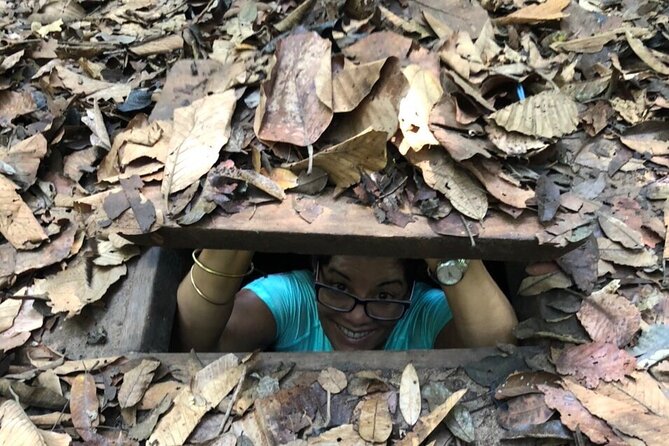
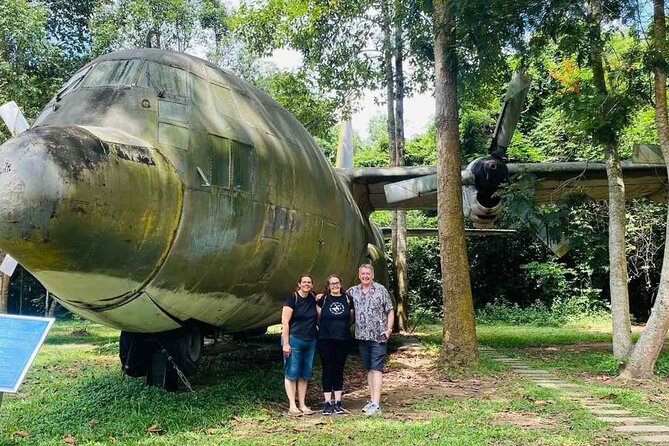
Then comes the part that turns the day serious: the Ben Dinh tunnels and the Cu Chi Legend Tunnel area. The visit focuses on the wartime remnants, including secret bunkers used as military shelters. You’ll also watch a documentary to understand how Vietnamese fighters resisted and fought for independence.
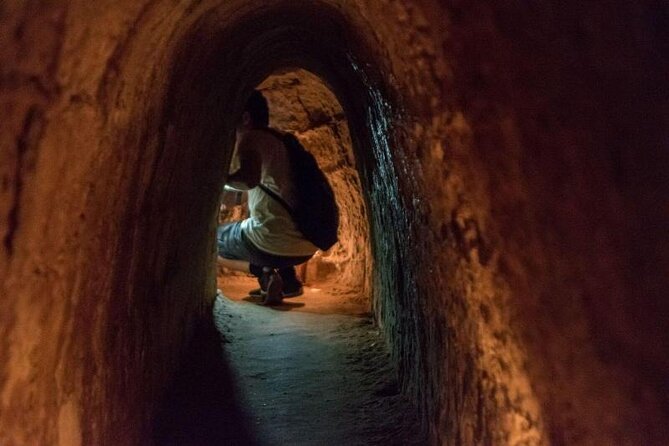
This is not a “look, take a photo, leave” stop. You’ll have the option to crawl and crouch through the tunnels, which is where the history becomes physical. It’s a sobering experience because it shows how cramped, low-ceiling, and exhausting underground life could be.
A practical note: these tunnels can be tight and warm. If you’re prone to claustrophobia, think carefully before going in. Even if you don’t crawl, the above-ground exhibits and guide explanations still offer context.
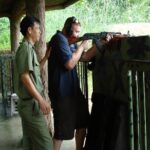
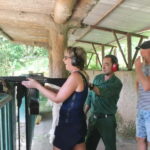
There’s also a shooting range you can visit at your own expense, with bullet costs not included. If you’re not into firing ranges, skip it and spend more time absorbing the documentary and bunker layout.
Your guide matters: clear explanations and the right tone for history
This tour lives or dies with the guide, and you’re likely to get a strong one. The operator’s English-speaking guides—names that come up include Miss Linda, Ken, Tommy, Tri, Rose, and Jason—are often praised for making the story understandable.
From your point of view, that means you’re not stuck guessing. At Cu Chi, details matter: where shelters were, why routes existed, and how people survived. A good guide keeps it clear, and in several cases, adds humor and personality in a way that doesn’t erase the seriousness.
If you want the best experience, ask one simple question early in the Cu Chi portion: what should I notice first in the tunnels? It helps you watch with purpose instead of just walking through.
Price and value: what $205 covers (and what you’ll add)
At $205 per person, the big question is: do you get enough included to justify the full-day commitment? For what’s listed as included, the value looks solid for a one-day combo.
Included:
- Transportation (minivan/car) and pickup
- Breakfast, drinking water, and a big lunch
- All entrance fees
- Boat trips
- English-speaking tour guide
Not included:
- Tips/gratuities for guide and staff
So you’re not paying separately for the boat time, entrance costs, or meals—those are the items that can quietly inflate a DIY day. The tour also keeps the logistics tight with a single guide and transport plan, which is a major convenience when you’re leaving the city very early.
What you’ll likely add:
- Guide tip (optional but expected in many service models)
- Anything extra at the shooting range, if you choose it
Bottom line on value: if you want Cai Rang + Cu Chi in one long day without juggling tickets and transport, this package is priced like a convenience product, and it includes the high-ticket pieces.
Who should book this tour, and who should think twice
This works best if you want a high-contrast day. You’ll start with river food culture and floating market visuals, then switch to a heavy, hands-on historical site. If you like seeing how regions work—foodways, waterways, and wartime survival—this combo makes a lot of sense.
Book it if:
- You’re okay with early starts and a long day (13–14 hours)
- You want both a food-focused Mekong experience and a major history stop
- You’d rather go with a guide than figure out boat transfers and timing alone
Think twice if:
- You don’t handle tight spaces well, since crawling and crouching in tunnels is part of the experience
- You prefer lighter, purely scenic activities and would rather avoid emotionally intense history
Should you book this 1-day Cai Rang and Cu Chi combo?
If you want one day that gives you real Mekong Delta culture plus a world-famous Vietnam history site, I think this is a strong choice. The included meals and boat time reduce friction, and the small group size (max 10) makes the guide’s explanations easier to absorb—especially at Cu Chi.
Just go in with the right expectations: 4:30 AM is early, the day runs long, and Cu Chi can be physically and emotionally intense. If that sounds like your kind of travel, this is a very practical way to pack a lot of meaning into one visit to Ho Chi Minh City.
FAQ
What time does the tour start?
Pickup starts at 4:30 AM.
How long is the experience?
It runs about 13 to 14 hours.
How much does the tour cost?
The price is $205.00 per person.
What’s included in the price?
Transportation by minivan/car, breakfast, drinking water, big lunch, entrance fees, boat trips, and an English-speaking tour guide are included.
Do I need to pay for the floating market or tunnel entrances?
Entrance fees are included.
Is the tour group small?
Yes. The maximum group size is 10 travelers.
Does the tour include a bike ride?
Yes, there’s a leisurely bike ride through the village.
Is lunch provided?
Yes, you get a big lunch included.
Is the shooting range included at Cu Chi?
It’s optional and not included in the base price, and bullet costs are excluded.