REVIEW · HO CHI MINH CITY
Vietnamese Cooking Class and Cu Chi Tunnels Tour from Ho Chi Minh City
Book on Viator →Operated by Western Asian Travel Service · Bookable on Viator
Starting the morning underground makes the rest of the day stick. This Vietnamese cooking class and Cu Chi Tunnels combo mixes hands-on cooking with a real look at the tunnels and wartime life around Ho Chi Minh City.
I especially love the way the meal is built step by step: you pick ingredients at a farm, learn why they work together, then eat what you make. I also like that the day doesn’t feel like a lecture; it’s active, from the cooking station to the tunnel experience with traps and bomb areas.
The one possible drawback is timing and pacing. With a long day and several stops, you’ll want to be comfortable moving along and staying with the group, especially early in the morning.
In This Review
- Key things to know before you go
- The big idea: why this tour works
- Morning start in Ho Chi Minh City: pickup, pace, and what to expect
- Stop 1: Cu Chi Tunnels and the war lessons that stick
- Stop 2: Vietnamese cooking class—your station, your choices, your lunch
- Chef instruction and the best part: you eat what you made
- Rubber tree plantation and the farm stop: agriculture you can see
- What “balance” looks like in a real cooking class
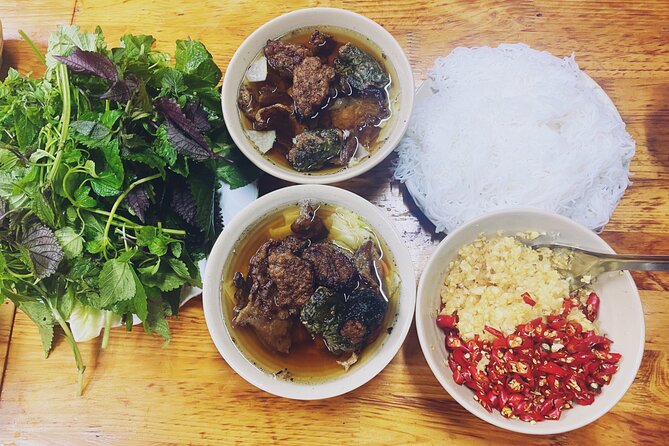
- Lunch: four dishes, one big payoff
- Logistics that affect your comfort
- Price and value: is $81 a fair deal?
- Who should book this tour (and who should think twice)
- Quick tips to get more from the day
- Should you book this Vietnamese cooking + Cu Chi Tunnels day trip?
- FAQ
- What’s the starting time for the tour?
- How long is the experience?
- How much does the tour cost?
- Do you get hotel pickup and drop-off?
- Is lunch included, and how many dishes do you cook?
- Is the cooking class hands-on?
- Is there a vegetarian option?
- What’s the group size limit?
- Is cancellation free?
Key things to know before you go
- Small group (max 8): easier questions and more time at your cooking station
- Hands-on cooking, not just watching: you make four dishes and eat them at the school
- Farm ingredient picking: you learn what to choose and why, plus you get fresh fruit
- Nutrition and “yin and yang” balance: you’ll see how chefs think about harmony on the plate
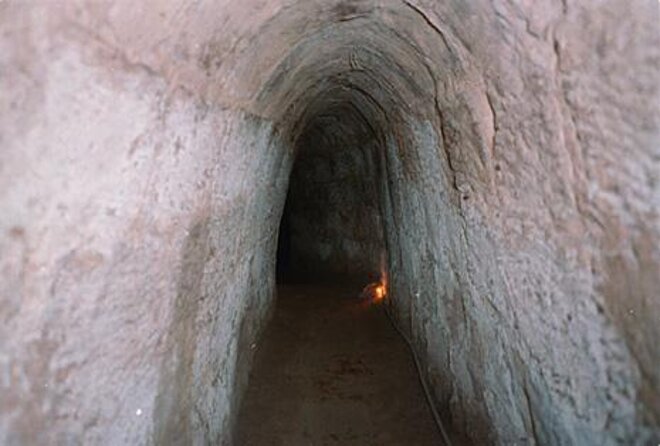
- Cu Chi Tunnels walkthrough: see traps and bomb-making examples and learn how people survived
- Hotel pickup and drop-off: you start 7:30 am without fuss
The big idea: why this tour works
This is one of those day trips that makes sense because it connects the dots. You start with agriculture and food logic, then shift to survival logic. One half of the day is about plants, flavors, and balance. The other half is about tunnels, ingenuity, and what people had to do to last.
For me, the pairing is the charm. A lot of Ho Chi Minh City tours grab you with one highlight and leave the rest as transit. Here, the day has two strong anchors: a Vietnamese cooking lesson with a chef, and the Cu Chi Tunnels experience with war-era explanations.
And the value is easy to understand. At $81 per person (about 9.5 hours), you get hotel pickup, lunch, a full set of activities, and a small group setup. You’re not paying extra to enter the big sites during the day because the day’s core items are bundled.
You can also read our reviews of more city tours in Ho Chi Minh City


Morning start in Ho Chi Minh City: pickup, pace, and what to expect
The tour starts at 7:30 am. Expect a fairly early morning pickup from your hotel and a drive in an air-conditioned vehicle. You’ll be moving quickly between parts of the day, so come ready for a full schedule rather than a slow sightseeing crawl.
A small group cap of 8 travelers matters more than you’d think. In cooking classes, it often means you get clearer guidance at your station instead of hovering behind others. In history stops, it helps the guide keep everyone together without turning the tour into a stop-and-go scramble.
What helps most: wear comfortable shoes you can handle for the tunnel portion. Also, bring a water bottle if your daypack allows it. The tour includes lunch, but the day is long.
Stop 1: Cu Chi Tunnels and the war lessons that stick
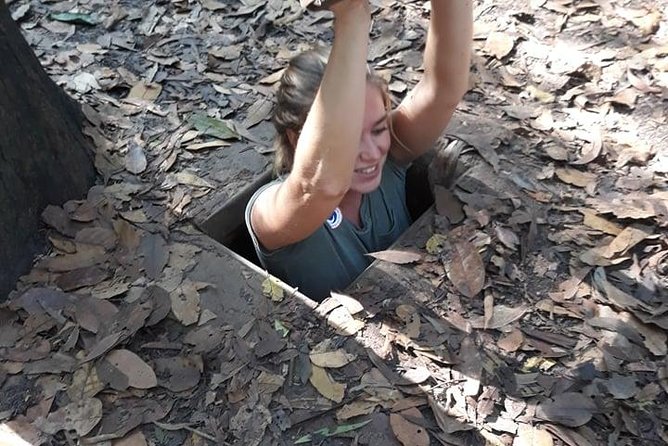
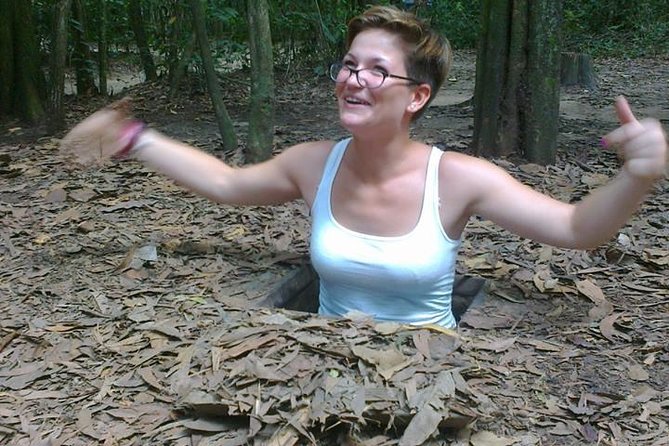
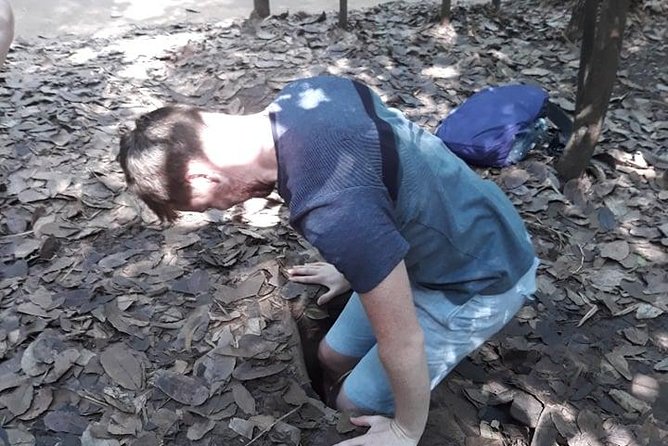
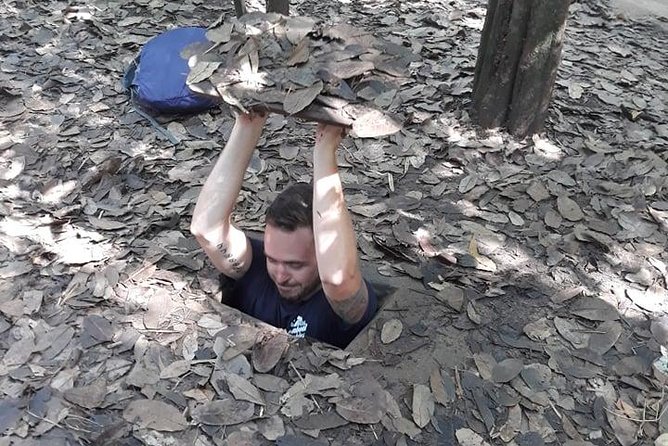
The day’s first major shift is into the Cu Chi Tunnels. This isn’t just about walking in a hole in the ground. You’re there to understand how tunnels were constructed, what underground life was like, and how people survived for long stretches.
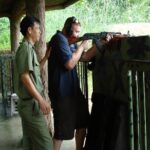
Here’s what makes the tunnel portion memorable: you don’t only hear general history. You see practical examples tied to survival. The plan includes time to understand tunnel construction, and it also covers the kinds of defenses that were used—think traps and bomb-related items attributed to Viet Cong fighters.
You’ll also get context about why the tunnels mattered. The explanations focus on staying hidden, moving safely, and coping with the constraints of being underground. If you’re the type who likes history explained in concrete terms, you’ll appreciate this format more than a museum-only approach.
Possible drawback to consider: the tunnel environment can be physically demanding. Even if you’re prepared, you should expect tight, darker spaces and a slower pace. If you’re sensitive to confined areas, you might want to mentally plan for that before you go.
Stop 2: Vietnamese cooking class—your station, your choices, your lunch
Then the day flips from history to food. You’ll head to the cooking school part of the tour, where the class is described as 100% hands-on. In plain terms: you cook. You’re not standing on the sidelines.
You’ll work through an ingredient-based lesson before the cooking starts in earnest. The teaching style is built around choosing the right ingredients and understanding how plants and flavors connect. One of the class themes you’ll hear is nutrition from different plants, which is useful if you want to recreate dishes later instead of only copying a recipe.
A highlight is learning how Vietnamese dishes balance elements—your class includes the idea of harmony using yin and yang concepts. If that sounds abstract, don’t worry. In a good class, it becomes practical: how you pair flavors, how you think about balance, and how you adjust to get the dish right.
Chef instruction and the best part: you eat what you made
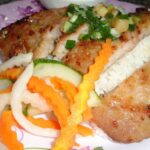
You’ll cook four Vietnamese dishes for lunch. That “four courses” structure keeps things moving and gives you a chance to practice more than one technique. And you’re eating your work, not a plated show-me-and-skip-me meal.
From the experience descriptions and guide notes, the chef instruction can include entertaining, high-energy coaching. You may be led by someone like Chef Ten, who’s specifically mentioned for making the cooking class fun while sharing knowledge. Another cook/guide named Alice is also mentioned for guiding people through ingredient choices and helping them put together the course lineup.
Even the small things count. You’ll likely be taught how to pick ingredients that match each dish. One person described learning how to choose the right ingredients to go with the four courses, then eating the result. That’s the kind of lesson that pays off after the trip.
A nice extra: you receive a certificate and a copy of the recipes. That means you can recreate at home with the right dish logic, not just a vague memory of tasty food.
You can also read our reviews of more cooking classes in Ho Chi Minh City
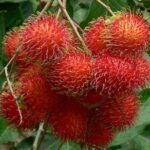

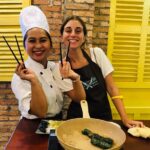
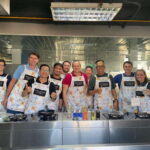
Rubber tree plantation and the farm stop: agriculture you can see
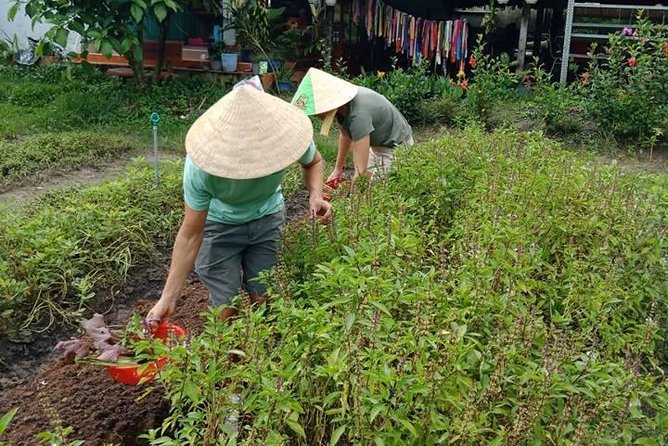
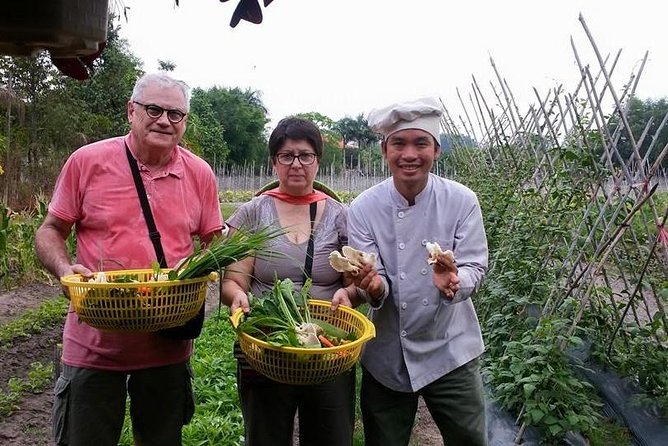
The itinerary includes a visit connected to a rubber tree plantation and also an organic farm experience. On paper, that’s two agricultural settings, and both help explain the “why” behind Vietnamese cooking.
The farm portion is where you’ll do active work. You’ll pick your own ingredients and learn about the nutrition behind different plants. You’ll also enjoy fresh fruit during the farm time. This is important because it turns food shopping into something you can actually think about later. You’ll go from buying ingredients by habit to buying them by purpose.
Some details you should know: the plan specifically mentions seeing the rubber tree plantation. However, with long days and time constraints, you might find it’s brief compared with the farm time. If rubber trees are a must for your curiosity, treat the farm portion as the more reliable anchor.
In terms of value, the farm stop is what makes the cooking class more than just a meal. If you want a day that feels connected to local life, agriculture is the bridge.
What “balance” looks like in a real cooking class
One of the most helpful parts of this experience is how the class is described: learning ways to make yin and yang balance for Vietnamese and Asian dishes. The practical takeaway is that Vietnamese cooking isn’t only about taste. It’s also about balance—texture, heat, freshness, sourness, saltiness, and how ingredients behave together.
Here’s how you can apply this after your trip:
- When you cook later, don’t treat sauces as an afterthought. The class focus suggests you’ll be taught how each ingredient supports the final dish.
- Think in pairs: fresh vs. cooked, bitter vs. sweet, herbs vs. starch. That’s the “balance” mindset in action.
- Use the certificate and recipe copy as a template, then adjust with what you can find locally.
The class being “hands-on” matters here. If someone only talks at you, balance stays theoretical. If you’re chopping, mixing, and tasting, balance becomes muscle memory.
Lunch: four dishes, one big payoff
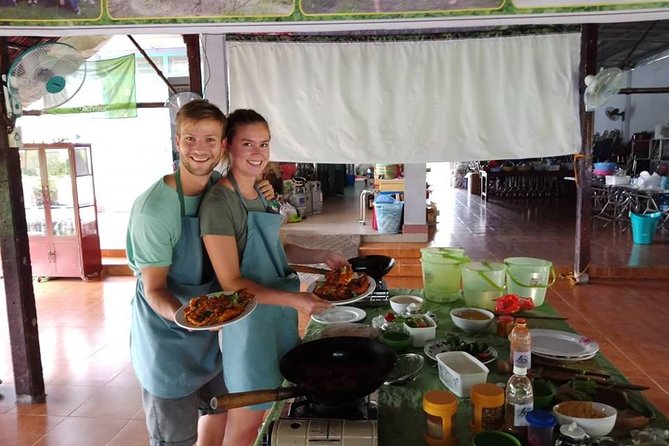
The lunch is included, and it’s the point of the cooking class. Since the class is structured around four dishes, you’ll likely feel the progression: appetizer-to-main style flow, or multiple courses you build in sequence. The best part is you eat each dish you make rather than waiting for a final buffet.
One person described having a cooking station to themselves and eating after each dish. Another mentioned getting so full they had no room for more. That’s exactly what you should expect: this isn’t a light snack lunch.
If you’re picky about textures or spice levels, speak up early to your chef/guide so you can adjust. The more you flag preferences at the start, the more likely the final plates match what you want.
Logistics that affect your comfort
A few practical notes can help you enjoy the day more:
- Duration: about 9 hours 30 minutes. That’s a full day; plan your energy for it.
- Group size: max 8 travelers, which usually keeps the class smoother and the history portion easier to follow.
- Pickup and drop-off: included, so you don’t need to figure out transport to the rural areas and back.
- Air-conditioned vehicle: a real comfort saver for the road between city and countryside stops.
- Vegetarian option: available if you ask at booking. This is one of those details that can make or break a cooking tour.
The schedule starts early, and you’ll likely be out most of the day. Bring sunglasses and something for sun protection. Even if the farm portion is shaded, you’ll still feel the morning light.
Price and value: is $81 a fair deal?
At $81 per person, you’re paying for a bundle: pickup, air-conditioned transport, a cooking class, four dishes for lunch, farm activities, and the Cu Chi Tunnels portion with a local guide.
If you try to do this separately, you’d usually pay transport to the tunnels and then pay for a separate cooking class. Combining them often ends up cheaper than arranging one-off experiences, especially when the package includes lunch and the guides.
The value improves further because:
- It’s a small group experience (better interaction).
- It’s hands-on and you eat what you cook (not a passive demo).
- It includes both agriculture learning and war-era education, which is a distinctive combo for Ho Chi Minh City.
If you already plan to visit Cu Chi Tunnels and you only want a basic cooking demo, you might feel it’s less tailored. But if you want one organized day where the story connects, the price lands in the sweet spot.
Who should book this tour (and who should think twice)
This tour is best for you if:
- You want a practical cooking experience with real instruction and recipes to take home.
- You’re curious about Vietnamese agriculture and how plants show up in everyday cooking.
- You want a day in Ho Chi Minh City that includes both food and history, not only one theme.
- You like small groups and clear guidance.
Think twice if:
- You dislike confined spaces or you know tunnels are uncomfortable for you.
- You’re looking for a slow, laid-back day with lots of free time. This is structured and full.
Quick tips to get more from the day
- Wear shoes you can handle for the tunnels.
- Eat breakfast lightly. Lunch is included and it can be substantial.
- If you’re vegetarian, confirm it at booking so the cooking plan can fit you properly.
- Ask questions during the cooking part. The class structure is built for interaction, and you’ll get more out of it that way.
Should you book this Vietnamese cooking + Cu Chi Tunnels day trip?
If you like tours that do more than check boxes, I’d say book it. The best reason is simple: you get hands-on cooking with four dishes plus a Cu Chi Tunnels visit that teaches survival details, not just dates. The farm ingredient picking also gives the cooking class context, so you learn how to think about food instead of only memorizing steps.
I’d hold off only if the tunnel part is a deal-breaker for you or if you want lots of downtime. Otherwise, this is a strong value day in Ho Chi Minh City: chef-led, small group, lunch included, and tied together by real local themes—food and endurance.
FAQ
What’s the starting time for the tour?
The tour starts at 7:30 am.
How long is the experience?
The duration is about 9 hours 30 minutes.
How much does the tour cost?
The price is $81.00 per person.
Do you get hotel pickup and drop-off?
Yes. Hotel pickup and drop-off are included.
Is lunch included, and how many dishes do you cook?
Lunch is included, and the cooking class involves making four Vietnamese dishes.
Is the cooking class hands-on?
Yes. The experience is described as 100% hands-on, with you preparing your own food at the cooking station.
Is there a vegetarian option?
Yes. A vegetarian option is available, but you need to advise at the time of booking.
What’s the group size limit?
The tour has a maximum of 8 travelers.
Is cancellation free?
You can cancel for a full refund up to 24 hours before the experience starts. After that, the amount paid is not refunded. Confirmation is typically received within 48 hours of booking.