REVIEW · HANOI
Sapa: 3-Day, 3-Night Trek and Hotel with Overnight Train
Book on GetYourGuide →Operated by Crossing Vietnam Tour · Bookable on GetYourGuide
Sapa starts on a moving train. This 3-day Sapa trek combines the overnight train from Hanoi with walking in the Muong Hoa Valley and visiting hill-tribe villages like Black H’mong, Zay, and Red Zao, plus a 1-night homestay in Ta Van. I especially like the village variety packed into a short time and the chance to sleep in Ta Van with local Zay families. One thing to plan for: during the hike, local people may try to accompany you for money or sell items at high prices, so you’ll want to ignore that and stick with your guide.
I also like how the route gives you both early mountain time and actual downtime—breakfast, then walking, then a rest back at your hotel before the next day. You get practical pacing like starting at 6 AM on trekking days and returning to Sapa in time to catch the limousine back to Hanoi around the afternoon of Day 3. Just know the walking is not a stroll: it’s described as a 9-km trek and it’s not recommended for older guests or children.
In This Review
- Key highlights that make this Sapa trip work
- Entering Sapa via the overnight train: Hanoi to Lao Cai, then right into the mountains
- Day 0: What the overnight train segment is really like
- Day 1: Sin Chai Village, Black H’mong life, and a slower evening in Sapa Center
- Day 2: The Muong Hoa Valley walk—Y Linh Ho to Lao Chai, then Ta Van homestay
- Day 3: Red Zao and H’mong villages, waterfall, rattan bridge, then back to Hanoi
- What the trek really demands: distance, pacing, and Sapa weather realities
- Handicrafts and village life: what the schedule gives you (and what to do about sellers)
- Price and value: is $212 per person a good deal?
- Who this trek suits best (and who should rethink it)
- Guides, group size, and the small moments that make it feel organized
- Should you book this Sapa 3-day trek with overnight train?
- FAQ
- What villages and ethnic groups does this trek visit?
- How long is the tour and what are the basic daily timings?
- How do you get from Hanoi to Sapa?
- What’s included in the price?
- What meals are included?
- What should I bring for Sapa trekking?
- Is this trek suitable for older guests or kids?
Key highlights that make this Sapa trip work
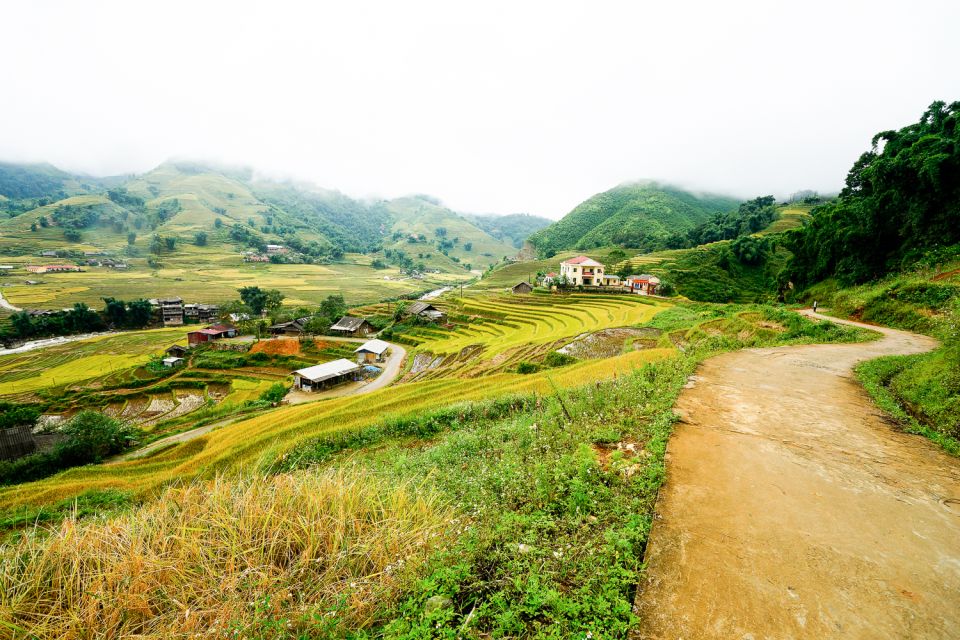
- Muong Hoa Valley villages across Black H’mong, Zay, and Red Zao communities
- Ta Van homestay: a real overnight in the Zay Hill Tribe area
- Handicraft center visit where women gather to trade skills and make items
- Overnight train Hanoi–Lao Cai that saves time and adds a fun “on the move” start
- Stop-friendly sightseeing including a waterfall and a rattan bridge on Day 3
- A clear plan for sellers: you may get followed, but you’re expected to stay with your guide
Entering Sapa via the overnight train: Hanoi to Lao Cai, then right into the mountains

This tour’s biggest trick is time management. Instead of burning a day on a bus, you board an overnight train from Hanoi to Lao Cai at 10 PM, then arrive the next morning and keep moving. For many first-timers, that feels like getting extra Sapa daylight without paying for extra hotel nights.
You’ll start by getting yourself to Hanoi Railway Station by 9 PM, then meeting the tour staff and getting your tickets to board. The train ride is part of the package, including a shared 4-bed air-conditioned cabin on the train. That’s a big plus because you’re not just sitting upright for hours.
The trade-off? One common caution is comfort. Some people report the overnight train can be noisy and bumpy, and using the toilet can feel challenging. If you’re a light sleeper, pack like it’s a long-haul coach: earplugs help, and don’t assume luxury.
You can also read our reviews of more evening experiences in Hanoi



Day 0: What the overnight train segment is really like
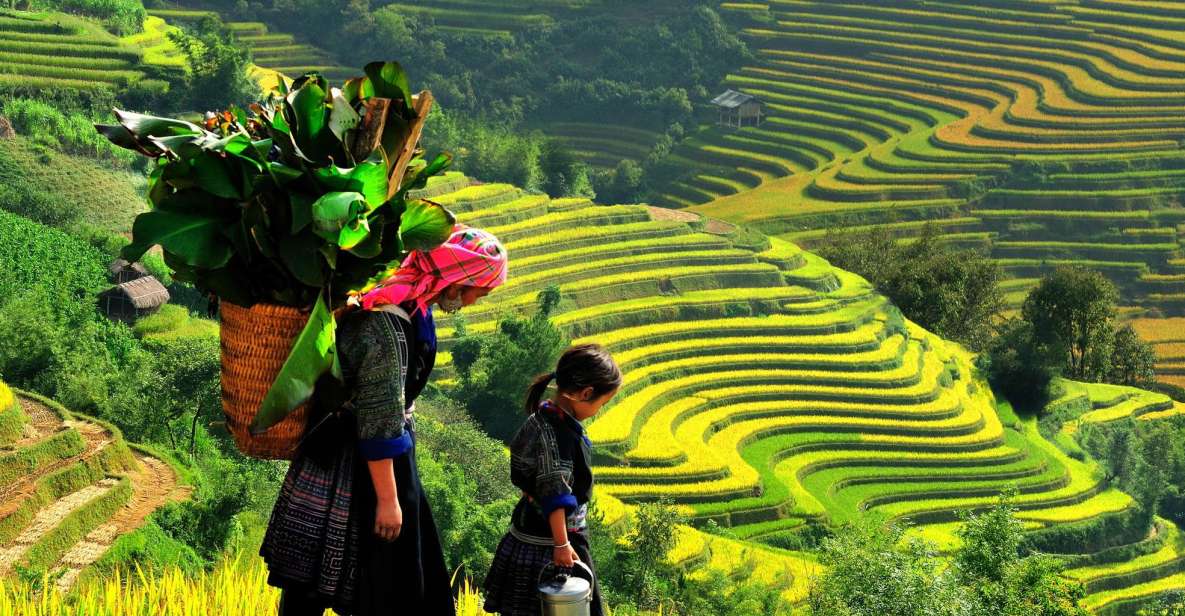
On the train, you’re basically buying sleep and momentum. You’ll ride overnight from Hanoi to Lao Cai, then your tour continues in the morning. The cabin setup is shared (4-bed), and it’s air-conditioned, which can be a lifesaver in warm seasons.
A couple of small practical notes help you set expectations:
- You’ll likely be tight on personal space like any shared cabin.
- You might not get to choose where you sleep on the bunks, since that’s not listed as a selection.
Even with those bumps, the overall idea is smart: you arrive already set up for the Sapa morning. I love that you can hit Sapa activities with less wasted time and fewer transfers.
Day 1: Sin Chai Village, Black H’mong life, and a slower evening in Sapa Center
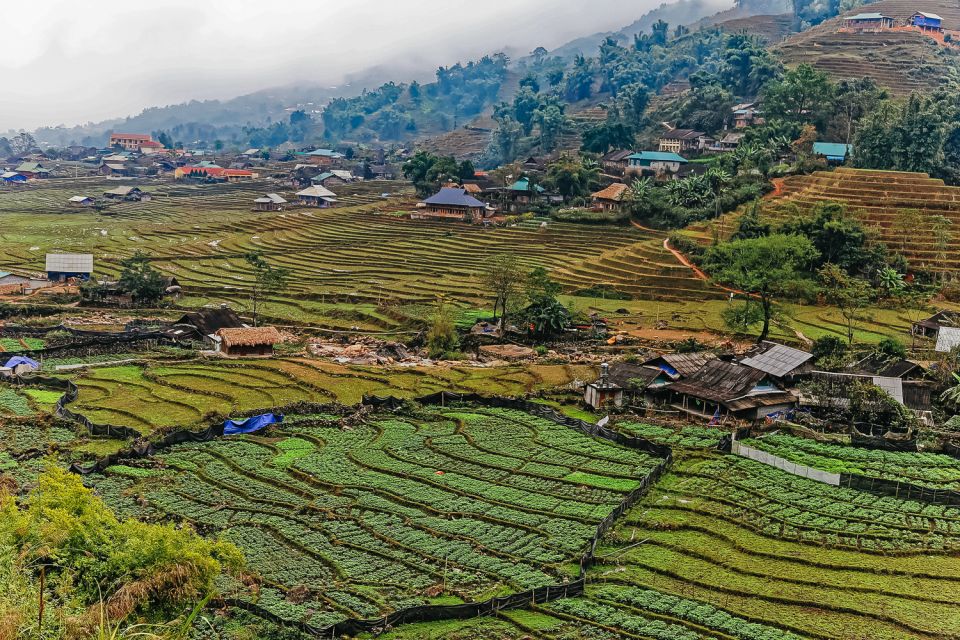
Day 1 begins early. After the train lands, you’ll meet your English-speaking guide at the station and transfer back to your hotel in Sapa around 6 AM. You’ll leave luggage at the hotel and then get breakfast.
One practical point: hotel rooms aren’t guaranteed for early check-in. The guidance says the room is available for check-in at 2 PM, unless you pay extra for early check-in. So plan on using the hotel morning area for breakfast and luggage, then resting later.
Then comes the trek. You’ll walk down toward the southwest of Sapa to Sin Chai Village, where the Black H’mong live. Sin Chai is described as more than 2 km from the center of Sa Pa town, and it’s set up as a rustic, highland village that keeps day-to-day simplicity.
After the hike, you head back for lunch and some free time. This is when you can actually recover—snack, nap, or just walk around Sapa Center before dinner. Dinner time is set for 6 PM, and it’s a nice moment to switch gears from hills to town.
A small detail that sounds simple but matters: you get evenings where you can try local foods like roasted corn and baked eggs beside a charcoal fire. Then you sleep in a 3-star Sapa hotel in the town center. That’s convenient because you’re not constantly packing and repacking every day.
Day 2: The Muong Hoa Valley walk—Y Linh Ho to Lao Chai, then Ta Van homestay

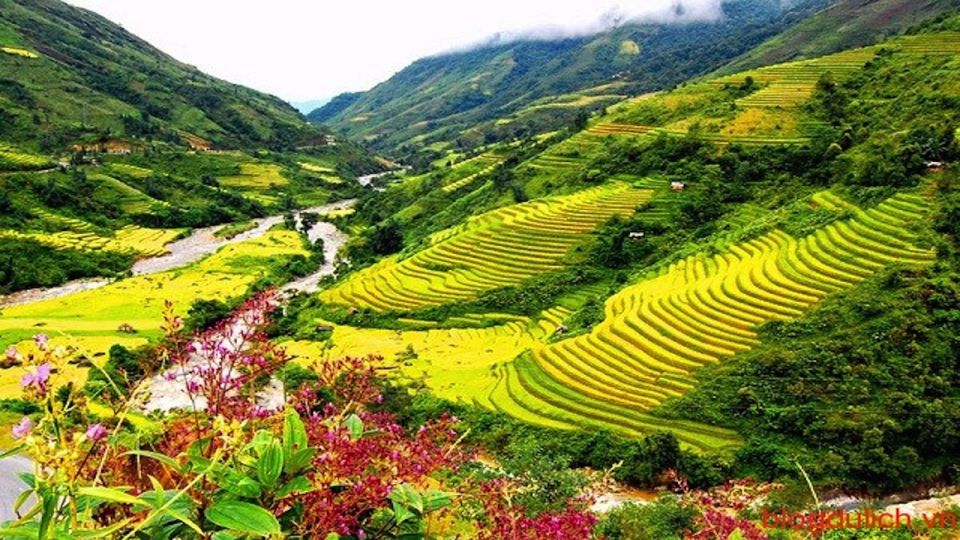
Day 2 is where the scenery turns into a full working trek day. After breakfast at your Sapa hotel, you’ll head trekking along the side of the Muong Hoa Valley. This is the corridor where terraced farming and village life sit close together, so you’re not walking in isolation.
You’ll first visit Y Linh Ho Village of the Black H’mong, then continue down to Lao Chai Village of the H’mong. Lunch happens along the way, and after that you walk through terraced rice fields on your way to Ta Van Village.
Ta Van is where you switch from day visiting to overnight living. You’ll stay in a homestay in Ta Van for the night—specifically with the Zay Hill Tribe. This is one of the best parts of the trip because you’re not just checking off villages from a distance. You’re sharing a home rhythm overnight.
What you should know going in: homestay comfort levels can vary by village. The tour data says you’ll have accommodations included, but it doesn’t list bedding style or bathroom setup in detail. I’d treat this as part of the cultural trade: expect clean and basic, not a resort.
Then you do the normal human things: eat, talk, and rest. Even if you’re tired, I think the homestay night is worth it because it adds a “pause button” to the schedule.
Day 3: Red Zao and H’mong villages, waterfall, rattan bridge, then back to Hanoi
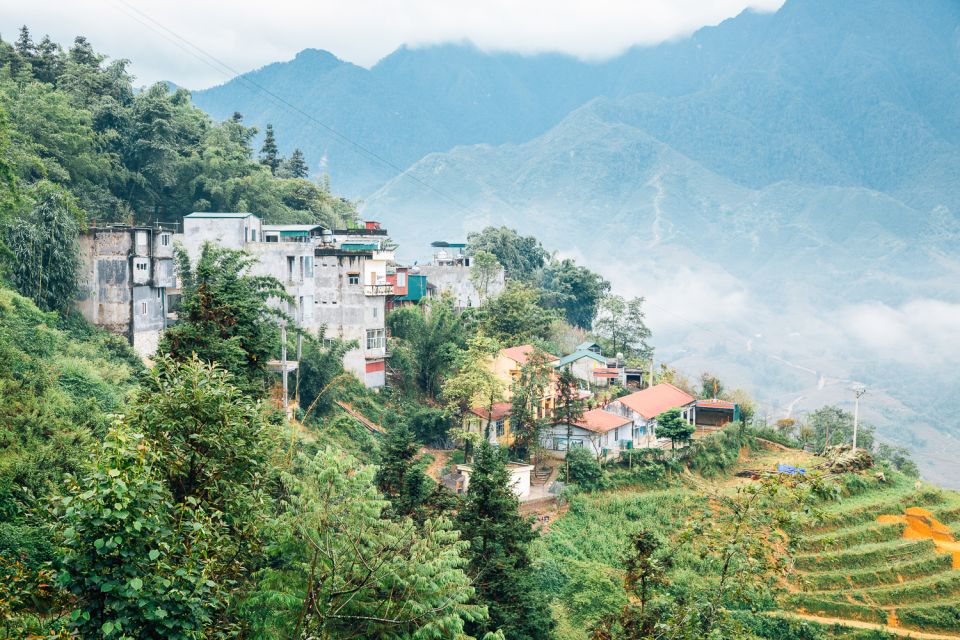
Day 3 starts with breakfast in Ta Van, then you continue trekking. This day focuses on visiting two villages—one connected with the Red Dzao and another with the H’mong—plus a couple of set sightseeing stops.
Two named highlights help you picture the day:
- a beautiful waterfall
- a rattan bridge
You’ll also pass through areas with bamboo forest views as you move between points.
At a certain point, you stop walking and switch back to transport. The plan is to head to the main road by car, then take a limousine back to Hanoi. You pack your things around 2 PM, then drop-off in Hanoi at roughly 8–9 PM.
This is a full-day finish. If you’re the type who hates travel days, you’ll still get a solid amount of trekking and village time before the ride back—so the day won’t feel like a wasted buffer.
You can also read our reviews of more hiking tours in Hanoi


What the trek really demands: distance, pacing, and Sapa weather realities
This tour is listed with a 9-km trek, and it’s not recommended for older guests or children. That’s your cue to treat it as moderate hiking, not a casual walk. Even if you’re fit, wet conditions or fog can make footwork harder, so comfortable shoes matter more than looks.
Sapa also has its own personality. The weather is described as unpredictable, and it’s normally cold from September to March. Fog is also common in December, January, February, and March, so pack for reduced visibility and cold air. Sunglasses help, even in foggy months, because light can bounce off misty slopes.
Bring:
- comfortable trekking shoes
- warm clothing plus a scarf/hat/cap
- sunscreen and sunglasses
- insect repellent
Altitude isn’t a box you check off; it’s a reason to move steadily and dress warm. If you’ve never been at elevation, you’ll want to take breaks and drink water.
And one money tip you’ll actually use: bring cash in Vietnamese Dong, because banking can be unreliable in Sapa. US dollars, euros, and Australian dollars are accepted in town, but don’t assume every payment works smoothly.
Handicrafts and village life: what the schedule gives you (and what to do about sellers)
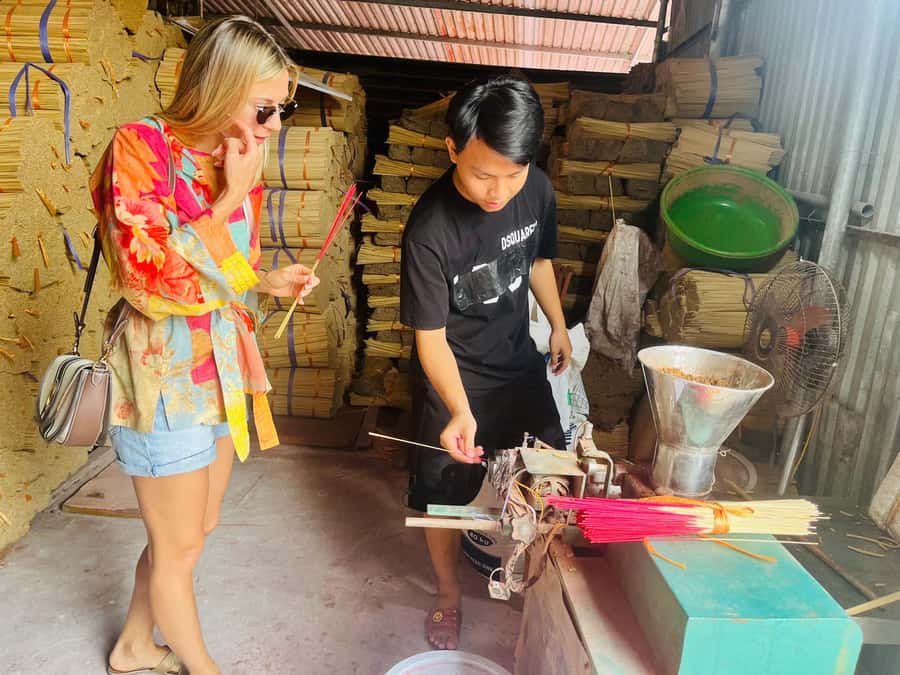
One of the tour’s stated stops is a local handicraft center. Women gather there to exchange skills, which is a more meaningful use of time than just a quick souvenir glance. It’s also the kind of activity that helps you understand how the same patterns you see in clothing connect to real work.
But here’s the part of Sapa that takes mental energy: village tourism often comes with a lot of people trying to sell items or follow you on the trail. The tour explicitly warns that local ethnic people may try to accompany you to ask for money or sell local items at high prices. The advice is clear: ignore that and stick with your guide.
This doesn’t mean everyone is trying to scam you. It just means you should manage the situation the same way you’d manage any market pressure: set boundaries early and keep the day’s plan with your guide. If you buy something, do it thoughtfully. If you don’t, you don’t owe anyone a long negotiation mid-trek.
A useful mindset: focus on conversation and observation when you can, but keep your route. The guide is your safety net in both navigation and social overwhelm.
Price and value: is $212 per person a good deal?
At $212 per person, you’re paying for a package that bundles several expensive-moving parts together. Here’s what’s included, based on the tour details:
- pickup and drop-off from Hanoi Old Quarter
- an English local guide
- one-night shared cabin on the overnight train (4-bed, air-conditioned)
- Lao Cai to Sapa transfer by shared minibus
- one night in a 3-star Sapa hotel (town center)
- one night at a homestay in Ta Van
- all meals listed in the itinerary (breakfast/lunch/dinner on the trekking days, plus what’s scheduled)
- sightseeing fees, taxes, and service charges
So you’re not separately booking transport between Hanoi and Sapa, guide time, and meals. For many budgets, that’s where the value comes from.
What’s not included:
- drinks with meals
- personal expenses
In plain terms, you’ll want to budget extra for water and anything you drink at lunch or dinner. Also consider spending time and money on any village handicrafts you decide to buy.
Is $212 fair? For a 3-day/3-night experience with train + hotel + homestay + guiding + meals, it’s not outrageous—especially if you want the overnight train component. But if you hate night-train comfort issues or you already prefer to arrange independent transport and meals, you might find cheaper in pieces.
Who this trek suits best (and who should rethink it)

This tour fits you best if:
- you want a culture-first Sapa trip with real village visits
- you enjoy structured days with an English guide
- you’re comfortable hiking on uneven paths and at least moderately cold conditions
It’s a weaker match if:
- you need mobility-friendly options (the tour is not suitable for people with mobility impairments or wheelchair users)
- you’re bringing older travelers or children, since the 9-km trek isn’t recommended
- you’re extremely sensitive to train discomfort (some people report noise and bumpy rides)
If you’re solo, there may be a single supplement for the 2 nights in the 3-star hotel and private bungalow area during booking. So factor that into what you’ll truly pay.
Guides, group size, and the small moments that make it feel organized
A common theme in the feedback is that people feel reassured by the organization and by the guide’s attitude. In this area, names like Chu, Mai, Su Su, and Ai come up in connection with friendly, chatty guiding and good knowledge. That matters because on a trek like this, you don’t just want someone who points things out—you want someone who helps the day flow.
You also get helpful planning details like set meal times (dinner at 6 PM on Day 1) and a consistent handoff between train, minibus, hotel, and return limousine.
Still, there’s one small logistics friction point that can hit hard at the end: the tour data notes that you may not get a transfer back to your Hanoi hotel at the end, and you’ll need to find your way when you arrive around 4 AM in some cases. In your planning, assume you’ll handle that final link to your lodging.
Should you book this Sapa 3-day trek with overnight train?
I’d book if you want a short, high-value Sapa experience that combines Muong Hoa Valley trekking with real village variety and a 1-night Ta Van homestay. The package structure is the draw: you cover the long Hanoi–Lao Cai connection with the overnight train and then spend the next two-plus days walking and meeting people, not just sitting in transit.
Skip or compare if you know you’re a light sleeper on trains, dislike any kind of persistent seller pressure, or need mobility-friendly logistics. This tour isn’t designed for easywalking-only travelers, and the hiking is part of the point.
If you go in prepared—warm clothes, trekking shoes, cash in dong, and a simple rule to stick with your guide—you’re set up for a memorable Sapa version that feels more like daily life than a one-time photo stop.
FAQ
What villages and ethnic groups does this trek visit?
The trek focuses on villages in the Muong Hoa Valley and includes Black H’mong villages such as Sin Chai, Y Linh Ho, and Lao Chai. You also visit Ta Van Village for a homestay with the Zay Hill Tribe, and on Day 3 you visit villages connected with the Red Dzao and the H’mong.
How long is the tour and what are the basic daily timings?
The duration is listed as 3 to 3.5 days. Day 1 starts with meeting the guide and traveling to Sapa around 6 AM. On Day 3, you pack around 2 PM and return to Hanoi by limousine, with drop-off around 8–9 PM.
How do you get from Hanoi to Sapa?
You take an overnight train from Hanoi to Lao Cai. Then you transfer from Lao Cai station to Sapa by shared minibus. On the way back, you catch a limousine from Sapa back to Hanoi.
What’s included in the price?
Included items are pickup and drop-off from Hanoi Old Quarter, an English local guide, overnight train cabin accommodation, a 3-star hotel night in Sapa center, a homestay night in Ta Van, transfers between Lao Cai and Sapa, sightseeing fees, taxes, and service charges, plus all meals mentioned in the itinerary.
What meals are included?
All meals listed in the itinerary are included. The itinerary shows breakfast, lunch, and dinner on trekking days, and dinner is scheduled for 6 PM on Day 1.
What should I bring for Sapa trekking?
Bring comfortable shoes, warm clothing, and items like a scarf and hat or cap. The tour also recommends trekking shoes, sunglasses, sun cream, and insect repellent, plus cash in Vietnamese Dong.
Is this trek suitable for older guests or kids?
No. The trek is listed as a 9-km hike and is not recommended for older guests or children.