REVIEW · HANOI
Private food tour with Real Foodie
Book on Viator →Operated by Hanoi Tour Zone · Bookable on Viator
A quick walk, good stories, and real street bites. This private Hanoi tour mixes classic sights with the kind of food you’d otherwise miss. I like how it starts with a hotel pick-up and a quick check for allergies or vegetarian needs, so the plan actually fits you.
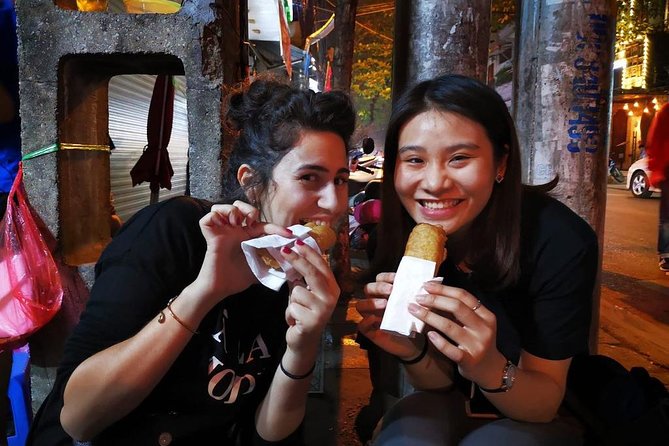
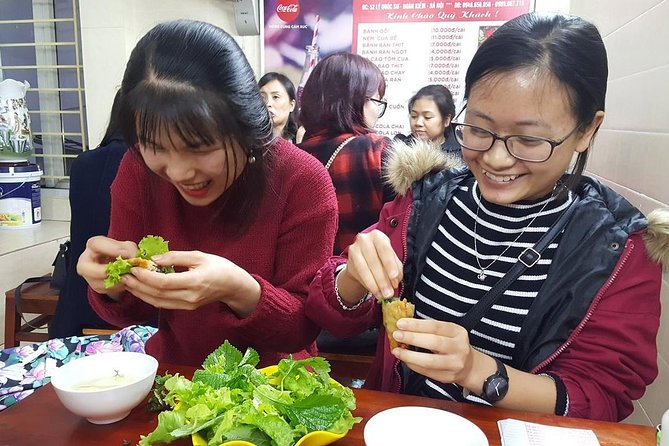
Second, I like the food approach: you’re guided to places locals use, then you pick from 5 to 8 street dishes. One guide named Alex has been specifically praised for being fun and informative and for tailoring the bites to what a group wants, including favorites like bánh xèo and egg coffee.
One thing to consider: the tour price covers the guide and the walking, but the food is extra. The upside is that you pay only what you actually eat, which can keep costs under control.
In This Review
- Key highlights you’ll care about
- Old Quarter pick-up, fast food check, and your first local bite plan
- Old Quarter streets to Hoan Kiem Lake: daily life at the center of Hanoi
- St. Joseph’s Cathedral and the French imprint in the city center
- Train Street (Duờng Tau): what makes this narrow road special
- Dong Xuan Market: French-built origins, 1994 rebuild, and real browsing
- Food budget reality check: pay only what you use, so eat smart
- Timing, comfort, and what to wear for a 3-hour walking format
- Should you book this private Real Foodie Hanoi tour?
- FAQ
- How long is the private food tour with Real Foodie in Hanoi?
- Does the tour include hotel pick-up and drop-off?
- Is the tour private or shared with other groups?
- What does the tour price include, and what costs extra?
- How many street foods will I try?
- What if weather is bad?
Key highlights you’ll care about
- Private group flexibility with only your group participating
- Old Quarter start with a quick food check for allergies and vegetarian preferences
- Hoan Kiem Lake morning energy plus Ngoc Son Temple and The Húc Bridge
- Train Street photos with context on a narrow road that sees passing trains twice daily
- Dong Xuan Market history and browsing from the late-1800s French-built era to the 1994 rebuild
- Budget-friendly food payment model where you pay for what you use (typically 5–8 dishes)
Old Quarter pick-up, fast food check, and your first local bite plan
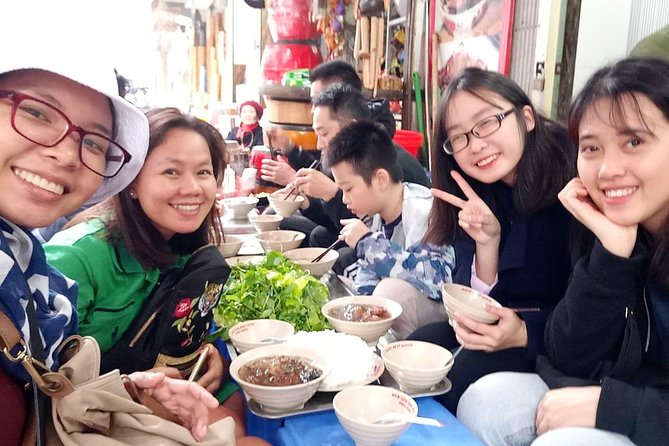
This is the kind of tour that works well on a first evening in Hanoi, because it puts you in motion right away—without the stress of figuring out where to eat. You get a free hotel pick-up in Hanoi Old Quarter, then you get a short, practical start: the guide checks for food allergies, vegetarian preferences, and your itinerary so the tastings don’t turn into a guessing game.
The best part of this start is that it sets you up to eat like a local rather than like a tourist. You’ll be steered toward street-style meals and small plates, not big sit-down dishes. And since this is a private format, your pace can match your group—slow for photos and conversations, or faster if you just want to sample and move on.
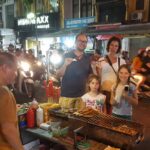
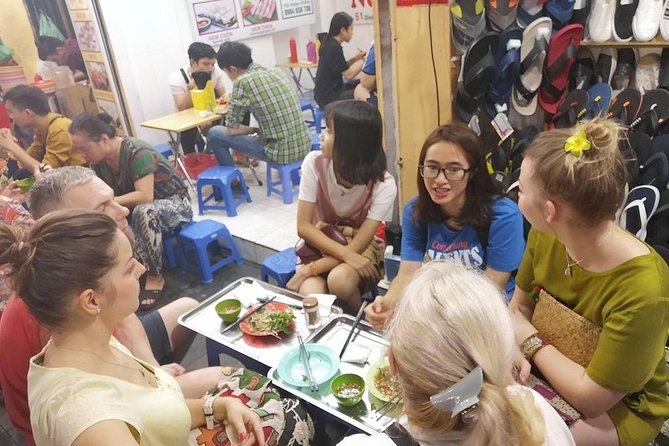
About the food: the tour is built around 5 to 8 different street foods, and the guide brings you to spots locals recognize. Admission at listed stops is marked as free, so most of your “cost” during the sights comes down to what you choose to eat and drink.
If you’re the type who likes to know what you’re ordering before the first spoon hits your bowl, you’ll like the guide’s style. The tour description promises mysterious stories about recipes and Vietnamese traditions tied to what you’re eating. Even if you don’t catch every detail, you’ll feel the difference between random street snacking and guided ordering.
You can also read our reviews of more food & drink experiences in Hanoi

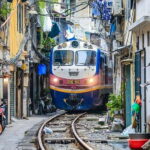
Old Quarter streets to Hoan Kiem Lake: daily life at the center of Hanoi
After that first Old Quarter start, the tour shifts toward Hoan Kiem Lake, which is basically the city’s easy meeting point. You’ll spend a big chunk of time here, and the timing matters. In the early morning, the area draws lots of locals for exercise and strolling, so you’re not just seeing a postcard view—you’re watching how Hanoi moves.
Two sights anchor this stop: Ngoc Son Temple and The Húc Bridge. The temple gives you a focal point, and the bridge is the classic walk-through moment that frames the lake. Even if you’re not a “temple person,” this is still a good stop because it slows the tour down and gives you a reset after the street-food focus.
One useful way to think about Hoan Kiem Lake here is as a cultural switch. Old Quarter is about daily commerce and compact streets. Hoan Kiem is about pace—people walking, exercising, and meeting. That contrast helps you understand the city instead of just collecting photos.
Practical note: because this stop depends on daily life, the vibe changes with weather and timing. The tour description also flags that it requires good weather, so if Hanoi is cloudy or rainy, expect the guide to adapt and keep things moving.
St. Joseph’s Cathedral and the French imprint in the city center
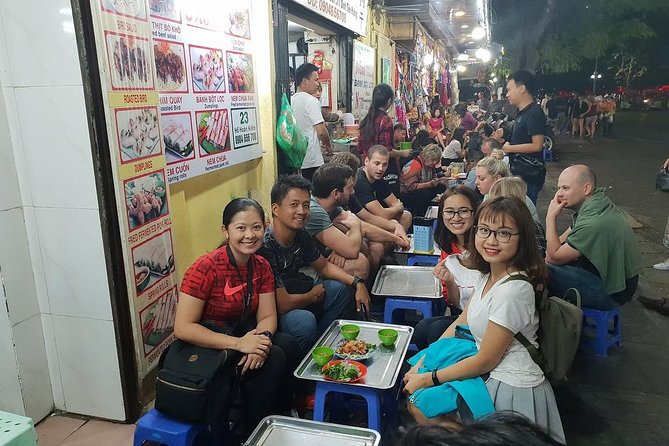
Next up is St. Joseph’s Cathedral, a late-19th-century Gothic Revival church in the Hoàn Kiếm District. If you’ve only seen Hanoi as a sea of scooters and street stalls, this is a striking contrast. The architecture is Neo-Gothic, and it’s still an active religious site with real presence in the neighborhood.
You’ll also run into the Hanoi Opera House area as part of the broader central-city sightseeing. The Opera House was erected by French colonial authorities between 1901 and 1911, and it’s one of the major surviving reminders of that era in Hanoi. Even if you don’t go inside, this stop helps you connect the dots between old colonial planning and the modern city that grew around it.
Why this matters on a food tour: it prevents the experience from being one-note. After you’ve spent time learning about Vietnamese food traditions and street staples, it’s satisfying to step into the larger city story for a bit. You’re still in the same walking circuit, but now you’re seeing how Hanoi’s layers overlap.
One possible drawback: religious and architecture stops can feel slower than pure “eat and go.” If your group is very food-urgent, ask the guide to keep the photos moving and focus on the points they’re visiting rather than lingering too long in one spot.
Train Street (Duờng Tau): what makes this narrow road special
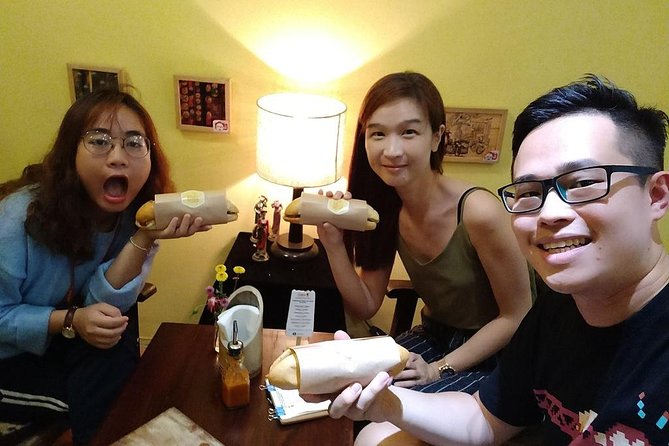
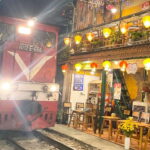
Then comes the stop people love to talk about: Train Street, also known by its local name Duờng Tau. This is a residential street so narrow that it’s famous for the visual of a train passing through. The tour description notes that trains pass straight through twice a day, which is why you’ll see residents and visitors coordinating their bikes and belongings around the passing moments.
A good guided visit is the difference between chaotic and safe. A local guide helps you understand what you’re looking at and where to stand, instead of crowding the wrong spot. You’re also more likely to get context about daily life for residents who live next to a schedule most outsiders only associate with a few photos.
You may find this stop more interesting if you like real-city oddities—the kind of place that’s strange on paper but totally normal for the people who live there. If you’re hoping for a calm, scenic walk, this isn’t that. It’s more about watching, understanding, and keeping your expectations realistic.
Since this is still part of an active walking tour, wear shoes you can trust. Train Street is not a “light sneaker” moment. You’ll also want to be flexible about timing, because the passing moments set the rhythm of what happens on the street.
Dong Xuan Market: French-built origins, 1994 rebuild, and real browsing
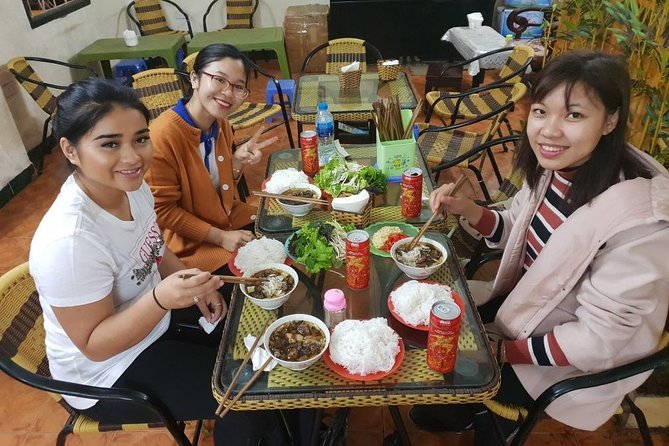
The tour ends at Đồng Xuân Market in the Hoàn Kiếm area. This is one of those places where the guide experience really pays off. Markets can feel intimidating if you don’t know what to look for, but with a local guide, you can focus on what matters: the food atmosphere, the everyday flow, and the types of items people actually buy.
Here’s the helpful context: the market was originally built by French administration in 1889, then renovated multiple times. After a fire nearly destroyed much of it, the market was rebuilt again in 1994. That timeline makes the place feel less random and more like a surviving city institution.
For your tour experience, the market stop is a good way to connect street food to shopping culture. You’ll likely get a sense of how everyday Hanoi eats: what ingredients show up, what people browse, and what’s familiar in the rhythm of daily shopping.
Keep expectations flexible. Market browsing can stretch depending on crowds and the route your guide uses. If you love photos, this is a strong place for them. If you prefer quiet, ask your guide how they’ll handle busier areas and keep your group moving.
A few more Hanoi tours and experiences worth a look

Food budget reality check: pay only what you use, so eat smart
Let’s talk money, because this is where you’ll want clarity. The tour price is $37 for the private, guided experience. The food is not included, but the tour design is meant to keep you from being forced into a set menu you don’t want.
The description explains that you’ll pay only what you use—typically 5 to 8 different street foods. It also suggests an indicative total around $10 for 2–4 people, which can make this tour feel like a bargain if your group shares dishes and orders within reason.
How to make this model work in practice:
- Decide early if you want to treat it like a full meal or like a tasting.
- If your group is hungry, you can plan to do more dishes. If you’re not, you can comfortably choose fewer.
- If you have allergies or vegetarian needs, the quick start check helps your guide steer you toward safer options.
Also, a private tour changes the value math. For a family or a pair of friends, $37 doesn’t just buy “a guide.” It buys a plan that adapts to your pace and food needs. That’s especially handy in Hanoi, where the best street-food spots aren’t always obvious, and where ordering without context can lead to wrong expectations.
One more thing I like: the tour concept includes Vietnamese traditions and customs tied to what you’re eating. That turns street snacks into learning, so your money feels like it’s going somewhere besides your stomach.
Timing, comfort, and what to wear for a 3-hour walking format
The tour runs about 3 hours, and most of that time centers on the Old Quarter and Hoan Kiem Lake areas, with shorter segments at central landmarks like St. Joseph’s Cathedral and Train Street, plus a market stop. The schedule can feel like a lot of points for a short window, so comfort matters.
Because the tour is mainly walking:
- Wear shoes that handle uneven sidewalks.
- Bring a light layer if it’s cool or breezy.
- Plan for typical street humidity or heat, especially if you’re going earlier in the day.
You don’t get included transportation. That’s normal for a walking city experience, but it does mean you should expect to handle getting to the pick-up area (again, pick-up is listed for Hanoi Old Quarter).
You do get a mobile ticket, and confirmation happens at booking time. The tour is private, so you won’t be mixed into a big group.
Weather is the one “real world” factor flagged for this experience. If weather is poor, the tour can be canceled and you’ll be offered a different date or a full refund. That’s a fair trade for street-food time, since rain can shut down the outdoor parts of the experience fast.
Should you book this private Real Foodie Hanoi tour?
Book it if you want a first-pass Hanoi evening that blends street food plus iconic central sights in one plan. It’s a smart fit for couples, families, and small groups who like structure without feeling boxed in. The private setup helps a lot if you have dietary preferences, because the tour begins with an allergy/vegetarian check.
Skip it only if you want zero walking, a fully packaged meal where food is included in the price, or a very slow, museum-like pace. The food is extra, and the tour runs by a walking schedule rather than long sit-down time.
If you’re curious about Hanoi’s food culture but don’t want to guess at where to go, this one gives you direction fast. You’ll leave with both full context and full plates—without paying for more than you actually eat.
FAQ
How long is the private food tour with Real Foodie in Hanoi?
The tour is listed as about 3 hours.
Does the tour include hotel pick-up and drop-off?
Yes, free hotel pick-up and free hotel drop-off are offered for hotels and hostels in Hanoi Old Quarter.
Is the tour private or shared with other groups?
It’s a private tour/activity, meaning only your group participates.
What does the tour price include, and what costs extra?
The price includes a local guide and the Old Quarter pick-up and drop-off. Transport is not included, and foods and drinks are not included. You pay only what you use for the street foods.
How many street foods will I try?
The tour description indicates 5 to 8 different street foods.
What if weather is bad?
The experience requires good weather. If it’s canceled due to poor weather, you’ll be offered a different date or a full refund.