REVIEW · HO CHI MINH CITY
PHU MY PORT: SAIGON SHORE EXCURSION-Old and New Parts of Saigon
Book on Viator →Operated by Saigon Private Tourguide · Bookable on Viator
Saigon feels like two cities at once: old French lines, and the Vietnam you live with today. This cruise-day tour is built to show you both without the usual scramble from the pier, thanks to included pickup and drop-off, a local English-speaking guide, and a tight 7–8 hour route. I like that you get a proper lunch first, not a snack-between-stops situation. I also like the way the day mixes big-photo icons with a more grounded look at daily life.
What I’d call the biggest plus is flexibility. It’s private for up to 12 people, so your guide can work with what you care about and keep things moving in real Saigon traffic. You’ll also get entrance fees handled, plus bottled water in the car, which saves mental math while you’re on a cruise schedule.
One consideration: the pacing is still “highlights in a day.” With multiple stops—some quick, some longer—you’ll want to be ready for short walks, bright sun, and a moderate activity level rather than a slow, linger-everywhere style.
In This Review
- Key highlights that make this day tour work
- Price and value: what $135 covers (and why it matters)
- The real win: getting off the ship and into Saigon fast
- Binh Quoi Village: a look at weekend life outside the big center
- People’s Committee Building: French colonial looks, government reality
- Emperor Jade Pagoda: a calmer pause with old Saigon roots
- Independence Palace: a time capsule locked in 1975
- Ben Thanh Market: souvenirs, art, and snack stops
- Central Post Office: French-era architecture that’s still useful
- Notre Dame Cathedral and Saigon Opera House: two classic exteriors
- War Remnants Museum: emotional content, planned time, and real context
- Why the guides make the difference (and how you can use that)
- When this tour fits you best
- Should you book? My straight advice
- FAQ
- How long is the Saigon shore excursion?
- What time does the tour start?
- Is pickup and drop-off from the cruise port included?
- What’s included in the price?
- Are drinks included with lunch?
- Is this tour private, and how many people can join?
- Is free cancellation available?
Key highlights that make this day tour work
- Cruise port pickup and drop-off so you don’t lose time figuring out transport
- Lunch at a local restaurant before the sightseeing starts, which helps a lot on a long day
- Old-and-new Saigon contrast, from Emperor Jade Pagoda to Independence Palace
- Major landmark run including Notre Dame Cathedral, the Central Post Office, and Saigon Opera House
- War Remnants Museum included, with time set aside to take it in
- Small private group (up to 12) with a guide who can adjust the flow for you
Price and value: what $135 covers (and why it matters)

At $135 per person, this tour is priced like a true cruise shore experience: you’re paying for convenience and for the parts that usually add up fast. You get cruise port pickup and drop-off with private transportation, lunch, bottled water in the vehicle, an English-speaking local guide, and all entrance fees. If you’ve ever tried to DIY Saigon from a pier, you already know how quickly time turns into money.
Here’s what you avoid by booking: last-minute ticket hunting, uncertain opening hours, and the hassle of coordinating taxis while your ship is waiting. Even if you’re a confident navigator, a private driver and a guide who knows where to go can be the difference between a good day and a stressful one.
The only real downside on cost is that drinks aren’t included with meals, and personal spending is on you. If you plan to buy extra water, coffee, or sodas during stops, budget for that separately.
A few more Ho Chi Minh City tours and experiences worth a look


The real win: getting off the ship and into Saigon fast
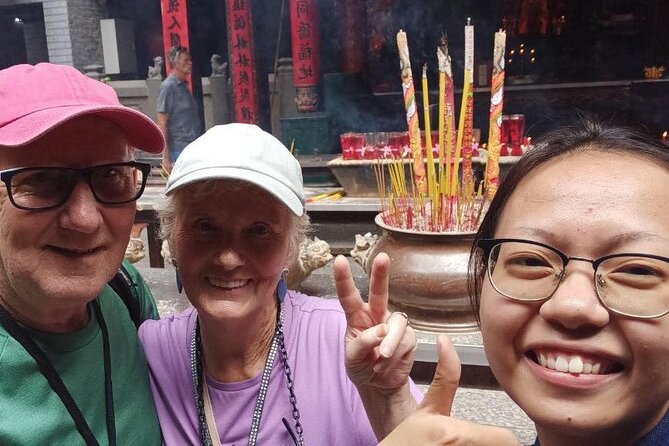
Starting at 7:00 am means you beat the later crush and have more daylight for your photos. With cruise port pickup and drop-off included, you’re not wasting time negotiating rides or waiting for others to catch up. This matters in Ho Chi Minh City because the traffic flow can be chaotic, especially when you’re carrying a camera bag and moving with cruise-day timing.
This is also a private group experience, so you’re not stuck listening to a big loud group compete for the guide’s attention. Your guide is the one driving the day—where you stop, how long you stay, and how you move through each area.
Binh Quoi Village: a look at weekend life outside the big center
You start with Binh Quoi Village, a place meant for people who want real local life rather than only postcard monuments. This is popular with locals on weekends for picnic and fishing. You’ll also see how rice is grown and how fish are caught—small details that explain how people live when the city’s main sights aren’t the focus.
The stop is about 40 minutes with free admission, so it’s not a long detour. It’s also not a hard sell for shopping; the point is to watch, notice, and connect the dots between city life and river life.
A practical tip: because it’s outdoors and activity is around water and land edges, wear shoes you don’t mind getting a little messy. And if you’re heat-sensitive, this is one of those times where you’ll appreciate that the day begins early.
People’s Committee Building: French colonial looks, government reality
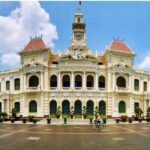
Next comes People’s Committee Building, often recognized for its French colonial architecture—cream and yellow tones that are easy to photograph. You should know upfront, though: it’s an official government building and it’s closed to the public.
So what do you get here? Mainly the exterior and the setting, plus the context from your guide about why it matters. It’s still a smart stop because it gives you a visual anchor for Saigon’s colonial-era footprint—then the tour moves you toward places where you can step inside and absorb more directly.
If you’re the type who wants to go from door to door, you might find this one a little short. But the trade-off is a smoother day and less wasted time.
Emperor Jade Pagoda: a calmer pause with old Saigon roots
From government façades, you shift to spirituality at Emperor Jade Pagoda in District 1. This is described as one of the oldest pagodas in Saigon, about a 10-minute drive from the city center. Admission is included, and the time here is around 15 minutes.
This stop works best when you treat it as a breather. You’ve had vehicles, crowds near major landmarks, and the energy of cruise scheduling. A pagoda visit gives you a slower moment to notice religious atmosphere and older layers of the city.
Dress and behavior expectations aren’t spelled out in the tour info you provided, so just follow common sense: be respectful, keep your voice down, and plan for a short walk.






Independence Palace: a time capsule locked in 1975
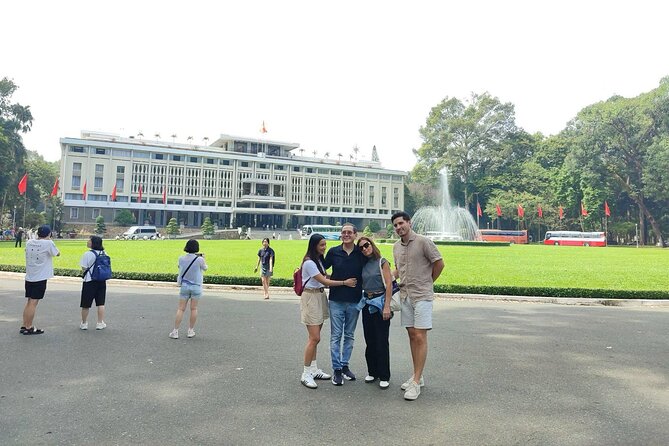
Then you go to Independence Palace, the most history-heavy stop on the “icon” side. It’s framed as a time capsule frozen in 1975, and the grounds include two original tanks used in the capture of the palace.
You’ll spend about 45 minutes here with admission included. That’s enough time to see the main rooms without rushing like you’re trying to beat a clock. It’s also a place where your guide’s explanation really changes how you experience it. Without context, palaces can feel like just buildings. With context, they start to tell a story about power, conflict, and how a city rebuilds.
A consideration: if you prefer museums to outdoor-to-indoor transitions, you may find this stop a strong emotional shift after the pagoda. That said, it’s exactly the kind of stop that helps you understand “old and new” in one day.
Ben Thanh Market: souvenirs, art, and snack stops
After palaces and pagodas, you get Ben Thanh Market, one of the best-known places in District 1. The focus here is shopping for local handicrafts, branded goods, Vietnamese art, and other souvenirs. There are also eating stalls inside, which can be handy if you get hungry again after lunch.
This stop is about 30 minutes with free admission. That timing is intentional: you’ll get enough time to browse, compare, and maybe pick up a few things without having the day slide away.
Here’s the practical mindset I suggest: choose your priorities before you arrive. If you want a specific kind of souvenir, decide early so you don’t end up stuck in decision fatigue. And keep an eye on your belongings—crowded markets are crowded for a reason.
Central Post Office: French-era architecture that’s still useful
The Central Post Office is next, and it’s a treat if you like architecture that keeps working. It was originally constructed as a hotel in 1886 by French architect Gardes, and today it serves city functions while remaining one of Saigon’s most iconic landmarks. Your time here is about 20 minutes.
This stop is interesting because it’s not only about seeing something old. It’s about seeing a building that’s continued to adapt. You can also use it as a calm landmark for your guide to orient you before the next wave of cathedral and theater photos.
Notre Dame Cathedral and Saigon Opera House: two classic exteriors
After that, you hit the French-era photo stretch: Saigon Notre Dame Cathedral and Saigon Opera House.
At Notre Dame Cathedral, the tour provides about 10 minutes. The highlight is the outside look, with its bright red brick wall described as part of what makes it unique. Since you’re staying mostly on the exterior, you’ll want good timing for photos and a quick, respectful look around.
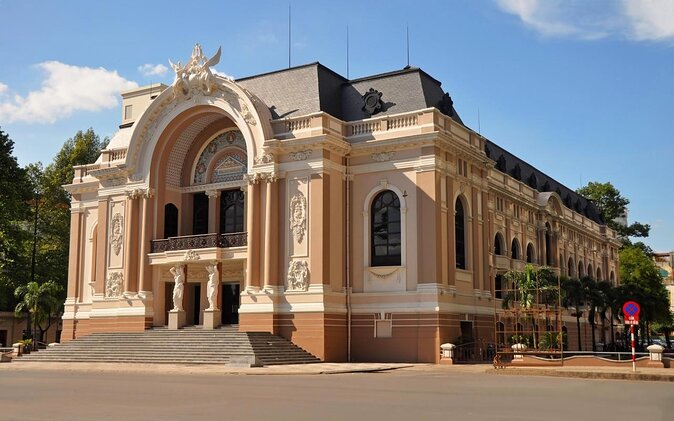
Then it’s Saigon Opera House (Ho Chi Minh City Municipal Theater) in Lam Son Square at the beginning of Le Loi Street, a popular shopping street. You get around 10 minutes, again focused on exterior viewing and quick photos.
If you’re wondering whether two short exterior stops feel too similar, here’s how I’d frame it: one is a cathedral façade; the other is theater architecture and a public square. Together, they paint a quick picture of how Saigon’s colonial-era design language shows up in different city functions.
War Remnants Museum: emotional content, planned time, and real context
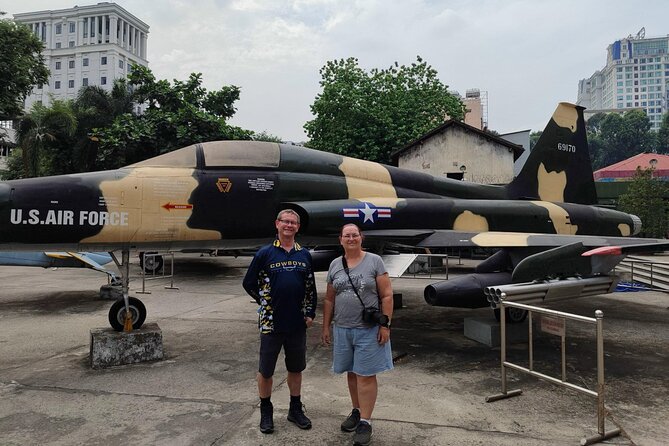
The day ends on a heavy note with the War Remnants Museum, which is included with admission. This museum is also known as the Museum of American War Crimes, and it’s described as holding more than 20,000 documents, exhibits, and films, including more than 1,500 documents and artifacts and films.
You’ll have about 40 minutes here. That’s a thoughtful amount of time for a museum like this on a cruise day, where you don’t want to cut it too short. The info you get from your guide matters here because this isn’t just a collection of objects—it’s a place designed to make you understand the scale and impact of war.
A practical consideration: this is emotional material. If you’re sensitive to graphic imagery, pace yourself. Take breaks inside if you need to, and focus on reading what you can rather than trying to absorb everything in one sprint.
Why the guides make the difference (and how you can use that)
The tour is private and flexible, and you feel that through the guide’s approach. In the feedback tied to this experience, guides such as May, Penny, Duc, Linh, Layla, Mia, Tuan, and Khang are singled out for being friendly, caring, and strongly able to explain history and daily life.
That “explain” part is key. Saigon’s sights can look straightforward on a map, but the meaning isn’t obvious unless someone brings you context. A good guide helps you connect the dots between the Independence Palace’s 1975 framing, the French colonial architecture feel you see at the People’s Committee Building and post office, and the war memory you see at the museum.
Also, a private guide can respond to you. If you want more time for photos at a landmark or you’d rather keep moving through a busier area, that’s the kind of adjustment that tends to make the day feel personal rather than rushed.
When this tour fits you best
I think this is a strong choice if you want a high-impact day with structure, especially if you’re on a cruise and time is tight. It suits larger groups and families because the format is up to 12 people and keeps everything on a single plan with a private driver.
You’ll also like it if you’re the kind of person who wants both angles of Saigon: the iconic exteriors and buildings you recognize, plus the more grounded stop at Binh Quoi Village and the museum stop that forces you to slow down.
If you dislike history-heavy content or you prefer lots of free time to wander alone, this might feel too programmed. It’s still flexible, but the day is designed around major highlights.
Should you book? My straight advice
Book it if you value convenience, clean logistics, and not losing half your day to getting from point A to point B. You’re getting lunch, entrance fees, and bottled water handled, and the route gives you a good mix of old-and-new Saigon in one go.
Skip it—or consider a different style—if you want a slow morning, long stays, and lots of independent wandering. The best parts here happen when you’re okay with moving at a cruise-friendly pace and taking in meaning in a structured order.
For most first-timers on a short schedule, I’d say this is one of the smarter ways to see Saigon without getting stressed.
FAQ
How long is the Saigon shore excursion?
The tour runs about 7 to 8 hours.
What time does the tour start?
It starts at 7:00 am.
Is pickup and drop-off from the cruise port included?
Yes. Cruise port pickup and drop-off are included with private transportation.
What’s included in the price?
Lunch, bottled drinking water in the car/bus, all entrance fees, a local English-speaking tour guide, and a private customized flexible tour are included.
Are drinks included with lunch?
No. Drinks are not included with any meal.
Is this tour private, and how many people can join?
It’s private. Your group will participate only, and it’s designed for up to 12 travelers.
Is free cancellation available?
Yes, you can cancel for a full refund up to 24 hours in advance. If you cancel less than 24 hours before the start time, the amount paid is not refunded.