REVIEW · HUE VIETNAM
Hue: 3 Best Royal Tombs Tour and Ancient Pagoda
Book on GetYourGuide →Operated by Hue Friendly Travel Company · Bookable on GetYourGuide
Hue’s tombs turn history into architecture. I like the way this tour chains UNESCO royal tombs into one smooth route, so the Nguyen Dynasty story makes sense instead of feeling scattered. I also love the A/C car on a hot day, which keeps you comfortable between the sites. One thing to plan for: the tomb entrance fees are not included, and they’re cash only at the entrances.
This is a clean 5-hour hit of Hue’s must-sees: Minh Mang, Khai Dinh, Tu Duc, then Thien Mu Pagoda and the incense-making village. If you pick the option that includes a guide, you’ll get the extra context faster; otherwise you’ll rely more on signage and your driver’s explanations, like the helpful folks I’ve heard named along the way (from Toan and Hien to Hai and Tom).
In This Review
- Key Points You’ll Care About
- Why This Hue Royal Tombs Route Works in 5 Hours
- The one budget twist: entrances are cash only
- Minh Mang Tomb: Structure, Mountain Views, and That Royal “Plan”
- What to watch for while you’re there
- Khai Dinh Tomb: The Vietnamese-French Blend You Won’t Forget
- A good tip for your visit
- Tu Duc Tomb: Gardens, Lakes, and a More Poetic Pace
- The place to slow down
- Hue Incense Village: Watch the Craft, Then Try It
- What you’ll likely enjoy doing
- Thien Mu Pagoda: The Seven-Story Tower and Hue’s Spiritual Anchor
- How to get the most out of it
- Price and Logistics: What You’re Really Paying For
- Is it worth it?
- Choosing Between the Two Options (Guide vs. Driver-Only Experience)
- Getting There Comfortably: A/C, Pickup, and What to Pack
- What I’d pack (practical, not fancy)
- Who This Tour Fits Best
- Should You Book This Hue Royal Tombs and Ancient Pagoda Tour?
- FAQ
- How long is the Hue Royal Tombs and Thien Mu Pagoda tour?
- What is the price per person?
- What stops are included in the route?
- What’s included in the tour price?
- Are the entrance fees included?
- Is food included?
- Can I add the Imperial City to the itinerary?
- What language is the service in?
- Is free cancellation offered?
Key Points You’ll Care About
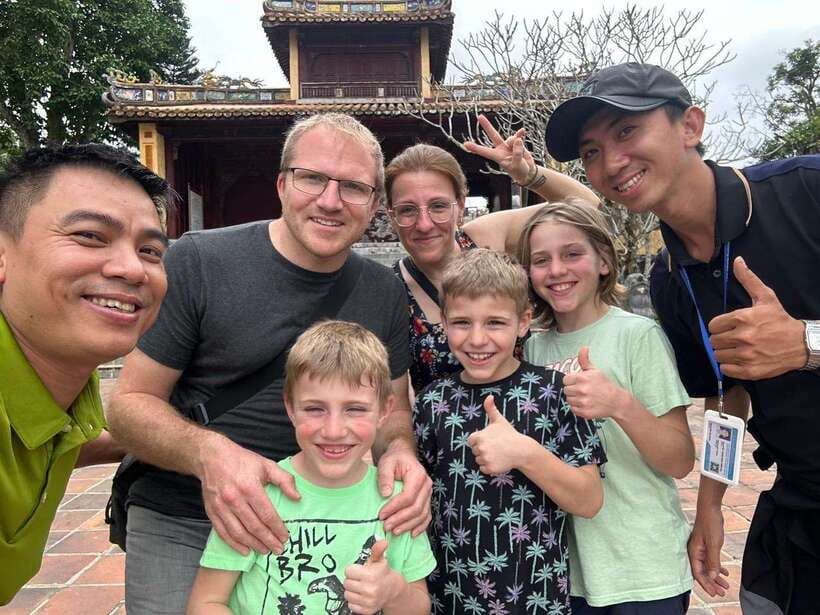
- UNESCO royal tombs in one day: Minh Mang, Khai Dinh, and Tu Duc are different in style, setting, and mood.
- A/C transport + bottled water: you stay cool between far-apart stops.
- Khai Dinh’s Vietnamese-French mix: a rare architectural blend you’ll see up close.
- Tu Duc’s gardens and lakes: more calm than crowds, with a layout that rewards slow walking.
- Incense village practice: you can watch (and try) traditional incense rolling during a long-running craft.
Why This Hue Royal Tombs Route Works in 5 Hours
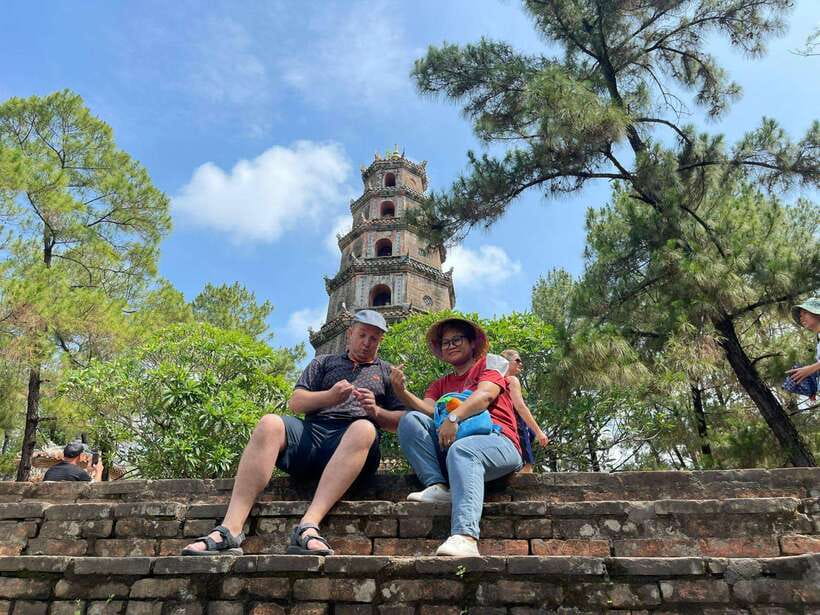
Hue can feel big when you try to do everything by yourself. This tour solves the “where do I go next?” problem by putting three royal tombs and two cultural stops into a single plan, with hotel pickup and drop-off in the city.
The payoff is variety. You’ll see one emperor’s carefully balanced complex at Minh Mang, then you’ll jump to Khai Dinh with its unusual European-leaning design, and finish at Tu Duc, where the tomb sits in a quieter, garden-and-water world. Even if architecture isn’t your thing, these three styles help you understand how Vietnamese royal design changed over time.
Timing is the other big win. In about 5 hours, you get a compact overview plus some hands-on culture at the incense village, and you’re still done early enough to enjoy Hue on your own afterward.
You can also read our reviews of more tours and experiences in Hue Vietnam.



The one budget twist: entrances are cash only
The price you pay for the tour covers transport and service, but not the tomb entrances. Entrance fees for the Royal Tombs are cash only at the gate, so it’s smart to bring small bills and avoid ATM stress mid-day.
Minh Mang Tomb: Structure, Mountain Views, and That Royal “Plan”
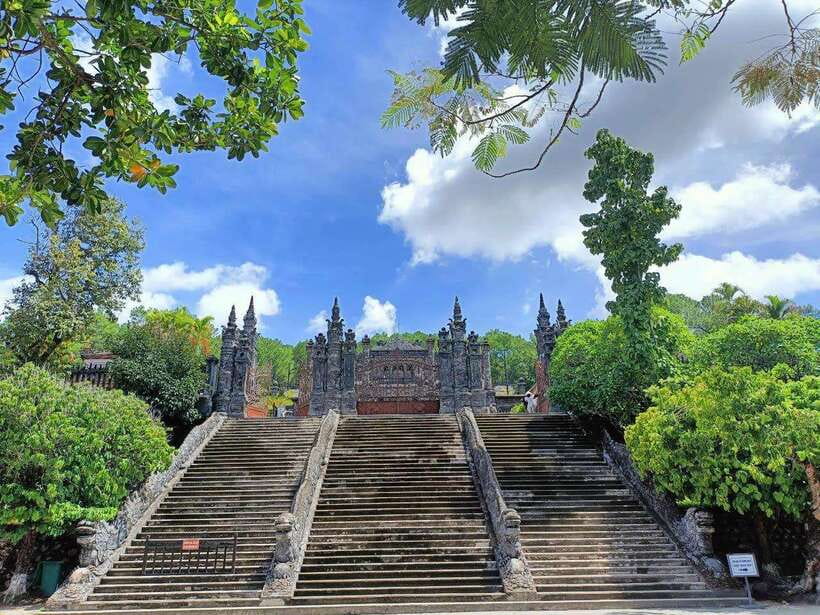
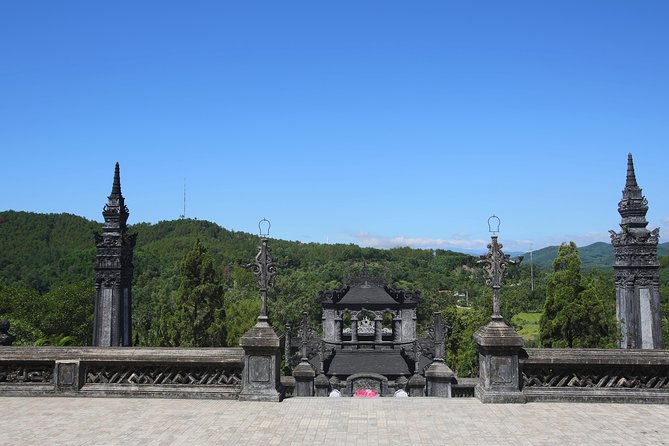
The tour begins at Minh Mang Tomb, the resting place of Emperor Minh Mang. It sits on Cam Khe Mountain, and the big idea here is harmony—how the complex is arranged with the landscape instead of just dropped onto it.
What I like about this stop is that it’s a strong “baseline” before you hit the more dramatic places. You see a traditional royal layout with a clear sense of design order, which makes the later contrasts at Khai Dinh feel even more striking.
What to watch for while you’re there
Take your time with the pathways and viewpoints. The tomb’s setting helps you understand why emperors built both for power and for nature, using mountains and water as part of the experience rather than background scenery.
Practical note: expect walking on uneven grounds and paths. Wear shoes you can trust—Hue’s humidity can turn “just a few steps” into a mini workout.
Khai Dinh Tomb: The Vietnamese-French Blend You Won’t Forget
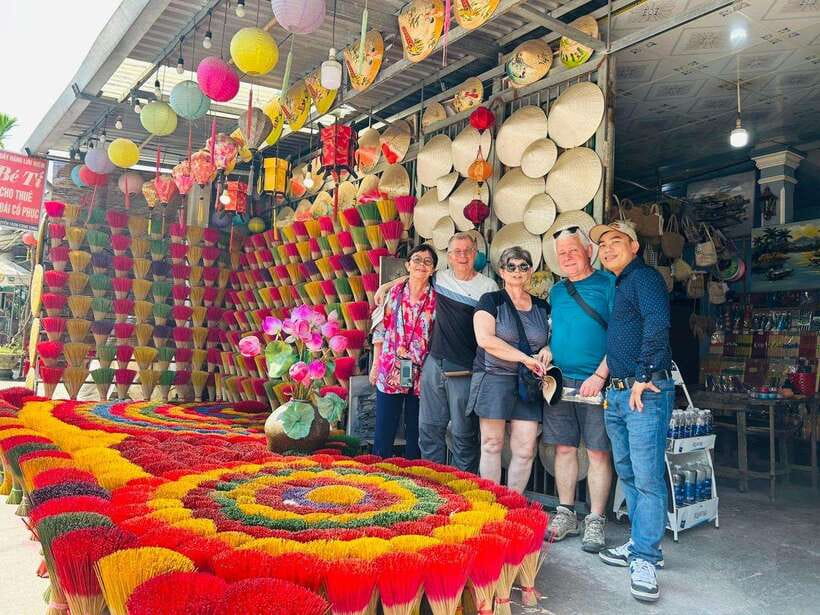
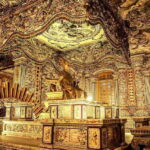
Next is Khai Dinh Tomb, the mausoleum of Emperor Khai Dinh. It’s on Chau Chu Mountain, and this is where the architecture gets noticeably different: traditional Vietnamese aesthetics mixed with French-influenced elements.
This mix is the reason people love this tomb. You’re not just seeing a royal grave site—you’re seeing a visual snapshot of cultural exchange and changing tastes in the Nguyen Dynasty era. The design feels more theatrical than purely formal, and it’s the stop that tends to make the photos look like they belong in a museum.





A good tip for your visit
If you have a guide option, this is the best place to use it. Explanations about symbolism and design choices help you notice details faster, especially if you’re trying to understand why the styles look the way they do.
Also, plan for sun. Even if your tomb wandering is short, Khmer-cool? no. Hue heat can be intense, so using the day’s A/C transport between stops matters.
Tu Duc Tomb: Gardens, Lakes, and a More Poetic Pace
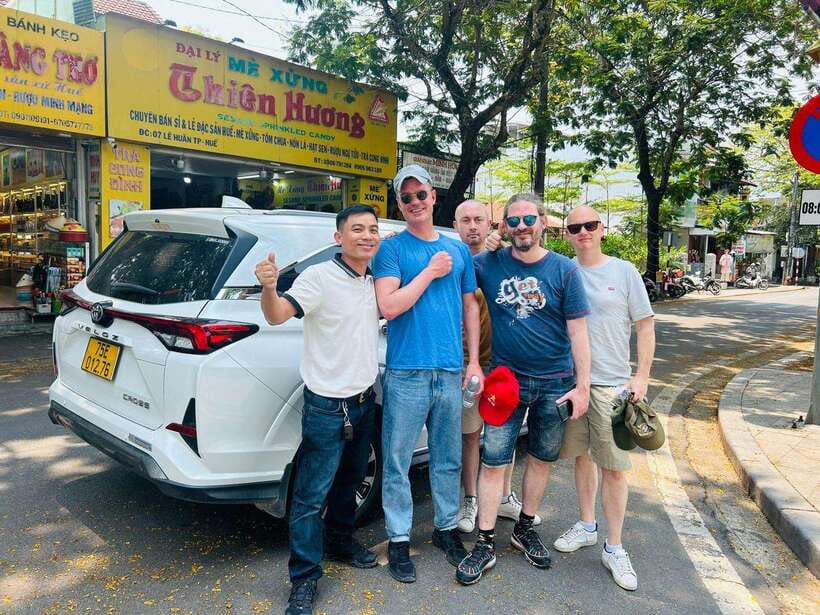
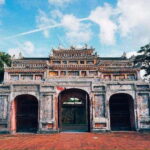
Then you move to Tu Duc Tomb, the final resting place of the ninth Nguyen emperor. Tu Duc is famous for its secluded setting, with gardens and lakes that make the whole visit feel calmer than you’d expect for a royal site.
This tomb is all about mood. Instead of grand showmanship, it leans toward contemplation. As you walk around, the water and greenery slow you down, and the layout feels more like a designed retreat than a monument in the middle of nowhere.
The place to slow down
Give yourself extra time at Tu Duc if you can. This isn’t a stop where you’ll feel satisfied by rushing from one corner to the next. If you like quiet spaces, this is the best match in the itinerary.
One caution: layouts at Tu Duc can be confusing under foot, and paths can be easy to lose if you don’t keep track. If the site feels like a maze, don’t panic—ask your driver or guide to point you back to the main route. Having that human context saves time and frustration.
Hue Incense Village: Watch the Craft, Then Try It
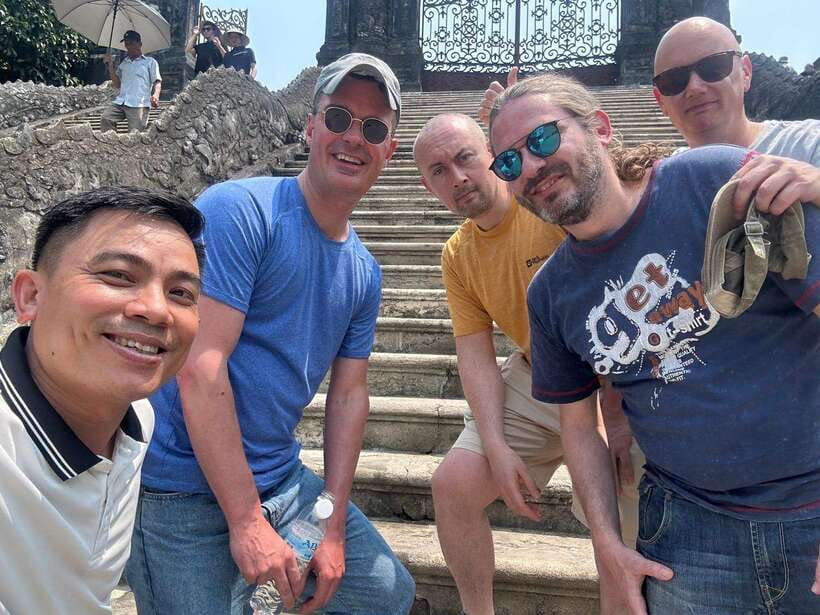
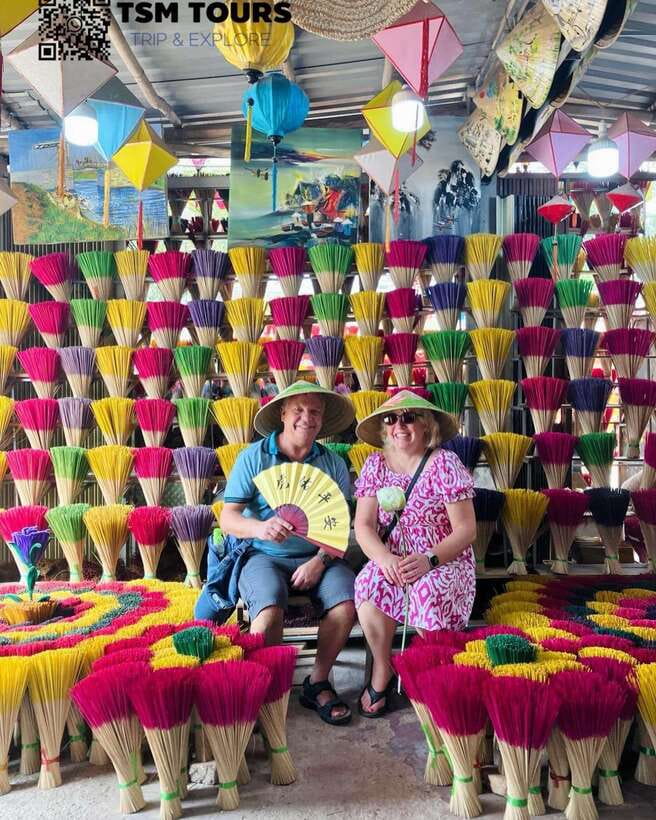
After the tombs, you head to Hue Incense Village, where incense making has been practiced for over 700 years. This stop is different from the tombs because it’s active and human-scale. You’ll see the process, and you often get a chance to roll incense sticks yourself.
I like this kind of cultural pause in the middle of a sightseeing day. It gives your brain a break from monument-to-monument, and it’s a chance to see how tradition survives through local craftsmanship.
What you’ll likely enjoy doing
You get hands-on interaction rather than just standing and watching. Even if you’re bad at it at first, that’s part of the fun—incense rolling is fiddly, and that’s exactly why it feels authentic.
Also, this is a good moment for questions about daily life in Hue, since the workers you meet can explain the craft in plain, practical terms.
Thien Mu Pagoda: The Seven-Story Tower and Hue’s Spiritual Anchor

To close the day, you visit Thien Mu Pagoda, Hue’s best-known Buddhist landmark. It sits on Ngu Phong Mountain, and it’s about 5 km from Hue’s Imperial City, which is why it’s such a strong “wrap-up” stop after the royal tombs.
The star is the iconic seven-story tower. It’s the kind of landmark you immediately recognize, even from a distance, and it helps connect Hue’s royal past to its spiritual present. If the tombs are about emperors, Thien Mu is about belief—and the contrast helps the city feel whole.
How to get the most out of it
Go at a relaxed pace. Pagodas reward looking, not sprinting. If you’re tired from walking, use a few moments to sit, watch the grounds, and let the day settle.
Price and Logistics: What You’re Really Paying For
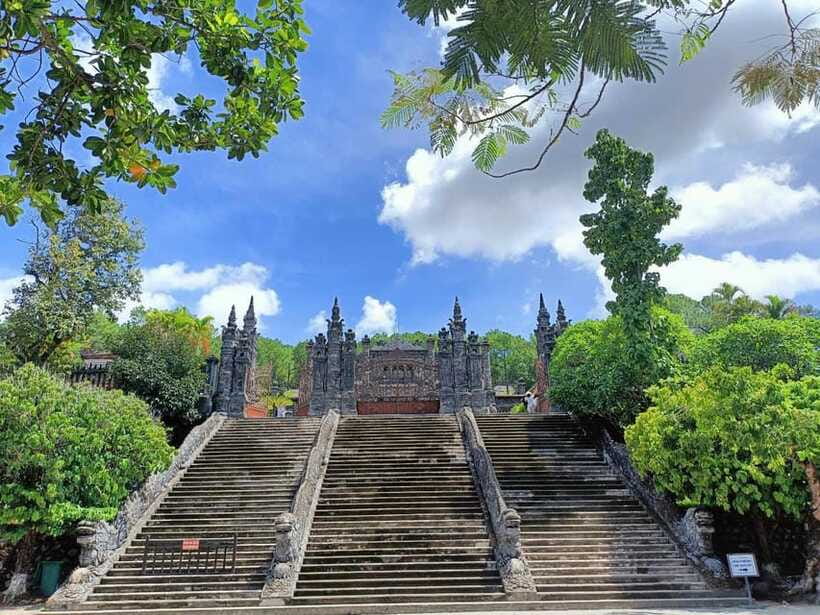
The tour price is listed as $13 per person, and that’s where the value comes from—especially in a place where the sights are spread out. At this price point, you’re essentially paying for transport, pickup and drop-off, and English service, while you handle the entrance fees yourself.
Included in the cost:
- Hotel pickup and drop-off in Hue
- English-speaking driver
- Model car with strong A/C
- Bottled water
- Parking fees
- A tour guide only if you choose the option that includes one
Not included:
- Tomb entrance fees (cash only at the Royal Tomb entrances)
- Food and other drinks
- Optional add-on: Imperial City can be added for $8 / 200,000 VND
Is it worth it?
Yes, if your priority is efficiency. Trying to arrange the same sequence on your own means extra planning, possible taxi math, and a lot of heat exposure while you figure out routes. The A/C car and hotel pickup make the whole day feel smoother than DIY.
If you’re the type who enjoys long, slow museum-style visits, you might find 5 hours tight at the tombs—especially if you want to linger. In that case, treat this as a “best-of” day and do deeper follow-ups later.
Choosing Between the Two Options (Guide vs. Driver-Only Experience)
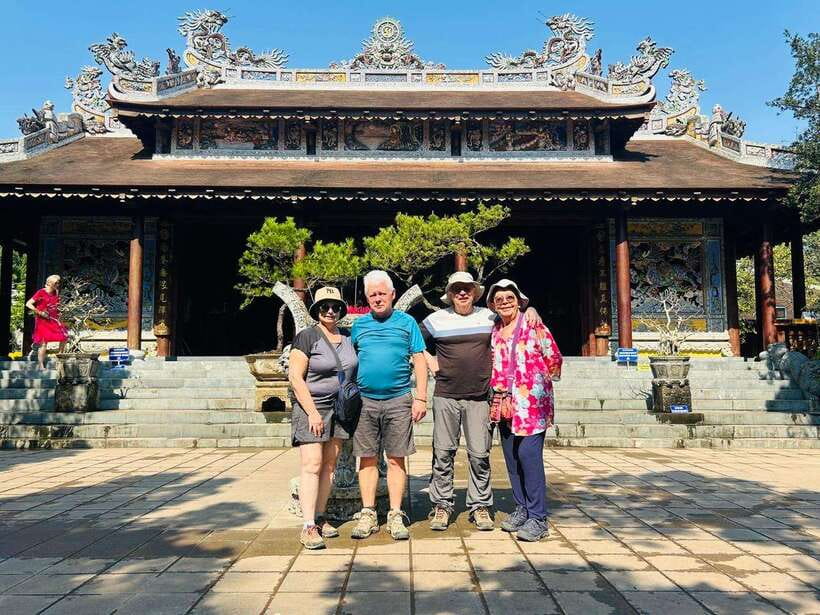
This tour comes with two options, and what changes is whether you get a tour guide in addition to the English-speaking driver. If your option includes the guide, you’ll likely understand the tomb design and symbolism faster, and you’ll spend less time guessing what you’re looking at.
If your option is driver-only, that’s still workable. You’ll still get transport, timing, and practical explanations, and you can use your time to wander at your own pace with signage to guide you.
My practical advice: if you care about meaning and context, choose the guide-included option. If you just want the sights efficiently and don’t need as much storytelling, the driver-focused option can be enough.
Getting There Comfortably: A/C, Pickup, and What to Pack
The logistics are straightforward: you’re picked up in Hue, you visit the tombs and pagoda across town and out to the mountains, and you return to Hue at the end.
Because the itinerary is spread out, the A/C car and bottled water matter more than you’d think. In hot weather, comfort turns into better attention span—meaning you enjoy the details instead of just surviving the day.
What I’d pack (practical, not fancy)
- Comfortable walking shoes
- Sunscreen and a hat (tombs include open areas)
- Cash for Royal Tomb entrance fees
- Light layers for indoor or shaded sections
Also, this tour isn’t for pets, and it’s not suitable for babies under 1 year or people over 95 years. If you’re traveling with anyone with mobility limits, confirm the walking demands before you go.
Who This Tour Fits Best
This is a smart match if you:
- Want the main Hue tombs in one day without taxi planning
- Like seeing different architectural styles back-to-back
- Enjoy a cultural stop that’s hands-on at the incense village
- Prefer a relaxed pace where you’re not constantly rushing to find the next transport
It can be less ideal if you:
- Want to spend many hours at just one tomb
- Need your day to be fully entrance-fee included with zero cash handling
- Get uncomfortable with some site navigation challenges, especially at Tu Duc’s layout
Should You Book This Hue Royal Tombs and Ancient Pagoda Tour?
Book it if you want a value-priced, efficient way to experience Hue’s royal architecture and major spiritual landmark in one afternoon block. The mix of Minh Mang, Khai Dinh, Tu Duc, plus Thien Mu Pagoda and the incense village gives you both big monuments and real daily tradition.
Skip it or modify expectations if you’re building a “slow travel” day with long stays. In that case, you might want to prioritize one or two sites and add the incense village on your own schedule.
If you’re on a tight timeline in Hue, this tour is one of the easiest ways to make the most out of it without turning your day into a logistics puzzle.
FAQ
How long is the Hue Royal Tombs and Thien Mu Pagoda tour?
The duration is 5 hours.
What is the price per person?
The price is listed as $13 per person.
What stops are included in the route?
You visit three Nguyen Dynasty royal tombs: Minh Mang, Khai Dinh, and Tu Duc, plus Hue Incense Village and Thien Mu Pagoda.
What’s included in the tour price?
Included features are hotel pickup and drop-off, an English-speaking driver, A/C transport, bottled water, and parking fees. A tour guide is included only if you select the option that has a guide.
Are the entrance fees included?
No. Entrance fees for the Royal Tombs are not included, and they are cash only at the entrances.
Is food included?
No. Food and other drinks are not included.
Can I add the Imperial City to the itinerary?
Yes. Imperial City can be added for $8 (200,000 VND).
What language is the service in?
English is available.
Is free cancellation offered?
Yes. You can cancel up to 24 hours in advance for a full refund.