REVIEW · HO CHI MINH CITY
Ho Chi Minh: Historical City Scooter Tour
Book on GetYourGuide →Operated by AN Tours Vietnam · Bookable on GetYourGuide
Saigon by scooter turns history into a ride. In just 4 hours, this private setup helps you cover 8 districts in one day, hitting both the famous sights and the day-to-day places you’d never find on your own. I like that the route is planned to keep things moving, but still lets your guide shape the pacing as you go. You’ll also feel like you’re riding with locals, not just getting shuttled from stop to stop.
Two things I really love: first, the way the tour pairs big “postcard” stops with quieter local scenes, so your brain doesn’t just fill up with icons. Second, the guides can read the room—people I spoke with named Halsey, Henry, Hannah, Son, Midori, and Sunny as standout guides, and the common thread is an easy vibe plus clear explanations. One possible drawback is physical: it’s not suitable for people with back problems, mobility impairments, heart problems, or wheelchair users, and you should be comfortable riding a scooter in traffic.
The best way to picture it is this: you start near major French-built landmarks, then you move through war memory, everyday housing, coffee culture, a late-opening flower market, and finally Chinatown temple life. Along the route you’ll also get the little details that make Saigon feel personal, like meeting a 90-year-old letter-writer and learning why Da Lat flowers matter to the city’s flower rush.
In This Review
- Key highlights I’d focus on before you book
- Riding Saigon like you mean it: scooters, flow, and control
- From French-built Notre Dame vibes to Saigon’s letter-writer corner
- War Remnants Museum: seeing what the city learned the hard way
- The oldest apartment built from wartime life
- Flower market time: 24-hours-ish energy and Da Lat transfers
- Coffee stop at a 75-year-old shop: slow taste, fast city
- Chinatown by scooter: Thien Hau and the markets that run on routine
- Guides, safety, and why the conversation matters
- Price and value: is $49 for four hours a good deal?
- What to bring and how to survive scooter weather
- Should you book this Ho Chi Minh City historical scooter tour?
- FAQ
- FAQ
- What is the duration of the Ho Chi Minh City scooter tour?
- What are the pickup times?
- Where will the guide pick me up?
- Is the tour private or shared?
- What attractions are included?
- What is included in the price besides the tour?
- What languages will I be able to use during the tour?
- What should I bring with me?
- Is this tour suitable for people with mobility or health concerns?
Key highlights I’d focus on before you book
- 8 districts, 1 day: A fast but thoughtful way to get oriented without sacrificing context.
- Tour guides who set the tone: English support (plus Vietnamese) with the kind of conversation that keeps it human, not scripted.
- Mix of landmark + local texture: Cathedral, museums, and temples paired with everyday markets and housing.
- Safety and comfort included: Helmet and raincoat are part of the package, and drivers handle heavy traffic.
- Coffee and flowers as pace-changers: You’ll get breaks that feel like real local routines, not just transport stops.
Riding Saigon like you mean it: scooters, flow, and control

A scooter tour is only fun if you feel steady on the bike and confident in the driver. Here, that’s part of the deal: you’re not “at risk” by design. You get a good-quality helmet and raincoat, and the drivers are described as careful in busy traffic. That matters in Ho Chi Minh City, because even a short move can feel like a moving puzzle of lanes, scooters, and buses.
Another value point is the tour format. This is a private tour, meaning you’re not squeezed into a loud pack or stuck with the slowest rider. It also makes the “flexible itinerary” idea more than a marketing line—your guide can shift timing when something needs extra explanation (or when you want a slower look at a market corner).
You’ll be on the back of a scooter for most of the ride. If you already know you get uncomfortable in that position, plan around that. And if you have any of the listed health or mobility constraints (back problems, heart issues, wheelchair use), it’s not the right fit.
You can also read our reviews of more city tours in Ho Chi Minh City



From French-built Notre Dame vibes to Saigon’s letter-writer corner
The tour kicks off with a classic anchor point: the most famous cathedral in Ho Chi Minh City, built using materials from France. It’s a good start because it gives you a visual baseline. Before you get pulled into smaller streets, you see how French architecture shaped early Saigon—and you understand why later history feels so layered.
Next comes the post office stop, where you meet a 90-year-old man, described as the last hand-written letter-writer in Vietnam. That moment is small on paper, but it’s huge emotionally. It turns “heritage building” into a living connection: this is where handwriting, patience, and old-school routines still exist. For me, this is the kind of scene that makes you slow down for five minutes and actually look at details you’d normally speed past.
If you like history, you’ll appreciate the pacing. The tour doesn’t start at museum-darkness. It starts with visual roots, then moves into human stories. That makes what comes later hit harder.
War Remnants Museum: seeing what the city learned the hard way
After the early cultural stops, you go to the War Remnant Museum. This is not a “quick photo and leave” type of stop. The point is to hear some of the unknown stories behind the wars in Vietnam—stories that help explain why certain symbols, streets, and monuments feel the way they do now.
A key detail here is how your guide handles the subject. In the best cases (and the names in the guide feedback matter), the conversation isn’t cold or dramatic for effect. It’s sensitive. You get a sense of how war affected everyday life and how people today carry respect and gratitude for sacrifices made long ago. That’s the difference between “facts on a wall” and understanding what those facts mean in daily life.
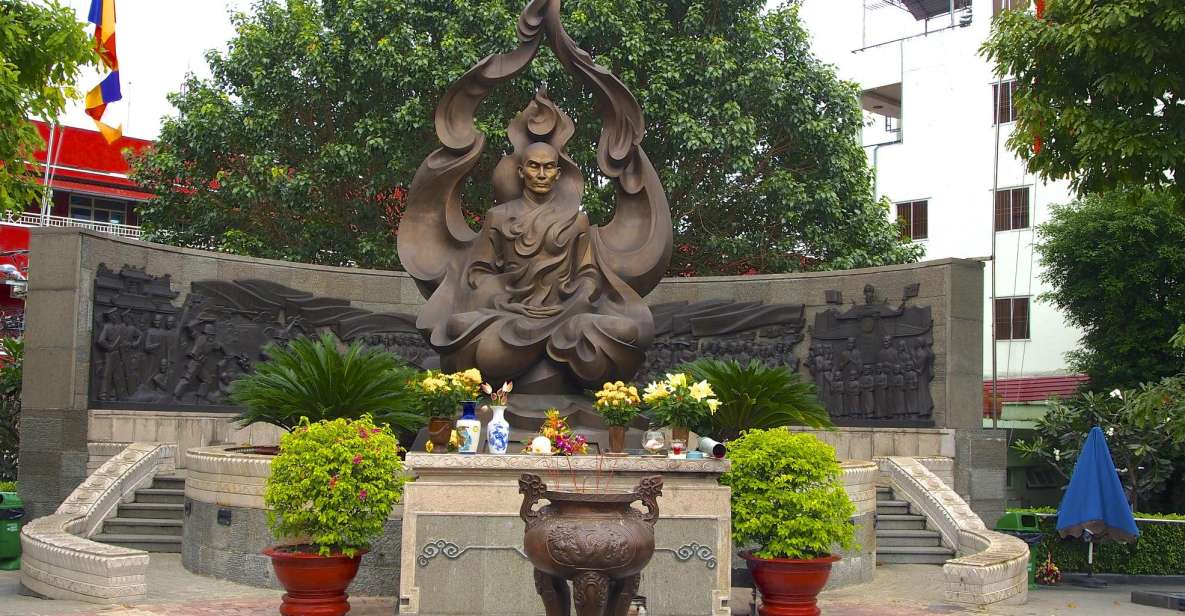
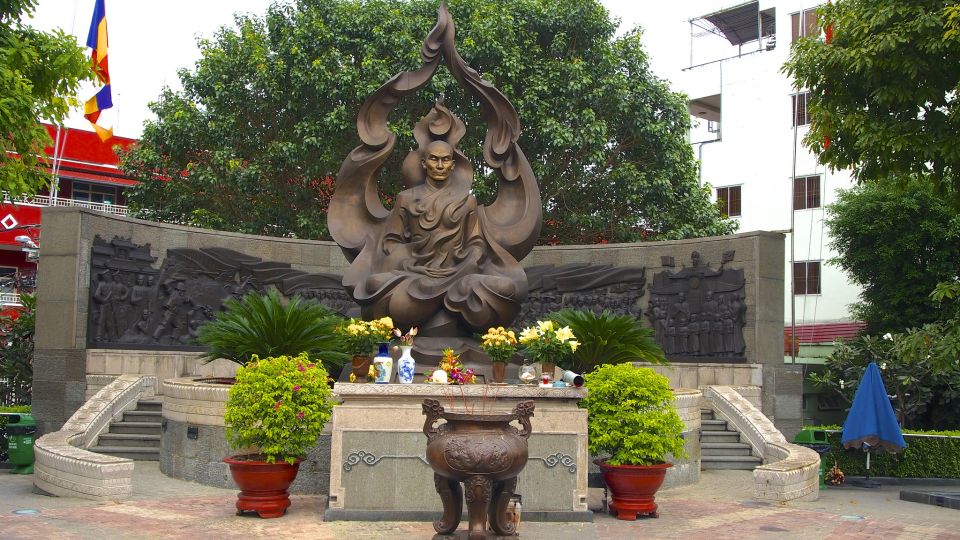
Then you continue to the Thich Quang Duc Monument, a tribute to the famous monk who burnt himself in 1963 as a protest. Again, your guide’s tone matters. You’re learning about civil resistance and moral conviction, not just viewing a statue. If you’re the kind of person who can’t handle heavy topics, you’ll want to mentally prepare. If you’re curious about how Saigon formed, this is a major piece of the puzzle.
The oldest apartment built from wartime life
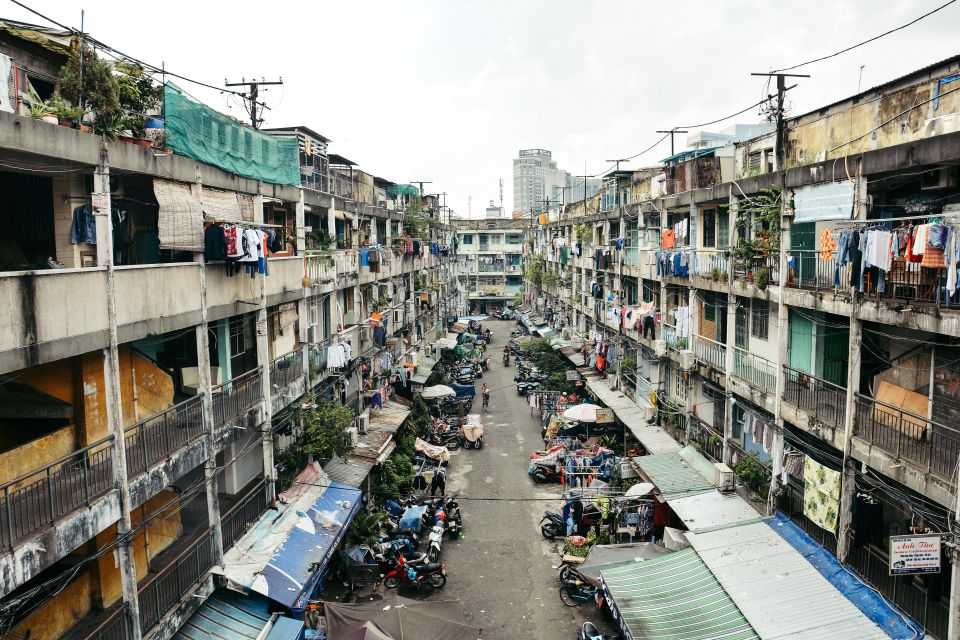
One of the more memorable stops is the oldest apartment in Ho Chi Minh City, described as being built from the war. This is a fascinating contrast after the monument and museum. You move from national tragedy to the practical reality of housing.
Here you see the lifestyle of local people and hear interesting stories about its history. It’s the kind of stop that helps you understand that history isn’t only statues and big buildings. It’s also the way people live, share space, and keep routines going under pressure. Even if you’re not a “history person,” this stop often lands because it feels close-up.
This is also where the scooter format earns its keep. You’re not just walking through one museum. You’re moving through the city’s memory at city speed, which helps you connect the dots while they’re still fresh.
Flower market time: 24-hours-ish energy and Da Lat transfers
Next is the biggest flower market in the city. It started in 1980 and is described as open almost 24 hours a day, which means you can catch a real rhythm—flowers moving, vendors working, and shoppers coming and going. If you care about everyday commerce, this stop is a great one.
A detail that makes it more than a pretty picture: flowers are transferred from Da Lat each morning (Da Lat gets nicknamed the Paris of Vietnam), feeding Saigon’s flower scene daily. When you walk among thousands of flowers on display, you start to see the city like a network. One region’s climate becomes another region’s celebration.
You’ll probably want to take it slow here. Markets can look chaotic, but with a guide you’ll know what you’re seeing—what’s being prepared, what’s selling quickly, and how the supply works.
Practical tip: wear comfortable shoes and give your sunglasses a job. This is a bright place in daylight, and you’ll be outside for the stroll.
You can also read our reviews of more historical tours in Ho Chi Minh City






Coffee stop at a 75-year-old shop: slow taste, fast city

Then the tour shifts to something that feels like a reset button: Vietnamese coffee at a 75-year-old coffee shop. The shop uses a method of making coffee that only three coffee shops in Vietnam use (so it’s not just “another café stop”).
Even if you’re not a coffee fanatic, this pause matters. After monuments, museum emotions, and walking through markets, you need a calmer moment. Coffee culture gives you a sensory break: smell, steam, taste, and a moment to breathe without moving.
Also, this is a smart timing choice. Coffee shops are where you can talk. You can ask your guide follow-up questions. You can process what you just saw instead of stacking more impressions back-to-back.
If you like learning through food and drink, this is one of the stops that makes the price feel more justified than just “entry tickets and sightseeing.”
Chinatown by scooter: Thien Hau and the markets that run on routine
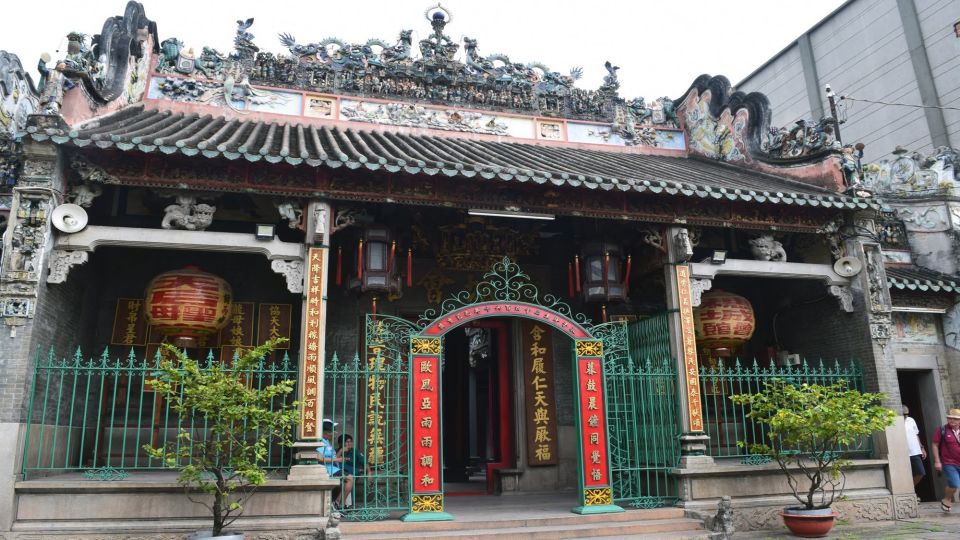
Toward the end, you ride into Chinatown, where you’ll encounter a breathtaking 300-year-old temple, described as the most special “Thien Hau.” This is a strong closer because it’s spiritual life in a neighborhood context, not just a single temple photo.
Chinatown is also home to about 1.5 million Chinese-Vietnamese people for generations. That scale shows you why the area feels distinct. You’re not visiting a theme zone. You’re moving through a living community.
Your guide also points out what’s around the temple area: a motorbike market and a bird market. Those scenes are easy to overlook when you travel fast. But they explain the neighborhood’s daily economy—how people buy, trade, and maintain traditions as part of normal life.
If you’ve ever wondered what makes Saigon feel layered instead of just “one city,” Chinatown is where it clicks. You see how culture keeps flowing inside the same streets.
Guides, safety, and why the conversation matters
A scooter tour can be noisy. It can also be shallow. This one is praised for something better: the guides bring the city to life with the right tone.
The feedback I’ve seen highlights guides like Halsey, Henry, Hannah, Son, Midori, Sunny, and Thong. Names show up because people remember them. The common compliments are consistent: English is clear, explanations are thoughtful, and the guide makes you feel at ease. In some cases, guides are described as safe and confident drivers who can maneuver through heavy traffic without panic.
Just as important, the best guides handle war topics with care. The tour doesn’t treat history as a dramatic show. It talks about sacrifices and gratitude, and it creates room for thoughtful conversations. That’s why private tours can feel so much more personal—your guide can respond to your pace and your curiosity.
The “flexible itinerary” aspect also helps. If you want more time in a market or want your guide to explain something you just noticed, you’re not trapped in a rigid script.
Price and value: is $49 for four hours a good deal?
At $49 per person for about 4 hours, the math can work well if you’re doing this the smart way.
Here’s why it can be good value:
- You get access to multiple paid stops, with entrance tickets included.
- You get private guiding plus a driver (so you’re paying for time, coordination, and local navigation).
- You get equipment—helmet and raincoat—that you’d otherwise need to hunt down.
- You’re covering a lot of distance and variety in one session, from major landmarks to neighborhood markets.
The main reason this price feels fair is density. You’re not just paying for one attraction. You’re stitching together several parts of Saigon’s story, and the scooter transport makes it realistic in a half-day window.
If you prefer calm walking tours and dislike the scooter riding style, the price won’t matter—you’ll have a less enjoyable experience. If you like pace, local driving, and learning through movement, $49 starts to look very reasonable.
What to bring and how to survive scooter weather
This tour gives you helmet and raincoat, but you still control comfort. Bring comfortable shoes, sunglasses, and sunscreen. Heat and sun can sneak up on you even when you’re busy looking around. Sunscreen is specifically called out, and you’ll want it.
Also, your guide will pick you up from your hotel lobby, and you’ll have a defined schedule with pickups at 8:00AM or 1:00PM. Plan your day around that so you’re not rushing to catch the flower market or coffee stop.
Not suitable notes matter here, too. If riding is a challenge for your body, this route will likely feel like work instead of travel.
Should you book this Ho Chi Minh City historical scooter tour?
Book it if you want a fast, high-coverage Saigon orientation that still includes real local texture—cathedral-to-Chinatown, plus museum and monuments, plus coffee and flowers. It’s a strong choice for first-timers who want their bearings quickly and for couples or solo travelers who like a private, guide-led rhythm.
Skip it if you can’t handle scooters, have the listed mobility/health constraints, or you know you freeze up in heavy traffic. Also, if you hate emotional subjects like war memorialization, you may find the War Remnant Museum and the monk monument too intense for your style.
FAQ
FAQ
What is the duration of the Ho Chi Minh City scooter tour?
The tour lasts about 4 hours.
What are the pickup times?
Your pickup time is either 8:00AM or 1:00PM.
Where will the guide pick me up?
Pickup is included, and you should wait at the lobby of your hotel.
Is the tour private or shared?
It’s described as a private tour just for you.
What attractions are included?
All the stops listed in the tour are included: the cathedral, the post office (including meeting the 90-year-old letter-writer), the War Remnant Museum, the Thich Quang Duc Monument, the oldest apartment, the biggest flower market, a 75-year-old coffee shop, and Chinatown with the 300-year-old Thien Hau temple.
What is included in the price besides the tour?
Entrance tickets are included, along with a good-quality helmet and raincoat, plus a private driver with fluent English.
What languages will I be able to use during the tour?
The live tour guide speaks Vietnamese and English.
What should I bring with me?
Bring comfortable shoes, sunglasses, and sunscreen.
Is this tour suitable for people with mobility or health concerns?
It’s not suitable for people with back problems, mobility impairments, heart problems, wheelchair users.