REVIEW · HO CHI MINH CITY
Ho Chi Minh City Private City Tour – History, Culture, Local Life
Book on Viator →Operated by Vietnam - Ho Chi Minh City Package Tours · Bookable on Viator
Saigon is intense, and this tour keeps it human. In about four hours, you move from wartime memory to quiet temple corners and everyday street life, guided in English and paced for real sightseeing.
I especially like the flexibility—you can slow down for coffee, a snack, or extra time near something that grabs you. Another big win is how private transportation plus pickup from District 1, 3, or 4 makes the whole thing feel smoother than hopping between spots on your own.
One thing to consider: two major places have extra entry costs (War Remnants Museum and Independence Palace/Reunification Hall), so your final total depends on whether you enter them.
In This Review
- Quick hits before you go
- A 4-hour Saigon intro that balances memory and daily life
- War Remnants Museum: what you see in a 30-minute stop
- Colonial-era landmarks you’ll recognize immediately
- Thích Quảng Đức Monument: a stop that makes you slow down
- Hầm Vũ Khí Bí Mật Secret Weapon Cellar: history underground
- Nguyen Huệ Walking Street and the “real Saigon” rhythm
- A quick pass for viewpoints and photo breaks
- Chùa Vạn Phát in Chinatown: spiritual space and cultural influence
- Flower market time: seeing what’s bought, not just what’s famous
- How the guide’s pace changes everything
- Price and value: what $31.57 covers (and what it doesn’t)
- What’s included: the practical stuff that saves you time
- What you can adjust on the fly
- Who should book this private Saigon city tour
- Should you book this Ho Chi Minh City Private City Tour?
- FAQ
- How long is the Ho Chi Minh City Private City Tour?
- Is this tour private?
- Where does pickup and drop-off happen?
- What’s included in the tour price?
- What extra tickets should I expect to pay?
- Are there any free entry stops?
- What transportation options can the tour use?
- Do I get a mobile ticket?
- Is the War Remnants Museum open all day?
- What’s the cancellation policy?
Quick hits before you go
- A private, English-speaking guide who can tailor the pace instead of forcing a rush-through schedule.
- History plus street-level life: monuments, a secret weapon cellar, neighborhoods, and a flower market in one loop.
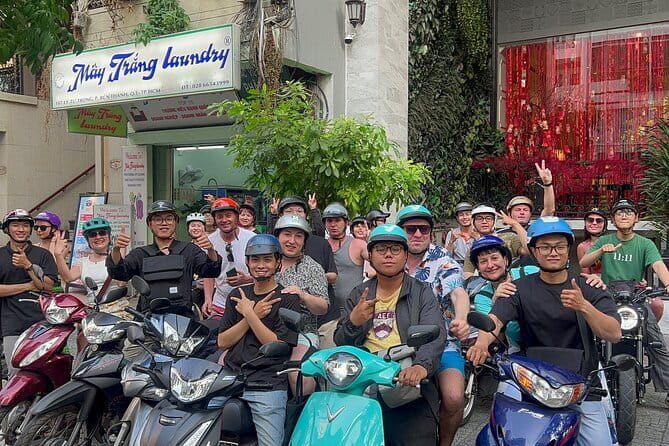
- Transport is flexible: motorbike, jeep, car, walking, or cyclo can be arranged to match how you like to move.
- A smart mix of pay and free stops: some sites are included only as passes, while others are free to enter.
- Temple and Chinatown culture with a visit to Chùa Vạn Phát (Temple of Ten Thousand Buddhas).
- Time matters for the War Remnants Museum, which is closed after 17:00.
A 4-hour Saigon intro that balances memory and daily life
This is a short tour designed for first-timers who want context fast. You’ll start with modern Vietnamese history, then shift gears to major colonial-era landmarks, Buddhist remembrance, and everyday downtown scenes.
The real value is how the route doesn’t treat Saigon like a checklist. You get iconic architecture from the outside, meaningful monuments, and local color you can still recognize even after the tour ends.
You can also read our reviews of more city tours in Ho Chi Minh City



War Remnants Museum: what you see in a 30-minute stop
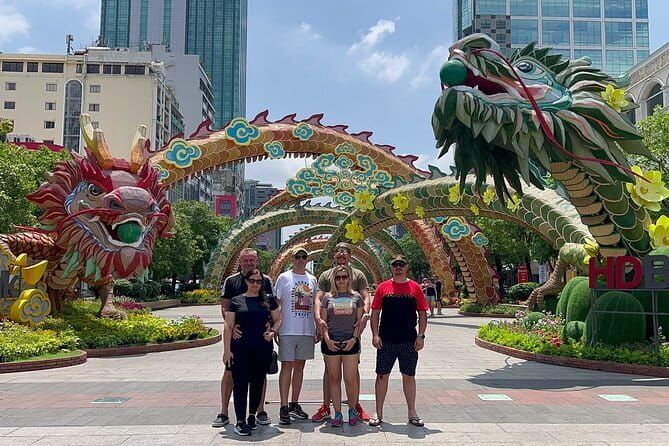
The tour begins at the War Remnants Museum, a place that hits hard through photos and artifacts. You’ll get about 30 minutes here, which is enough to understand the big themes without turning your day into a full research project.
Your ticket is not included, so you’ll pay on top of the tour price. The War Remnants Museum entrance is listed as 40,000 VND, and it’s worth planning for that early rather than being surprised in the moment.
Also pay attention to closing time: the museum is closed after 17:00. If you’re arriving late in the afternoon, you may want to adjust your start time or choose a different day.
Colonial-era landmarks you’ll recognize immediately
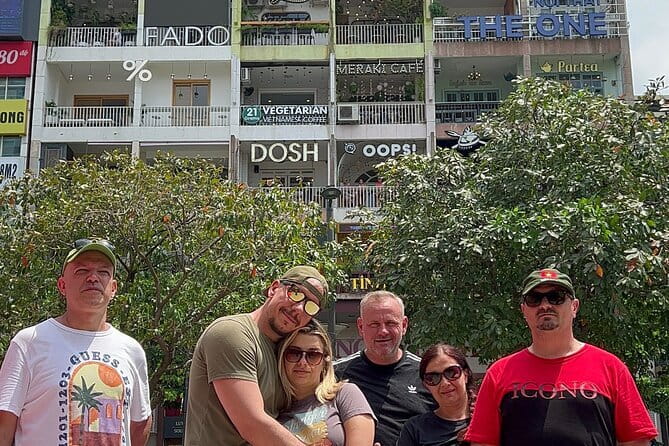
After the museum, the route threads through the city’s most recognizable downtown landmarks. You’ll pass the Saigon Central Post Office, a French-era building near Notre-Dame Basilica, and you’ll see the kind of grand, symmetrical architecture that made this part of the city feel like another world during Indochina times.
You’ll also go by the Saigon Opera House, where the design reflects colonial influence. And later, you’ll pass the Reunification Convention Hall, a landmark tied to the presidency and Vietnam’s political shifts.
A practical note: because several of these are pass-by moments, you won’t get long walk-in time at every facade. This is ideal if you want orientation, but if you love architecture and want photos from every angle, you may want to ask your guide where to pause longer.
Thích Quảng Đức Monument: a stop that makes you slow down

This tour includes a dedicated stop at the Thích Quảng Đức Monument. You’ll spend about 15 minutes here, and entry is free, which makes it easy to fit into your schedule without extra costs.
The story matters: Thích Quảng Đức was a Vietnamese Mahayana Buddhist monk who died by self-immolation on 11 June 1963 at a busy road intersection. The protest was against the persecution of Buddhists by South Vietnamese authorities at the time.
This is one of those places where “just looking” doesn’t feel enough. I like that the tour gives you a brief window to stand, read what’s there, and absorb why the monument has stayed in the city’s memory.
Hầm Vũ Khí Bí Mật Secret Weapon Cellar: history underground
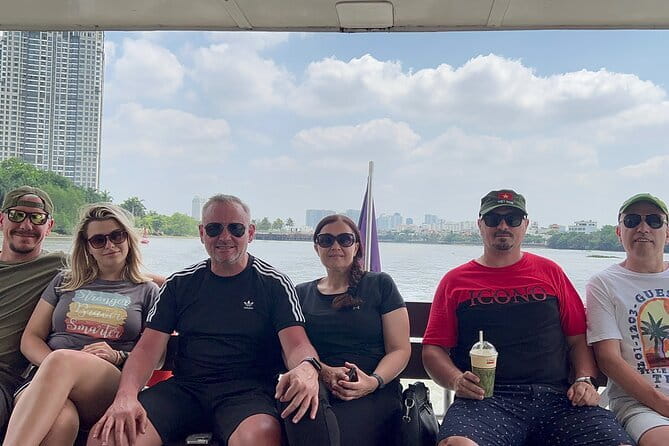
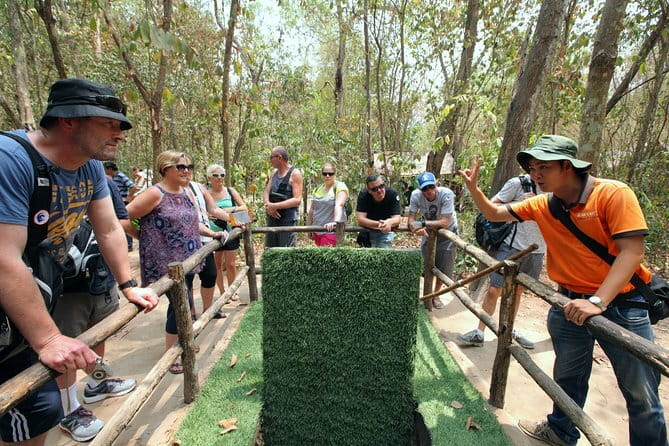
Next up is the Hầm Vũ Khí Bí Mật Secret Weapon Cellar, also free to enter. You’ll have about 15 minutes here, which is brief—but the point is to connect the dots between wartime planning and how Saigon was lived in under pressure.
The information provided highlights the Tet period of 1968, so expect the space to be framed in that context. Even with a short visit, it gives you a different kind of history than museums do—more direct, more physical, and harder to forget.
If you dislike confined spaces or hate rushing through indoor exhibits, let your guide know. You can often control pacing on a private tour, and a minute or two more can change how much you take in.
You can also read our reviews of more private tours in Ho Chi Minh City






Nguyen Huệ Walking Street and the “real Saigon” rhythm
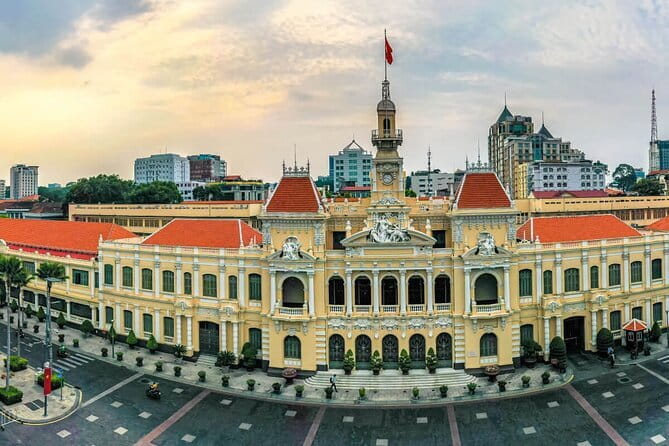
From there you’ll shift into the flow of central District 1 life. You’ll pass through Nguyễn Huệ Walking Street, a major boulevard that has changed over the years but remains one of the city’s well-known thoroughfares.
This stop is more about atmosphere than interpretation. It helps you understand where people actually walk, gather, and navigate—not just where history happened.
The tour also includes passing Nguyễn Thiên Thuật apartment buildings in District 3. These are historic structures with American-built roots, and seeing them from the street gives you a sense of how older urban infrastructure still frames daily life.
A quick pass for viewpoints and photo breaks

The itinerary includes a “beautiful view” moment, though it doesn’t specify the exact viewpoint. In practice, this is usually where your guide decides the best angle based on timing, light, and pedestrian traffic.
If you care about photos, this is a good time to ask for a short pause. On a private tour, you’re not locked into a strict timetable in the same way as a large group.
Chùa Vạn Phát in Chinatown: spiritual space and cultural influence
One of the most satisfying parts of the route is the visit to Chùa Vạn Phát (Temple of Ten Thousand Buddhas) in Chinatown. You’ll have about 30 minutes, and entry is free.
This is also a cultural bridge stop. The information provided connects the temple to spiritual traditions and Chinese cultural influence, which helps you see Saigon as a layered city—not only a Vietnam-war story.
Even if you’re not religious, temples like this are about community life and identity. I like that the tour doesn’t keep pulling you back toward conflict; it gives your mind a reset in a calmer space.
Flower market time: seeing what’s bought, not just what’s famous
The tour also includes a flower market stop. This is one of the best ways to understand “local life” in a single glance: you see what people choose, how vendors set up, and how the city moves day to day.
The flower market also pairs well with the temple visit. One place shows spiritual practice; the other shows celebration in everyday form—arrangements for home, worship, and special moments.
If you want to buy small souvenirs like incense or flower-related items, this is where it makes sense. Just keep an eye on where you step and what you photograph, since market paths can get tight.
How the guide’s pace changes everything
The strongest praise here is about the guide’s flexibility. In one experience, the guide adjusted around an early morning situation—time before hotel check-in—and made room for what mattered most, including a stop for coffee and slower travel instead of forcing every sight to the minute.
That flexibility is a big deal in Ho Chi Minh City, where traffic, heat, and crowds can turn “4 hours” into a very different experience depending on pacing. If you’d rather see fewer things well than rush through more, this tour style fits you.
It’s also useful if you want to control the transportation choice. The tour can be operated by motorbike, jeep, car, walking, or cyclo, depending on how you like to move and what your guide recommends for the day’s conditions.
Price and value: what $31.57 covers (and what it doesn’t)
The listed price is $31.57 per person for a private, four-hour tour. That’s strong value if you compare it to the cost of hiring a driver yourself, especially since the tour includes an English-speaking guide, plus pickup and drop-off in District 1, 3, and 4.
However, your budget needs a small extra layer for entries. The War Remnants Museum entrance is 40,000 VND, and Independence Palace (also known as Reunification Convention Hall) has an entrance fee listed as 40,000 VND. The tour route passes key sites like the Opera House and convention hall, but the inclusion of those fees suggests you may be asked whether you want to enter specific interiors.
So the math usually works like this:
- You pay for the guide and route up front.
- You add the museum/palace tickets if you choose to go inside (or if the tour includes the interior visit).
If you’re watching your spend, you can still enjoy a lot just from the pass-by landmarks and free stops. If you’re history-focused, plan to budget for at least one paid site.
What’s included: the practical stuff that saves you time
Included items are the things that make a city tour actually easier:
- English-speaking tour guide
- Center hotel pickup and drop-off (District 1, 3, 4)
- Private transportation
You also get a mobile ticket and there are group discounts available. The tour is private, meaning only your group participates, which makes it easier to set your rhythm.
What you can adjust on the fly
The tour is described as fully customizable, and that usually matters most in the first hour. You can choose transport styles, request breaks, and shift the order slightly when it helps your comfort.
If you’re arriving early and waiting around, that’s often when a flexible tour can be a lifesaver. The early-start flexibility described in real use shows the guide is willing to adapt, not just recite a schedule.
If you want a more relaxed version, ask for it. If you want the tightest possible route, ask for that too. This tour’s value is the ability to match how you travel.
Who should book this private Saigon city tour
I think this tour is a great fit if:
- you’re on a short visit and want a coherent Saigon orientation in about four hours
- you want history context plus places tied to daily life
- you prefer a private experience over joining a larger group
- you’d benefit from an English-speaking guide to explain what you’re seeing
It may not be the best choice if:
- you want a long, detailed museum-only day (this tour keeps visits short)
- you don’t want to pay any extra entry fees
- you’re trying to do it late enough that the War Remnants Museum closing time becomes an issue
Should you book this Ho Chi Minh City Private City Tour?
If you want a clean first-day introduction that mixes major history with street-level Saigon, I’d book it. The private format and guide flexibility are the difference between just seeing famous names and actually understanding what you’re looking at.
Do book it when you can start before the War Remnants Museum closing window and when you’re okay with the fact that key interiors cost extra. If that fits your travel style, this is one of the better ways to get oriented fast without turning the trip into a hurry-up photo mission.
FAQ
How long is the Ho Chi Minh City Private City Tour?
It runs for about 4 hours.
Is this tour private?
Yes. It’s a private tour, and only your group participates.
Where does pickup and drop-off happen?
Pickup and drop-off are available for hotels in District 1, 3, and 4.
What’s included in the tour price?
An English-speaking tour guide, center hotel pickup and drop-off (District 1, 3, 4), and private transportation are included.
What extra tickets should I expect to pay?
War Remnants Museum entrance is listed at 40,000 VND, and Independence Palace entrance is listed at 40,000 VND. Those are not included.
Are there any free entry stops?
Yes. The Thích Quảng Đức Monument, the Secret Weapon Cellar, and Chùa Vạn Phát are listed as free. A flower market stop is also included.
What transportation options can the tour use?
The tour can be operated by motorbike, jeep, car, walking, or cyclo, depending on what you choose and what’s arranged.
Do I get a mobile ticket?
Yes, the tour includes a mobile ticket.
Is the War Remnants Museum open all day?
No. It closes after 17:00.
What’s the cancellation policy?
You can cancel for a full refund up to 24 hours before the experience starts. If you cancel within 24 hours, the amount paid is not refunded.