REVIEW · HANOI
Hanoi: Incense, Hat and Lacquer Local Artisanal Tour
Book on GetYourGuide →Operated by Tinny Travel and Service Company Limited · Bookable on GetYourGuide
Craft villages near Hanoi can feel like time travel.
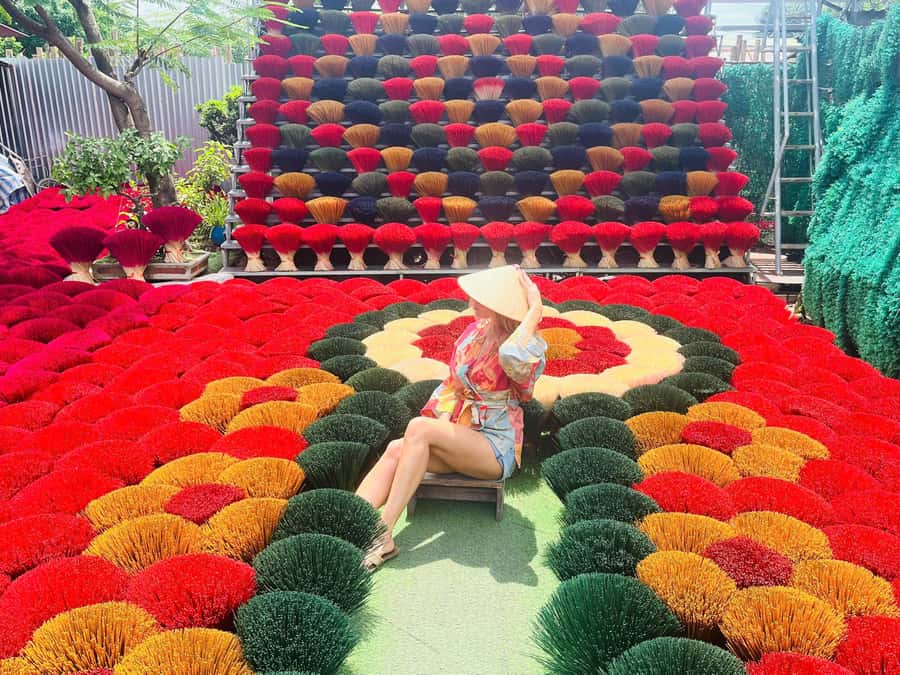
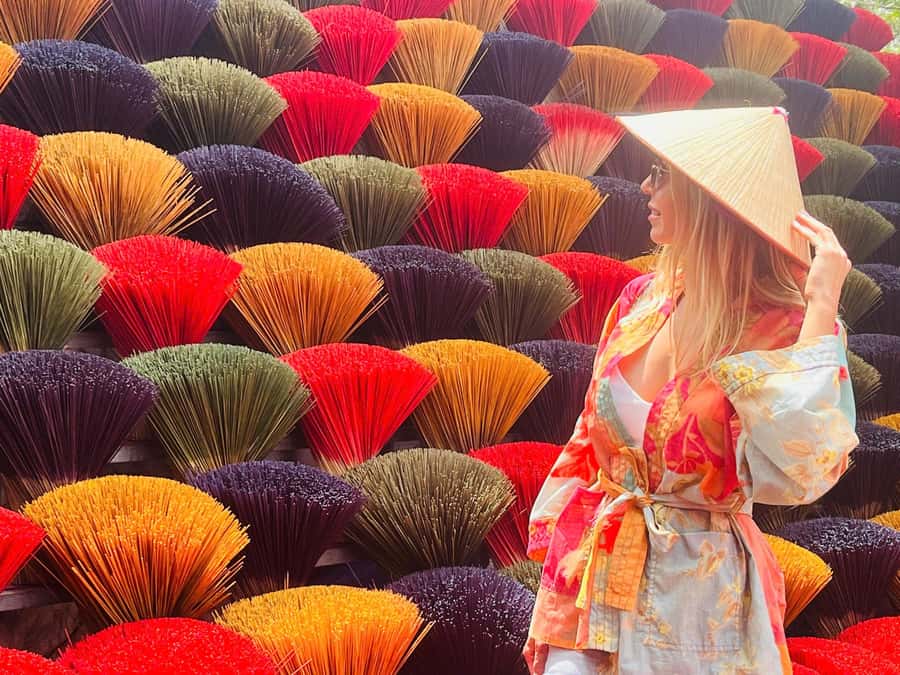
This tour is interesting because you see Vietnam’s handicrafts made in real working spaces, not just shopfronts, and I especially like the photo-heavy scenes in Quang Phu Cau where incense bundles sit in bright, candy-colored stacks. You also get a real sense of the skill behind each product, from traditional hat work to lacquer art. One consideration: if you’re sensitive to chemical odors, the tour notes that many places use acrylic paint and lacquer paint, which can smell strong indoors or close quarters.
You’ll start with hotel pickup in Hanoi’s Old Quarter area and ride out by comfortable bus with an English-speaking guide (you might even get Danny, who comes across as funny, helpful, and very good at explaining what you’re seeing). The best part for me is the pacing: it’s structured enough to make sense, but you still have time to watch artisans closely and ask questions.
If you book the half-day option, plan ahead for food. Lunch is only included on the full-day itinerary, so I’d eat beforehand or bring snacks to avoid getting sluggish during the afternoon.
In This Review
- Key highlights at a glance
- Craft villages with real hands-on work near Hanoi
- Half-day vs full-day: picking the right itinerary (and time window)
- Half-day option: 2 villages plus optional Train Street
- Full-day option: 3 villages with home-cooked lunch
- Chuong conical hat village: 300+ years of craft work
- Quang Phu Cau incense village: dyeing, color, and the family-scale process
- The incense factory stop: what changes at bigger production
- Lacquer art-making village: the process behind glossy art
- Optional Train Street drop-off: how to use it wisely
- Price and value: what $16 really covers
- Practical tips so your day feels smooth
- Bring comfortable shoes
- Plan around scents if you’re sensitive
- Eat smart for the half-day schedule
- Know the limits
- Who should book this Hanoi craft tour?
- Should you book it?
- FAQ
- What is the duration of the Hanoi incense, hat and lacquer local artisanal tour?
- Where do they pick you up in Hanoi?
- How long is the half-day option, and what times does it run?
- How long is the full-day option, and what does it include?
- Does the half-day tour include lunch?
- Is Train Street included on every itinerary?
- What craft items are included?
- Do I get to make or paint anything?
- Is there an English-speaking guide?
- What should I bring, and is there anything I cannot bring?
Key highlights at a glance
- Quang Phu Cau incense village: family-scale dyeing and production, plus a factory look
- Chuong conical hat village: a craft known for over 300 years, with hands-on hat-making
- Hanoi lacquer village: learn the lacquer process and get a chance to paint
- Colorful photo opportunities: especially at incense-making areas with dyed sticks
- Optional Train Street drop-off: add it if you want, or stay on the bus if you don’t
Craft villages with real hands-on work near Hanoi
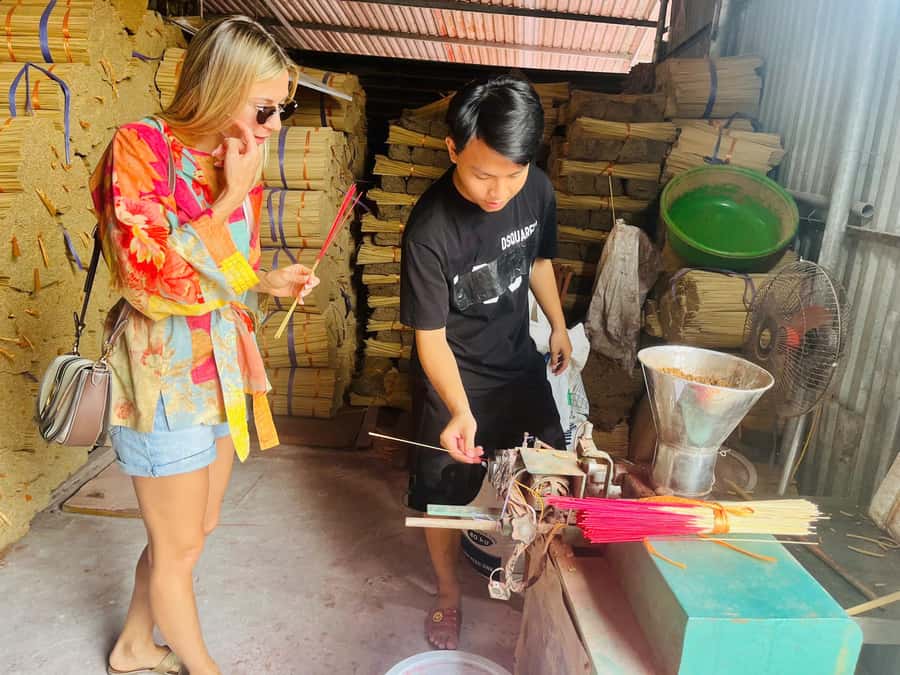
There’s a specific kind of satisfaction that comes from watching someone build something slowly and carefully. This tour does that well. Instead of bouncing through a checklist of monuments, you spend the day focused on three Vietnamese crafts that have been practiced for generations: incense-making, conical hat production, and lacquer work.
What makes this experience feel practical (and not like a staged show) is that you’re taken to places where the work is happening. You walk through the incense village and see how locals make incense on a family scale. You also move to a nearby factory for a bigger view of production. Then, on the full-day version, you finish with a lacquer workshop/factory-type setting where you can understand how lacquer products are made and try painting.
This is also the kind of day that helps you “read” Vietnam a little better. Crafts are not just souvenirs. They reflect local materials, local labor, and local routines. Even if you only buy one small item, you leave with a clearer idea of what it took to make it.
You can also read our reviews of more tours and experiences in Hanoi.



Half-day vs full-day: picking the right itinerary (and time window)
You’ve got two ways to do this, and the difference mostly comes down to how many villages you want plus whether you want lunch.
Half-day option: 2 villages plus optional Train Street
The half-day schedule runs about 6 hours with a morning and an afternoon slot.
- Morning: 7:45–13:30
- Afternoon: 11:45–17:30
This version visits two craft areas: the conical hat village (Chuong) and the incense village (Quang Phu Cau). It also includes an optional Train Street drop-off at the end. If you don’t want to go there, you wait on the bus.
Practical tip: since lunch isn’t included on the half-day, plan your meal timing. If your pick-up is late morning, eat a solid breakfast. If your pick-up is early afternoon, consider a quick snack right before you leave. The tour includes a water bottle, but it doesn’t replace a proper meal.
Full-day option: 3 villages with home-cooked lunch
The full-day route is longer, typically within the 5.5 to 8 hour range, and it includes a meal.
- Pick-up starts around 7:45–8:15
- You go to the incense village first
- Then conical hat village
- Then the lacquer art-making village
- Optional Train Street drop-off at the end
You’ll have home-cooked lunch on this one, and you’ll get more hands-on time. You’re also more likely to come back with more crafts, because the full-day route includes the lacquer stop plus a conical hat you can keep.
If you want a more complete craft day and don’t mind the time, I’d lean full-day. If you’re short on time or you only care about incense and hats, half-day is plenty.
Chuong conical hat village: 300+ years of craft work

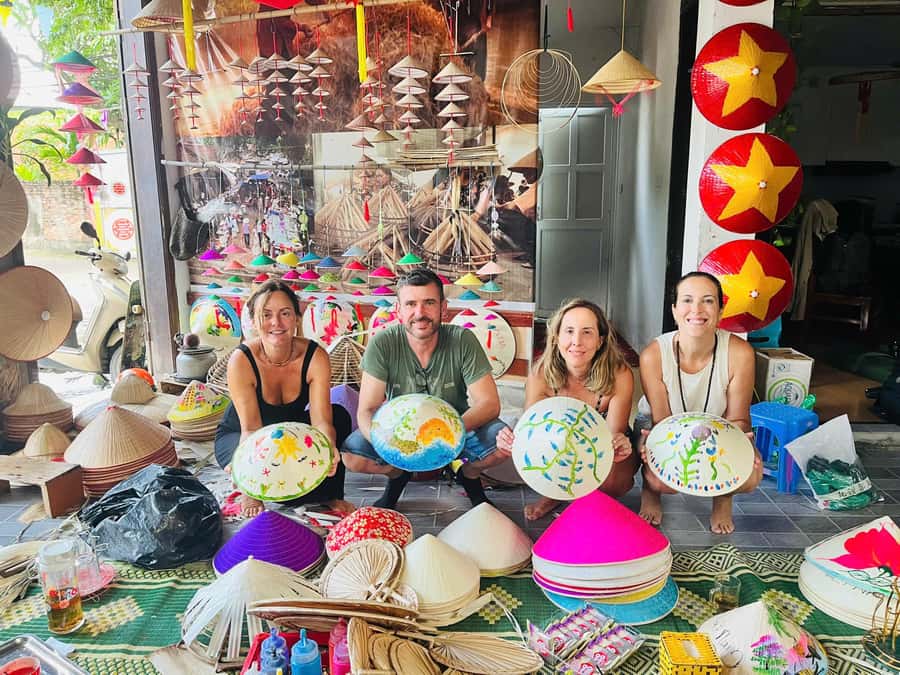
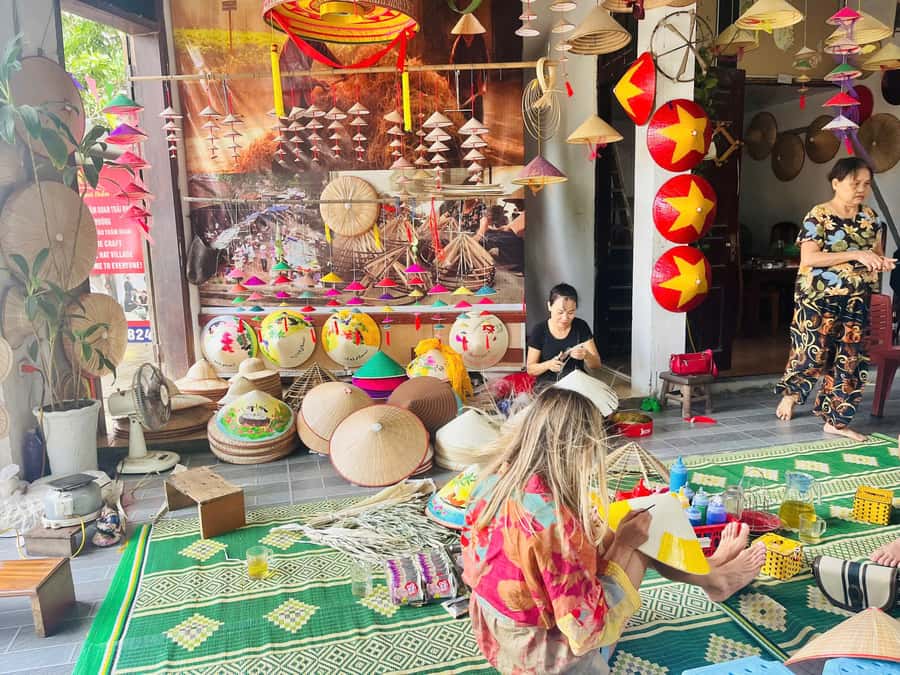
Chuong (the conical hat crafting village) is the kind of stop where you can actually see how the product is built. You’ll start by meeting your guide and then connecting with a local artisan’s place, where you can observe how conical hats are made.
The craft here is described as being known for over 300 years, which matters because it explains the rhythm of the work. These aren’t brand-new techniques. They’re the same basic process passed down and refined over time. That’s why it feels different from a modern “make-your-own” workshop where the focus is just on producing something quickly.
On the half-day tour, you primarily observe and learn. On the full-day tour, you go a step further: you can get involved in making and painting your own hat, which becomes a souvenir that feels earned rather than bought off a shelf.
What to watch for (so you get more out of it):
- Look at how materials are prepared before painting starts
- Pay attention to how the artisan handles the hat shape so it stays even
- Notice that the coloring step is part of the process, not just decoration
One small note from the tour details: many places use acrylic paint/lacquer paint. If odors bother you, the hat stop may still be fine, but the lacquer later can be stronger.



Quang Phu Cau incense village: dyeing, color, and the family-scale process
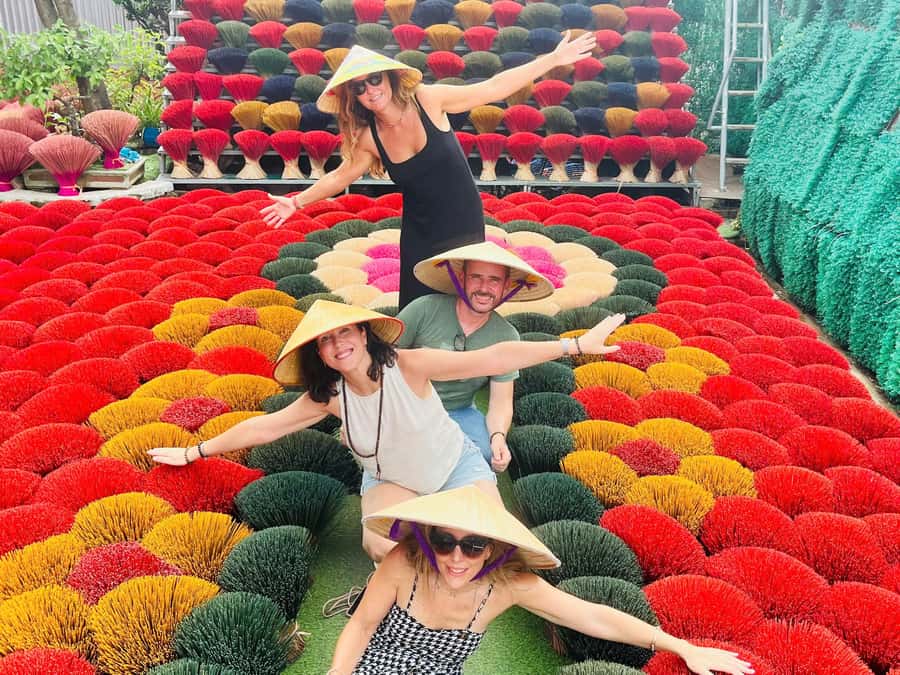
If you like textures and color, this is your star stop. Quang Phu Cau is known for incense production for more than 100 years, and the tour takes you into the village center where incense-making happens on a manual, family scale.
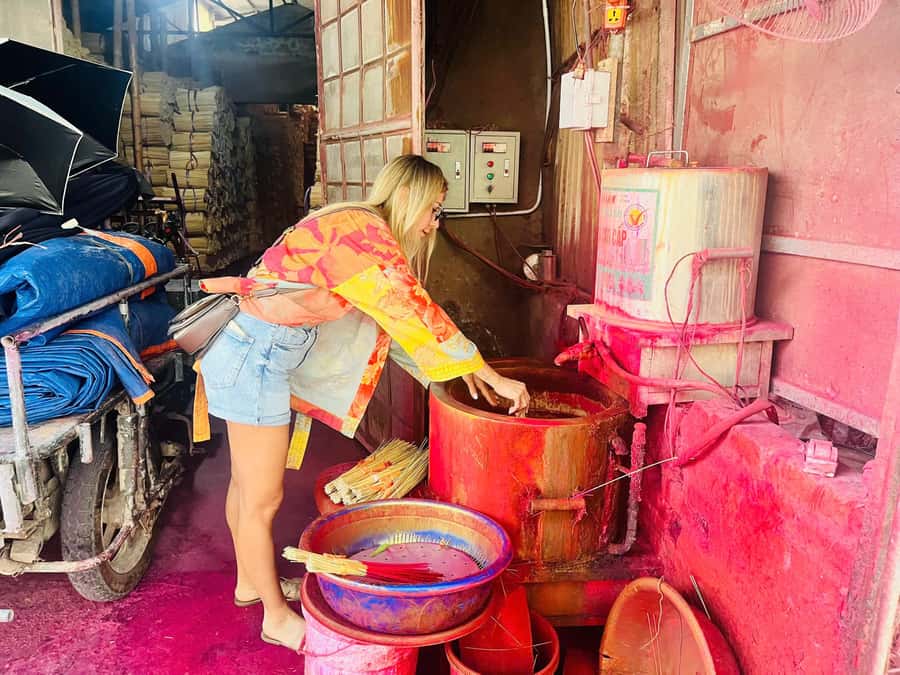
You’ll walk through the village and see locals making incense sticks step-by-step. The experience highlights meeting a family who specializes in dyeing incense sticks, and that’s where the visual payoff shows up. The incense sticks can look like colorful bundles of small rods, grouped and arranged in a way that’s easy to photograph and hard to forget.
This stop is also where you get the clearest sense of “craft equals routine.” Incense is not a one-time project. It’s a workflow. The tour layout helps you understand that by putting the emphasis on how locals work, not just the final smell.
Photos are the obvious attraction, but don’t treat it like a picture-only stop. Take a minute to ask questions about dyeing and handling. Even basic explanations can change what you notice when you look at those stacks of color.
The incense factory stop: what changes at bigger production
After seeing the village scale work, the itinerary takes you to a nearby factory for a “next level” view. This matters because you get a more complete picture of how incense goes from artisan craft to larger production.
You’ll learn how incense is made from scratch and also hear about the lives of manual workers. That’s a big difference from tours that treat factories as purely mechanical. Here, it’s positioned as a place where human labor and careful handling still drive the product.
If you’re trying to choose between half-day and full-day, the presence of the factory viewpoint can help you decide. The half-day itinerary includes incense village activities plus the factory visit, so you still get this perspective. In other words, even the shorter version doesn’t skip the “how it’s made” story.
Lacquer art-making village: the process behind glossy art
On the full-day itinerary, you finish at a lacquer art-making village. The tour frames lacquer as the quintessence of local artwork, and that shows up in how the stop is structured.
You visit a large, family-run type of factory setting where you can observe and learn the lacquer production process. Then you move to a local artist house to see how lacquer products are made, and you may even get a chance to paint a lacquer.
A practical caution from the tour notes: lacquer-related places can involve stronger odors due to lacquer paint and acrylic paint. If you’re sensitive to smells, this is the moment to pay attention and ask what you’ll be exposed to.
Also read the fine print on what’s not included: the tour notes that the lacquer piece for painting purpose only isn’t included. Translation: painting time may come with a purchase element. You should expect to pay if you want your painted item as a keepsake.
If you love crafts, lacquer is one of the most satisfying mediums because it looks simple until you watch the process. It’s a layered art form, and even learning the basics helps you appreciate why lacquer products often cost more than typical handmade souvenirs.
Optional Train Street drop-off: how to use it wisely
Train Street is optional here, which is exactly how it should be handled. The tour includes a first drop-off point on Hanoi Train Street. If you don’t want to visit, you can wait on the bus instead.
Here’s the way to think about it. Adding Train Street can turn your day into a “craft + iconic Hanoi photo stop” combo. Skipping it keeps your time focused on hands-on work and village atmosphere, which is the real strength of this tour.
If you do go for Train Street, plan to take breaks. It’s a photo attraction with crowds and an intense street vibe. If you’re the type who wants slow, calm looking time, staying with the tour and heading back might feel more relaxing.
Price and value: what $16 really covers

At around $16 per person, this is the kind of deal that can make sense even if you only pick the half-day. You’re paying for more than transport. The tour includes:
- Hotel pickup and drop-off in the Hanoi Old Quarter area
- An English guide
- Entrance fees
- A water bottle
- For the half-day: a conical hat included
On the full-day option, you also get home-cooked lunch, which can be one of the biggest hidden costs on short day trips.
What’s not included (so you’re not surprised later):
- Other drinks and personal expenses
- A guide/driver appreciation payment
- For full-day lacquer painting, the lacquer piece for painting purpose only
- Snacks for half-day (since lunch isn’t included)
My advice: treat this price as “mostly all-in for the experience,” but budget a little extra for drinks and for any take-home craft connected to painting—especially on the lacquer stop.
Practical tips so your day feels smooth

This is the kind of outing where small planning choices can make a big difference.
Bring comfortable shoes
You’ll be walking around village areas and craft spaces. The tour specifically calls out comfortable shoes, and I agree. The ground can be uneven and the stops can involve short indoor/outdoor transitions.
Plan around scents if you’re sensitive
The tour notes that artisans often use acrylic paint/lacquer paint. If odors bother you, this is important. You may want to keep your exposure time in mind, especially at the lacquer stop.
Eat smart for the half-day schedule
Half-day does not include lunch. If you’re prone to getting hungry mid-afternoon, eat beforehand or pack a few snacks. A small snack can also help you stay patient while you watch longer processes.
Know the limits
The tour data says it’s not suitable for wheelchair users and pregnant women, and pets aren’t allowed. If any of these apply, it’s better to choose a different tour style that matches your needs.
Who should book this Hanoi craft tour?
This tour is a strong match if you:
- Like making things with your hands, not just taking photos
- Want a cultural day that’s more local and craft-based than museum hopping
- Enjoy clear, step-by-step explanations from an English-speaking guide
- Don’t mind leaving the center of the city to reach quieter, working villages
It’s also a good pick if you want a day trip with variety: incense village color, conical hat craft, and lacquer art, plus optional Train Street at the end.
Should you book it?
I’d book this tour if your idea of a great Hanoi day is craft detail and real workshop observation. The value is solid because the logistics are handled (pickup/drop-off, entrances, guiding), and on the full-day option you also get home-cooked lunch and extra creative time.
I wouldn’t book if you’re strongly scent-sensitive, because lacquer and acrylic/lacquer paint odors could be uncomfortable. I’d also skip it if you need full wheelchair access or if you’re pregnant and prefer a lighter, more flexible schedule.
If you’re okay with that trade-off, this is one of those experiences that leaves you with a better understanding of what Vietnamese souvenirs actually represent.
FAQ
What is the duration of the Hanoi incense, hat and lacquer local artisanal tour?
The tour duration is listed as between about 5.5 and 8 hours, with starting times depending on availability.
Where do they pick you up in Hanoi?
Pickup is included in the Hanoi Old Quarter area, with the itinerary listing Hoàn Kiếm as the pickup point.
How long is the half-day option, and what times does it run?
The half-day option is about 6 hours. There are a morning slot from 7:45 to 13:30 and an afternoon slot from 11:45 to 17:30.
How long is the full-day option, and what does it include?
The full-day option includes visits to three villages (incense, conical hat, and lacquer) and includes home-cooked lunch. Pickup starts around 7:45 to 8:15.
Does the half-day tour include lunch?
No. The half-day option does not include lunch, so it’s recommended that you eat beforehand or bring snacks.
Is Train Street included on every itinerary?
Train Street is optional. The tour can drop you off there, or you can wait on the bus if you don’t want to visit.
What craft items are included?
A conical hat is included. For lacquer painting, the lacquer piece for painting purpose only is listed as not included.
Do I get to make or paint anything?
On the conical hat stop, you can get involved in the process of making and painting your own hat (as a souvenir). On the lacquer stop, you can paint a lacquer.
Is there an English-speaking guide?
Yes. The tour includes a live guide in English.
What should I bring, and is there anything I cannot bring?
You should bring comfortable shoes. Pets are not allowed. If you are sensitive to smells, note that acrylic paint/lacquer paint is used in many places visited.