REVIEW · HO CHI MINH CITY
Daily Small Group Tour to Saigon City and Cu Chi Tunnels
Book on GetYourGuide →Operated by MILLENIUM TRAVEL CO.,LTD · Bookable on GetYourGuide
This war history hits close to home. You’ll pair major Saigon landmarks with the War Remnants Museum and then head to the Cu Chi Tunnels for a crawl-and-learn day. It’s a hard subject, but the format is practical and guided, with time to see the key sights without getting lost in translation.
What I like most is how the tour builds context first, so the tunnel experience makes more sense once you’re down there. You’ll also get a true hands-on feel at Cu Chi: a tunnel intro video, time inside the site, tea and cassava, and the option to try the rifle range.
One thing to consider: it’s a 12.5-hour schedule and some parts can feel a bit tight, especially if you want to linger longer at the museum.
In This Review
- Key takeaways before you go
- A long, structured day linking Saigon to Cu Chi
- Pickup in District 1: easy if you’re central, less so if not
- Independence Palace: where the city’s timeline turns
- Notre-Dame Cathedral and the Central Post Office: French colonial landmarks with practical time
- War Remnants Museum: hard images, strong context
- Lunch in a local restaurant: included fuel for a long day
- Cu Chi Tunnels: video, tunnel village, tea/cassava, and the rifle range
- The reality of the tunnel crawl: who should think twice
- Group size and guide quality: the main reason people rate it highly
- Timing and pacing: where the schedule can feel rushed
- Comfort tips that make the day easier
- Should you book the Saigon City and Cu Chi Tunnels tour?
Key takeaways before you go
- Max 12 people means you’re less likely to be shuffled around like a sardine.
- English-speaking guides with strong storytelling can make the sites click fast.
- Cu Chi isn’t just photos: you get a tunnel crawl plus tea/cassava and a rifle range option.
- Saigon landmarks in one sweep (Reunification Palace, Post Office, Notre-Dame outside).
- Lunch and bottled water are included, so you’re not scrambling midday.
- The day is physically demanding with lots of walking and a crawl underground.
A long, structured day linking Saigon to Cu Chi
This tour is designed for one thing: giving you the full Vietnam War picture across two worlds. First you’re above ground, moving through Saigon’s historic center with stops at the Independence Palace, the Central Post Office, and the War Remnants Museum. Then you switch gears and go underground to see how Viet Cong fighters lived, moved, and survived in the tunnels.
The total time is about 12.5 hours, with hotel pickup in Ho Chi Minh City’s central District 1 area (with a couple of excluded wards). You’ll end the day back in District 1 in the early evening, with the exact return time depending on traffic.
If your goal is one solid day of history that doesn’t require planning every transfer yourself, the structure is a big part of the value.
You can also read our reviews of more city tours in Ho Chi Minh City



Pickup in District 1: easy if you’re central, less so if not
Pickup is included for centrally located hotels in District 1, but Đa Kao Ward and Tan Dinh Ward are excluded. If you’re not in the pickup zone, you’ll need to make your own way to a meeting point at 112 Tran Hung Dao Street in Pham Ngu Lao Ward, with an 08:00 AM departure.
That matters because it shapes how smooth your start will be. Staying in central District 1 usually means a short walk to the van and a quick morning roll-out. If you’re elsewhere, plan extra buffer time for getting to the meeting point.
Also keep in mind: you’re asked to arrive at least 10 minutes early at pickup, so you don’t start the day sprinting.
Independence Palace: where the city’s timeline turns
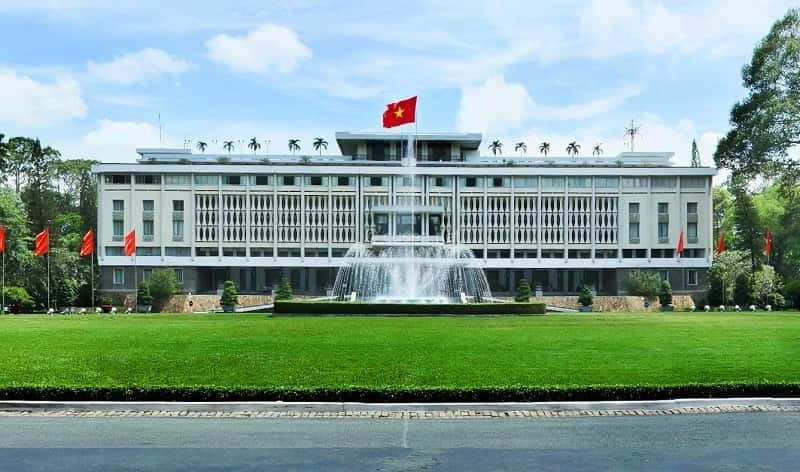
Your day starts with a guided visit to the Independence Palace (also called Reunification Palace). This stop is about an hour, and it’s the kind of place where a guide really helps, since you’re looking at rooms, corridors, and details that become more meaningful once you understand what each area represents.
The palace stop is useful even if you’re not a hardcore history person. It’s a physical, on-site way to grasp the timing of political change in South Vietnam, and it sets an emotional tone for the rest of the day.
You’ll be on your feet and moving through rooms, so comfortable shoes matter here.
Notre-Dame Cathedral and the Central Post Office: French colonial landmarks with practical time
Next up you’ll visit the Saigon Notre-Dame Cathedral. Because the cathedral is currently being restored, you only see it from the outside. This one is a short photo stop with about 15 minutes guided time.
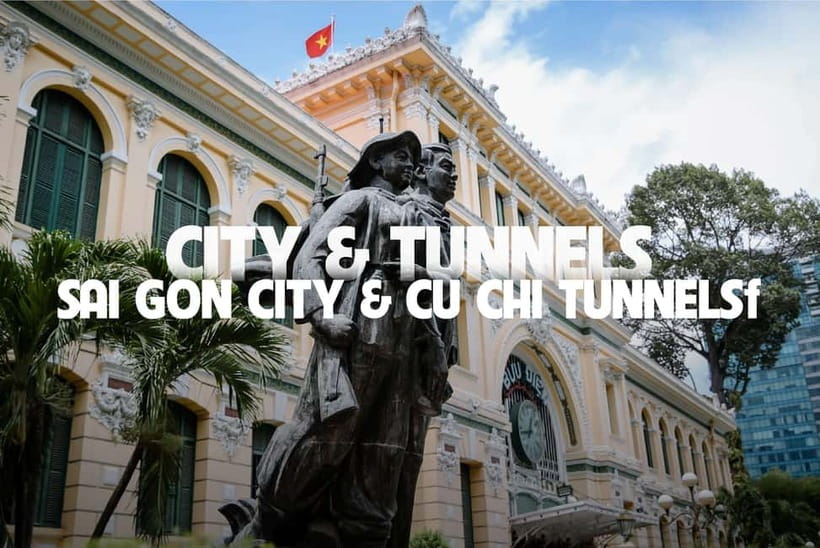
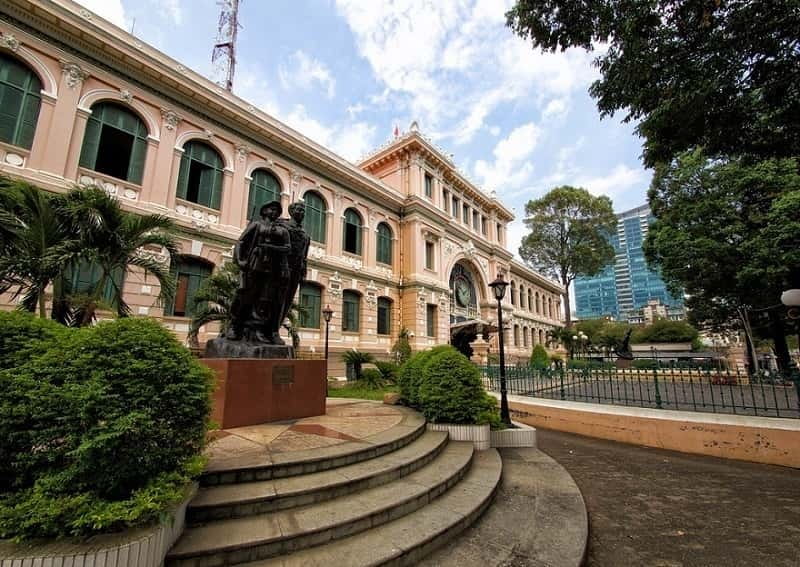
Right after that, you’ll go to the Saigon Central Post Office. This is another French colonial-era landmark with a photo stop plus guided sightseeing time (about 25 minutes). The post office is a place where you can appreciate the building even without a long lecture, and it’s a great moment to slow down and take photos.
Here’s the practical truth: these are brief stops compared to the museum and Cu Chi. If you want deep time inside either location, this isn’t a tour built for lingering. It’s built for coverage. If you like souvenir crafts and postcards, this is the time to do it, since your schedule won’t leave you much slack later.
War Remnants Museum: hard images, strong context
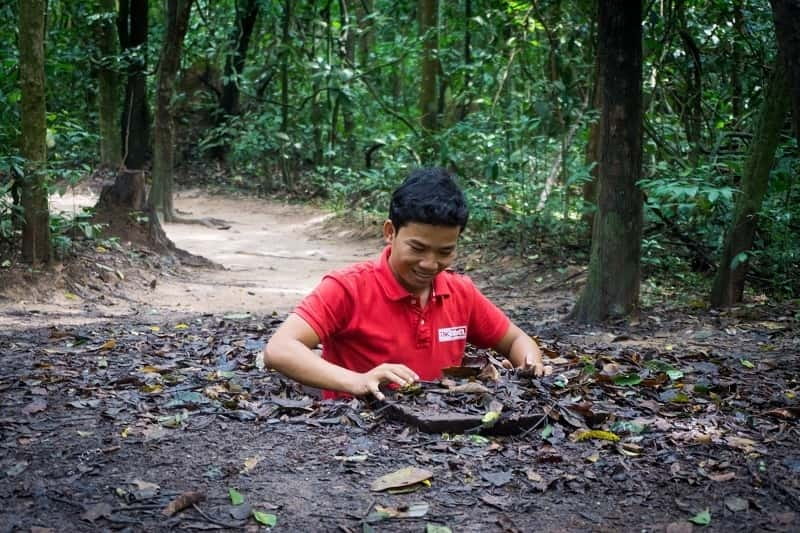
The War Remnants Museum is the emotional center of the day. You’ll get a guided visit and about an hour on-site, plus time to browse exhibits at your own pace.
This is not “light history.” The museum is known for presenting the human cost of the war, including artifacts and photos related to bombings and chemical warfare, along with material connected to both the Vietnam War and earlier Indochina conflict-era history, including colonial French context. Even if you think you know the topic, a museum visit changes the way it lands in your head.
A couple of things to plan for:
- One hour can feel short if you stop often to read captions and look closely at photos.
- The tour format means your guide may orient you and point out key areas, but you should expect the pace to be guided, not museum-slow.
If you’re the type who wants to absorb every detail, I’d treat this stop as a strong starter. You can always return later on your own if you want to spend more time with the exhibits that hit you hardest.



Lunch in a local restaurant: included fuel for a long day
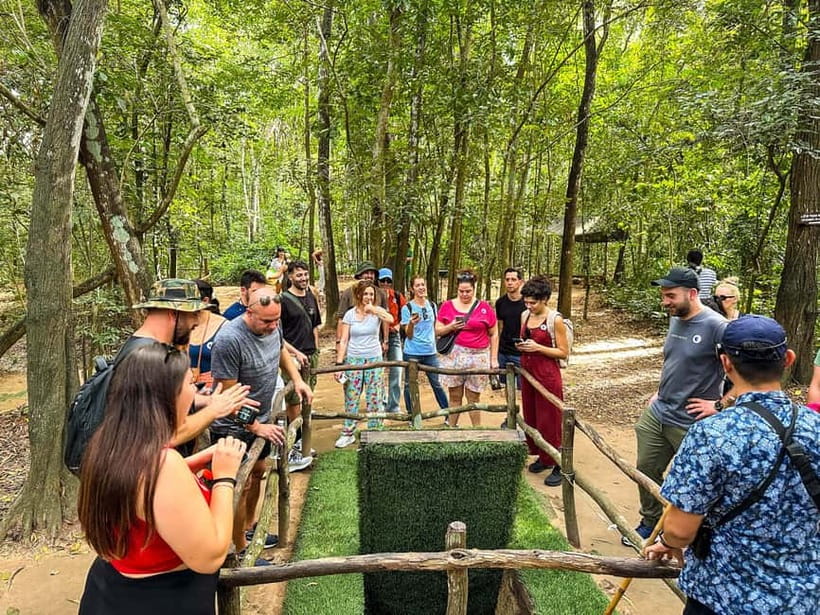
Lunch is included, and it’s one of those underrated benefits of a guided day trip: you don’t have to decide where to eat at the exact moment your energy dips.
Based on past participant feedback, the included lunch is generally considered good, and you’ll also have bottled mineral water provided during the day (one bottle per person). If you want soft drinks or anything beyond the water, you should expect to pay extra.
This is the meal that helps you survive the second half of the tour—especially because Cu Chi involves more walking and a physical crawl option.
Cu Chi Tunnels: video, tunnel village, tea/cassava, and the rifle range
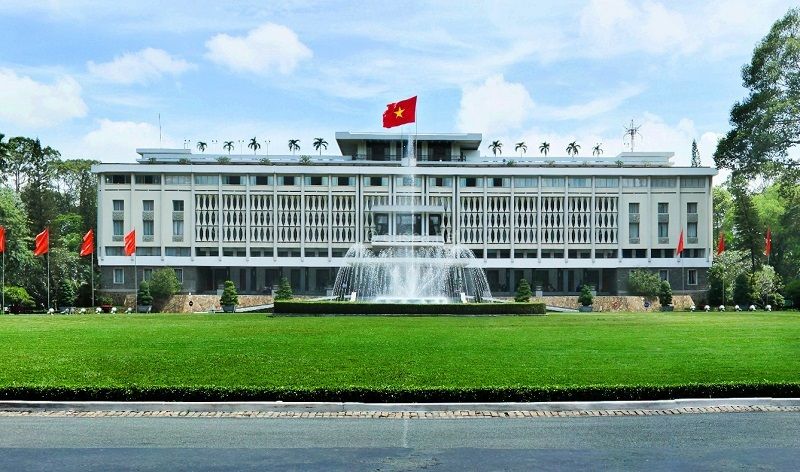
Then comes the part most people remember: the Cu Chi Tunnels visit.
You’ll start with an intro video covering the history of the tunnels and daily life during the war. That intro matters because it gives you a framework before you step into the underground village area. Without it, the tunnels can feel like a maze for tourists. With it, you start to see why the design exists.
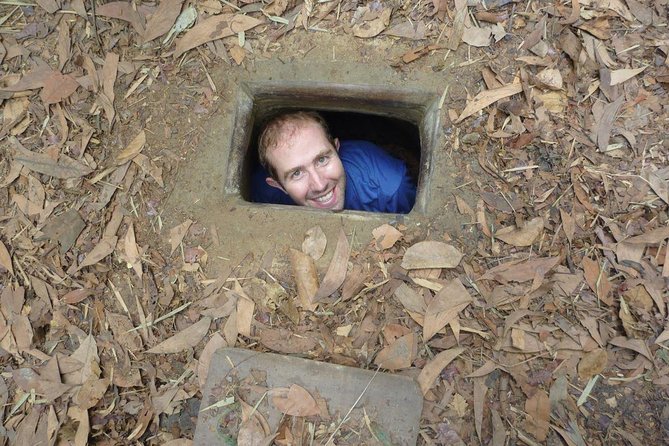
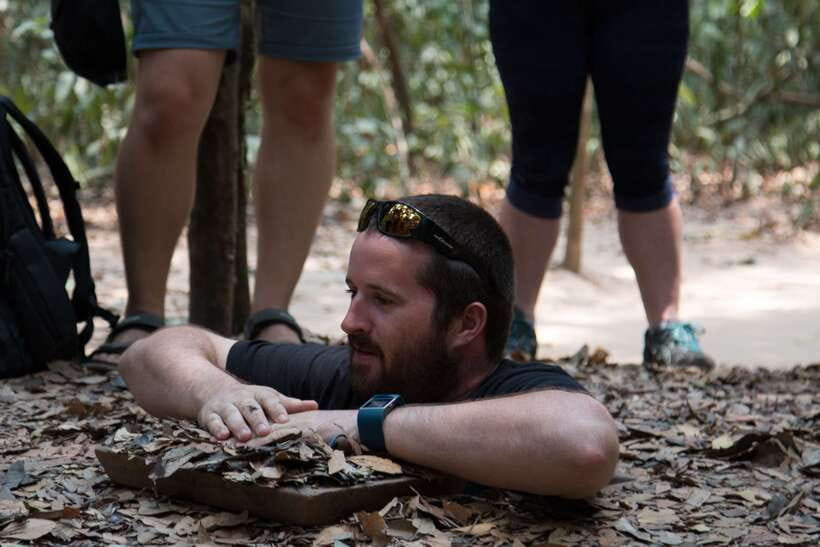
After that, you’ll have a guided visit around the tunnels entrance area and exhibits (about 1.5 hours total for that segment). You’ll also have the chance to walk through an underground village setting. Some sections let you crawl through tunnel passages, which is the most hands-on part of the experience.
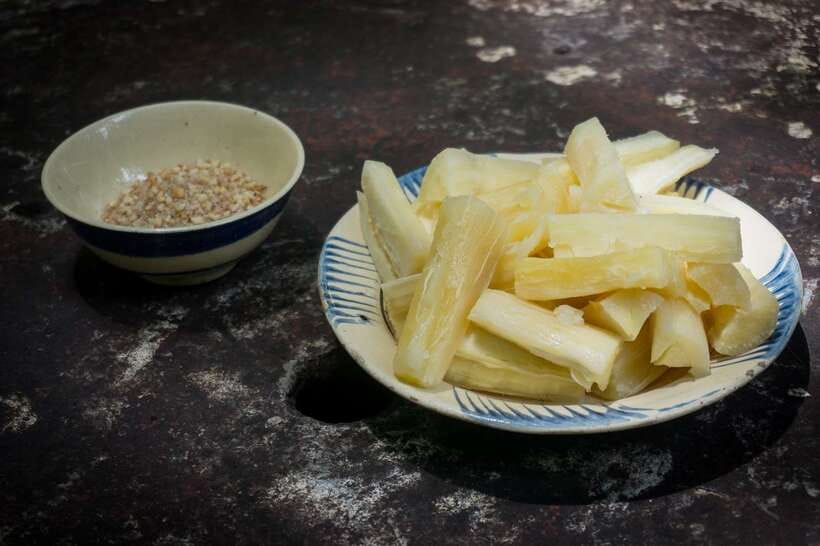
They also offer a taste of what guerrillas reportedly used to survive—tea and cassava. It’s small, but it adds a food-world connection to what you’re seeing.
Finally, there’s an option to shoot at the rifle range. If you’re interested, this is not just a prop moment. It’s a real activity at the site, with participants able to fire a selection of guns for an additional fee (the exact options and pricing depend on what’s offered that day).
The reality of the tunnel crawl: who should think twice
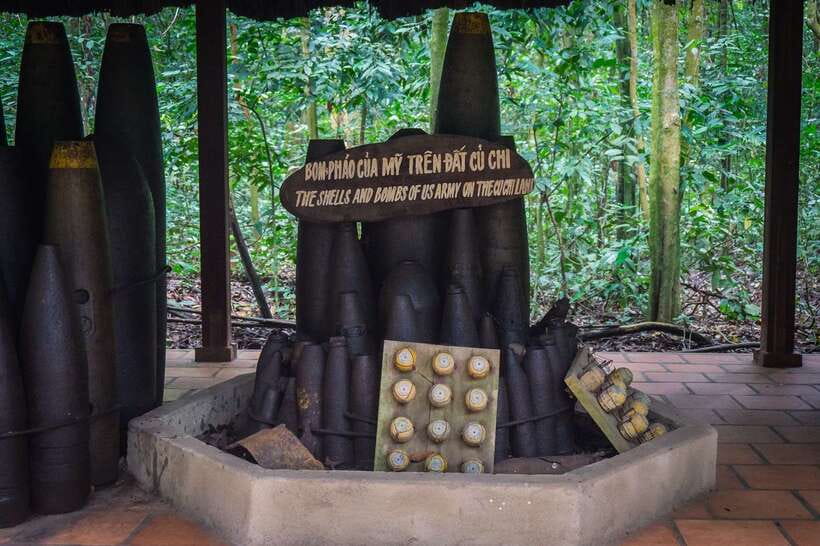
This tour isn’t for everyone.
It’s not suitable for people who:
- are pregnant
- have back problems
- have mobility impairments or use wheelchairs
- have claustrophobia
- have heart problems
That’s because the tunnel areas are physically tight and involve crawling and uneven movement. Even if you’re fit, you should take the tunnel safety seriously and think about whether enclosed spaces are a deal-breaker for you.
If you’re on the fence, the key question isn’t how brave you feel today. It’s how your body reacts when you’re in a narrow space with limited visibility.
Group size and guide quality: the main reason people rate it highly
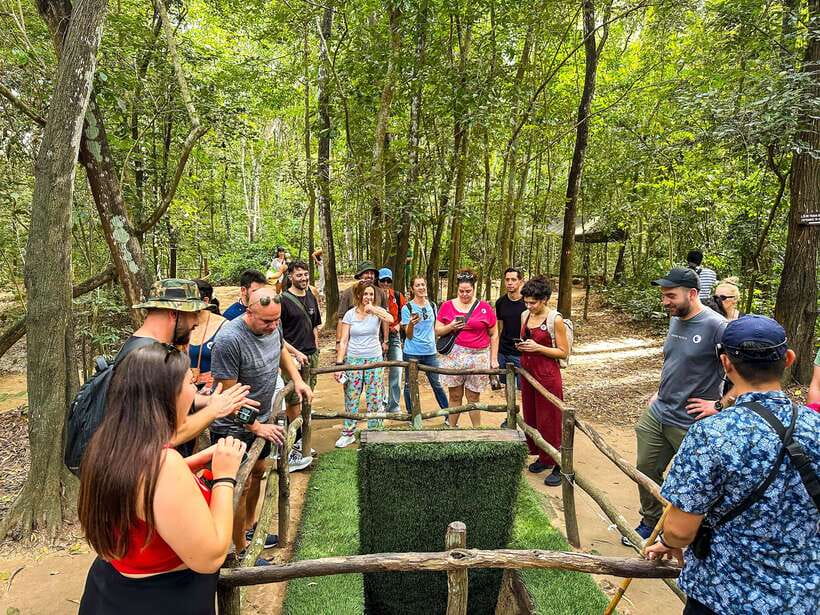
Small group means better rhythm. This tour caps at 12 participants, and that usually helps keep your pace manageable, especially on a long schedule.
The guide is often the difference between a tour that feels like a checklist and one that feels like a coherent story. Past participants have praised guides by name—people like Leo, John, Patrick, Vi, Tom, Tibiet, Felix, Huy, Lina, Xuan, Ryan, Danny, Joe, and Trum. Across those names, the common themes are clear English, lots of answering questions, and keeping energy up during long van rides.
Many guides also bring humor and personal context, which helps when the subject matter is grim. You’re not just getting facts; you’re getting explanations that tie the history to daily life, choices, and survival.
Timing and pacing: where the schedule can feel rushed
This is a full-day tour, so you’ll move. Transfers take time, and the schedule is tight on purpose: Saigon highlights first, museum in the middle, tunnels late afternoon.
Two timing realities to know:
- If your priority is spending extra time in the War Remnants Museum, you may feel the museum segment is short.
- The Notre-Dame stop is brief since the cathedral is outside-only due to restoration.
There can also be delays at the start of the day if multiple pickup points are involved. Even if the tour is well-run, one late joining passenger can throw off timing, and that’s how you end up feeling the day is more rushed than it needs to be.
On the plus side, the tour does well with keeping the flow moving so you actually see everything promised in one day.
Comfort tips that make the day easier
A tour like this punishes small mistakes—wrong shoes, too little water intake, bad planning around sun and heat.
Bring:
- comfortable shoes (your feet will notice if you don’t)
- sunglasses and sunscreen
- a sun hat
Also note:
- No large bags or oversize luggage.
- No smoking during the tour.
- Pets aren’t allowed.
This kind of day is easier if you travel light and keep what you need easy to reach during stops.
Should you book the Saigon City and Cu Chi Tunnels tour?
Book it if:
- you want a one-day combination of Saigon history and Cu Chi’s underground story
- you like guided context more than self-planning
- you’re comfortable with walking and you’re okay with the tunnel crawl experience (or at least the tight environment)
Skip it or consider a different format if:
- claustrophobia is an issue
- you have back, heart, or mobility concerns
- you want a slow, deep museum day where you can linger for hours
For the right person, this tour is strong value: you pay around $54 for transportation, an English-speaking guide, entrance fees, lunch, and bottled water—then you get two major historical anchors in one long loop around Ho Chi Minh City and Cu Chi.
If you want one day that gives you both perspective and impact, this is one of the more practical ways to do it.

![[Free E-sim] Half Day Guided Tour in Ho Chi Minh City - Stop 1: Central Post Office—European style and easy first photos](https://2.thevietnamtraveler.com/wp-content/uploads/free-e-sim-half-day-guided-tour-in-ho-chi-minh-city.jpg)