REVIEW · HO CHI MINH CITY
Cu Chi Tunnels Half Day Of Adventure
Book on Viator →Operated by Viet Kolors Tour · Bookable on Viator
Cu Chi tunnels hit harder than you expect. This half-day adventure from Ho Chi Minh City takes you out to a Vietnam War underground network, with an early start that keeps the experience calmer and more reflective. You’re not just reading facts from a sign; the tour leans on storytelling, small-group pacing, and hands-on-style stops like the command post and trap explanations.
I love the convenience of hotel pickup and drop-off in central districts, plus air-conditioned transport that makes the ride out to Cu Chi feel civilized. I also like that you get an English-speaking guide who ties together how the tunnels formed, how they were used, and what daily life and survival looked like below ground. In past visits, guides named Ken and Mr. Chien stood out for being friendly and clear, and for making the history feel human rather than just technical.
One thing to plan for: lunch isn’t included, and there are optional add-ons once you’re there (like a paid bullet activity). If you’re picky about timing or meals, you’ll want to budget a bit of extra time and money.
In This Review
- Key things I think you’ll notice right away
- Getting to Cu Chi from Ho Chi Minh City without hassle
- Early morning pacing: quiet air, fewer crowds, better focus
- First stop: the tunnel overview that sets your expectations
- Underground resistance base: what you’ll see and why it matters
- Hoang Cam kitchen and trap explanations: the details that stick
- About the optional bullet activity and extra costs
- Guide quality: why Ken and Mr. Chien keep coming up
- Timing and comfort: a true half-day with a clear shape
- Price and value: $18 that actually includes the essentials
- Who this Cu Chi half-day adventure suits best
- Should you book Viet Kolors Tour for Cu Chi Tunnels?
- FAQ
- What is the duration of the Cu Chi Tunnels half-day tour?
- How much does the tour cost?
- Does the tour include pickup and drop-off?
- Where does the tour start and end?
- Is the admission ticket included?
- Is lunch included?
- Is there an English-speaking guide?
- Are bullets available as an optional activity?
- What should I know about cancellations?
Key things I think you’ll notice right away
- Early start for a quieter Cu Chi experience before the busiest waves arrive
- Pickup and drop-off from District 1, 3, and 4 hotels, plus return to the meeting point
- English-speaking guide storytelling that connects the tunnels to real decisions people had to make
- On-site highlights like the command post and remaining cannons, plus explanations of hidden traps
- Hoang Cam kitchen and tunnel walking options that add texture beyond the underground maze
- Strong value at $18 since fees, taxes, bottled water, and admission are included
Getting to Cu Chi from Ho Chi Minh City without hassle
The tour is built around a simple idea: if you’re going to spend hours learning about the past, you shouldn’t lose your whole morning fighting traffic. Pickup is offered from hotels in Districts 1, 3, and 4, and you’ll ride in an air-conditioned van. The drive is about 60 km, taking roughly 1.5 hours each way, so the whole day has a real rhythm: travel, learn, explore, then head back.
The van part matters more than people think. You get bottled water along the way, which is handy when you’re heading into an active site where you’ll likely want to stay hydrated. The tour also ends back at the meeting point near 156 Lê Thánh Tôn in District 1, so you’re not stuck figuring out return transport.
There’s also a practical comfort factor: the tour is listed as a private tour/activity for your group. In real life, that usually means the guide can keep your pace smoother, and you’re less likely to spend half the day waiting for stragglers. (That’s especially nice on a site that’s spread out and not designed for long lines.)
You can also read our reviews of more tours and experiences in Ho Chi Minh City.



Early morning pacing: quiet air, fewer crowds, better focus
Cu Chi can feel overwhelming in the wrong conditions. So I like that this tour is designed to start early, aiming to let you experience the site before the crowds arrive. That timing shift changes the vibe. You get that calmer early-air feeling—breeze, forest scents, the sense that the place is still thinking about what happened there long after the war ended.
This kind of pacing also helps you absorb the story properly. When the site is calmer, you can actually pay attention to the guide’s connections: how the tunnels were organized, why certain parts were used, and how people moved through the system under pressure. When you’re squeezed by crowd flow, it’s easy to miss details like the purpose of the command post or how trap locations created a layered defense.
One note you’ll want to respect: the experience requires good weather. If conditions are poor, the tour may be rescheduled or refunded. That’s the honest part—Cu Chi is an outdoor site as much as it is an underground one.
First stop: the tunnel overview that sets your expectations
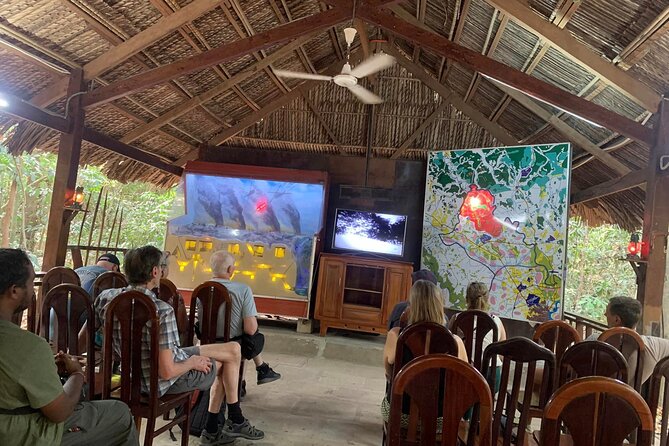
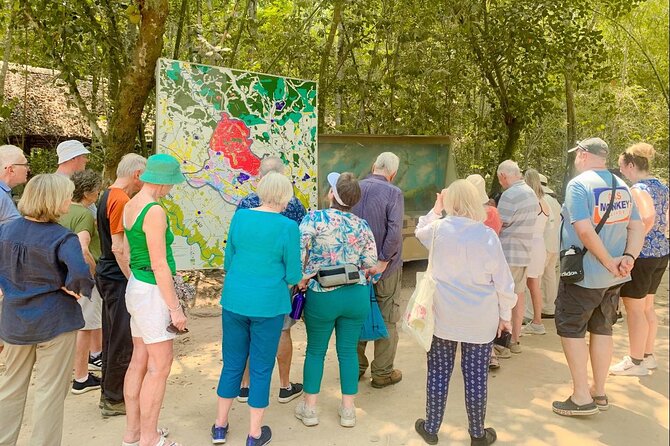
When you arrive at Cu Chi, the tour doesn’t immediately throw you into the maze. You get a brief historical overview that covers how the tunnels were formed, how they were used, and what structures made the system work. The tour also references documentaries to help anchor the story in the bigger Vietnam War context.
This setup is valuable because Cu Chi is not just one tunnel. It’s an extensive network, and without a baseline explanation, it can feel like you’re wandering without knowing what you’re looking at. With the overview first, the later stops click into place—especially when the guide starts explaining how the guerrilla resistance used the terrain and the underground layout to survive and fight.
The tour also includes a walkthrough of key elements above ground and at the edge of the system: you’ll hear about wartime traps hidden within the tunnels, then move on to the command post and a look at remaining cannons. Even if you know the broad story already, this part helps you notice how the site was organized for control, communication, and defense rather than just concealment.
Underground resistance base: what you’ll see and why it matters
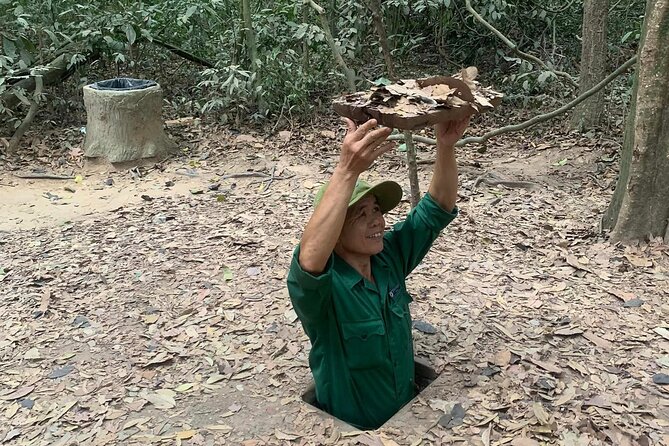
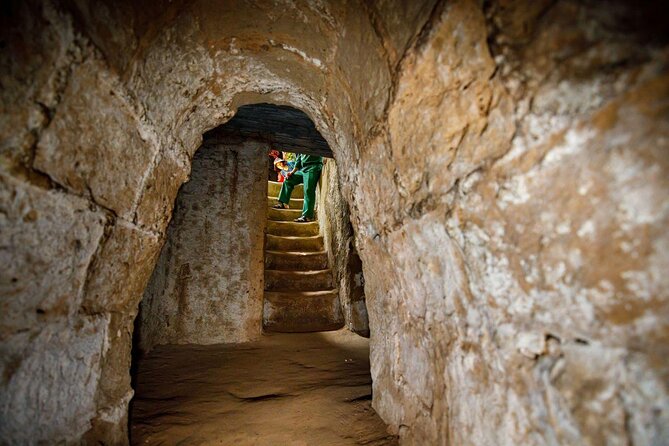
After the overview and key exhibits, you head deeper into the underground resistance base. This is where the tour’s “half day” format still manages to feel substantial. You’re guided through the space with explanations of how the system supported resistance efforts—how people could move, hide, and respond when the situation changed.
An optional walking tunnel experience is included as part of this exploration. That optional element is important. You can choose a level of involvement that fits your comfort. It also helps if you’re traveling with mixed groups—say, someone who wants to move through more of the tunnel area versus someone who prefers to stay focused on the explanations and exhibits.
The tour’s tone is built to be emotionally grounded. The goal isn’t shock for shock’s sake. It’s about understanding how ordinary human needs—food, shelter, communication, safety—had to be solved in extraordinary circumstances. That’s one reason the stops later in the tour matter: the tour isn’t only about tunnels; it’s also about the daily mechanisms that kept people alive.
Hoang Cam kitchen and trap explanations: the details that stick
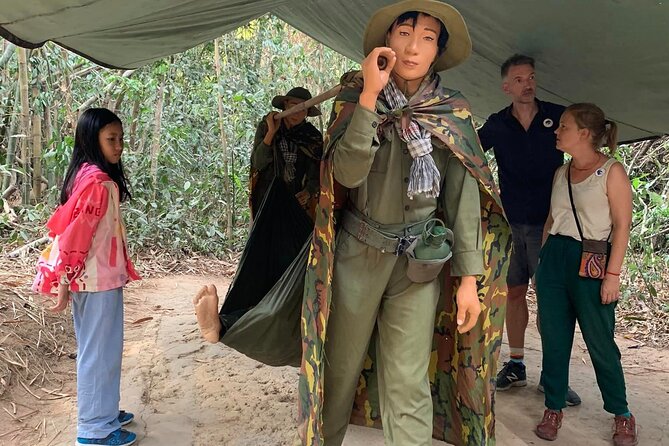
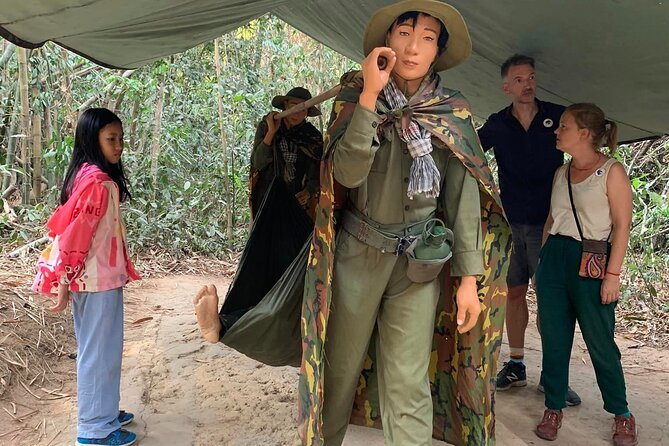
This is a tour where the small details carry the weight. One of the distinctive stops is the Hoang Cam kitchen, paired with explanations of handmade traps and other features of the tunnels. The kitchen stop is more than a scene from a museum; it’s a reminder that survival isn’t abstract. It’s practical decisions made every day with limited resources.
The trap explanations also add complexity. Traps weren’t random hazards; they were strategic features designed to complicate movement and decision-making for those trying to locate or enter the tunnel system. Hearing that logic out loud makes the underground space feel engineered—less like a spooky hole in the ground, and more like a living system built around real constraints.
If you’re someone who likes understanding cause and effect, this tour rewards you. You start to see the tunnel network as a set of linked problem-solutions: concealment, movement, warning, defense, and control. That’s why the command post stop is so useful. It gives you a reference point for how leadership and coordination worked underground.





About the optional bullet activity and extra costs
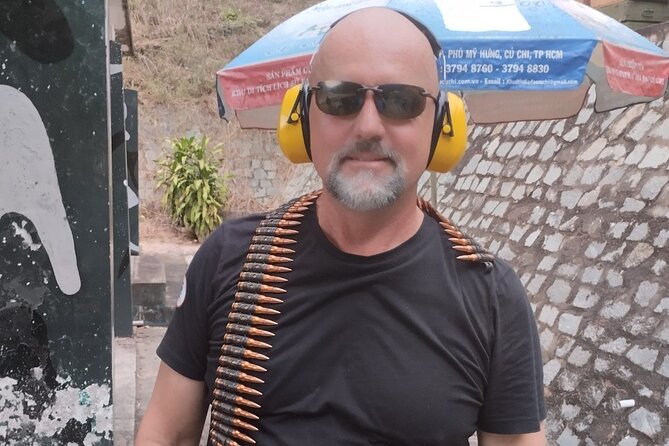
The big value point here is that the core tour includes the admission ticket and the guided experience. But the site also offers an optional activity: bullets can be purchased on-site (listed as 600,000 VND for about 10 bullets, roughly $25 USD). It’s not included in the price.
I’d treat that option like any paid add-on at a historic site: worth considering only if it’s aligned with what you want from the day. If your goal is education and understanding, you may simply skip it and still get plenty from the tunnel and trap explanations, kitchen stop, and command post visit.
Also watch for what’s not included. Lunch isn’t included, and tips are optional. The tour provides bottled water, which helps, but you’ll still want a plan for food before or after.
Guide quality: why Ken and Mr. Chien keep coming up
In a tour like this, the guide is the difference between a good outing and a memorable one. Here, the guides are presented as English-speaking and focused on storytelling. That matters because Cu Chi can turn into a checklist if the person leading you doesn’t connect the facts.
Names that have come up in past experiences include Ken and Mr. Chien. The common thread is that they were described as friendly, helpful, and able to explain the material clearly. One standout pattern in feedback is comfort and organization too: people highlighted that the car was clean and that pickup/drop-off felt easy and timely.
From a practical standpoint, this kind of guide approach helps you get more from every stop. If the guide can connect the tunnel structure to how resistance fighters used it, you’re not just seeing artifacts—you’re building mental maps. And when you leave, you’re not only remembering sights; you’re understanding why those sights were there.
Timing and comfort: a true half-day with a clear shape

The duration is listed at about 6 hours. That’s a useful window for two reasons. First, it gives enough time to travel out to Cu Chi, cover the overview, see major highlights, and explore the tunnel area with an optional walking segment. Second, it keeps you from blowing your whole day when you still want to eat well back in Ho Chi Minh City and see other neighborhoods.
Group size is also a factor. The experience is described as a small group setting, which typically means less rushing and fewer “lost in the shuffle” moments when you move between exhibits. Combine that with air-conditioned transport and the fact that you get water, and the day feels manageable rather than tiring.
This is also why the early start idea is more than marketing. When you’re refreshed and the site is quieter, the explanations land better. You’re not trying to listen while people stream around you.
Price and value: $18 that actually includes the essentials
At $18 per person, the price is hard to ignore—especially because several key pieces are included: air-conditioned vehicle, all fees and taxes, bottled water, an English-speaking guide, and convenient pickup/drop-off from central districts. Most importantly, the admission ticket is included.
That turns the cost into something more like “transport + guided entry + basic on-the-day support,” not just a bare-bones ticket. For a half-day that requires travel from the city and entry into a major historic site, those inclusions help the math.
You do have optional expenses: lunch, tips, and possibly the bullet activity. But those are easy to plan around. If you treat it like a guided morning-and-early-afternoon education session, $18 can feel like a fair deal rather than a bargain that cuts corners.
It also has strong ratings: a 4.9 out of 5 overall score from 201 reviews. That’s a signal the format and service quality tend to land well.
Who this Cu Chi half-day adventure suits best
This tour fits best if you want Vietnam War history that’s organized and human-paced. You’ll likely enjoy it if:
- you have limited time in Ho Chi Minh City and want a structured half-day plan
- you prefer an English-speaking guide who explains the tunnel system clearly
- you like details like trap explanations, the command post, and the Hoang Cam kitchen
- you want a morning start that keeps the experience calmer
It may not be ideal if you’re looking for a purely light, relaxed outing. This is a serious historical site, and the content is designed to be moving. Also, if you’re avoiding any underground walking, choose the optional parts carefully when offered.
Should you book Viet Kolors Tour for Cu Chi Tunnels?
I’d book this when you want a guided Cu Chi visit that’s efficient, well-supported, and focused on understanding. The biggest reasons are practical: pickup from Districts 1/3/4, air-conditioned transport, admission included, and a guide approach that connects the tunnel network to real life and real strategy.
The only real “think twice” areas are simple: plan for lunch, and remember optional add-ons like bullets cost extra. If you’re okay with that, you’re buying a clear half-day structure that makes the site easier to process—and that’s the real value.
If your goal is to leave Cu Chi with more than photos—more like a working map of how the system functioned—this is the kind of tour that can get you there without wasting your time.
FAQ
What is the duration of the Cu Chi Tunnels half-day tour?
It runs for about 6 hours (approximately).
How much does the tour cost?
The price is listed at $18.00 per person.
Does the tour include pickup and drop-off?
Yes. Pickup and drop-off are offered at District (1, 3, and 4) hotels, and the tour ends back at the meeting point.
Where does the tour start and end?
The listed start meeting point is 156 Lê Thánh Tôn, Phường Bến Thành, Quận 1, Ho Chi Minh City. The activity ends back at the meeting point.
Is the admission ticket included?
Yes. The admission ticket is included in the tour.
Is lunch included?
No. Lunch is not included.
Is there an English-speaking guide?
Yes. The tour includes an English-speaking guide.
Are bullets available as an optional activity?
Yes. Bullets are optional and listed at 600,000 VND (about $25 USD) for 10 bullets.
What should I know about cancellations?
Free cancellation is available up to 24 hours in advance for a full refund.