REVIEW · DA NANG
4-Day Private Central Vietnam Tour from Da Nang: Hue, My Son, Hoi An
Book on Viator →Operated by Bravo Indochina Tours · Bookable on Viator
Four days. Three heritage stops. One easy plan.
This private Central Vietnam tour runs with just your party plus an English-speaking guide/driver, so you’re not squeezed into anyone else’s pace. It starts with hotel or airport pickup from Da Nang at 8:00am, then moves you efficiently between the big names: Hoi An, My Son, and Hue.
What I really like is how much is bundled for you. All entrance fees are included, and you also get breakfasts and lunches across the days, which cuts down on “where do we eat now?” stress.
One consideration: you’ll still need to arrange your own hotel accommodation. The tour price is fair when you want a smooth first-timer route with logistics handled, but if you’re already set on lodging and you like DIY, it may feel pricey.
In This Review
- Key things to know before you go
- A smart Da Nang base: why this route feels efficient
- Day 1 in Da Nang to Hoi An: Cham roots, Marble Mountains, then Old Town
- Cham Museum of Da Nang: start with the people behind the ruins
- Marble Mountains: caves, temples, and viewpoints
- China Beach on the way + Hoi An Ancient Town at a slow pace
- Day 2 in Hoi An and My Son: UNESCO mornings and old-town landmark time
- My Son Sanctuary: the Champa world in temple ruins
- Sa Huynh Culture Museum: quick context that pays off
- Back in Hoi An: a focused route through iconic stops
- Day 3 to Hue: Hai Van Pass views and a clean arrival plan
- Hai Van Pass: the Sea Clouds Pass moment
- Lang Co Beach + lunch break
- Hue basics: Truong Tien Bridge as your first Hue landmark
- Day 4 in Hue: Perfume River boat time, Thien Mu, and the Citadel
- Perfume River cruise: a calmer way into Hue’s stories
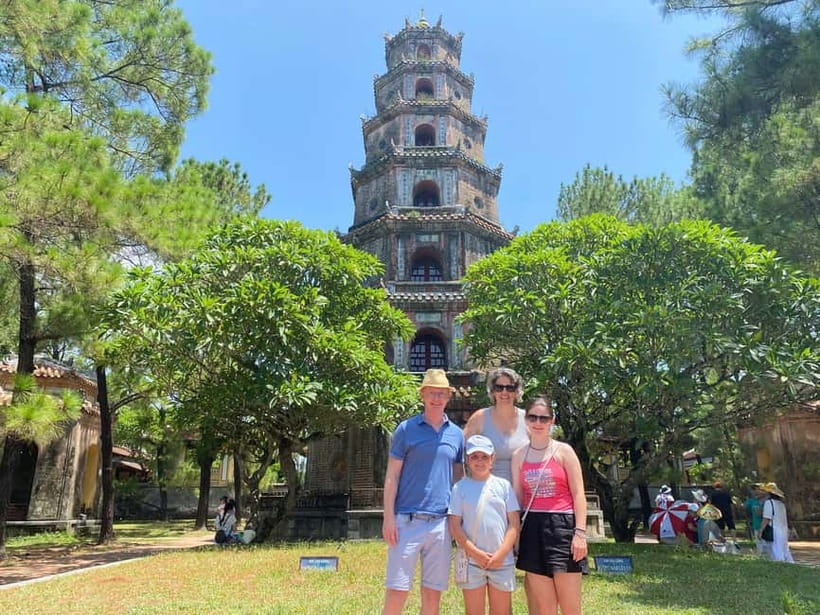
- Thien Mu Pagoda: Hue’s icon on a hill
- Emperor Minh Mang’s tomb: longer visit, more “palace time”
- Hue Imperial City (Citadel): UNESCO monuments with structure
- What’s included vs. what you’ll pay for anyway
- Included
- Not included
- Price and value check: where the $297.44 per person makes sense
- Choosing a guide you’ll click with (Ha Nguyen, Tan)
- Practical tips to make the days smoother
- Should you book this 4-day private Central Vietnam tour?
- FAQ
- FAQ
- What’s the tour duration?
- What time does the tour start?
- Is this a private tour or shared group?
- How do airport or hotel transfers work?
- What’s included in the price?
- What’s not included?
- Do you need to arrange a hotel during the tour?
- What about kids’ fares?
Key things to know before you go
- Private guide/driver for your group means you can ask questions and adjust timing.
- Hoi An on foot keeps the Old Town details at a human pace.
- My Son + Hue gives you a strong slice of Vietnam’s UNESCO heritage.
- Hai Van Pass + Lang Co break turns a long transfer into a scenic day.
- Entrance fees and meals are included, so your budget stays predictable.
- Operator support can be excellent, with Ha Nguyen noted for careful help, including visa assistance, and guide Tan praised for friendly, clear storytelling.
A smart Da Nang base: why this route feels efficient
If you only have four days, the trick is avoiding backtracking. This tour does it for you by anchoring around Da Nang on the start and end (pickup, then Phu Bai airport transfer) while packing in Hoi An first, then My Son and Hue, and finishing with a Perfume River day.
You get a guide through the whole experience, which matters in Central Vietnam where the “what you’re looking at” can change fast—especially at Hue’s royal sites and My Son’s ancient temples. Even when you choose to walk slowly, you’re still moving with purpose.
And because it’s private, you’re not stuck with a one-size schedule. The itinerary is solid, but you can usually adjust timing based on your energy, your photo stops, and how long you want at each ruin or courtyard.
You can also read our reviews of more private tours in Da Nang

Day 1 in Da Nang to Hoi An: Cham roots, Marble Mountains, then Old Town
Day 1 is your on-ramp. You leave Da Nang with pickup and a drive toward Hoi An (about 45 minutes), with a few key stops that set the stage for what you’ll see in Vietnam’s older layers.
Cham Museum of Da Nang: start with the people behind the ruins
You’ll spend about 30 minutes at the Da Nang Museum of Cham Sculpture, which focuses on the indigenous Cham people and their culture (the museum traces roots far back—centuries ago, not just “recent history”). This is one of those stops that makes the next days easier because it gives you context for why My Son and other sites matter.
If you like explanations that connect art and language to real places, you’ll get a lot from this quick museum break. Don’t plan on reading every label, but do plan on letting your guide connect the dots.
Marble Mountains: caves, temples, and viewpoints
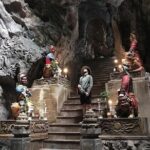
Next are the Marble Mountains, a cluster of five limestone/marble hills with caves, tunnels, temples, and viewpoints. You’ll have about an hour here, which is enough time to walk a main loop without rushing every step.
This stop is also a good “stretch break” after travel, and it’s ideal if you enjoy small detours—like stepping into a cooler cave section or pausing for views over the surrounding coast.
China Beach on the way + Hoi An Ancient Town at a slow pace
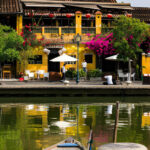
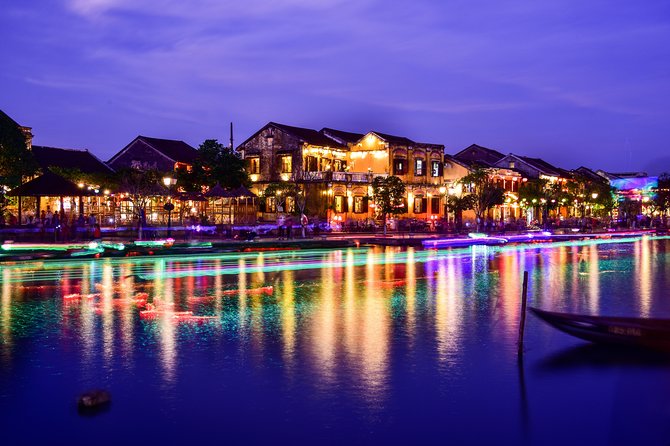
On the way to Hoi An you also stop along China Beach (as part of the transfer route), then finish the day with a deep inhale of Hoi An Ancient Town (about two hours). Hoi An’s old town is mostly about walking: old architecture, trading-post history, and a mix of influences you can spot street by street.
At this hour of the day, the Old Town is at its best for easy wandering—less heat, more atmosphere. You’ll also get a foundation for Day 2, when you’ll return for more specific landmarks.
Watch-outs: bring comfortable shoes. Hoi An rewards walking, but the streets can be uneven and you’ll be on your feet a lot across these four days.
A few more Da Nang tours and experiences worth a look
Day 2 in Hoi An and My Son: UNESCO mornings and old-town landmark time
Day 2 is where the tour shifts into “big sights.” You start with My Son Sanctuary and then spend the rest of the day in Hoi An, hitting several of its most recognizable old-town stops.
My Son Sanctuary: the Champa world in temple ruins
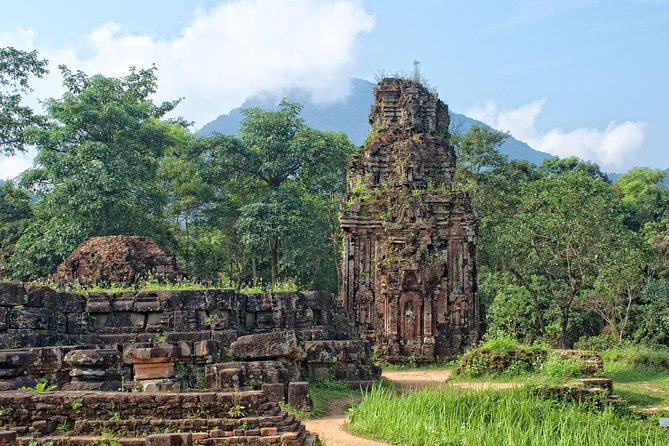
You’ll spend about two hours at My Son Sanctuary, a UNESCO World Heritage Site tied to the ancient Champa civilization. This is a temple complex, not a single monument, so the flow usually feels like moving through a site where each structure adds another piece of the story.
What makes My Son worthwhile on a private tour is interpretation. Your guide can point out what you’re seeing—temple layout, cultural purpose, and how the site fits into broader Champa history. Even if you’re not a “ruin person,” it’s one of the places that makes Vietnam feel older than you expected.
Sa Huynh Culture Museum: quick context that pays off
You also stop at the Sa Huynh Culture Museum (about 45 minutes). This museum connection matters because it gives you context for the region’s earlier cultures. It’s the kind of stop that turns My Son from just “pretty ruins” into “a part of something bigger.”
If you’re short on museum patience, focus on the parts your guide highlights rather than trying to read everything yourself.
Back in Hoi An: a focused route through iconic stops
The rest of Day 2 is a guided walk and landmark circuit in Hoi An, with short, efficient stops:
- Chinese All-Community Assembly Hall (about 30 minutes): a reminder that Hoi An wasn’t just Vietnamese history—it was a trading hub for many groups.
- Japanese Covered Bridge (about 15 minutes): fast photo time, but it’s a strong “signature” stop.
- Old House of Tan Ky (about 15 minutes): a preserved house built about two centuries ago and carried through multiple generations.
These are not long stays, but the private format makes them work. You can ask questions, then move on before you lose interest or energy.
Tip: if you’re the type who likes to linger for photos, tell your guide early. They can often shuffle time within the day to give you more moments where you want them.
Day 3 to Hue: Hai Van Pass views and a clean arrival plan
Day 3 is mostly travel, but it’s designed so it doesn’t feel like dead time. You head to Hue over Hai Van Pass, with a scenic coastal stop along the way.
Hai Van Pass: the Sea Clouds Pass moment
You cross Hai Van Pass with a short time window (about 3 minutes listed), but the views are the point—mountains, the coast, and sightlines toward Da Nang, Tien Sa Port, and the South China Sea. This is one of those “you remember it even if you don’t stay long” stops.
If you’re prone to motion sickness, ask your driver for a smooth approach and sit where you feel best. The route is short but twisty, and comfort matters.
Lang Co Beach + lunch break
You’ll also stop at Lang Co Beach for about an hour. There’s lunch at a local restaurant during the Hue travel day, which keeps you from hunting food on the road.
Lang Co is a good “reset” stop—walk a bit, hydrate, and get ready for Hue’s monuments the next day.
Hue basics: Truong Tien Bridge as your first Hue landmark
The day includes Truong Tien Bridge, listed as a major Hue attraction. Think of it as an arrival marker: Hue feels different from Hoi An, and this bridge helps you orient yourself visually as you transition into Hue’s old-capital vibe.
Consideration: Hue day timing is long (about 8 hours listed), so it helps if you keep your expectations flexible. This is a travel-heavy day with stops that keep it interesting.
Day 4 in Hue: Perfume River boat time, Thien Mu, and the Citadel
Day 4 is the emotional payoff day. It pairs river scenery with Hue’s signature religious and royal sites—and it ends with a transfer to Phu Bai airport.
Perfume River cruise: a calmer way into Hue’s stories
You’ll sail on a boat cruise along the Perfume River, then hop off to see key sites. This boat time is practical because it gives you a break from walking while still feeling like you’re part of the city, not just passing through it.
If you like that “moving while you learn” feel—ships, viewpoints, changing river edges—this is one of the better ways to see Hue with limited time.
Thien Mu Pagoda: Hue’s icon on a hill
Next is Thien Mu Pagoda (about 30 minutes). It’s described as 4km southwest of the Citadel and is one of Hue’s most recognizable symbols. It’s also a quick stop that helps anchor what you’re seeing later in the royal complex.
You don’t need hours here. The value is that the guide can point out why it’s so closely tied to Hue’s identity.
Emperor Minh Mang’s tomb: longer visit, more “palace time”
Then comes the Mausoleum of Emperor Minh Mang (about 45 minutes). The tour gives the tomb’s setting in La Khe Bai Village and notes it’s about 12 km from Hue city center. This helps you understand you’re not just doing an “urban hop”—you’re going out to a royal resting place designed for dignity and scale.
If you enjoy quiet, wide spaces and guided explanations, this stop can be one of the most satisfying of the day.
Hue Imperial City (Citadel): UNESCO monuments with structure
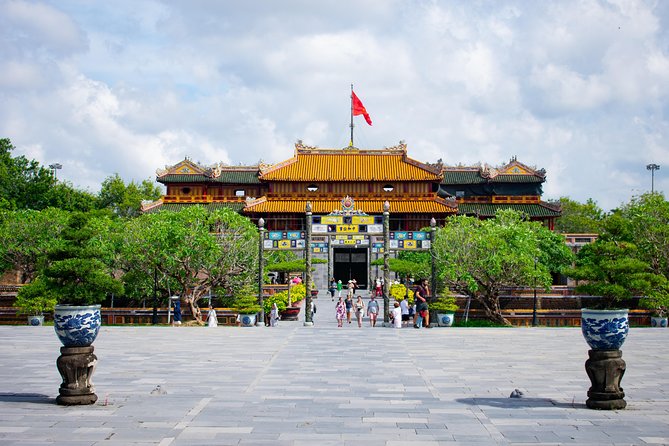
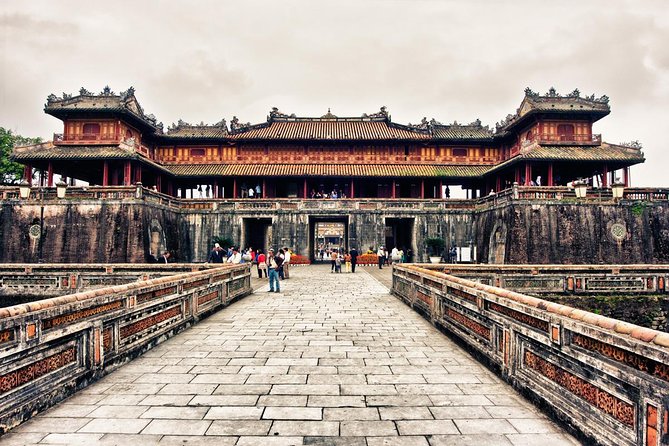
Finally, you visit Hue Imperial City (the Citadel) (about two hours). The complex of Hue Monuments is UNESCO-listed, and it’s the culmination of the royal story.
This is the kind of place where a guide makes a difference. Without one, it can feel like a collection of walls and gates. With one, it becomes a readable map of how the Nguyen dynasty shaped power and ceremony.
What’s included vs. what you’ll pay for anyway
This tour tries to protect your time and your budget at the same time. Here’s what’s covered and what you’ll handle:
Included
- Pickup and transfer (Da Nang hotel or airport to the tour, and the final transfer to Phu Bai airport)
- Private air-conditioned transportation with English-speaking guides
- Mineral water during the tour
- Breakfasts (3) and lunches (2)
- Entrance fees (all entrance fees are included)
- A mobile ticket is provided
Not included
- Hotel accommodation
- Drinks
- Personal expenses and gratuities (gratuities are recommended)
For me, the meals and entrance fees are the biggest “value” lever. You don’t spend mental energy tracking tickets, buying separate entry passes, or wondering if you’re short on time.
Price and value check: where the $297.44 per person makes sense
At $297.44 per person for about four days, you’re paying for three things: privacy, logistics, and reduced friction.
You’re not just buying sightseeing. You’re buying:
- a driver and air-conditioned vehicle across multiple transfers,
- an English-speaking guide throughout,
- entrance fees handled for you,
- plus breakfasts and lunches.
That can be good value if you’re a first-timer who wants a clean route and doesn’t want to spend evenings planning tickets, museum hours, and inter-city transport.
It may feel overpriced if you’re already comfortable handling your own hotel and you’d rather piece together transportation and entrance fees independently. One thing to watch: the included breakfasts may not match your personal schedule if you prefer to eat later. Plan your day around the tour flow.
Choosing a guide you’ll click with (Ha Nguyen, Tan)
One of the practical strengths of this setup is support from the operator and the guide. Ha Nguyen is specifically noted for being helpful—especially with communication and practical assistance, including visa help. Guides such as Tan are described as friendly and easy to spend time with, with a strong ability to explain what you’re seeing.
You can’t always pick a guide, but if guide quality matters to you, ask when you book. Even with a great itinerary, the best days usually come down to how well your guide connects the dots.
Practical tips to make the days smoother
A few small moves can help this tour feel even better:
- Keep your morning light: the tour starts at 8:00am, so pack what you need the night before.
- Wear shoes for walking: Hoi An Old Town and the imperial sites involve lots of steps.
- Plan for heat and sun: bring water habits in your routine, and expect midday warmth in Central Vietnam.
- Share dietary needs early: the tour asks you to advise dietary requirements at booking, which matters for lunch and breakfast timing.
- Use the private pace: if you want extra photo time at the Japanese Covered Bridge or a longer pause at Thien Mu Pagoda, tell your guide early.
And if you want to save time on planning hotels, consider arranging accommodation so you’re not rushing on arrival day. The tour includes everything else that typically slows people down.
Should you book this 4-day private Central Vietnam tour?
Book it if you want a first-timer-friendly route with privacy, included entrances, and a guide who handles the story behind each site. It’s a strong choice if you’d rather spend your energy on Hoi An’s streets, My Son’s temple layout, and Hue’s royal monuments—rather than organizing buses and tickets between them.
Skip or reconsider if you already have a tight DIY plan and you’re aiming for the lowest possible cost. In that case, hotel + transport + entrances might be cheaper when you assemble it yourself.
My take: for most visitors, this tour’s value comes from the friction it removes—especially the private transport, included admissions, and the way it strings Hoi An, My Son, and Hue into a logical four-day arc.
FAQ
FAQ
What’s the tour duration?
It’s listed as 4 days (approximately).
What time does the tour start?
The start time is 8:00am.
Is this a private tour or shared group?
This is a private tour/activity, so only your group participates.
How do airport or hotel transfers work?
You get airport pick up and transfer, and pickup is available from your Da Nang hotel or airport. The tour ends with a transfer to Phu Bai airport.
What’s included in the price?
Included items are private air-conditioned transportation, English-speaking guides, mineral water, 3 breakfasts and 2 lunches, and entrance fees (entrance fees are included).
What’s not included?
Hotel accommodation is not included. Drinks, personal expenses, and gratuities (recommended) are also not included.
Do you need to arrange a hotel during the tour?
Yes. The tour does not include hotel accommodation, so you’ll need to book your own lodging.
What about kids’ fares?
Children (2–11 years) are listed at 75% of the applicable adult fare.