REVIEW · CAO BANG
2 Days Camping Tour in Angel Eye Mountain and Ban Gioc Waterfall
Book on Viator →Operated by Cao Bang Eco Tour · Bookable on Viator
Watching the waterfall hit the border line is special. This 2-day Cao Bang trip is built for speed without feeling rushed, stitching together Ban Gioc–Detian Falls, cave time, and the out-of-the-way camping at Angel Eye Mountain. I like that the route targets the big UNESCO-listed scenery in northern Vietnam, while also giving you time to slow down and eat local food along the way. You’ll also spend real time on uneven mountain roads, rice fields, and viewpoints that feel a world away from city life.
Two things I especially like: first, the camping night is part of the experience, not an afterthought, with tents and basic gear included and sunset and sunrise built into the plan. Second, the day structure covers the main hits of Cao Bang—waterfalls, Nguom Ngao Cave, and the historical stops around Pac Bo—so you get a lot of variety for the price. One drawback to keep in mind: camping can turn uncomfortable if conditions are cold or damp, so you’ll want to plan your timing and pack smart for weather.
In This Review
- Key highlights you’ll care about
- Cao Bang in two days: what this loop really delivers
- Ban Gioc–Detian Falls and Nguom Ngao Cave: the nature core
- Angel Eye Mountain camping: sunset, sunrise, and the weather reality
- Morning waterfall time: Nam Tra on day two
- Pac Bo: history stops that fit the nature pace
- Returning via Three Fairies Waterfall and city time
- Transportation and guides: what to expect on the road
- Price and value: is $133 a fair deal?
- Who this tour is best for (and who should pass)
- Quick practical tips before you go
- Should you book this 2-day Angel Eye Mountain and Ban Gioc tour?
- FAQ
- What’s included in the camping at Angel Eye Mountain?
- Are entrance fees included for the attractions?
- What meals are included in the 2 days?
- How does transportation work during the tour?
- Is pickup included, and where does the tour start?
- Is an English tour guide included?
- What’s the group size limit?
Key highlights you’ll care about
- Ban Gioc–Detian Falls: a border waterfall over 30m that’s one of Southeast Asia’s most dramatic
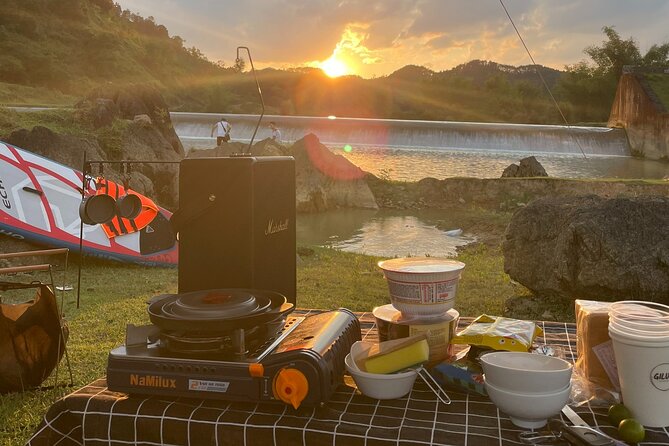
- Angel Eye Mountain camping: sunrise and sunset views with tents and basic equipment included
- Nguom Ngao Cave: a longer-than-quick cave stop, not just a photo break
- Pac Bo sites + Ho Chi Minh Museum: history added to the nature-heavy days
- Local meals: breakfasts and lunches at local spots, plus dinner included
Cao Bang in two days: what this loop really delivers
Cao Bang can swallow time fast. Roads take longer than you expect, viewpoints are spread out, and the best sights aren’t always close to each other. This tour solves that problem with a tight loop: you start from Cao Bang city, hit the standout waterfall first day, camp on Angel Eye Mountain night, then fold in cave + history on day two.
If you’re trying to do the classic Cao Bang highlights without renting and driving your own transport, this plan makes sense. It’s also designed for short attention spans and practical travelers: most stops have a clear block of time, and admissions are handled as part of the tour.
The day pacing is a big deal here. You’re not sitting in the vehicle for hours, then standing for five minutes. You have proper time at major spots like Ban Gioc–Detian Falls and Nguom Ngao Cave, then you shift into mountain atmosphere for the camping night.
A few more Cao Bang tours and experiences worth a look
Ban Gioc–Detian Falls and Nguom Ngao Cave: the nature core
The itinerary starts early, with pickup around 7:30am at Cao Bang Eco Homestay (the exact address is Số 024 tổ dân phố 11). You’ll also have breakfast before heading out, then you roll toward Ban Gioc–Detian Falls.
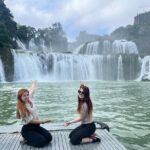
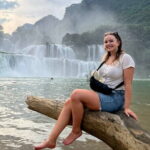
Ban Gioc is the headline for a reason. This is a waterfall on the Vietnam–China border, with a height of over 30 meters. Even if you’ve seen waterfalls before, it’s the setting—border geography plus big drop—that makes it feel different. You’re going to want to be ready for misty conditions and strong light when the sun breaks through.
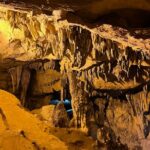
After that, you switch gears and go underground to Nguom Ngao Cave. This stop is planned for about three hours, which is a good sign. Short cave visits can feel rushed; a longer window helps you actually move at a comfortable pace and take in what you came for instead of just scanning the interior and leaving.
Lunch lands mid-day at a local restaurant, and the tour aims at traditional Cao Bang food rather than generic tourist plates. Also, because the schedule is stable, you can plan your energy. This is one of those tours where you’ll feel happier if you don’t treat it like a casual stroll. Bring a bottle you like, wear grippy shoes, and keep your phone charged for the cave lighting.
Angel Eye Mountain camping: sunset, sunrise, and the weather reality
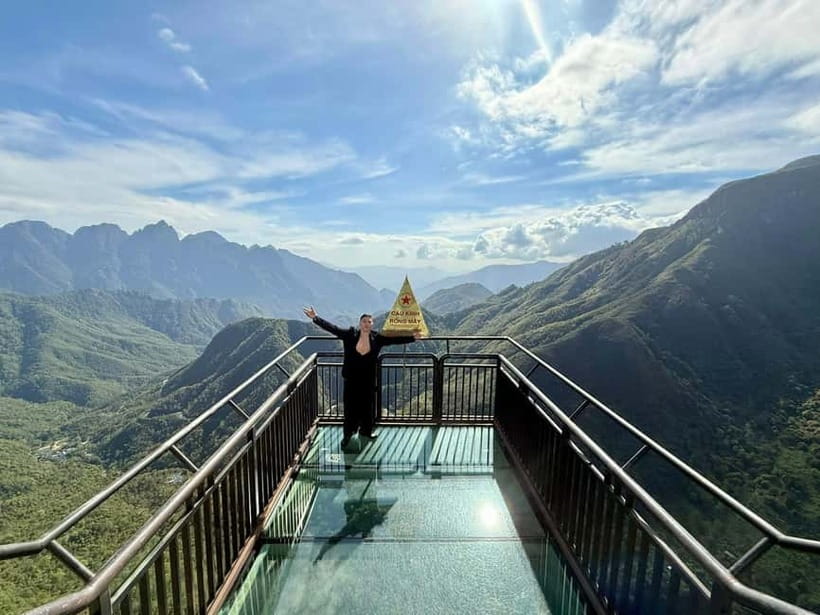
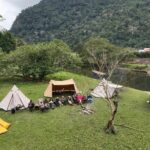
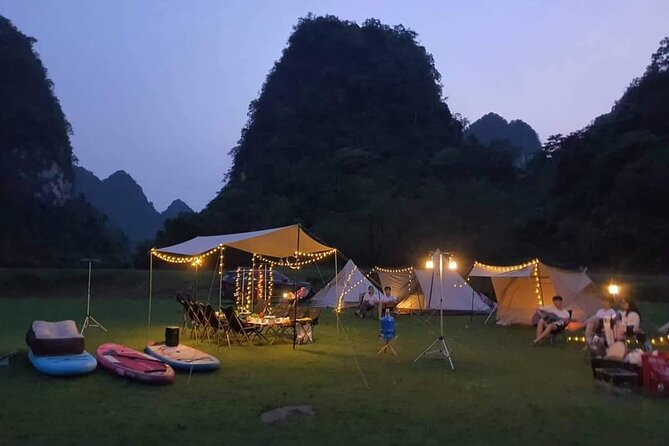
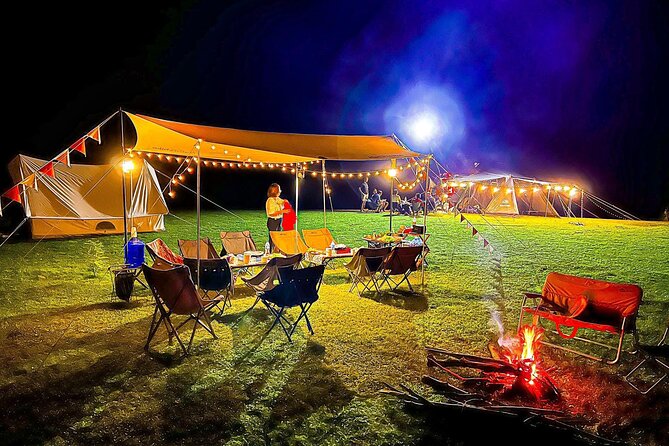
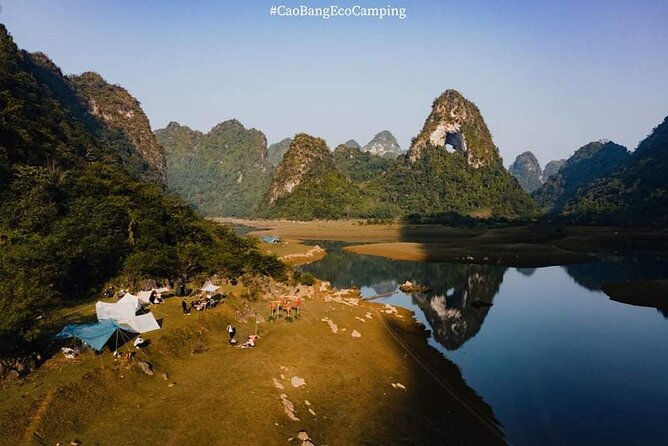
The camping night is the heart of this experience. In the afternoon of day one, you travel through Trung Khanh – Tra Linh, a calmer-feeling road section known for rice fields and less traffic. You’ll check in near Angel Eye Mountain in time to watch sunset, then the evening turns into a nature-only kind of night.
At Angel Eye Mountain, you’re staying with tents plus basic equipment included (tents, tables, chairs). Each guest also gets a free 500ml bottle of filtered water. That matters because it reduces what you have to carry and lets you focus on being outdoors rather than running logistics.
Then comes the part people remember: early rising for sunrise. On day two, you can get up around 6:00am for photos and morning views. The tour schedules breakfast at 7:00am, then you move into a short walk for the next waterfall stop.
Now for the consideration that I think matters most: camping can be affected by damp and cold weather. One review pointed out that in winter, tents weren’t well equipped for wet, cold conditions—and there was a nearby homestay fallback available. If you’re booking in cooler months, don’t assume camping will feel cozy. Pack like you’re camping in real weather: warm layers, a proper sleeping layer, and something to keep damp off your sleeping setup.
Also note that the tour includes a backup option: there’s a free bed in a dorm from 3:00am to 8:00am if you book and availability allows. That doesn’t replace the full camping night, but it can help you survive the coldest early hours when the temperature can drop fast.
Morning waterfall time: Nam Tra on day two
After breakfast, you head to Nam Tra Waterfall. The walk time is about three hours, so this isn’t just one quick look. It’s a chance to keep the nature streak going after the camping night, and it gives your body a change of pace from the earlier day’s road time.
Waterfalls in this part of Vietnam often come with underground water and rocky terrain. So go at a steady pace and don’t rush the steps. If you’re prone to slipping on wet stone, you’ll feel grateful for shoes with traction.
This portion of the day also helps explain the tour’s overall design. The first day is border waterfall and a big cave. The second day continues with more waterfall scenery, then transitions into history and museum time. It’s not random—it keeps the emotional rhythm of the trip moving.
Pac Bo: history stops that fit the nature pace
Once day two moves past the waterfall, you shift to history. Around 9:00am, you go to Pac Bo and nearby sites connected to Uncle Ho. You break for lunch at about 11:30am at a local restaurant.
Then you visit Ho Chi Minh Museum at about 13:00, followed by Pac Bo historical site around 14:00. That last block is about four hours, which is enough time to understand what you’re looking at without feeling like you’re being pushed through.
The value here is pacing. You’re not spending the whole day in museum rooms right after a long night of sleeping outdoors. The schedule builds in a natural transition: mountain morning, then cultural and historical learning.
If you like context—why a place matters beyond the view—you’ll appreciate this part of the route. If you’re only chasing photos, you might want to go in with a lighter mindset. Either way, it’s a meaningful way to balance Cao Bang’s dramatic nature with human stories tied to the region.
Returning via Three Fairies Waterfall and city time
On the way back to Cao Bang city, you stop at Three Fairies Waterfall. The itinerary doesn’t frame it as the primary star, but it’s a nice added look and helps break up the return ride.
You reach the city around 17:30 for time with the tour guide. The plan mentions you can shop for local specialties. That matters if you want practical souvenirs: food items, small gifts, and things you can carry without extra hassle.
Dinner is scheduled around 19:00. You’re not just ending with an empty stomach—you’re ending with local specialties, which fits the tour’s theme of food culture as part of the trip.
Transportation and guides: what to expect on the road
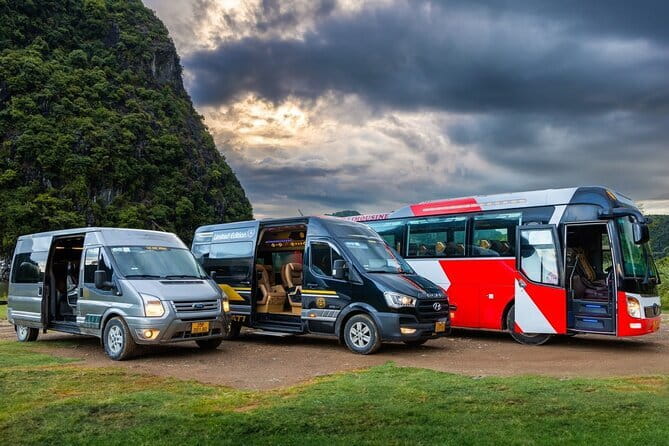
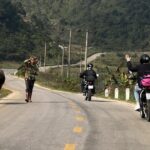
This is a tour with personal transportation by motorbikes, including gasoline for the whole trip. That means you’ll likely feel the road conditions more than if you were in a private car the entire time. It can be fine—sometimes motorbikes make mountain travel feel quicker and more flexible—but it’s worth noting if you’re sensitive to rough rides.
The tour says a local guide is included. Reviews mention a guide named Tho, and another review praises Ly and her Eco team for caring support. Also, an important detail: an English tour guide is not included. If you don’t read Vietnamese, bring patience and a good vibe. A lot of what you need is visual and practical, but the deeper explanations may be limited.
Group size is capped at 20 travelers, which is usually comfortable for this kind of route. Smaller groups often mean less waiting at stops and fewer people to manage during transitions.
Price and value: is $133 a fair deal?
At $133 per person for about 2 days / 1 night, this tour can feel like good value—mostly because it bundles the things that normally cost extra on your own:
- Entrance fees to attractions
- Motorbike transport with fuel included
- Meals: breakfast (2), lunch (2), dinner (1)
- Camping setup: tents and basic gear
- Local guide and a working itinerary with set stop times
What’s not included is also clearly stated: drinks during meals and during the trip. That’s normal, but it’s smart to budget for water you’ll want beyond the included 500ml bottle. If you’re someone who gets thirsty on long rides, plan to buy extra along the way.
One more value angle: this itinerary combines the big Cao Bang icons—Ban Gioc, a major cave, and Pac Bo history—without you needing to piece together transport between them. In remote regions, that planning overhead can cost real time and money. Paying for a planned loop can be cheaper than improvising.
Who this tour is best for (and who should pass)
This is a great fit if you want a fast, high-sight mix in a short window. It’s especially good for:
- People who want Ban Gioc + Angel Eye Mountain without self-driving
- Travelers who enjoy nature + a bit of history in the same trip
- Anyone comfortable with camping, and willing to dress for real weather
It may be less ideal if:
- You want a guaranteed comfortable bed for the whole night (because the camping experience can vary with conditions)
- You need an English-speaking guide for explanations at every stop
- You dislike motorbike-style travel or uneven roads
If you’re deciding between camping and going fully indoors, be honest with yourself about weather tolerance.
Quick practical tips before you go
- Wear shoes with grip for caves and waterfall terrain.
- Bring a warm layer for Angel Eye Mountain at night, even if daytime feels mild.
- Pack a small dry bag so your phone and wallet survive spray and mist.
- If you know you’ll be colder at night, plan for damp risk. Camping gear matters.
- Download offline maps and keep cash ready for drinks, since those aren’t included.
Should you book this 2-day Angel Eye Mountain and Ban Gioc tour?
I’d book it if your goal is a concentrated Cao Bang hit list: Ban Gioc–Detian Falls, Nguom Ngao Cave, Angel Eye Mountain sunrise/sunset camping, and Pac Bo history—all in one clean loop with meals and entrance fees taken care of.
I’d think twice if you’re traveling in colder, wetter months and you hate damp camping. The itinerary does offer a backup dorm bed window in the early morning and there’s evidence of a nearby homestay option in harsh conditions, but you still need to be realistic about tent comfort.
Bottom line: this tour is built for people who like doing a lot, seeing a lot, and sleeping under big skies. If that’s you, it’s an efficient, memorable way to experience Cao Bang.
FAQ
What’s included in the camping at Angel Eye Mountain?
The tour includes one night camping with camping equipment such as tents, tables, and chairs. You’re also provided a free 500ml bottle of filtered water.
Are entrance fees included for the attractions?
Yes. Entrance fees to all attractions on the tour are included in the price.
What meals are included in the 2 days?
You get breakfast (2), lunch (2), and dinner during the trip. Drinks are not included.
How does transportation work during the tour?
The tour provides personal transportation by motorbikes, including gasoline for the whole trip.
Is pickup included, and where does the tour start?
Yes, there is pickup offered. The start point is Cao Bang Eco Homestay (Số 024 tổ dân phố 11, Nà Cạn, Cao Bằng). The tour begins around 7:30am.
Is an English tour guide included?
No. English tour guide is not included.
What’s the group size limit?
The tour has a maximum of 20 travelers.