REVIEW · HANOI
Vietnam Motorbike Tour to Ha Giang, Sapa, Mu Cang Chai – 8 Days
Book on Viator →Operated by Indochina Motorbike Tours · Bookable on Viator
Eight days of backroads can change how you see Vietnam. This motorbike loop stitches together the northeast and northwest with tight passes, river crossings, and off-road dirt-track days. You start in Hanoi and end back near where you began, with an English-speaking guide and geared scooters geared for real riding.
I especially like two parts. First, you get the chance to eat and sleep with Tay families around Ba Be and again near Ha Giang, which turns the ride into a lived-in experience instead of a drive-by. Second, the route keeps moving between smooth climbs and rougher sections, so you’re not bored by the same kind of scenery all week.
One consideration: this is not a sit-and-sightsee trip. You need strong physical fitness and comfort with long hours in the saddle, plus the reality of steep, curvy, sometimes muddy roads.
In This Review
- Key highlights I think you’ll care about
- Starting in Hanoi at 7:30 AM, then going straight for the quiet roads
- Ba Be National Park: Pac Ngoi, Tay home life, and the lake’s limestone setting
- Meo Vac on the Dong Van route: passes, streams, and the Nho Que river line
- Ha Giang’s big-mountain day: Pi Leng Pass, Vuong Palace, and Heaven Gate
- Sapa with the Fanxipan backdrop: smooth uphill riding and terrace fields up close
- From Sapa to Tram Ton Pass and Mu Cang Chai: 2,000m climbs for terrace-photo time
- Phù Yên district: tea-growing roads, a high pass hike, and the sea of rice feeling
- Mai Châu via Da River lake and Hua Tat: French-era road vibes in a calmer valley
- The Hanoi return: Thung Khe and Doc Cun passes, then highway back before rush hour
- Bikes and guides: scooter power, enduro energy, and why the guide names matter
- Price and value: what $1,409 buys on an 8-day pass-and-homestay route
- Packing and riding checklist for steep, curvy, sometimes rough days
- Who this tour fits best
- Should you book the Hanoi to Ha Giang to Sapa to Mu Cang Chai ride?
- FAQ
- FAQ
- What time does the tour start, and where does it begin?
- Is pickup included?
- What motorbikes are included in the tour price?
- How many meals are included?
- What happens if the tour is canceled due to poor weather?
- Do I need travel insurance and a visa?
Key highlights I think you’ll care about
- Tay homestay nights: Pac Ngoi and Ha Giang area stays add real local life to the ride
- Pass-focused days: Pi Leng, Tram Ton, Thung Khe, and Doc Cun are built into the route
- Off-road rhythm: dirt tracks, streams, and back-roads show up often, not as an afterthought
- English-speaking guidance: guides like Son, Tony, Linh, Dūc, and Ducky are repeatedly praised for keeping it fun and safe
- Meals handled for 7 days: breakfast (7), lunch (7), dinner (7) plus government taxes included
- Scooter base, manual upgrades optional: 110cc or 125cc scooters are included; 150cc–300cc manual bikes cost extra
Starting in Hanoi at 7:30 AM, then going straight for the quiet roads
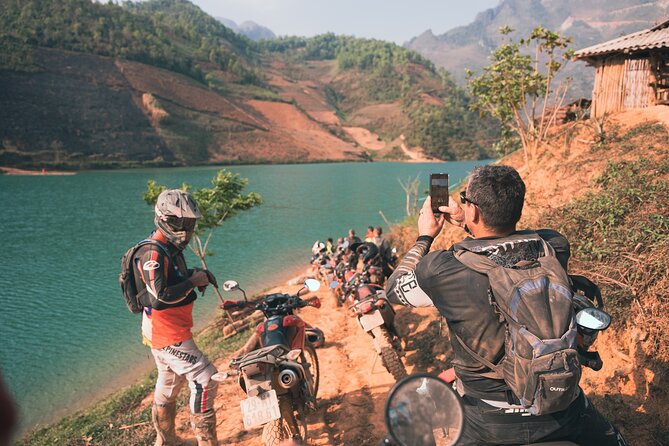
You meet at 841 Đ. Hồng Hà, Chương Dương Độ, Hoàn Kiếm, Hà Nội with a 7:30 AM start. The day kicks off early, and that matters, because mornings are when roads feel calmer and you can get into a steady riding pace faster.
This tour is also set up for a private group, meaning only your group participates. That’s useful on a ride like this, where you don’t want ten different skill levels and expectations mixed together. Pickup is listed as offered, and you’ll use a mobile ticket, which keeps the pre-trip stress lower than the typical paper-chasing routine.
You can also read our reviews of more tours and experiences in Hanoi.
Ba Be National Park: Pac Ngoi, Tay home life, and the lake’s limestone setting
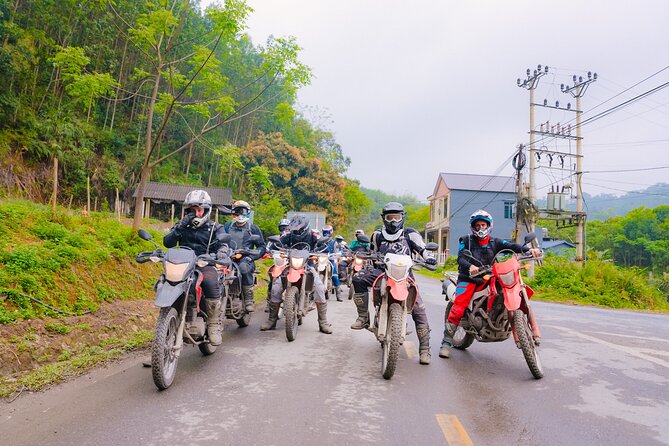
Day one is about momentum. You ride away from busy roads in the morning until you reach Cho Chu town for lunch, then continue toward Ba Be with mountain views and less traffic. By late afternoon, you reach Pac Ngoi, a peaceful village area by Ba Be Lake.
Ba Be is described as Vietnam’s largest natural lake, fed by three rivers, with limestone cliffs and primary forest around it. That’s the kind of geography that makes the ride feel earned: you’re not just arriving at a photo spot, you’re working your way there.
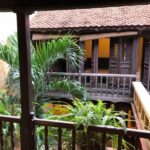
The plan also gives you a Tay-family option. You can dine and stay with a Tay family, which is the most valuable part of the day if you want your trip to feel human, not packaged. Dinner and lodging are built into the schedule, and the day’s entry ticket is listed as free, which helps keep value high.
A practical drawback: with an early start and a late-arrival lake village, this day can feel like a full-body warm-up. If you’re coming straight from a flight, plan a little extra sleep or you’ll feel it by dinner.
Meo Vac on the Dong Van route: passes, streams, and the Nho Que river line
On day two, the trip shifts into more rugged touring. You leave the Tay stay behind and ride back-roads through rustic villages and jungle, with stream crossings built into the flow. Then you stop in Bảo Lộc/Bao Lac town for lunch before climbing again on scenic routes with multiple passes.
You’re aiming for Meo Vac by about 5:00 PM, and the road repeatedly follows mountain ridgelines and the Nho Que river. This is the kind of day that rewards riders who stay relaxed. If you fight every bump with tension in your arms and shoulders, the bike will feel harsher than it needs to.
Also note: Meo Vac sits in the Dong Van Rock Plateau, listed as part of the Global Geo-Park Network. That means the area is geologically dramatic, and the roads are often cut to work with that reality.
Ha Giang’s big-mountain day: Pi Leng Pass, Vuong Palace, and Heaven Gate
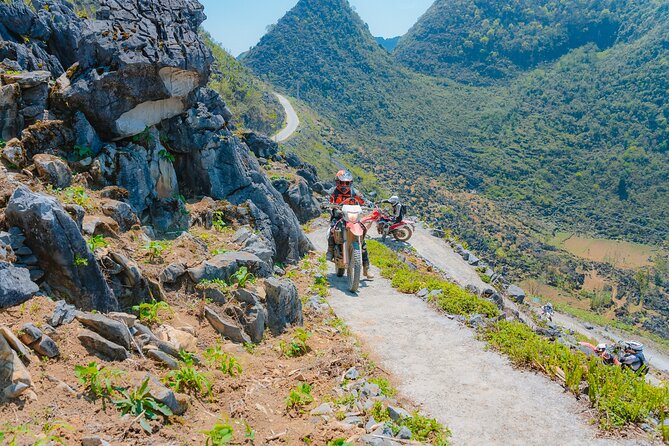
Day three is often the highlight of the whole Northern Vietnam motorbike arc. You ride toward some of the most remote-feeling roads in the north, with multiple ethnic communities and imposing terrain. The route specifically points to several marquee sites: Pi Leng Pass, the Dong Van Rock Plateau, the Vuong palace in Dong Van, and the Heaven Gate in Quan Ba.
If you’re trying to understand what makes this part special, it’s the combination of distance and detail. You’re not just passing by huge views; you’re also threading through small towns and cultural stops that explain why the roads exist the way they do.
By late afternoon, you arrive in Ha Giang, then you either stay with a Tay family or in a hotel in the Ha Giang area. That flexibility is nice: if you want one home-style night and one hotel night, the schedule gives you options.
From the guide feedback you can learn something useful: when riders felt challenged but safe, they often named guides like Son and Dūc for controlling the route pace and making sure everyone stayed comfortable. If you have any skill anxiety, that’s a good sign you’ll be in capable hands.
Sapa with the Fanxipan backdrop: smooth uphill riding and terrace fields up close
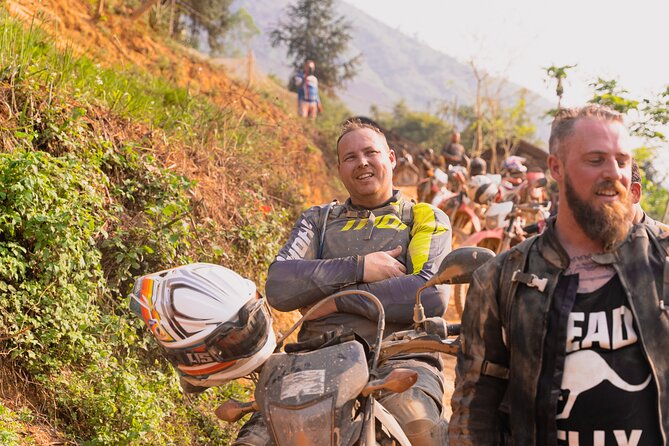
On day four, you head toward the northwest mountain region where the Fanxipan range dominates the ride until you reach Sapa. The road is described as smooth, and that’s important after earlier rougher days. It gives your body a break while still feeding you beautiful views.
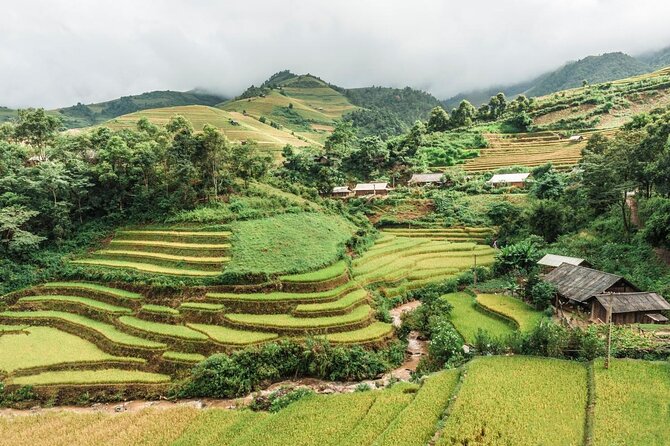
You’ll see green mountain slopes, rice terraces, and village life tied to the hill tribes. There’s also a short stop in Lao Cai to see the Chinese border area, then the ride continues up to Sapa. The schedule says you gain altitude up to about 1,600 meters, arriving around 5:00 PM for an overnight in a Sapa hotel.
The drawback here is subtle: smooth road doesn’t mean easy. Long uphills still demand steady posture and watchful braking on downhill sections. If you’re sensitive to fatigue, plan to take small snack breaks rather than pushing through hunger.


From Sapa to Tram Ton Pass and Mu Cang Chai: 2,000m climbs for terrace-photo time
Day five starts with a slower rhythm in Sapa. You’re free until about 1:30 PM, check out, then ride toward Trạm Tôn Pass (Tram Ton Pass). This is described as the highest road pass in Vietnam, and you’re crossing over 2,000 meters while moving into Lai Châu Province.
That’s a big jump from the Sapa altitude feel. The payoff is in the views of the Hoang Lien mountain ranges for miles, plus the sense that the road keeps opening out into new terrain.
You arrive in Mu Cang Chai by around 5:00 PM, then dinner and overnight are handled in a hotel. This is the day that suits riders who love stopping for photos without feeling guilty. Mu Cang Chai’s terrace country is exactly the kind of place where you’ll keep finding another angle a few minutes later.
Phù Yên district: tea-growing roads, a high pass hike, and the sea of rice feeling
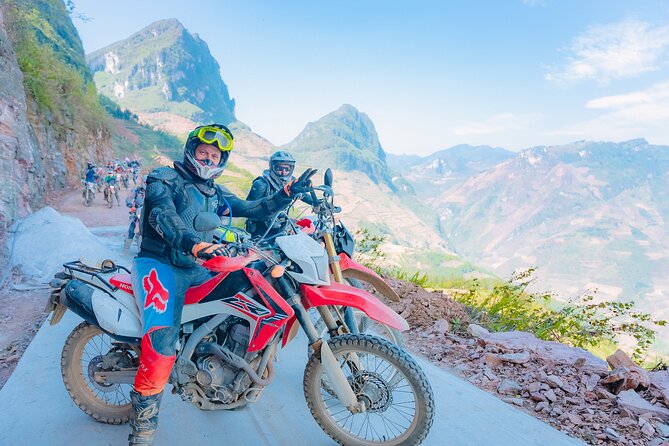
Day six changes your pace again. You ride up and down through forested high-mountain region with H’mong peoples, then there’s a hike up a very high mountain pass before descending.
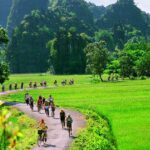
After that, the route drops into a tea-growing region, then you ride along valley floors that can look like a sea of rice, with H’mong and Thai villages alongside the roads. Lunch is taken after you’re already in the Mu Cang Chai area, and then the ride continues toward Phù Yên town, arriving around 5:00 PM.
If you don’t like days where the day’s work includes walking uphill (even briefly), this is the one to consider. But if you want the trip to feel varied, this is a good break from pure riding. It also helps you stretch your legs before the later valley/ferry day.
Mai Châu via Da River lake and Hua Tat: French-era road vibes in a calmer valley
Day seven is shorter riding time, but it still feels like a distinct chapter. You head to Mai Châu valley with different views from earlier days, riding along the Da River lake on winding roads between mountain and water.
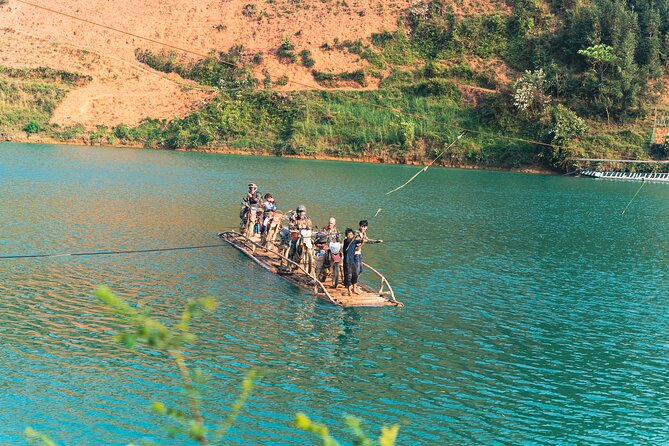
You cross the Da river by ferry, then climb up to the Mộc Châu plateau for lunch. After lunch, you take Hua Tat, a quiet mountain road described as built by the French during wartime, now feeling like a forgotten side road. You finish the day by riding to Mai Châu.
This is a nice contrast if you’ve felt overloaded by steep passes. Mai Châu gives you space to breathe, and the road style is more about steady control than heroic climbing.
The Hanoi return: Thung Khe and Doc Cun passes, then highway back before rush hour
Day eight is the wrap-up ride. You get up later and start with a more peaceful local moment: walking around the valley. Then the motorbike return to Hanoi begins around 10:00 AM.
Along the way, you cross two mountain passes: Thung Khe and Doc Cun, then have lunch before joining the highway back to Hanoi. The plan says you’ll reach your end point before rush hours, which is the kind of detail that keeps arrival calmer and helps you avoid the most stressful traffic moments.
Bikes and guides: scooter power, enduro energy, and why the guide names matter
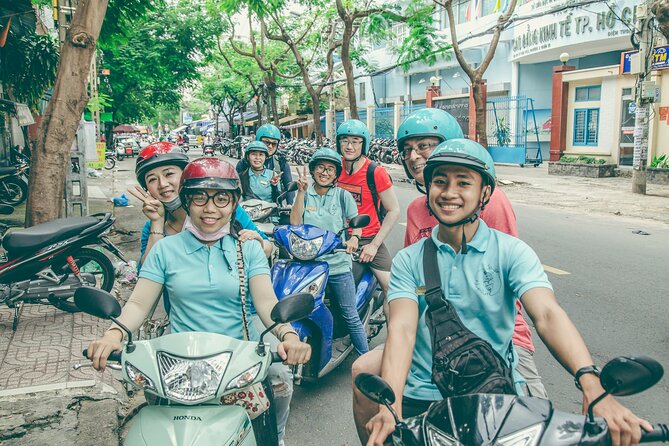
Your base setup is listed as geared scooters of 110cc or 125cc, plus an English-speaking guide. Those scooter sizes are the practical middle ground for mixed-road touring: enough engine to handle steady climbs and passes, while still being manageable for riders who are new to this kind of road.
Not included in the standard setup are manual dirt bikes in 150cc, 250cc, and 300cc ranges. If you want that extra punch, you’d look at upgrading. It’s also clear from past rider feedback that people who moved up to bigger bikes often enjoyed the ride more on challenging sections.
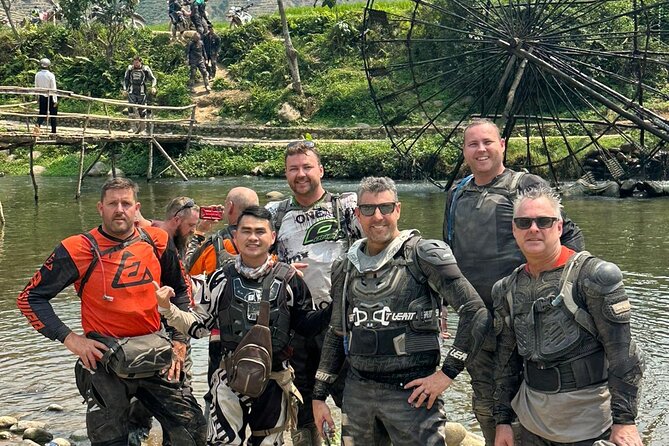
Guide quality is a recurring theme in the feedback tied to this company’s trips. Names that come up include Ducky, Tony, Son, Linh, Dūc, and Duckydowheelie, with riders praising how guides kept things interesting while still managing safety. The best takeaway for you is simple: you should ask your guide how they’ll match route choices to your skill level, especially on rough sections and pass days.
Price and value: what $1,409 buys on an 8-day pass-and-homestay route
At $1,409 per person, you’re paying for far more than a “scenic bus.” What you get on paper that directly supports value:
- 110cc/125cc geared scooters
- English-speaking guide
- Government taxes
- Breakfast (7), lunch (7), dinner (7)
- Pickup offered
- Mobile ticket
- Admissions are listed as free for the days shown in the plan
You also get real lodging variety: the schedule includes Tay family stays in some places and hotel overnights in others. And the route touches several different regions that would be hard to connect yourself without specialist logistics.
What’s not included also matters for value math:
- Travel insurance
- Visa to Vietnam
- Tips for the guide
- Manual dirt bike upgrades (150cc to 300cc)
So the real value question isn’t only the price tag. It’s whether you want a ready-made route through Ha Giang, Sapa, and Mu Cang Chai that mixes pass riding and off-road sections with food and lodging handled. If yes, this price is easier to justify. If you’d rather rent a scooter and build your own route, you’ll save money but spend more time figuring out the hard parts.
Packing and riding checklist for steep, curvy, sometimes rough days
This tour asks for strong physical fitness, and the route includes passes, stream crossings, and dirt-track stretches. So pack for fatigue and weather swings rather than just comfort.
I’d plan around:
- Layers for cool mornings and warm afternoons
- Gloves and eye protection for dust and road debris
- A rain plan, because muddy backroads are part of this style of riding
- A small day bag that’s easy to grab when you stop quickly
- Cash for personal expenses where lunch or dinner might not include everything you want
Riding tip: on long pass days, your best friend is smooth control. Keep your speed steady where possible, look far ahead, and avoid sudden moves on gravel or wet patches. If you’re upgrading to bigger bikes later, still treat traction like it matters more than power.
Who this tour fits best
You’ll likely love this if:
- You want Northern Vietnam by motorbike, not just viewpoints
- You care about homestays and local food, especially Tay family nights
- You want pass days like Pi Leng and Tram Ton, plus calmer valley stretches like Hua Tat
- You prefer a guided plan that handles route pacing and logistics
This may be a tougher choice if you:
- Don’t like long days in motion
- Have low tolerance for steep roads and potential muddy sections
- Want a strictly on-road, easy pace only
Should you book the Hanoi to Ha Giang to Sapa to Mu Cang Chai ride?
If you want a trip that feels like you actually traveled the north, not just watched it from the edge of a road, I’d say this is a strong booking. The mix of passes + homestays + included meals is the core reason the value works.
Two practical final checks before you commit:
- Be honest about your fitness. The plan expects real stamina, not just casual sightseeing.
- Decide early whether your comfort goal is 110cc/125cc scooter touring or you want to explore higher-power manual dirt bike upgrades.
FAQ
FAQ
What time does the tour start, and where does it begin?
The tour starts at 7:30 AM at 841 Đ. Hồng Hà, Chương Dương Độ, Hoàn Kiếm, Hà Nội, Vietnam. It ends back at the meeting point.
Is pickup included?
Pickup is listed as offered.
What motorbikes are included in the tour price?
The included bikes are geared scooters of 110cc or 125cc. Manual dirt bikes of 150cc, 250cc, and 300cc are listed as not included.
How many meals are included?
The tour includes breakfast (7), lunch (7), and dinner (7).
What happens if the tour is canceled due to poor weather?
This experience is non-refundable and cannot be changed for any reason. If it’s canceled due to poor weather, you’ll be offered a different date or a full refund.
Do I need travel insurance and a visa?
Travel insurance and a visa to Vietnam are listed as not included. The tour also notes you should have strong physical fitness for the experience.