REVIEW · HANOI
Vietnam Cambodia and Thailand Group
Book on Viator →Operated by Mundo Asia Tours · Bookable on Viator
Hopping between three countries can feel chaotic. This one stays organized, with Portuguese-speaking guides, major icons, and clear pacing from Hanoi to Phuket.
I like two things most. First, the itinerary mixes big-ticket sights with real local moments, like a Hoi An lantern-lit river evening and flower-crown making in Hanoi. Second, the logistics do the heavy lifting—transfers, entrance fees, and day tours are handled, and a group cap of 20 travelers keeps it manageable.
One drawback to consider: you’re on the move. This is not a slow “sleep in” trip—expect early starts, temple hopping, boat time, and domestic flights stacked into the schedule.
In This Review
- Key highlights you’ll feel fast
- The big picture: what this 18-day route is really like
- Hanoi start: temples, mausoleum area, and a lake walk
- Halong Bay cruise: day trip that feels worth the travel
- Hoi An after dark: lanterns, river calm, and historic streets
- Siem Reap and Angkor: how they structure your temple days
- Beyond the classics: Buddhist ceremony, Banteay Srei, and craft support
- Bangkok temples, Chinatown gold, and royal-palace scale
- Floating markets and the train market: Thailand’s food-and-people side
- Chiang Mai vs. Chiang Rai: why the schedule leans hard on temples
- Doi Suthep and the Lanna temple cluster around Chiang Mai
- Phuket and Koh Phi Phi: the island finish is the reward
- Price and value: what $4,810 buys you
- Who this tour fits best (and who might not)
- Service quality: the human part (guides and communication)
- Should you book this Vietnam-Cambodia-Thailand journey?
- FAQ
- What is the starting point and start time?
- Where does the tour end?
- Are international flights included?
- What language are the guides?
- What meals are included?
- How big is the group?
Key highlights you’ll feel fast
Portuguese-guided, organized days with structured tours and smooth handoffs between cities
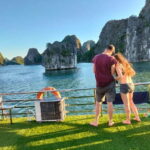
Halong Bay cruise with classic rock formations plus a sunrise option (Tai Chi on the terrace)
Angkor sunset timing built around Pre Rup at golden hour
Bangkok temples in one efficient loop (Wat Traimit, Wat Pho, Grand Palace, Wat Phra Kaew)
Chiang Rai’s White and Blue Temples in the same full-day outing
Phuket to Koh Phi Phi finish with long-tail boat stops and optional plankton diving after sunset
The big picture: what this 18-day route is really like
This trip strings together Vietnam, Cambodia, and Thailand in one continuous arc: history, then nature, then temples again, and finally beaches. If you like ticking off world-famous sights but hate hunting for tickets, routes, and timing, this format will feel like a weight lifted off your shoulders.
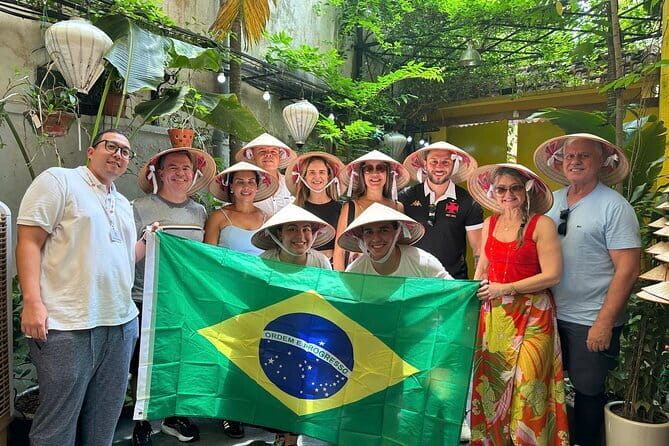
The group setup (maximum 20 travelers) also matters. You get the convenience of a tour while still having enough room for personal questions and quick adjustments. And based on how the guides are described, the translation piece isn’t an afterthought—it’s part of why the days feel smooth.
You can also read our reviews of more tours and experiences in Hanoi.

Hanoi start: temples, mausoleum area, and a lake walk
Your first day is simple: land at Hanoi, transfer into the city, and check in with rooms typically ready around mid-afternoon. It’s a good on-ramp, because day two is packed with major landmarks spread across the city center.
Day two is anchored by the Temple of Literature & National University, a site dating back to 1070 and closely linked to Confucian traditions. From there, you’ll head to the Ho Chi Minh Mausoleum area (outside viewing from Ba Dinh Square), then the One Pillar Pagoda, a small but symbolic lotus-leaf design built in 1049.
The rest of the day adds texture. After lunch, there’s a visit to a handmade florist where you can see how Vietnam’s traditional flower arrangements are made, including preparing a spiritual crown. Later you’ll walk around Hoan Kiem Lake, with views of Ngoc Son Temple and the red The Huc bridge. The day ends with a triciclo pousse panoramic ride through Hanoi’s Old Quarter—a nice way to get your bearings before you explore on your own.
Practical note: this is walking-forward sightseeing. I’d plan on comfortable shoes and a light layer, since Hanoi weather can swing.
Halong Bay cruise: day trip that feels worth the travel
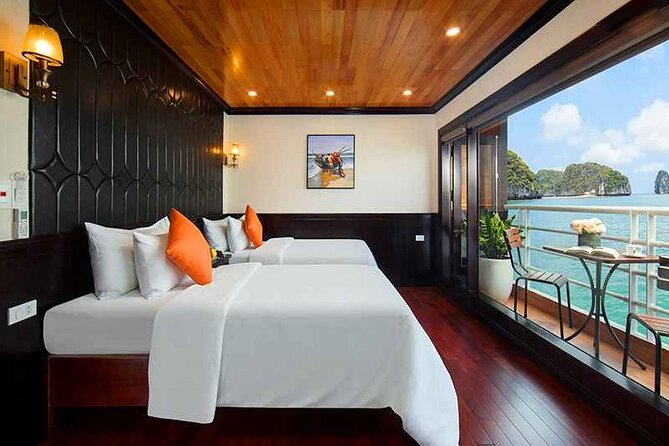
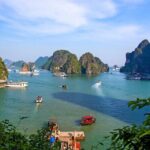
Halong Bay is treated as the centerpiece nature moment, and it’s built as a real cruise day rather than a quick bus stop. After breakfast, you’ll head to the pier area and board for lunch onboard while you cruise between the famous limestone formations.
You’ll get a classic best-of set of shapes—along the way, the sites are described with names like Turtle, Dog, and Head of Man. Halong Bay is also framed through UNESCO recognition and its status among major natural wonders, which helps you connect what you’re seeing to why the place matters.
The next morning you’ll have a chance to catch sunrise—and if you want it, there’s a Tai Chi class on the terrace. Then comes a return stretch with brunch, photo time, and lots of open viewing before you’re back on land.
The main value here is timing. Two days give you more than one light angle on the bay, and that makes the photos and the experience feel less rushed than a single afternoon outing.
Hoi An after dark: lanterns, river calm, and historic streets

After Halong, the route shifts to Hoi An via flight connections (you’ll travel from the Halong pier area back toward the airport for the next segment). When you arrive, you’ll be transferred into town, and the evening plan is where Hoi An starts to feel like a movie set—but with real local rhythm.
You’ll take a nighttime sail on the Hoai River, and the description focuses on what the river means to locals over Vietnam’s changing years. Once the lanterns are lit, the streets look different—then there’s the added ritual moment of lanterns being thrown into the water for good wishes.
The next day is about Hoi An’s heritage on foot and by small walking blocks of history. You’ll see the Old Quarter highlights like the Phuc Kien assembly hall, the Japanese bridge linked to centuries of trade, and traditional merchant houses such as Casa Tan Ky. Lunch is handled, and you also get a free afternoon for beach time, the market stroll, or shopping at your own pace.
Hoi An is one of those places where the slow moments matter. If you can, don’t fill every hour. The town is more about atmosphere than scoreboard touring.
Siem Reap and Angkor: how they structure your temple days

Cambodia’s temple day is arranged with the right kind of variety: big gates and towers, then one of the most dramatic ruins, then the main star at sunset.
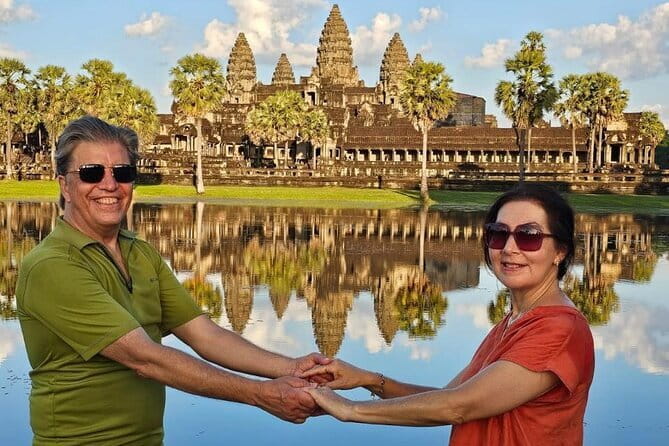
In Angkor Thom, you’ll ride by tuk-tuk to the South Gate, then move through key stops. You’ll look at the statues connected to ocean churning, visit Bayon Temple with its 54 towers and many smiling faces, and also take in areas like Phimeanakas, the terrace of the leprosy king and the royal chambers.
Then comes Ta Prohm, famous for ruins embraced by trees. This is the kind of site where the visuals hit quickly, but it still pays to slow down and look at the stonework details. Lunch is included at a local restaurant, which helps keep the day moving without you having to plan meals.
In the afternoon you go to Angkor Wat, described in terms that connect myth and design: Mount Meru symbolism, and the five towers and surrounding structures. You’ll then finish with sunset at Pre Rup, which is a smart choice. If you’ve ever watched monuments change color over an hour, you know how much that timing can add.

Beyond the classics: Buddhist ceremony, Banteay Srei, and craft support
The second Siem Reap day broadens the temple story beyond the headline names. You’ll start with a Buddhist ceremony with monks, including a prayer from the monks at the end. That’s a meaningful context piece, because it shows how living belief and Khmer culture sit alongside the archaeology.
Then you’ll visit Banteay Samre, a Hindu temple dedicated to Shiva, with reliefs linked to scenes from the Ramayana. After lunch, the trip turns to Banteay Srei, known for its refined carvings and rose sandstone facade. It’s also framed as a special case within Khmer temple building because it’s often described as not constructed for a monarch in the usual way.
On the return journey you’ll stop at D’Angkor Artisans, a center supporting traditional crafts and Cambodian youth. It’s the kind of add-on that makes your day feel less like a museum stamp and more like a link to what’s still being made today.
If you care about craftsmanship, this is one of the best “not just ruins” moments in the whole arc.
Bangkok temples, Chinatown gold, and royal-palace scale

After Siem Reap, you’ll fly to Bangkok and check in. Then your Bangkok day is a fast, efficient temple loop that still feels varied.
First is Wat Traimit in busy Chinatown, known for the massive gold Buddha statue—about 5 meters tall and 5.5 tons. Because it sits up higher, you also get a panorama of Chinatown, which makes the stop feel more than just “look at a statue.”
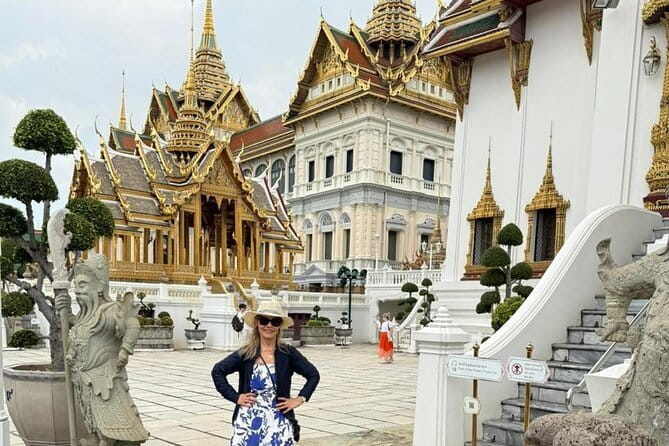
Next is Wat Pho, home to the huge reclining Buddha and also tied to traditional Thai medicine and massage training. Then you’ll go to the Grand Palace (built in 1782), used for certain official and religious ceremonies even though it’s no longer the royal residence.
Finally comes Wat Phra Kaew, the Emerald Buddha Temple with the statue made from a single block of jade. That pairing—palace outside, sacred statue inside—helps you understand why this zone is considered the core of Bangkok’s temple prestige.
You also get a free afternoon, which is valuable here. Bangkok can be intense. Giving you breathing room makes the day feel more enjoyable, not just impressive.
Floating markets and the train market: Thailand’s food-and-people side

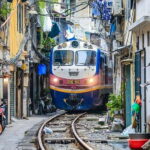
The next Bangkok outing keeps you out of temple mode. You start with Maeklong Railway Market, where the big moment is watching how vendors manage space as a train approaches—tents retract, then everything carries on.
Then you head to Damnoen Saduak Floating Market, taking a boat through canals and seeing produce sold along the waterways. It’s the kind of experience that works best when you treat it like a viewing window on daily trade, not like a staged show.
I like that you also get a free afternoon afterward. Markets can tire you out fast if you over-plan, so this break is practical.
Chiang Mai vs. Chiang Rai: why the schedule leans hard on temples
The itinerary sends you to Chiang Mai for check-in, but the major temple day is in Chiang Rai, described as a full day lasting roughly 9 to 12 hours. That’s the tradeoff: you get top sights in one push, but it’s a long day.
Your Chiang Rai day includes the Karen Long Neck Village (often called Giraffe women village), with time to meet the community and understand their lives in Thailand. Then comes Wat Rong Khun, the White Temple, built by an artist who influenced many Thai and Chiang Rai artists. The stop feels like more than sightseeing because it connects a modern art movement to a sacred setting.
The second big visual is the Blue Temple—Wat Rong Seur Ten—painted fully in blue, and linked to a student of the White Temple creator. The two together give you a helpful contrast: white purity and glowing detail versus deep, saturated blue that changes the mood of the whole area.
Doi Suthep and the Lanna temple cluster around Chiang Mai
Back in Chiang Mai, your temple day focuses on Wat Phra That Doi Suthep. You’ll go up to a forested mountain around 1,000 meters high, and the value here is the combination of views and temple details. You’ll also visit key nearby sites: Wat Chedi Luang and Wat Phra Singh, plus Wat Suan Dok.
Wat Phra Singh is described as a key Lanna architecture example and tied to Songkran festivities among Buddhist faithful. Wat Chedi Luang is framed as built around a partially ruined chedi, dated 1441, and among the tallest ancient structures in Chiang Mai. The stop at Wat Suan Dok ties the area to generations of Chiang Mai royal family remains.
This day gives you a clearer picture of Lanna-era design—less “look at one famous temple,” more “understand the region.”
Phuket and Koh Phi Phi: the island finish is the reward
After Chiang Mai, you fly to Phuket, then you head by bus and ferry to Koh Phi Phi. The schedule is then built for rest plus a structured boat day.
On Phi Phi’s first island day, you take a long-tail style boat loop that’s described as covering all the major stops with plenty of time at each. You’ll visit places such as Monkey Beach, Viking Cave, Pileh Lagoon, Snorkeling, Maya Bay, Bamboo Island, Nui Bay, and Wang Long. There’s also Sunset time, plus a mention that you can still enjoy diving with planktons after sunset.
That plankton add-on matters because it’s one of the more memorable “only here” activities on the list. If you’re the kind of traveler who wants one wow-night moment, this is it.
Day 17 is a free day to relax or explore on your own, and day 18 is departure: ferry to Phuket pier, then transfer to the airport.
If you want a trip that ends with something genuinely calming after temple and city days, this is the right landing.
Price and value: what $4,810 buys you
At $4,810 per person for about 18 days, the cost isn’t low—but the value depends on what’s included and how many logistics are removed from your plate.
This package includes accommodations, entrance fees, guided tours and visits in Portuguese, and key meals: breakfast for 17 days and lunch for 6 days, plus dinner (included, though the exact count isn’t listed). It also includes lots of transfers in air-conditioned vehicles, plus the boat parts and the domestic movement built into the schedule.
That matters because Vietnam–Cambodia–Thailand travel usually involves the most annoying parts: timing flights, aligning ferry schedules, buying tickets to multiple sites, and finding reliable guides. Here, you’re paying for someone else to handle that wiring so you can focus on walking into the places.
Where the cost might feel harder is if you’re a solo traveler, since there’s a single room supplement if you want your own room. Also, if you hate early starts and packed sightseeing days, you might feel like you’re paying for time you’d rather spend slowly.
Who this tour fits best (and who might not)
This works well for you if you want:
- Big icons without planning stress, especially UNESCO sites like Halong Bay and Angkor
- A trip paced around guided education in Portuguese
- A clean end on the beach with Koh Phi Phi downtime
- A group small enough to still feel personal (up to 20 travelers)
It may not be ideal if you:
- Want long, free “wander-only” blocks in every city
- Prefer slower travel between destinations
- Don’t like temple-heavy days (Angkor and the northern Thai sites are the core of the itinerary)
Service quality: the human part (guides and communication)
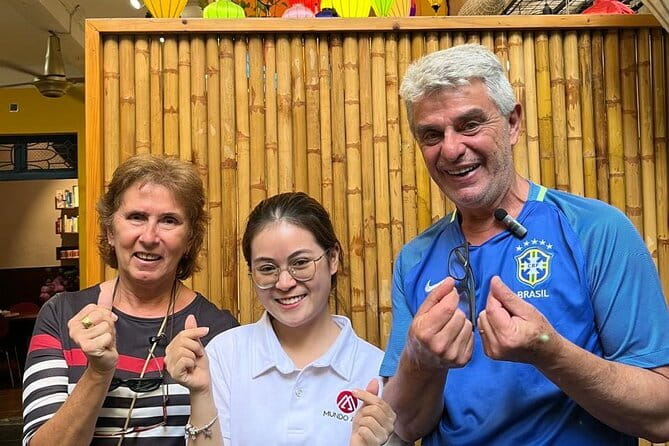
The best praise in the feedback centers on organization, guides, and pre-trip communication. In Vietnam specifically, one guide named Alberto is singled out, and a person named Camila helped with questions before departure. The care during planning and in-country guidance is a big part of why people describe the experience as reliable and easy.
There’s also mention of Portuguese-speaking guides and attention to translations. That’s not a small detail. It changes how much you understand while you’re standing in front of a mausoleum, walking through a temple, or listening to the meaning of ceremonies.
Should you book this Vietnam-Cambodia-Thailand journey?
I’d book it if you want a well-run route through the region’s most powerful sights, plus a beach finish that doesn’t feel like an afterthought. The combination of major landmarks, structured guides in Portuguese, and included entrance fees makes this a strong “save time, maximize experience” option.
I wouldn’t book it if you’re looking for a slow, flexible trip with lots of empty hours. This one is built to move, and the rewards come from seeing a lot—on a tight calendar.
If you’re the kind of traveler who likes the moment you arrive at a famous gate and want someone to explain what you’re looking at, this package fits your style.
FAQ
What is the starting point and start time?
The tour starts at Noi Bai International Airport in Hanoi, with a start time of 8:00 am.
Where does the tour end?
It ends at Phuket International Airport in Phuket, Thailand.
Are international flights included?
International flights and airport charges are not included. The tour does include the in-region movements described in the program.
What language are the guides?
Guided tours and visits are in Portuguese.
What meals are included?
The package includes breakfast (17), lunch (6), and dinner. Meals not listed as included aren’t covered.
How big is the group?
The tour has a maximum of 20 travelers.