REVIEW · HO CHI MINH CITY
Saigon Historical City Tour
Book on Viator →Operated by AN Tours · Bookable on Viator
Scooters, history, and real street-level Saigon. This 4-hour Ho Chi Minh City historical tour pairs hotel pickup with a local guide’s stories, from French-era landmarks to the moments that still shape modern Vietnam.
I really like two things here: the motorbike transport with an open-face helmet (so you spend time seeing, not waiting), and the way your guide points out history details you usually miss on your own.
One thing to consider: you’re riding on the back of a scooter, so plan for some bumpy traffic time and a moderate physical fitness level, plus a possible $5 per person pickup extra if your hotel is outside Districts 1, 3, and 4.
In This Review
- Key points before you go
- Why this scooter tour is a smart first half-day
- Meeting your guide: motorbike pickup, helmets, and pacing
- Notre Dame Cathedral and the Central Post Office: French Saigon in focus
- Thích Quảng Đức’s protest story: beyond the famous photo
- Weapon-concealing bunkers: the wartime layer under the city
- Ba Thien Hau Temple and Book Street: local texture between major sights
- Safety and comfort on the back of a scooter
- Price and value: what $45 buys you in real terms
- Who should book this, and who should skip it
- Should you book the Saigon Historical City Tour?
- FAQ
- How long is the Saigon Historical City Tour?
- Is hotel pickup included?
- How much does it cost?
- What’s included during the tour?
- What if my hotel is outside Districts 1, 3, and 4?
- Is it a private tour?
- What is the cancellation policy?
Key points before you go
- Hotel pickup by motorbike gets you moving fast, with a high-quality open-face helmet and fuel included
- French-era icons like the Notre Dame Cathedral and Central Post Office are explained in plain, human terms
- Thích Quảng Đức’s self-immolation story gives context to the Buddhist crisis under South Vietnam
- Wartime weapon-concealing bunkers add weight to the more famous sights
- Bottled water plus coffee/tea and snacks keep the half-day from feeling like a chore
- Private tour means it’s just your group, not a giant crowd shuffle
Why this scooter tour is a smart first half-day
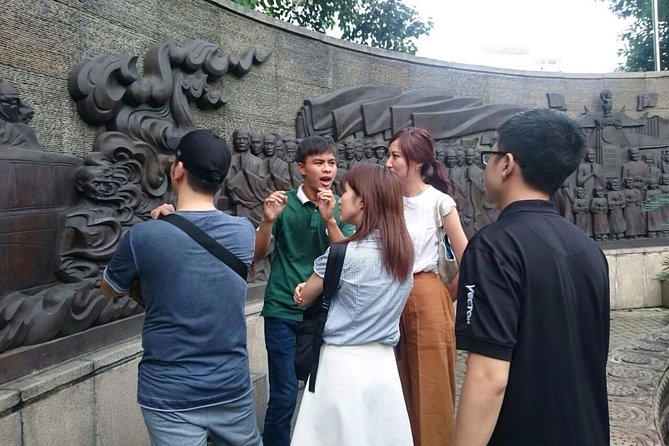
Ho Chi Minh City is loud, chaotic, and hot in a way that can make even confident travelers lose the plot. This tour tackles that head-on by giving you transportation and a guide, so you’re not trying to plan routes while fighting traffic. In just about 4 hours, you get a coherent walk-and-ride loop through the parts that explain how Saigon changed over time.
I also like the tour’s pacing for first-time history work. You’re not just snapping photos; your guide connects places to events—French colonial power, Buddhist persecution, and wartime secrecy—so the city starts to make sense. It’s a focused way to get your bearings fast.
The tour is also priced to feel reasonable for what you’re getting. At $45 per person, you’re paying for more than sightseeing stops; you’re paying for the guide, the motorbike rides (including fuel), and the small comforts like water and coffee/tea.
You can also read our reviews of more city tours in Ho Chi Minh City



Meeting your guide: motorbike pickup, helmets, and pacing

Your start is practical. Your guide picks you up from your accommodation and you ride on the back of their motorbike for the day’s main route. Reviews repeatedly highlight the feeling of safety and the comfort of getting used to the bike quickly, even for people who worried at first.
Two details matter a lot if you haven’t ridden in Vietnam before: you’ll have an open-face helmet, and your driver handles the traffic. Guides like Henry, Chris, Jessie, and An show up in the feedback as especially strong at explaining while driving calmly, with English that makes the stories click.
This is also a private tour, so you don’t get the stress of merging with strangers mid-ride. Your group stays together, which helps when you’re trying to listen closely. And because bottled water and snacks are included, you can keep moving without hunting for refreshments between stops.
The one real drawback is the obvious one: you’re on a scooter. If you hate sitting in traffic or you’re not comfortable with moderate physical activity, consider whether a more walk-heavy tour would suit you better.
Notre Dame Cathedral and the Central Post Office: French Saigon in focus
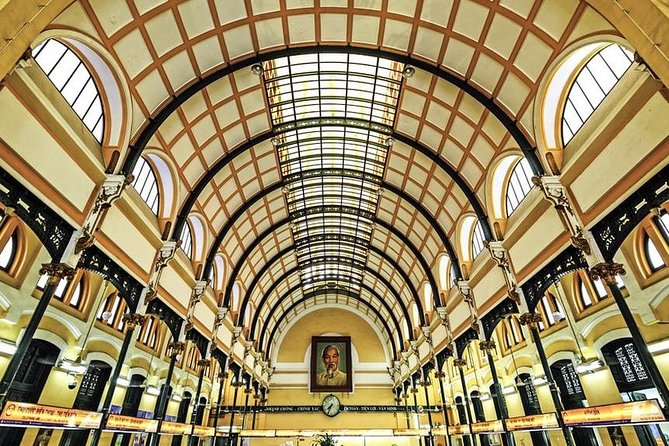
The tour’s first major payoff is the French-era story you can see with your own eyes. You’ll visit the Notre Dame Cathedral and the Central Post Office, and your guide ties them directly to the French period. That connection is the point. These buildings aren’t just pretty facades; they’re evidence of how power looked and how everyday life was organized under colonial rule.
At these stops, I’d expect you to slow down and look outward as much as upward. The Central Post Office, in particular, is the kind of place where architecture helps you understand scale and intent—this was built to function as a hub, not just a monument. Your guide’s explanations are designed to make the background feel relevant, not like memorizing dates.
The practical benefit: these are major landmarks, so you’re never guessing where you are. You’re in a part of the city where history is easy to spot, and the tour uses that clarity to teach you how to read what you’re seeing.
Thích Quảng Đức’s protest story: beyond the famous photo
After the French-era icons, the tour moves away from the busiest tourist feel and into a story that’s harder to forget. You’ll stop for the account of a Vietnamese Mahayana Buddhist monk who burned himself in protest, tied to persecution of Buddhists by the South Vietnamese government. This isn’t presented like a dramatic legend; it’s offered as history with context so you understand why it mattered.
The specific name that shows up in the tour experience is Thích Quảng Đức. If you know the iconic photo already, this is the chance to place it in the larger situation that produced it. If you don’t know the story, the guide helps you connect the event to the political and social pressures of the time.
Why this stop is valuable: it turns a headline into an explanation. You get a human-scale reason people remember this moment, and you see how religion, politics, and power collide in real history. It also gives your earlier French-era stops a sharper contrast—Saigon wasn’t just colonial administration; it was also a battlefield of ideas.
One consideration: this is emotionally heavy material. If you’re traveling with someone who prefers lighter sightseeing, you may want to pace your mood for this part of the ride.
Weapon-concealing bunkers: the wartime layer under the city
Next comes one of the stops that adds real weight to the tour. You’ll visit weapon-concealing bunkers, described as being used to hide nearly three tonnes of weapons. The story here is all about how people prepared for danger—and how secrecy functioned when visibility could get you killed.
This is exactly the kind of stop that feels different from the big monuments. Instead of explaining history as dates on a plaque, the bunker stop reframes it as logistics and survival. It’s the “how could they do that?” part of the city’s past, told in a way that makes the location feel purposeful, not random.
If you like history that mixes architecture with strategy, you’ll likely enjoy this part. It’s not just what happened; it’s how the city’s underground reality worked during conflict.
You can also read our reviews of more historical tours in Ho Chi Minh City






Ba Thien Hau Temple and Book Street: local texture between major sights
Not every stop is purely monumental, and that balance helps this tour feel like more than a checklist. Some of the highlights people mention include Ba Thien Hau Temple and time around Book Street. These stops add texture: you get a sense of everyday Saigon alongside the large political and historical narratives.
Ba Thien Hau Temple fits the tour’s broader theme of Buddhism and belief, especially after the Thích Quảng Đức stop. You can feel how religious practice sits in the city’s rhythm, not only in the past. Book Street, meanwhile, helps ground the experience. It’s a reminder that Saigon is still very much a living city, even when you’re tracing older layers.
One thing I appreciate here is variety within a half-day. You’re not stuck in only one type of sightseeing. You’re moving between colonial landmarks, protest history, wartime infrastructure, and places where culture shows up in daily life.
Safety and comfort on the back of a scooter
The most repeated theme in the feedback is how safe and manageable the scooter rides feel once you’re on them. People specifically mention guides driving responsibly, English skills that make listening easy, and the quick adjustment period to sitting on the motorbike.
Your gear helps. You get an open-face helmet, and fuel is included in the transport cost—so you aren’t worrying about random add-ons mid-ride. Your guide also chooses the route and timing, which matters in a city where traffic changes constantly.
If you’re older or you’re traveling with someone nervous about motorcycles, the tour’s structure can still work well. One review mentions a 74-year-old husband and wife feeling reassured. That doesn’t mean it’s risk-free, but it does suggest the guides typically match the ride to the group.
Comfort tip (practical, not fussy): wear something you can sit in comfortably for a while. This tour gives you history fast, and the tradeoff is that you’re spending much of the time seated on the bike instead of walking.
Price and value: what $45 buys you in real terms

At $45 per person, this isn’t a bargain that cuts corners. It feels more like paying for a small package deal: guide + motorbike transport (with fuel) + helmet + bottled water + coffee/tea + snacks.
That’s the value equation I’d use. If you tried to replicate this on your own, you’d need a guide for interpretation and someone to navigate the city safely, plus you’d pay for transport anyway. Here, those costs are rolled into one price, and the tour keeps you from spending time figuring things out.
There’s also a fair heads-up: if your accommodation is outside Districts 1, 3, and 4, there’s a $5 per person charge. That’s the main extra cost possibility you should plan for so you don’t get surprised.
Demand looks strong too. It’s commonly booked about 37 days in advance, which usually means the tour is popular for exactly the reason you’d want it: it’s a first-day-friendly way to see key history without turning your vacation into a navigation project.
Who should book this, and who should skip it

This tour is built for two types of people. First, first-time visitors who want a history overview with context. Second, history-focused travelers who like stories that connect buildings to events, not just names and photos.
It also works well for people who want local perspective. Guides such as Chris, Henry, Jessie, Linh, and Nguyen show up in feedback as doing more than facts. They point out perspective on contemporary life too, which makes the historical stops feel connected instead of frozen in the past.
Skip (or consider a gentler alternative) if you strongly dislike scooter rides. The tour expects you to ride behind the guide and maintain a moderate physical fitness level. If you’re traveling with mobility limitations or you know you won’t enjoy traffic noise and close driving, this may feel stressful rather than exciting.
If you’re unsure, ask yourself one question: do you want to see Saigon at street level for half a day, with history explained along the way? If yes, this is an easy match.
Should you book the Saigon Historical City Tour?
Yes, if your priority is a fast, guided introduction to Saigon’s layered past. The combo of French-era architecture, a major Buddhist protest story, and wartime bunkers gives you a timeline that feels more meaningful than random attractions. Add in the motorbike transport and included water/coffee/snacks, and the $45 price starts to look fair.
Maybe not, if your ideal tour is calm and walking-based. This one is built around scooters and short stops, which means comfort with riding matters. Also keep the pickup-area rule in mind so you can predict the full cost.
If you like being guided through history without doing the planning math yourself, book it and enjoy the ride. If you’d rather go slow, choose a different style of tour and give Saigon more time on foot.
FAQ
How long is the Saigon Historical City Tour?
The tour is about 4 hours.
Is hotel pickup included?
Yes. Pickup is offered, and you’re picked up from your accommodation by motorbike.
How much does it cost?
It costs $45.00 per person.
What’s included during the tour?
The tour includes transportation by motorbikes (including fuel) with a high-quality open-face helmet, plus bottled water, coffee and/or tea, and snacks.
What if my hotel is outside Districts 1, 3, and 4?
If your accommodation is out of District 1, 3, and 4, there is a $5 per person charge.
Is it a private tour?
Yes. This is a private tour/activity, so only your group participates.
What is the cancellation policy?
You can cancel for a full refund if you cancel at least 24 hours in advance. If you cancel within 24 hours of the start time, there is no refund.