REVIEW · HO CHI MINH CITY
Saigon: City Sightseeing Hop-On Hop-Off Bus Tour
Book on GetYourGuide →Operated by City Sightseeing Worldwide · Bookable on GetYourGuide
Saigon gets loud fast, so a bus tour that moves with you is smart. This Saigon hop-on hop-off loop gives you a fast overview of Ho Chi Minh City’s big sights, plus an easy way to hop out when something catches your eye. I like that it’s built for self-paced sightseeing, not a rigid schedule.
Two things I really like: the audio commentary in 9 languages with headphones, and the fact you can mix and match the Red and Blue routes across a 1- or 2-day pass. That combo helps you plan the rest of your days without guessing.
One thing to keep in mind: the narration is audio-recorded, and a few people report occasional audio sync or sound issues on certain buses—so bring patience and rely on the stop names to guide you.
In This Review
- Key points that make this tour worth your time
- Why a hop-on hop-off bus works so well in Saigon
- Price and value: is $21 a bargain or a splurge?
- Your Red Route vs Blue Route: choose the right loop for the day you want
- Red Route (classic District 1 sights)
- Blue Route (markets, flower market, pagodas, and the city beyond)
- The smart transfer tip
- Stop-by-stop on the Red Route: Opera House to Notre-Dame Cathedral
- Saigon Opera House (Stop 1)
- Nguyen Hue Street (Stop 2)
- Nha Rong Wharf (Stop 3)
- Tran Hung Dao Statue (Stop 4)
- Museum of Vietnamese History (Stop 5)
- War Remnants Museum (Stop 6)
- Pham Ngu Lao Street (Stop 7)
- Ben Thanh Market (Stop 8)
- Independent Palace (Stop 9)
- Saigon Notre-Dame Cathedral / Central Post Office (Stop 10)
- Stop-by-stop on the Blue Route: flower market, pagodas, and major markets
- Beer Street (Pham Ngu Lao Street) (Stop 1)
- Ben Thanh Market (Stop 2)
- War Remnants Museum (Stop 3)
- Ho Thi Ky Flower Market (Stop 4)
- Phuoc An society premises (Stop 5)
- Ong Bon Pagoda (Stop 6)
- Binh Tay Market (Stop 7)
- Thien Hau Pagoda (Stop 8)
- Van Phat Pagoda (Stop 9)
- Using the bus like a pro: timing, photos, and headphone fixes
- Work with the schedule instead of against it
- Use the top deck for photos, then move inside for comfort
- Volume and sync: plan for imperfect audio
- Hop off with a plan, not just a wish
- Comfort, staff help, and the small perks that actually matter
- Practical details before you board
- Who should book this Saigon hop-on hop-off bus?
- Should you book this tour? My honest take
- FAQ
- How long is the Red Route and how often do the buses run?
- How long is the Blue Route and how often do the buses run?
- Can I use both the Red and Blue routes during my pass?
- What languages are available for the audio guide?
- Where can I exchange a ticket voucher?
- Are entrance fees to attractions included?
Key points that make this tour worth your time

- Two route colors, two different parts of the city so you’re not repeating the same streets
- Red Route (75 minutes) and Blue Route (80 minutes) with regular departures all day
- 9-language headphone audio plus free onboard Wi‑Fi for quick map checks
- Practical stop locations for sights like Notre-Dame Cathedral, the War Remnants Museum, and Ben Thanh Market
- Transfer advice built in (switch lines at Red Stops 6, 7, 8 to match Blue Stops 1, 2, 3)
Why a hop-on hop-off bus works so well in Saigon
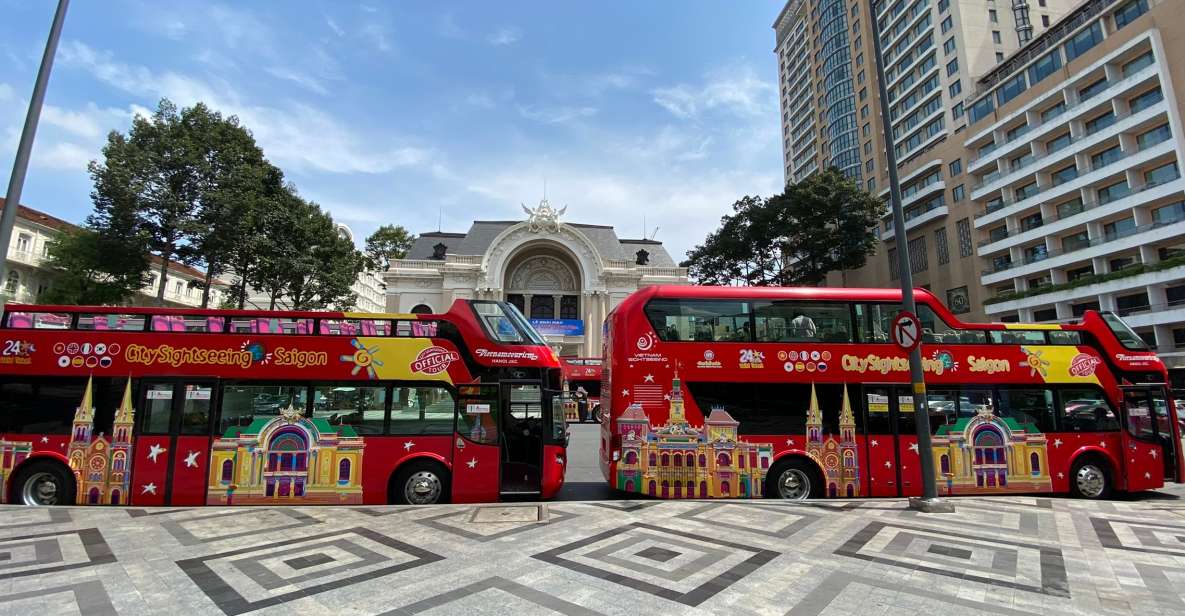
Saigon is not a “walk everywhere” city on day one. Streets get busy, traffic patterns can be chaotic, and crossing the wrong road can eat a lot of time. A hop-on hop-off bus solves that problem in a very practical way: you get height for photos, you avoid constant route planning, and you can bail out when you want to linger.
This tour is also good for building a mental map. As you ride, you’ll start to recognize District 1 landmarks, then you’ll see how the city spreads outward toward markets and pagodas on the Blue line. That helps you decide what to do next—museum time, market browsing, or just finding a café and watching street life.
And because the ride is scheduled in loop format (not a point-to-point transfer), you don’t feel rushed. If you hop off near one stop and it turns out you want more time, you can just catch the next bus.
You can also read our reviews of more city tours in Ho Chi Minh City



Price and value: is $21 a bargain or a splurge?
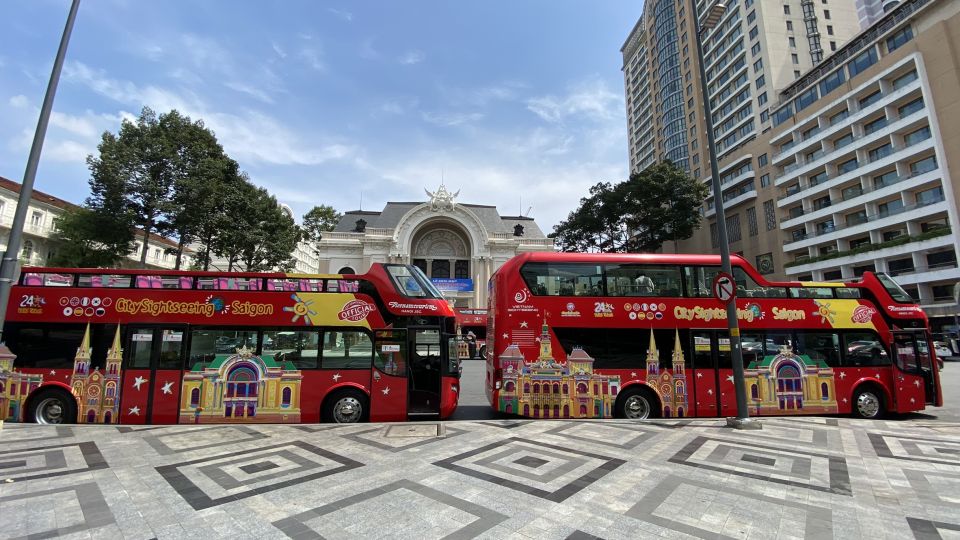
At about $21 per person for a 1–2 day pass, this is priced in the “reasonable convenience” range. The bus is not the cheapest way to travel block-to-block, especially if you’re comfortable using rideshare or taxis.
So when does this price feel worth it?
- You’re staying 1–2 days and want to cover a lot fast. The bus loops hit major District 1 highlights and extend to major sights on the Blue route.
- You’ll hop off multiple times. Hop-on hop-off only saves money if you actually use the flexibility.
- You care about guided context. Headphone audio in 9 languages plus a free guidebook helps you understand what you’re seeing, not just “passing by it.”
When might it feel pricey?
- If you plan to take the bus once, do one quick look, and then switch to taxis for everything else, you may not get full value. One review even points out it could be cheaper by using rideshare between specific attractions. That’s a fair thought.
My rule: if you want an overview day plus at least a couple of planned stops, this is good value. If you already know your exact itinerary and you’ll taxi directly, you might compare costs first.
Your Red Route vs Blue Route: choose the right loop for the day you want

You’re choosing between two loop styles, both starting at Stop 1 by the Saigon Opera House.
Red Route (classic District 1 sights)
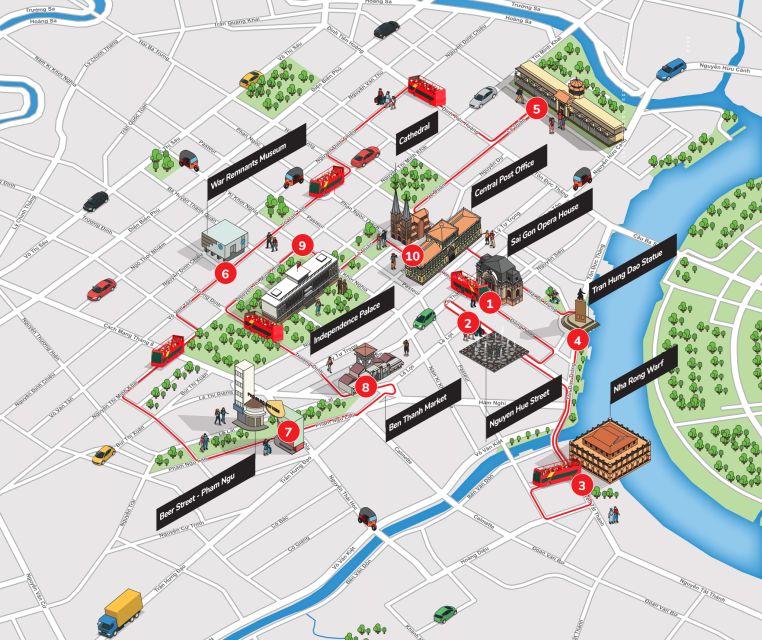
- Stops: Saigon Opera House, Nguyen Hue Street, Nha Rong Wharf, Tran Hung Dao Statue, Museum of Vietnamese History, War Remnants Museum, Pham Ngu Lao Street, Ben Thanh Market, Independent Palace, and Notre-Dame Cathedral / Central Post Office
- Tour duration: 75 minutes
- Frequency: every 30 minutes
- Hours: first departure 9:00am, last departure 4:00pm
This is the route you take when you want the iconic Saigon postcard scenes: grand French-colonial architecture, central boulevards, and the big museum hits.
Blue Route (markets, flower market, pagodas, and the city beyond)
- Stops: Beer Street (Pham Ngu Lao Street), Ben Thanh Market, War Remnants Museum, Ho Thi Ky Flower Market, Phuoc An society premises, Ong Bon Pagoda, Binh Tay Market, Thien Hau Pagoda, Van Phat Pagoda
- Tour duration: 80 minutes
- Frequency: every 45 minutes
- Hours: first departure 9:00am, last departure 3:45pm
This line is the one for people who like markets and religious sites, and who want to see more of Saigon’s working neighborhoods rather than only the central sights.



The smart transfer tip
If you want to stitch both routes together efficiently, follow the route connection advice: you’re advised to switch lines at Stops 6, 7, and 8 on the Red Route, which corresponds to Stops 1, 2, and 3 on the Blue Route. In other words, plan where you want your “museum / market / food street” part of the day to begin, then hop into the other color.
Stop-by-stop on the Red Route: Opera House to Notre-Dame Cathedral
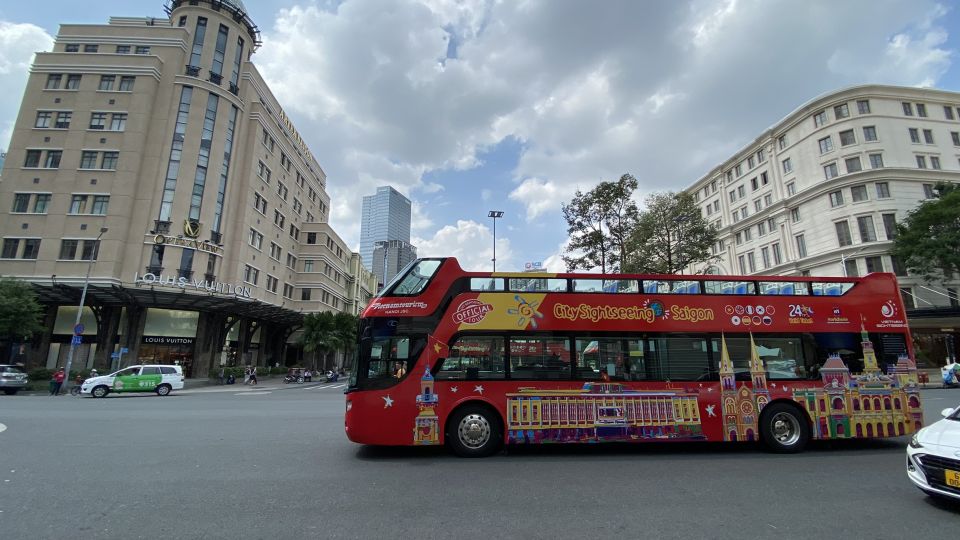
The Red Route is built like a greatest-hits tour through District 1, and it’s the easiest place to start your sightseeing.
Saigon Opera House (Stop 1)
This is a clean launch point, and it’s also where you’ll find the ticket counter area. If you’re the type who likes to settle in first, then scan for your next plan, this starting spot is convenient.
Nguyen Hue Street (Stop 2)
This is one of the city’s main show-streets. Expect big urban energy, good photo angles from the top deck, and an easy transition point for later stops on the route.
Nha Rong Wharf (Stop 3)
This is your “waterfront / transport history” moment. Even if you don’t go exploring on foot, the views from the bus are a quick way to understand how Saigon connects to trade and travel.
Tran Hung Dao Statue (Stop 4)
A notable visual landmark for orienting yourself. From the bus, it works as a reference point when you’re planning what’s next.
Museum of Vietnamese History (Stop 5)
This stop is a strong “if you have time” option. It’s also useful for first-day planning: you’ll know exactly where you’d want to return for a deeper visit if the rest of the day runs short.
War Remnants Museum (Stop 6)
If you only do one museum stop, this is a top contender on the Red route list. It’s also an important transfer zone—so even if you don’t go inside right away, you can still use the stop to reorganize your afternoon.
Pham Ngu Lao Street (Stop 7)
This is where you’ll feel the more casual, visitor-friendly side of Saigon. It’s also a practical place to break up the day—grab snacks, then get back on without losing your place.
Ben Thanh Market (Stop 8)
Ben Thanh Market is the classic stop for souvenirs and quick bites. Even if you’re not a serious shopper, it’s useful because it’s a live snapshot of local commerce. Go early if you want easier browsing and fewer crowds.
Independent Palace (Stop 9)
This stop pairs well with the broader French-colonial vibe of earlier sights. It’s one of those places where a quick bus photo doesn’t do it justice, so use the hop-off moment if you want to actually see the rooms and exhibits.
Saigon Notre-Dame Cathedral / Central Post Office (Stop 10)
You’ll likely recognize this area immediately. It’s the kind of end-of-loop stop that makes a good finale because it’s photogenic and easy to build plans around afterward.
Stop-by-stop on the Blue Route: flower market, pagodas, and major markets
The Blue Route is the one that rounds out your picture of Saigon. It still covers big names like Ben Thanh and the War Remnants Museum, but it adds market and religious sites that change the pace.
Beer Street (Pham Ngu Lao Street) (Stop 1)
This is an efficient starting point for a more food-and-drinks-focused loop. Even if you don’t order anything, it’s a good orientation spot for where nights can get lively.
Ben Thanh Market (Stop 2)
Yes, it overlaps on purpose. It’s a major landmark and a convenient reset point if you’re syncing two routes into one plan.
War Remnants Museum (Stop 3)
Same idea: it’s a key sight and a practical transfer stop. If you did it on the Red line already, you can use the Blue line timing to revisit the area when you’re fresher or when the light looks better for photos.
Ho Thi Ky Flower Market (Stop 4)
This stop adds color and local rhythm. If you like watching how the city moves through everyday shopping, this is a good place to hop off and walk around for a bit.
Phuoc An society premises (Stop 5)
This one is more niche. It’s a useful reminder that the Blue Route isn’t only about the famous “must-sees,” but also about seeing the city’s different layers.
Ong Bon Pagoda (Stop 6)
A calm contrast to the market areas. If you want one religious stop without committing a full extra day, this is a nice middle option.
Binh Tay Market (Stop 7)
A strong market stop on the Blue route. Expect shopping energy, everyday goods, and plenty of chances for quick, honest photos of daily life.
Thien Hau Pagoda (Stop 8)
Another meaningful pagoda stop, adding more variety to your sightseeing day.
Van Phat Pagoda (Stop 9)
This is the Blue Route’s closer. If you’re planning a late afternoon loop, it’s a good capstone for finishing with something quieter.
Using the bus like a pro: timing, photos, and headphone fixes

Here’s how you get the best experience out of hop-on hop-off in Saigon.
Work with the schedule instead of against it
Red buses run every 30 minutes, from 9:00am to 4:00pm. Blue buses run every 45 minutes, from 9:00am to 3:45pm. If you’re doing a museum-heavy day, start early so you aren’t rushing at the end of the day.
Use the top deck for photos, then move inside for comfort
The ride is designed for viewing, and the top deck is the easiest way to get wide shots. When it’s hot or rainy, you can shift to a more sheltered section of the bus. Some people also mention staff handing out sun hats and rain ponchos—so if weather shifts, don’t panic. Just keep an eye out when you’re getting on and off.
Volume and sync: plan for imperfect audio
Headphone audio in 9 languages is one of the main selling points. Still, a few riders report:
- audio not lining up perfectly with the buildings on screen
- sound system issues on some buses
- audio pausing or stopping during parts of the loop
- headphone volume being hard to hear over city noise
So I’d do two things: keep the stop list handy (so you don’t rely only on narration), and if the audio seems off, switch your focus to landmarks outside the window and the stop names.
Hop off with a plan, not just a wish
This is the fastest way to avoid wasting your own time. Before you hop off, decide what you’ll do once you’re there:
- museum inside?
- 30-minute market browse?
- photos only, then back on?
Since you can hop back on later, you don’t have to commit to a full visit immediately. But you do want to avoid “wander until you forget” mode.
Comfort, staff help, and the small perks that actually matter

This tour includes a free guidebook with maps, recommendations, timetables, and coupons, plus free Wi‑Fi onboard. Those sound like extras, but they matter in Saigon because it’s the kind of city where you’ll constantly be checking where you are and what’s worth the detour.
You also get headphones for the audio guide. The audio itself covers English, Spanish, German, French, Chinese, Japanese, Korean, Vietnamese, and Russian, which is a big deal if you’re traveling as a mixed-language group.
On the ground, people report friendly staff who help point you to the right bus. There’s also a practical detail: the tour provides a driver with English. So if something feels unclear at a stop, you have someone you can ask.
Practical details before you board
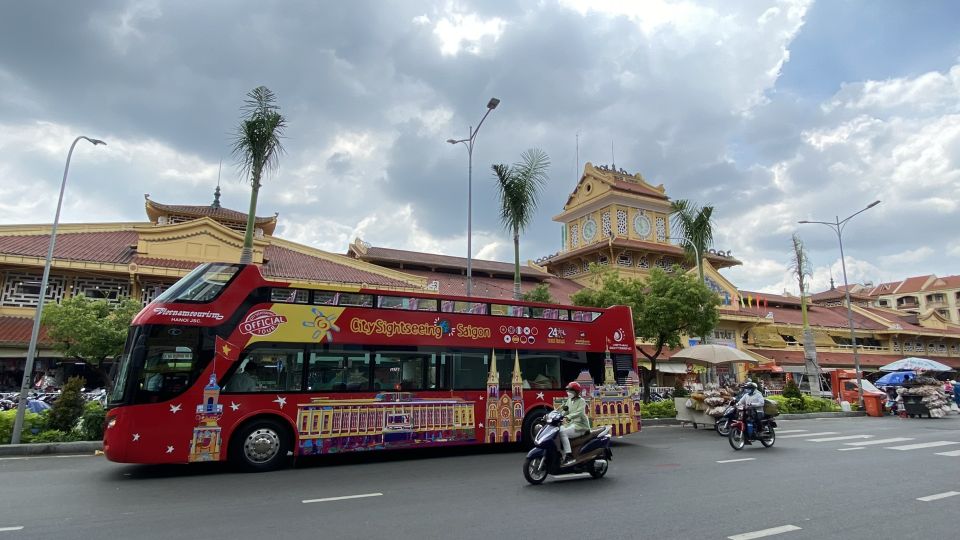
A few points you’ll want to have ready:
- Bring your passport or ID card
- Pets are not allowed, and smoking isn’t allowed
- Mobile and paper vouchers are accepted
- If you need to exchange a voucher, you can do it at the ticket counter located on the side of the Saigon Opera House, facing the Continental Hotel
Those are the basics that keep your first minutes smooth.
Who should book this Saigon hop-on hop-off bus?

This tour is a great match if you:
- want a fast overview of Ho Chi Minh City without stressful navigation
- like museums and architecture but still want flexibility
- are visiting with kids and want an easy way to pause when everyone needs a break
- don’t want to pre-plan every hour, but still want a structured backbone for the day
It also works well if you’re a “plan on the bus, walk later” person. You ride first, learn what the city looks like, then pick your walks based on what you liked most.
Should you book this tour? My honest take
If you’re short on time, the Saigon hop-on hop-off bus tour is an efficient, low-stress way to cover a lot of major sights. I especially like that you can choose between Red and Blue routes, giving you both iconic central highlights and a more market-and-pagoda side of the city.
That said, it’s not perfect. Audio quality can vary, and you may run into occasional headphone or syncing problems. If you’re the kind of person who needs flawless narration to enjoy a tour, you might find it frustrating.
My suggestion: book it if you want an easy first day that sets up the rest of your trip. Don’t book it if your plan is only one stop and then taxis for everything else. In that case, you’ll likely feel like the bus is more “convenience tax” than “best value.”
FAQ
How long is the Red Route and how often do the buses run?
The Red Route loop takes about 75 minutes, with departures every 30 minutes. The first departure is 9:00am and the last departure from Stop 1 is 4:00pm.
How long is the Blue Route and how often do the buses run?
The Blue Route loop takes about 80 minutes, with departures every 45 minutes. The first departure is 9:00am and the last departure from Stop 1 is 3:45pm.
Can I use both the Red and Blue routes during my pass?
Yes. Your 1–2 day pass includes access to both routes, and you can switch between them. You’re advised to switch lines at Stops 6, 7, and 8 on the Red Route, which corresponds to Stops 1, 2, and 3 on the Blue Route.
What languages are available for the audio guide?
The audio guide is available in English, Spanish, German, French, Chinese, Japanese, Korean, Vietnamese, and Russian, and you’ll get headphones.
Where can I exchange a ticket voucher?
You can exchange vouchers at the ticket counter on the side of the Saigon Opera House, facing the Continental Hotel.
Are entrance fees to attractions included?
No. Entry to attractions is not included, and food and drink are also not included. The tour covers the bus ride and onboard audio/guide materials.