REVIEW · HANOI
Knife Making in Blacksmith Village in Hanoi
Book on GetYourGuide →Operated by Beyond Backstreet Tours · Bookable on GetYourGuide
Fire, hammers, and a blade you make. This hands-on Hanoi workshop turns hot iron into a usable knife, led by English facilitator Mai in the Da Sy forging village. Two things I especially like: you go through the real steps of the craft (not just a demo), and it stays small-group so you get steady help as you work. One thing to consider: you’ll be around sparks, so you’ll need long sleeves and long pants and you should avoid fancy outfits.
Da Sy has a reputation that goes beyond a quick souvenir stop. The village’s forging work helped supply weapons during Vietnam’s wartime period, and then shifted back to peacetime tools like plows, rakes, and kitchen- and household-use metal items. In this class, you get the practical version of that story as you shape, heat, and finish a simple knife.
You’ll be paying $54, and the value comes from what’s actually included: tools, materials, safety gear, English guidance, light refreshments, and a knife you take home. Logistics are the main watch-out: there’s no knife cover included, and you’ll want to plan to transport your blade safely (usually in checked luggage).
In This Review
- Key highlights worth your time
- Entering Da Sy: where Hanoi gets more local
- What happens in your knife workshop (step by step)
- Rough draft and shaping
- Keeping the fire and controlling the heat
- Hammering red-hot iron into form
- Tempering for strength with water
- Sharpening the final product
- Meet Mai and the smiths behind the work
- Safety with sparks: what to wear and what to remember
- From village craft to a knife you can actually use
- Price and value: is $54 a fair deal?
- Who this Hanoi knife-making class is best for
- Quick practical tips so your day goes smoothly
- Should you book Knife Making in Blacksmith Village in Hanoi?
- FAQ
- Where is the meeting point for the knife-making workshop?
- How long is the experience?
- What language is the instructor?
- What is included in the price?
- Is pick-up or drop-off included?
- Do I need to bring safety gear or special clothing?
- Will I have time to make the knife myself?
- Is a knife cover included?
- Can the workshop start time be changed?
Key highlights worth your time
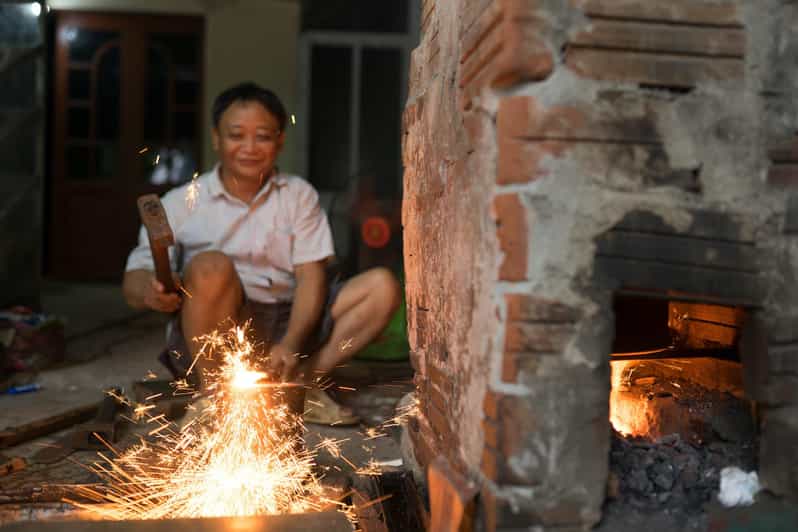
- Forge your own one-of-a-kind knife you can actually use back home
- Walk through the full process for a simple knife, from rough draft to sharpening
- Learn traditional hand techniques even though modern blacksmiths may use machines
- Mai hosts in English and helps you from start to finish
- Safety gear included: mask and eye protection, plus sensible prep for sparks
- Small group of 10 or fewer, which makes hands-on training feel real
Entering Da Sy: where Hanoi gets more local
The meeting point is simple and easy to find: the guide waits at the entrance of a football field next to a green fence. The session starts there and ends back at the same spot, which keeps the logistics straightforward if you’re building your day in Hanoi.
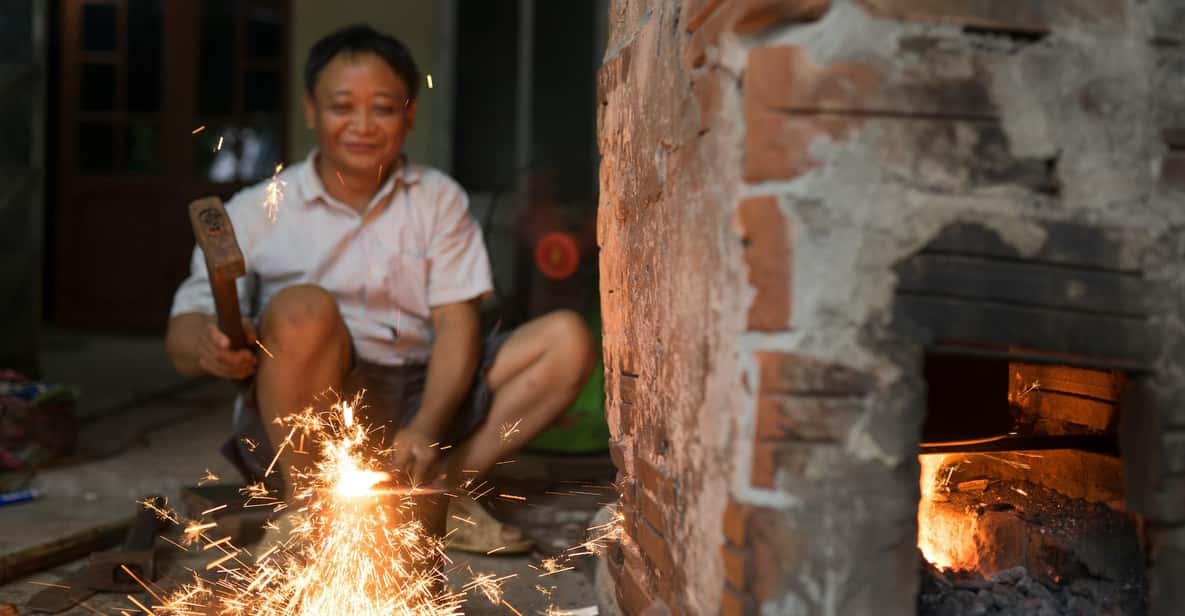
Da Sy (Kien Hung Commune, Ha Dong Town) is part of the Dong Bac area experience, and it’s the kind of place where the setting matters. You’re not standing in a showroom. You’re in the working world of a forging village that has shifted with Vietnam’s history—from wartime metal support to agricultural implements and kitchen tools once peace returned.
This is also the setting where the class makes sense. You’re learning knife-making basics in the same environment where blacksmiths kept jobs going during changes in the country’s needs. It’s a small but important difference between watching a craft and understanding how it fits into daily life.
If you’re sensitive to crowds, this part works in your favor: the workshop is limited to 10 participants, so the experience doesn’t feel like a factory line.
You can also read our reviews of more tours and experiences in Hanoi.



What happens in your knife workshop (step by step)
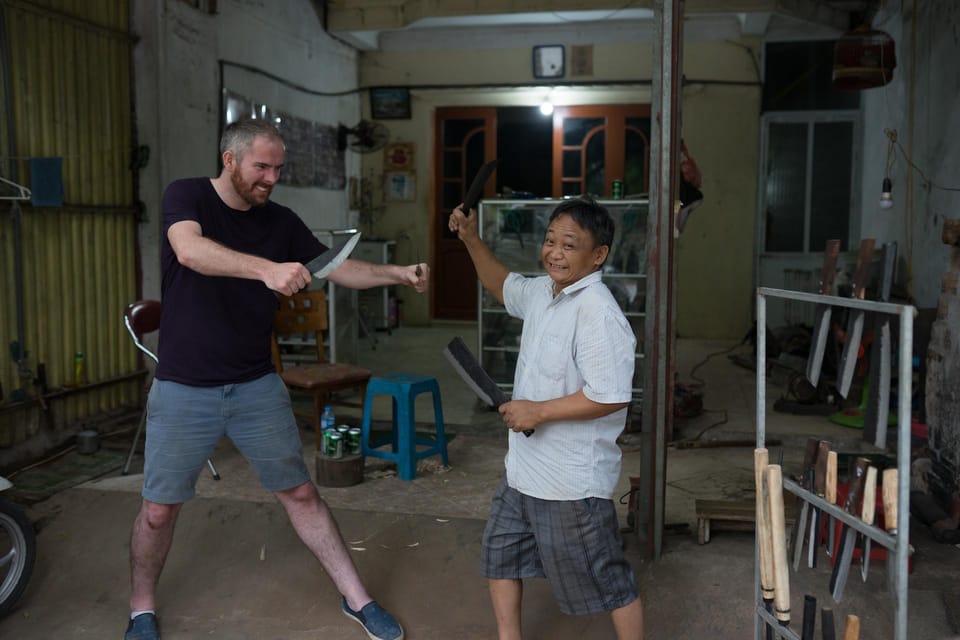
This is a 2.5-hour workshop where you go through the processes of making a simple knife. Even if machines exist today, the instruction focuses on traditional hand techniques, because that’s where the “how” and the feel of the metal come from.
Here’s what the craft sequence looks like:
Rough draft and shaping
You’ll start with the early forming steps—turning metal into something that resembles a knife blank. In practical terms, this is where patience matters. The blacksmithing work involves managing heat and working fast enough before the metal cools too much.
Keeping the fire and controlling the heat
Blacksmiths don’t just swing hammers. A big part of the job is keeping the fires burning and maintaining the right temperature. You’ll learn how temperature affects the metal’s behavior, and why timing matters during the shaping phase.
Hammering red-hot iron into form
Then you work with the most physical part: hitting red-hot iron into shape with hammers. Expect guided instruction so you’re not just making random strikes. The goal is a usable knife profile, and you’ll learn how repeated hammering changes the metal.






Tempering for strength with water
Next comes tempering, where the metal strength gets improved using water. This step is key because it’s about making the knife durable—not just pretty. You’ll learn how tempering fits into the overall process and why it can’t be skipped if you want a practical blade.
Sharpening the final product
Finally, you sharpen the finished product. This is the moment where the workshop stops being theory and becomes a tool you can bring home. The sharpening process matters because it turns your forged work into something you can use in real life.
What you’ll like if you’re hands-on: the structure is clear. You’re not stuck watching while someone else does everything. You’re in the work, under supervision, learning the steps that make a knife a knife.
Meet Mai and the smiths behind the work
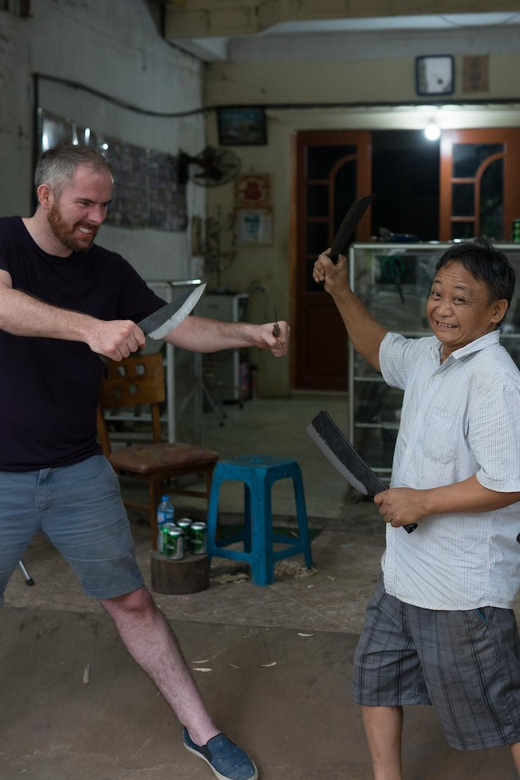
The English-speaking facilitator is Mai, and she’s the kind of host you want in a workshop: clear, supportive, and hands-on with guidance. In a class like this, that makes a difference. Knife-making involves heat, tools, and technique, so good explanation helps you feel safe and confident while you work.
You’ll also work with the blacksmith—one of the smiths you may be paired with is named Ha. That matters because craft instruction is often person-to-person. When you get help from someone actively working the craft, you don’t just hear what to do; you see how experienced hands control the process.
The small-group size (10 or fewer) supports this. With fewer people competing for attention, Mai can help you keep pace with the workflow rather than waiting your turn through long stretches.
Safety with sparks: what to wear and what to remember
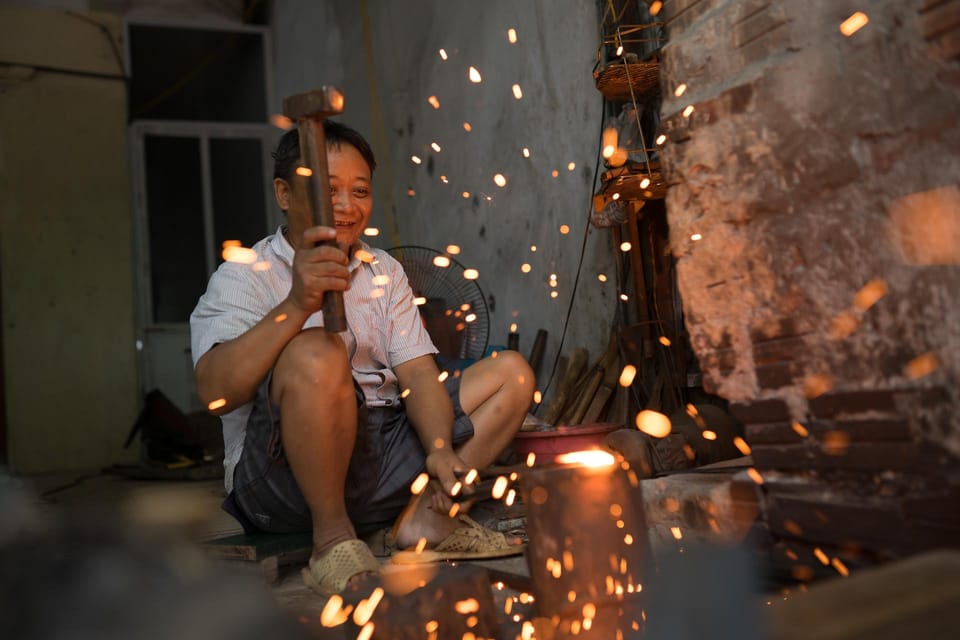
This is where you should be practical. The workshop recommends long sleeves and long pants to help protect you from sparks. It also says no dress—meaning don’t count on thin fabrics or loose clothing that can catch heat or get in the way.
Since the work involves red-hot metal and hammering, you should treat it like a real metal shop, not a craft fair. You’ll get mask and eye protection accessories included, which is the right baseline.
One more “don’t skip this” tip: plan your transportation home. The class includes a knife to take home, but a knife cover isn’t included, and the workshop advises you to check in luggage so you can carry your knife safely. If you fly, checked luggage is the usual practical choice so the blade doesn’t become a headache at security.
From village craft to a knife you can actually use
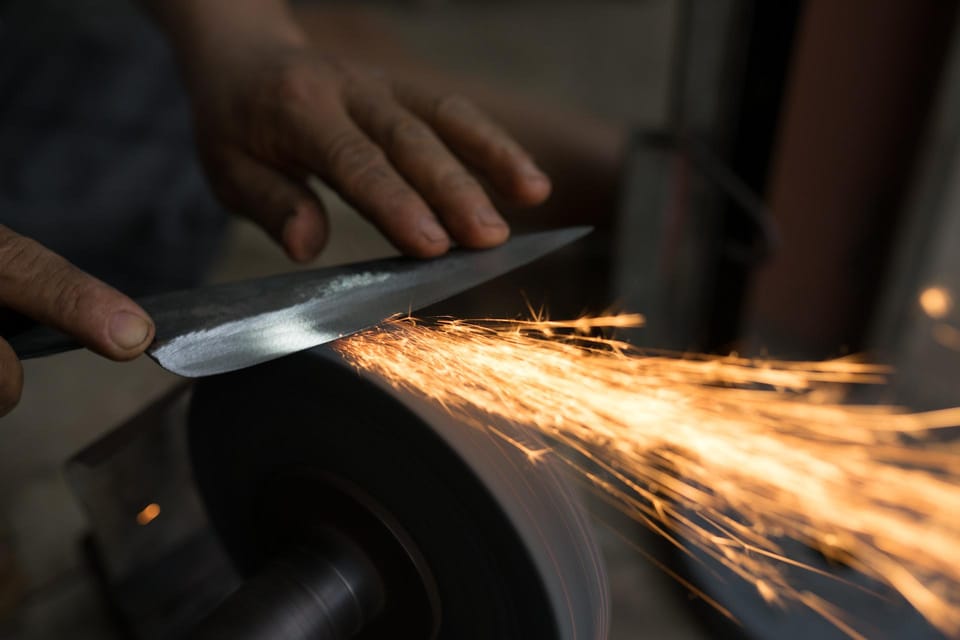
A common tourist souvenir is decorative, not functional. This one is different. You’ll leave with the handmade knife you made during the course—market-ready as a real cooking knife in the sense that it’s forged and finished through the steps of the process.
That’s a big part of the value: the experience and the product come from the same work session. You didn’t just pick up an item at the end. You made it through rough drafting, shaping with hammer control, tempering, and sharpening.
And because it’s hand-forged, your knife is genuinely unique. Even in simple designs, handwork creates small variations that machines don’t replicate. That’s the craft’s personality showing up in the tool you’re taking home.
Price and value: is $54 a fair deal?
At $54 per person for a 2.5-hour workshop, the price makes sense if you care about doing the work—not just watching it.
Here’s what your money covers:
- All equipment, tools, and materials for the workshop
- Knife to take home
- English-speaking facilitator (Mai)
- Light refreshments
- Mask and eye protection accessories
What’s not included:
- Pick-up and drop-off within Hanoi (optional for an additional cost)
- Knife cover
So you’re not paying just for the idea of blacksmithing. You’re paying for instruction, hands-on making, and the included materials/tools needed to produce a blade. In a city where you can spend less on a market souvenir, it’s worth comparing what you’re actually buying: this is time, training, and a forged tool.
If you’re the kind of traveler who likes practical crafts—things you can cook with, repair with, or show off at dinner—this is one of those rare workshops where the product matches the effort.
Who this Hanoi knife-making class is best for
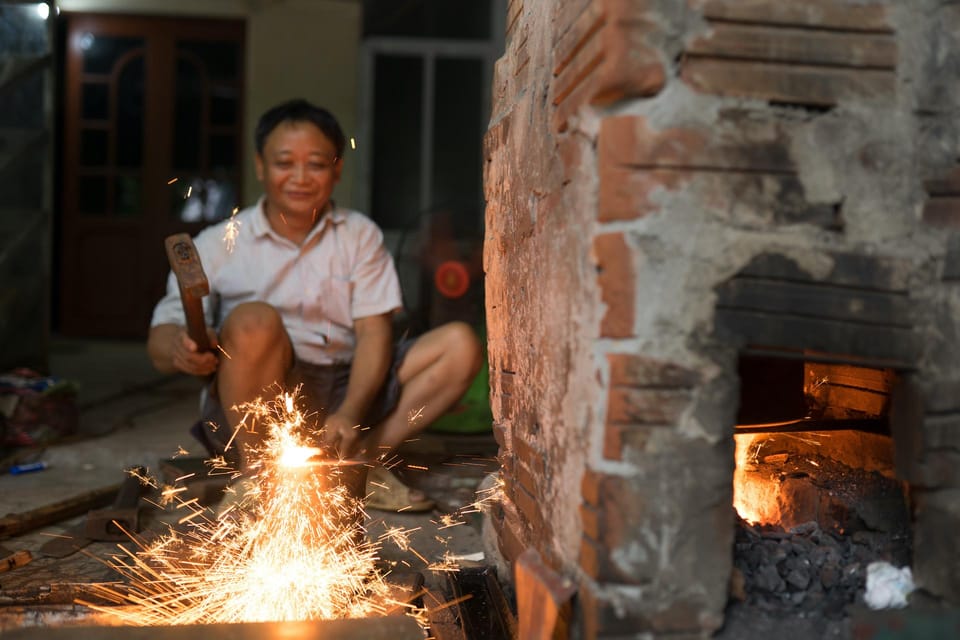
This workshop fits best if you want authentic, local skills in a manageable time block. It’s also well suited for families, including teens, because the workshop is structured and guided.
You’ll likely enjoy it most if:
- you like hands-on activities with clear steps
- you want a Hanoi activity that isn’t another museum or scripted photo stop
- you enjoy learning how local trades connect to everyday life
- you want a memorable gift that isn’t mass-produced
You might think twice if:
- you have limited comfort around sparks or hot tools (dress code matters here)
- you’re relying on carry-on only for travel home (plan for checked luggage due to the blade)
Quick practical tips so your day goes smoothly
- Arrive at the meeting point (football field entrance by the green fence) and give yourself a few minutes to orient.
- Wear long sleeves and long pants to reduce spark exposure.
- Don’t assume you’ll get a knife cover. If you need protection, plan to bring something or buy a simple cover after.
- Plan for safe transport with checked luggage.
- If you don’t like the starting time you see, timings are flexible—message the operator to ask if an alternative slot is available.
Should you book Knife Making in Blacksmith Village in Hanoi?
If you’re craving something real and hands-on, I’d book it. The combination of small-group attention, English facilitation with Mai, and the full knife-making sequence (shaping, hammering red-hot metal, tempering with water, sharpening) is exactly what turns a craft into a story you can tell.
I’d skip it only if you’re not comfortable with sparks and shop-style conditions, or if you don’t want to deal with the practical reality of transporting a metal blade home.
For most visitors to Hanoi, this is a strong value: a $54 workshop that ends with a tool you made, not just a postcard.
FAQ
Where is the meeting point for the knife-making workshop?
The guide waits at the entrance of a football field next to a green fence.
How long is the experience?
The workshop lasts about 2.5 hours.
What language is the instructor?
The workshop includes an English speaking facilitator.
What is included in the price?
Included are all equipment, tools, and materials, a knife to take home, an English speaking facilitator, light refreshments, and mask and eye protection accessories.
Is pick-up or drop-off included?
Pick-up and drop-off within Hanoi is not included, but it can be arranged for an additional cost.
Do I need to bring safety gear or special clothing?
You should wear long sleeves and long pants to avoid sparks. No dress is recommended. Mask and eye protection accessories are included.
Will I have time to make the knife myself?
Yes. The course goes through all processes of making a simple knife, with guidance so you forge and complete your own blade.
Is a knife cover included?
No, a knife cover is not included.
Can the workshop start time be changed?
Timings are flexible. If you prefer a different time than what is listed, you can message the operator to check schedule availability.