REVIEW · HANOI
Incense + Hat Villages/ Temple of Literature, Hoa Lo Prison
Book on GetYourGuide →Operated by Tinny Travel and Service Company Limited · Bookable on GetYourGuide
Craft villages near Hanoi you can actually touch.
What makes this outing special is the hands-on time with conical hat making in Chuong Village and the see-it-done incense process in Quang Phu Cau, where you watch the craft move from small workshops to larger production. I also love that the guide helps you make the day practical and photo-friendly, with names like Camila, Louisa, Paul, and Jenny popping up for their friendliness and clear explanations. One possible drawback: the half-day version does not include lunch, so you’ll want to eat beforehand or bring a snack if you’re heading out in the afternoon.
If you go full day, the pacing is still realistic: it’s not just craft-stop after craft-stop. You build context with the Temple of Literature (Vietnam’s first university, founded in the 11th century) and then face the emotional weight of Hoa Lo Prison, used by French colonists for political prisoners and later known to American POWs as the Hanoi Hilton. The $11 price (for the standard value tour) feels fair because it bundles guide time, entrance fees, and a hat you make yourself.
In This Review
- Key highlights worth knowing
- Why Hanoi’s incense and hat villages feel hands-on (and not touristy)
- Half-day versus full-day: picking the right length for your energy
- Chuong conical hat village: draw, paint, and take home the proof
- Quang Phu Cau incense village: where dyeing and stick-making become visual
- The Temple of Literature: education you can walk through
- Hoa Lo Prison Museum: heavy history, clearly framed
- Train Street option: plan it or skip it without stress
- Value and price: what your $11 actually buys you
- Getting there and keeping the day smooth (pickup, timing, shoes)
- Who this tour is for (and who should choose another option)
- Should you book this incense + hat villages (with Temple and Hoa Lo)?
- FAQ
- FAQ
- How long is the tour?
- What does the half-day group tour include?
- Does the half-day tour include lunch?
- Is lunch included on the full-day option?
- What is included besides the guide?
- Where does pickup happen in Hanoi?
- Are there different drop-off options?
- Is the tour suitable for wheelchair users?
- What should I bring and wear?
Key highlights worth knowing
- Chuong Village conical hats: paint/draw your own hat and take it home
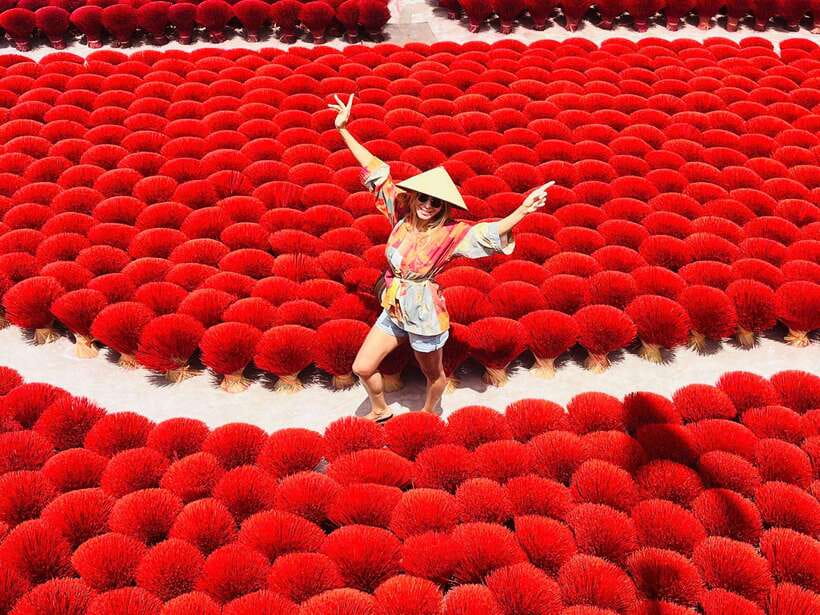
- Quang Phu Cau incense village: family-scale dyeing and production you can see up close
- Guides named Camila, Louisa, Paul, and Jenny: consistent praise for English and helpful pacing
- Temple of Literature: Vietnam’s first university in stone courtyards, not a quick photo stop
- Hoa Lo Prison Museum: powerful layers of history, from French rule to U.S. POWs
Why Hanoi’s incense and hat villages feel hands-on (and not touristy)
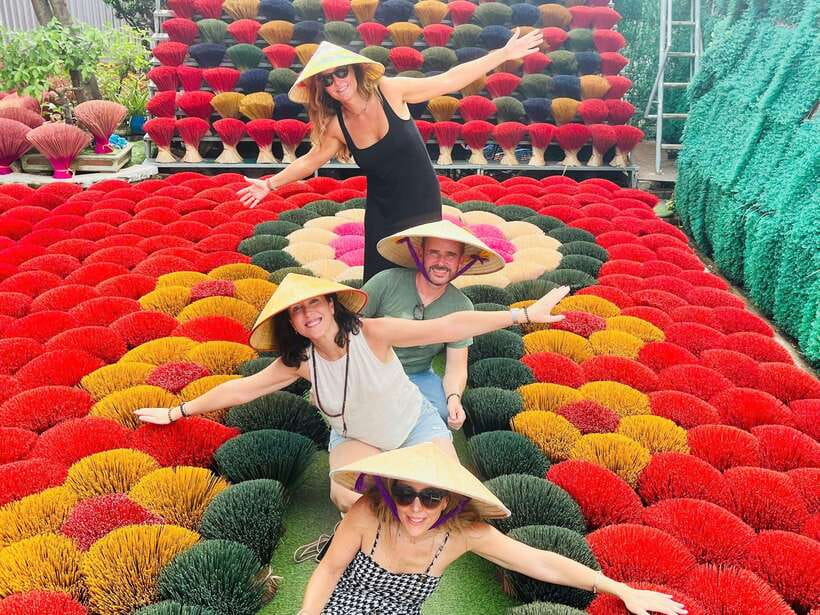
There’s a reason this kind of trip sticks in your memory. It’s not just looking. It’s doing, even if it’s for a short time. You’ll sit with artisans, watch how materials turn into finished goods, and in the hat village you’ll even decorate something you made with your own hands. That turns the day from sightseeing into a real craft lesson.
I also like that the tour doesn’t treat the villages like a theme park. You’re seeing incense making at a village scale first, then getting a step up into how sticks move through a nearby factory. That contrast helps you understand how traditional work feeds real production.
You should still calibrate your expectations. This is a culture-and-craft day, not a slow rural stroll. Expect walking, workshops with limited space, and a few spots where you’ll want quick decisions: what to buy, what to skip, and how much time you want for photos.
You can also read our reviews of more tours and experiences in Hanoi.



Half-day versus full-day: picking the right length for your energy
The half-day format is built around two craft locations plus an optional stop at Hanoi Train Street. Morning runs around 7:45–13:30, and the afternoon runs about 11:45–17:30. It’s a strong fit if you want the villages without committing to the museum-heavy side of the day.
The full-day option strings together crafts, plus Temple of Literature and Hoa Lo Prison. Pickup starts around 7:30 in Hanoi’s Old Quarter area, and the schedule is tight but doable: drive to the villages, incense, conical hats, lunch, Temple, then Hoa Lo, finishing around late afternoon.
Here’s the simple planning advice I’d use for you:
- If you’re sensitive to emotional history, consider the half-day first. You can add Hoa Lo later if you feel ready.
- If you like context (why crafts exist, how education and power shaped Hanoi), the full day makes the day feel complete.
Also note the half-day version doesn’t include lunch. That matters because you’ll likely be moving and learning during peak hunger hours. Even a quick snack helps you stay focused and patient.
Chuong conical hat village: draw, paint, and take home the proof
Chuong Village is known for conical hat making for over 300 years, and the workshop time is the part that feels most personal. You’re guided through how hats are produced and then given a chance to decorate your own. In plain terms: you get to leave with something that isn’t just a bought souvenir.
You’ll typically start with observing how artisans make the hats, then you move into the fun part—drawing or painting. The hat you take home is a real conversation starter because it has your choices on it, not just the pattern you picked in a shop.
What can help you enjoy this section more:
- Wear comfortable shoes. Workshop floors can be uneven, and you’ll be standing and moving.
- Go in with a rough idea of what you want on your hat. If you wait too long, time disappears fast in group tours.
- If you like photos, this is a good stop to ask the guide for help. Several guides were praised specifically for taking pictures and making sure people get clear shots.
A small consideration: conical hat making is hands-on, but it also means the pace is guided. If you’re the type who wants to linger and watch every single step, you might feel a bit rushed compared with independent exploring. Still, for the time, it’s one of the best craft experiences this region offers.
Quang Phu Cau incense village: where dyeing and stick-making become visual
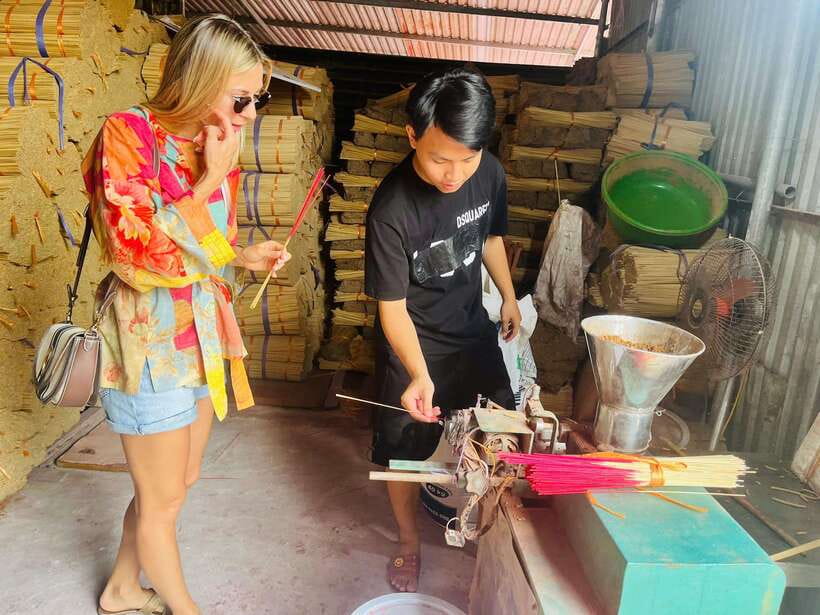
Quang Phu Cau has produced incense for more than 100 years, and it shows. The center of the village is where you’ll see the craft at a more intimate scale—locals making incense in a family-style setup.
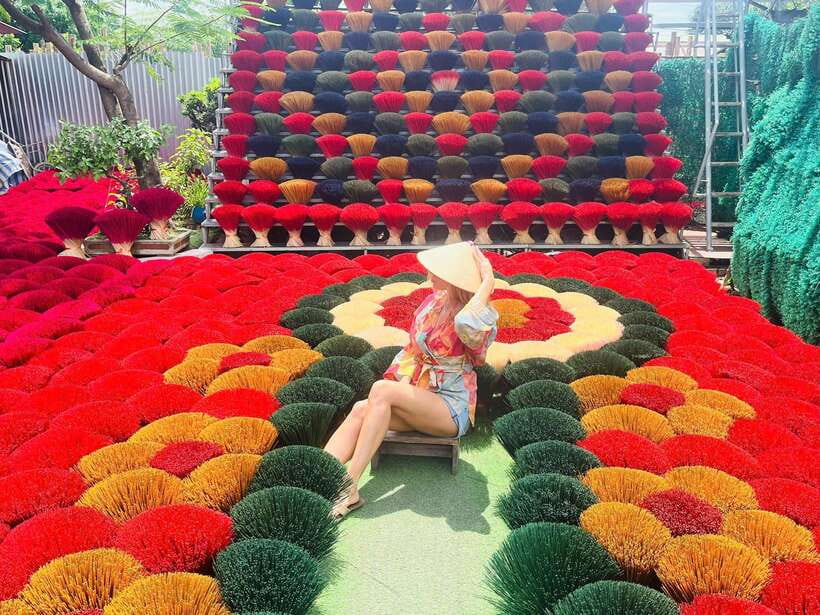
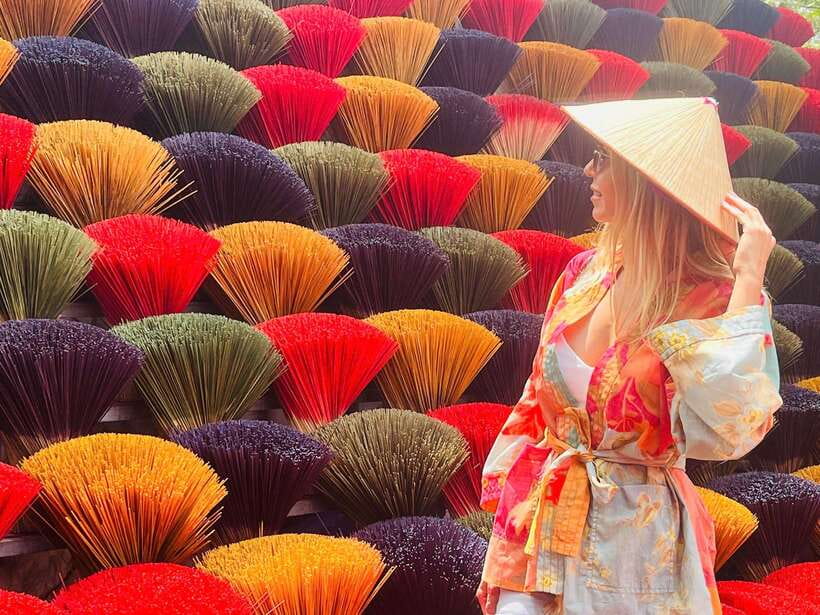
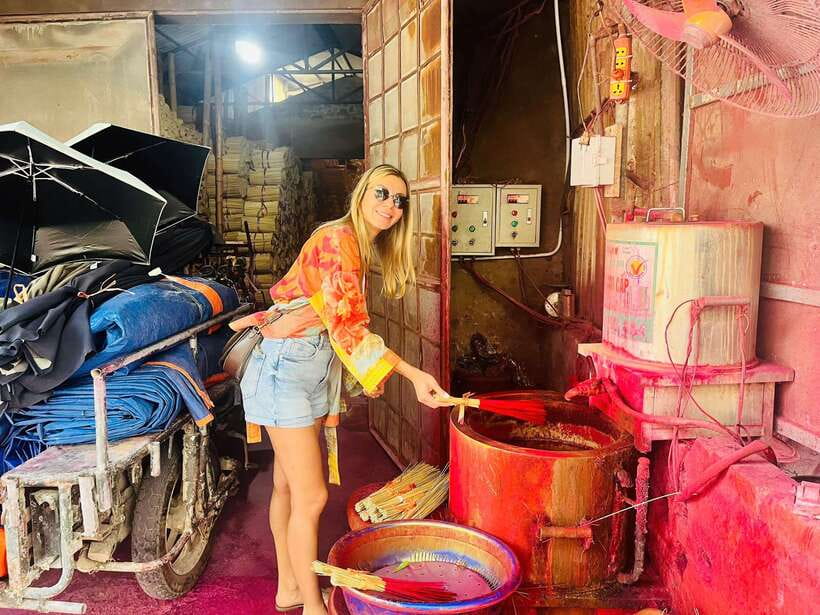
One of the most interesting parts is how much color is involved. You’ll meet a family specializing in dyeing incense sticks and see colorful bundles grouped for production. Even if you don’t buy anything, this section teaches you to look past the idea of incense as one flat product. There are steps, materials, and choices.
Expect a photo stop, a walk through the village, and guided time where the process is explained. Then, you move to the next level with a tour of a nearby factory so you can see incense made from scratch on a larger scale. That’s where the day gains depth. You start to connect the village craft to real-world supply chains—without getting lost in manufacturing jargon.
Practical notes for this segment:
- Incense is a sensory experience. Plan for the smell to follow you a bit. If you’re sensitive, it’s worth considering before you go.
- You’ll likely have shopping opportunities at the end, so it helps to decide what you want before you reach the souvenir displays.
For many people, this is the moment the tour turns from “nice” into “I get it now.” It’s not just watching. It’s learning how everyday work becomes a product used in homes and ceremonies.
The Temple of Literature: education you can walk through

If you choose the full-day tour, Temple of Literature is the cultural anchor. It’s Vietnam’s first university, established in the 11th century, and you’ll explore it with a guided walk. This isn’t a random stop. It helps you understand Hanoi as a city that built ideas and institutions, not only streets and neighborhoods.
The value here is the guided context. Stone courtyards and traditional architecture can look similar if you’re on your own. With a guide, you start connecting what you see to what it meant—who studied here, how the place worked, and why it became important.
What I like for you is that this stop balances the craft side of the day. After sensory incense and colorful hat decoration, Temple of Literature shifts you into slower observation. You’ll get photo opportunities, but the best part is the guided pacing: you don’t just wander, you learn.
One consideration: it’s a walking segment. If you’re doing the full day, keep your shoe comfort high and avoid heavy shopping bags earlier in the route.



Hoa Lo Prison Museum: heavy history, clearly framed
Hoa Lo Prison is the tour stop that most people remember for the emotions it brings. The site was used by French colonists in Indochina for political prisoners. Later, North Vietnam used it for U.S. prisoners of war during the Vietnam War. During that later period, it was known to American POWs as the Hanoi Hilton.
I appreciate that the tour approach here is guided. In a place like this, it’s easy to rush past the meaning and end up with only photos. A good guide helps you place what you’re seeing into a timeline—French colonists first, then the Vietnam War period—so you don’t come away with a vague impression.
This is not a casual stop. If you’re traveling with kids, the experience can still be done, but you’ll want a ready attitude for serious content. If you’re sensitive, pace yourself. Take short breaks if you feel overwhelmed.
Also consider your personal comfort: this is a museum setting with walking, indoor exhibits, and a guided timeline. Wear shoes you can stand in without punishment.
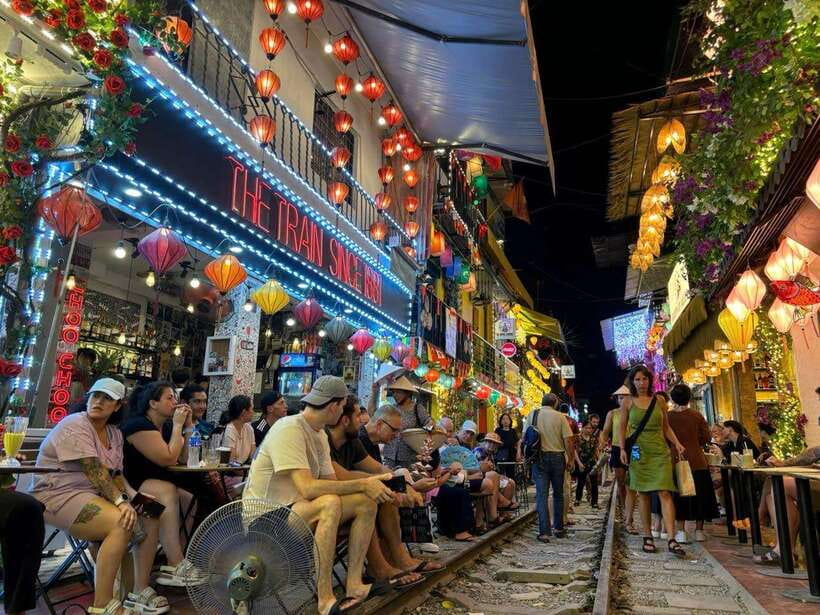
Train Street option: plan it or skip it without stress
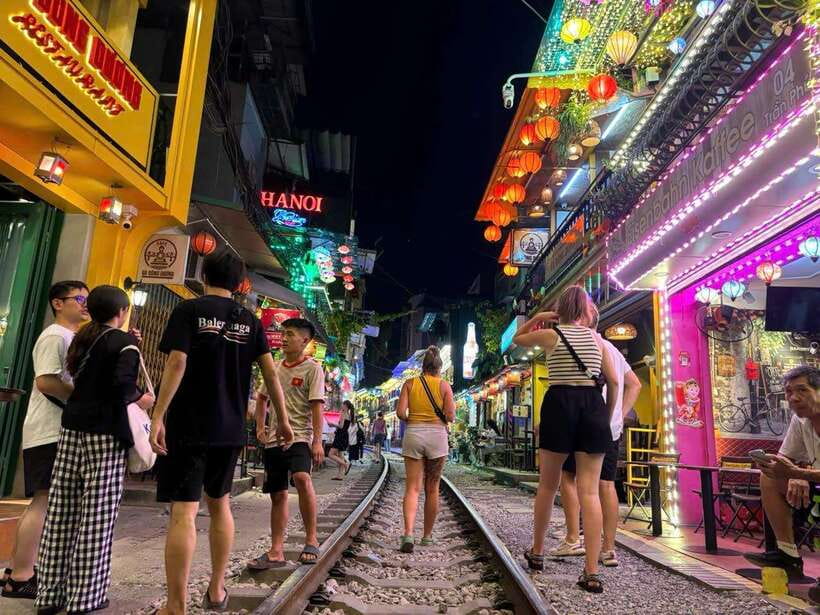
For the half-day version, there’s an option connected to Hanoi Train Street. If you want to visit, you’ll be dropped off there. If not, you can wait on the bus and skip it.
This matters because Train Street is a very specific kind of attraction. The practical advantage is choice. You can use it as a quick add-on if you like quirky urban stops, or you can focus purely on crafts if that’s your main goal.
My advice: if Train Street is just a checkmark for you, choose the option that keeps your day comfortable. Don’t force a stop that doesn’t match your travel style, especially when you’re already doing village workshops and walking.
Value and price: what your $11 actually buys you
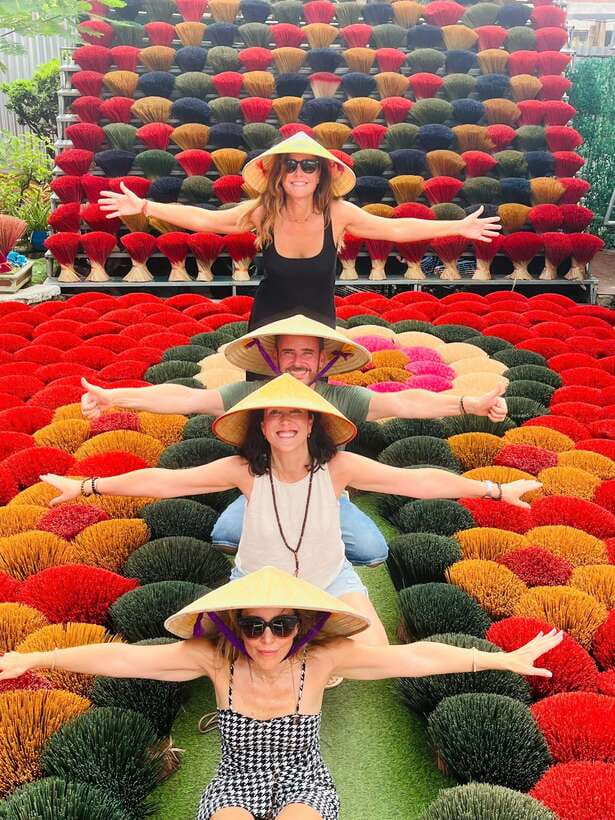
At about $11 per person, this is one of those Hanoi deals that feels too practical to ignore. What makes it good value is that it bundles the “stuff” that usually costs extra on your own: an English-speaking guide, hotel pickup and drop-off in the Old Quarter area (or the designated meeting point if you’re outside it), entrance fees, and a meaningful workshop result (one conical hat per person).
If you pick the full-day format, you also get a home-cooked lunch. That changes the math. Lunch on top of transportation and fees can easily exceed the base tour price when you piece it together yourself.
Included items you should note:
- English-speaking tour guide
- Hotel pickup and drop-off in Hanoi Old Quarter area by comfortable bus
- All entrance fees
- 1 conical hat per person
- 1 water bottle per person
- Home-cooked lunch for full-day option
What’s not included is also useful to know: drinks beyond what’s provided and personal expenses, plus your own tip for the guide and driver.
In short: if you’re trying to do crafts plus major sights in one day, this feels like strong value.
Getting there and keeping the day smooth (pickup, timing, shoes)
A tour is only as good as the logistics you don’t have to think about. Here, the tour is designed to start from Hanoi’s Old Quarter. Pickup is available from hotels in that area by bus. If your hotel is outside the Old Quarter, you’ll come to a meeting point at No. 27 Hang Bac Street, Hoan Kiem District and confirm timing by WhatsApp if you have it.
Drop-off can also be flexible depending on the option:
- Half-day: drop-off can be near Train Street, or you’ll return to the Old Quarter area.
- Full day: the tour finishes and you can go back to your hotel.
Two practical details I’d plan around:
- Comfortable shoes are non-negotiable. There’s walking at village stops and museum time.
- Pets are not allowed.
And remember the half-day lunch note. If you’re doing afternoon pickup, you’ll likely be hungry. Eat before you go, or keep small snacks in your day bag.
Who this tour is for (and who should choose another option)
This is a great match if you:
- Like hands-on culture, not only photos
- Want to understand how everyday Vietnamese crafts are made
- Want a guided day with clear structure
- Appreciate pairing crafts with historic context (especially if you do full day)
It may not be ideal if:
- You use a wheelchair. The tour states it is not suitable for wheelchair users.
- You strongly prefer fully independent travel with no scheduled workshop steps.
- You’re only interested in one attraction. This tour gives you a full set, so it works best when you want multiple stops.
The sweet spot is travelers who like seeing processes and want a day that feels “worth it” without requiring lots of planning.
Should you book this incense + hat villages (with Temple and Hoa Lo)?
Yes, I’d book it if your goal is a memorable Hanoi day that’s more than a checklist. The combination of hands-on conical hat decoration, the village-to-factory incense explanation, and then the historic stops (Temple of Literature and Hoa Lo Prison) makes the day feel balanced. The price is also hard to ignore when you compare it to paying for guide time, transport, and entrance fees separately.
Book the half-day version if you want crafts plus a flexible Train Street choice, and you’re good handling the no-lunch plan. Book the full-day version if you want the day to make more sense as a whole: craft work, education, and then the heavy modern story of Hoa Lo.
If you’re uncertain, choose based on your mood, not only your schedule. Crafts lift the day. Hoa Lo weighs it. Pick the mix that matches how you want to feel by evening.
FAQ
FAQ
How long is the tour?
The duration is listed as about 330 minutes for the day option. Schedules vary by half-day or full-day format.
What does the half-day group tour include?
The half-day option includes two craft villages: the conical hat village in Chuong and the incense craft village in Quang Phu Cau, plus Hanoi Train Street as an optional stop.
Does the half-day tour include lunch?
No. The half-day option does not include lunch, so the information suggests eating beforehand or bringing snacks.
Is lunch included on the full-day option?
Yes. For the full-day group/private tour, the tour includes a home-cooked lunch.
What is included besides the guide?
You get hotel pickup and drop-off from Hanoi Old Quarter by comfortable bus, an English-speaking tour guide, all entrance fees, 1 water bottle per person, and 1 conical hat per person.
Where does pickup happen in Hanoi?
Pickup is available at hotels in the Hanoi Old Quarter area. If your hotel is outside that area, you should go to No. 27 Hang Bac Street, Hoan Kiem District.
Are there different drop-off options?
Yes. The half-day tour can drop you at the famous Train Street area, or you can return to the Old Quarter area depending on the option.
Is the tour suitable for wheelchair users?
No. The tour is stated as not suitable for wheelchair users.
What should I bring and wear?
Bring comfortable shoes, since the itinerary includes walking at multiple stops. A water bottle is provided. Pets are not allowed.