Old Hanoi makes sense with a local in front. This private walk threads markets, temples, and French-era sites with flexible guidance and a chance to detour to spots most maps never mention. You’ll cover classic areas like the Old Quarter and Hoan Kiem Lake, but the payoff is how your guide steers you through the narrow streets with context.
I especially like two things: you get a one-on-one local host who can tailor the route as you go, and the itinerary is built around contrasts (ancient worship sites up through a visit to Hoa Lo Prison). One drawback to consider is simple logistics: there’s no hotel pickup, so you’ll need to make it to the meeting point on your own and be ready for a walk packed with short stops.
In This Review
- Key Things You’ll Notice On This Hanoi Private Walk
- How One Private Guide Changes Old Hanoi
- Starting at 28 P. Đồng Xuân: A Smart Place to Begin
- Dong Xuan Market: More Than Souvenirs
- Bach Ma Temple: The “Oldest Center” Feeling
- Ta Hien Street: Famous, But Understandable
- Hang Bac Temple: A Smaller Stop With Big Atmosphere
- Hoan Kiem District Library: A Break From the Noise
- Dền Ngọc Son (Turtle Temple): Hoan Kiem’s Spiritual Landmark
- St Joseph’s Cathedral: French Quarter Architecture, Up Close
- Hoa Lo Prison: Tragic Past, Clear Context
- Price and Logistics: What You’re Really Paying For
- Which Travelers Should Book This Hanoi Old Quarter Tour
- Should You Book This Tour of Old Hanoi?
- FAQ
- Is this tour private or shared?
- How long is the tour?
- What does the tour include?
- Where does the tour meet?
- Are Hoa Lo Prison tickets included?
- Can I cancel for a full refund?
Key Things You’ll Notice On This Hanoi Private Walk
- Private, you-and-your-guide pacing that lets you ask questions without watching the group move ahead
- Dong Xuan Market start to orient you fast to what people actually buy and talk about in Hanoi
- Temple stops with real purpose, from Bach Ma Temple to Ngoc Son (turtle temple)
- A bookstore break at Hoan Kiem District Library, an easy way to slow down and see Hanoi beyond the streets
- St Joseph’s Cathedral inside visit, for a clear look at the French architectural imprint
- Hoa Lo Prison with context, plus help to continue on afterward if you want
How One Private Guide Changes Old Hanoi
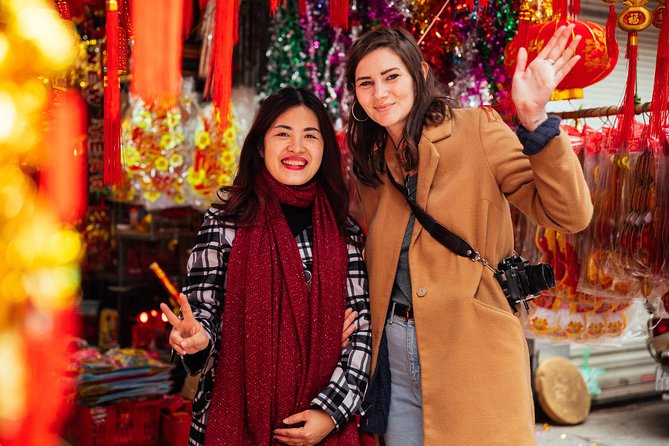
Old Hanoi can feel like one big maze: narrow lanes, scooters everywhere, and signage that only makes sense after you’ve watched how locals move. This tour is designed to solve that problem by giving you a local guide up front, not just a list of sights.
The private format matters more than it sounds. With only you and your host, you can move at a pace that works for you, linger where something grabs your attention, and ask the annoying questions that turn into useful answers (like what you’re looking at, why a shrine exists, or what life looks like outside the tourist corridors). It also helps if you’re visiting for the first time and need orientation, not just photos.
Value-wise, the price is about $68.86 per person for roughly 3 hours with a local guide, a local drink/tasting, and included tickets for Hoa Lo Prison. That can feel like good value when you add up what you’d otherwise pay for a guide plus the prison entry, especially if you want someone to translate the city’s layers for you.
You can also read our reviews of more private tours in Hanoi
- Doris Cruise 5 star cruise 2 days visiting Halong Bay Lan Ha Bay private balcony
★ 5.0 · 2,338 reviews



Starting at 28 P. Đồng Xuân: A Smart Place to Begin
You’ll meet at 28 P. Đồng Xuân, Hàng Mã, Hoàn Kiếm, Hà Nội. It’s a practical starting point because it puts you in the flow of the Old Quarter and close to major foot-traffic areas, so you’re not spending your limited time figuring out where to stand.
From there, you begin with Dong Xuan Market, one of the city’s classic hubs. Think of this stop as your “reality check” after landing: you’ll see the rhythm of commerce, what people notice first, and how everyday Hanoi moves at street level.
What to do during this market moment: keep your camera ready, but also pay attention to what your guide points out. Market visits work best when you treat them like a guided lesson in daily life, not a quick photo sprint.
Dong Xuan Market: More Than Souvenirs

Dong Xuân Market isn’t just a place to buy. It’s a place where you can learn how Hanoi talks through objects: food, packaging, how stalls are arranged, and what kinds of goods seem to matter most to locals on a given day.
If you’ve been to markets in other countries, you’ll notice this one has a distinct Hanoi rhythm—compact, busy, and practical. Your guide’s job is to help you see beyond the surface so you understand what you’re looking at.
If you’re the type who likes street food and everyday culture, this first stop sets you up well for the rest of the walk. If you hate crowds, you’ll still likely enjoy it, because the guide can nudge you through the lanes without wasting time.
Bach Ma Temple: The “Oldest Center” Feeling
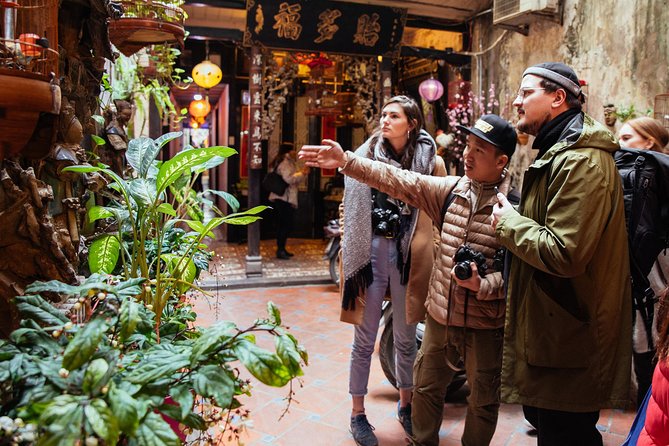
Next you head to Bạch Mã Temple (Bach Ma Temple), described as one of the city’s older temples and known for a famous statue. This is the kind of stop that helps you see Hanoi’s religious culture as something lived, not staged.
Why it’s worth a visit: it gives you a baseline for how older Hanoi framed spirituality around place and tradition. You’re not just collecting a landmark; you’re learning the language of shrines—what people come for, how they approach, and how the temple’s identity shows up in stories locals tell.
It’s also a helpful pacing tool. A market can crank your senses. A temple can reset them while still keeping you in the same neighborhood and walking distance world.
Ta Hien Street: Famous, But Understandable

Then you move to Tạ Hiên Street, known as one of the Old Quarter’s most famous streets. This is where you see Hanoi’s popularity concentrated—lots of activity, and a street scene that visitors recognize fast.
Here’s where a local guide earns their keep: you don’t just pass through. You learn why the street became a magnet and what it represents in modern Hanoi. It’s also a good moment to observe the “rules” of the street: where people wait, how they cross, and how scooters and pedestrians negotiate space.
One practical note: if you prefer quieter streets, you might feel Ta Hien’s energy more than the temple lanes. That’s not a problem, but it helps you choose how long to linger. Let your guide know what you prefer and they can adjust the tempo.






Hang Bac Temple: A Smaller Stop With Big Atmosphere

At Hàng Bạc Temple, you get something different: a temple that’s not as widely known, even by locals. The idea here is simple—Old Hanoi isn’t only the famous buildings. It also runs on lesser-seen places of worship tucked into ordinary-looking streets.
Why you’ll probably remember this stop: smaller temples often feel more personal. There’s less performance for cameras, and more sense of function. You’ll notice details your eyes might skip if you were walking alone.
This is also a great moment to ask your guide about the difference between a temple and a pagoda, since guides on this route commonly explain how locals categorize and use these spaces. You’ll come away with a mental framework that makes future sightseeing easier.
Hoan Kiem District Library: A Break From the Noise

Hoan Kiem District Library is a fascinating contrast stop. Instead of another outdoor sight, you get an old bookstore/library atmosphere—an easy place to slow down for a few minutes and notice a different side of the city.
Even if you’re not a big book person, this stop works for two reasons:
1) it cools your brain after street-level intensity
2) it gives you a calmer view of Hanoi’s culture and daily rhythms
This is the kind of stop that helps the whole tour feel balanced. After this, the walk keeps going, but you’re not only grinding from one landmark to the next.
Dền Ngọc Son (Turtle Temple): Hoan Kiem’s Spiritual Landmark
Now you head into Đền Ngọc Sơn, also known as the “turtle temple.” It’s tied directly to the Hoàn Kiếm Lake area, so you’re combining spiritual meaning with a major city landmark zone.
This is one of those places where explanation changes everything. Once you understand why the turtle symbol matters and how people connect the temple to the surrounding stories, the visit turns from scenic to meaningful.
Practical takeaway: plan your time at this stop so you don’t feel rushed. It’s a natural point to take photos, but it’s also a place to listen and absorb. Your guide can help you connect the temple’s role to the broader Hoan Kiem area and how locals treat that space.
St Joseph’s Cathedral: French Quarter Architecture, Up Close
Next comes St. Joseph’s Cathedral, described as Hanoi’s only cathedral, with time to look inside and admire the old architecture.
If you’re trying to understand Hanoi’s layers, this is a key hinge between the older Vietnamese and the French-era imprint. Even outside your personal religion preferences, the building’s style makes the historical transition obvious.
What to expect inside: classic cathedral architecture, a sense of formality, and calmer surroundings compared to the street chaos. If you want a break from scooters and narrow lanes, this stop delivers it.
Hoa Lo Prison: Tragic Past, Clear Context
Your tour ends at Hoa Lo Prison, the former French prison site that helps explain Hanoi’s tragic past. This part of the walk can be emotionally heavy, but it’s also one of the most educational experiences in the city when handled with context.
What makes it work on a guided route: you’re not walking through history as a checklist. You get understanding of why the site matters and how it fits into Vietnam’s broader story.
After your guided portion, your host will leave you to explore further or help you get back to your hotel. That flexibility is useful because Hoa Lo is a place where people often want extra time—or want to move on quietly.
If you’re worried about feeling overwhelmed, you can ask your guide to set expectations early. A good guide will pace the visit so you get context without being flooded.
Price and Logistics: What You’re Really Paying For
At $68.86 per person for about 3 hours, the price makes the most sense if you want:
- a private guide rather than a group schedule
- included entry for Hoa Lo Prison
- a local drink/tasting as part of your route
- someone to tailor stops based on what you care about
Two logistics points matter:
- No hotel pickup or drop-off means you must reach the meeting point on your own
- since it’s walking-based, you’ll want comfortable shoes and a steady pace
If you like planning yourself, you could cobble together these stops. But the time savings and explanation value are the reason this tour is so popular for a first day in Hanoi.
The tour also uses mobile tickets and is CO2 neutral, with emissions offset. Not a deciding factor for everyone, but it’s a sign the operator thinks about sustainability and modern operations.
Which Travelers Should Book This Hanoi Old Quarter Tour
This tour is a great fit if you:
- want an orientation day that helps you understand where things fit together
- enjoy temples, markets, and city history in walking form
- appreciate a guide who can answer questions and adjust the route on the fly
- like off-the-path places that you’d miss without local directions
It may be less ideal if you:
- hate walking through dense street areas
- want only major, easy-to-find sights with no time for explanation
- need a rest-break schedule built around long stops (this is designed as a steady walk with short visit windows)
One extra tip: if you’re nervous about street crossing, mention it at the start. Hanoi traffic can be intimidating, and guides on this route often help visitors feel more confident about crossing safely.
Should You Book This Tour of Old Hanoi?
I’d book this tour if you’re prioritizing understanding Hanoi, not just collecting landmarks. The pairing of Dong Xuan Market, temple culture, French-era architecture, and Hoa Lo Prison gives you a well-rounded picture of the city’s layers in a short window.
Skip it only if you already know exactly how you want to structure your day and you’re comfortable figuring out the maze streets without a guide. Otherwise, this is one of the most practical ways to get your bearings fast and leave with clearer context for what you’ll see next.
FAQ
Is this tour private or shared?
This is a private tour. Only your group participates, with just you and your local guide.
How long is the tour?
The tour runs for about 3 hours.
What does the tour include?
It includes a private local guide, one local drink/tasting, and tickets for Hoa Lo Prison.
Where does the tour meet?
The meeting point is 28 P. Đồng Xuân, Hàng Mã, Hoàn Kiếm, Hà Nội, Vietnam.
Are Hoa Lo Prison tickets included?
Yes. Tickets for Hoa Lo Prison are included as part of the tour.
Can I cancel for a full refund?
Yes. You can cancel up to 24 hours in advance for a full refund. If you cancel less than 24 hours before the start time, the amount paid is not refunded.




More Private Tours in Hanoi
- Doris Cruise 5 star cruise 2 days visiting Halong Bay Lan Ha Bay private balcony
★ 5.0 · 2,338 reviews