REVIEW · HANOI
Hanoi Sidecar Tour: Hanoi Countryside Food, Culture & Daily Life
Book on Viator →Operated by Hanoi Backstreet Tours - REAL · Bookable on Viator
Sidecar rides turn a trip into a story. This Hanoi countryside tour pairs Vespa sidecars with real rural stops, from the historic Co Loa area to farmland and markets. You get a car ride out of the Old Quarter first, then the slower pace of village roads takes over.
What I like most is the mix of Co Loa Citadel history and everyday countryside scenes, including farm life and hands-on local crafts and market moments. The second big win is the end of the day: an authentic Vietnamese meal at a local family’s home, where lunch actually feels like part of the community rhythm.
One thing to consider: you’ll be out in the weather, and the tour is most comfortable when conditions are good. If it’s rainy or rough, you’ll rely on the provided ponchos and good timing rather than planning a quick indoor escape.
In This Review
- Key highlights you’ll actually feel
- The Hanoi sidecar format: why it feels different
- Getting out of the Old Quarter: the 30-minute reset
- Co Loa Citadel: 280 BC myths you can walk through
- Rural Hanoi stops: rice paddies, orchards, and farm animals
- Farmer markets and local handicrafts: the everyday layer
- The lunch at a local family home: where the day lands
- Drivers, guides, helmets, and rain ponchos: comfort and confidence
- Price and value: what $59 really covers
- Who this Hanoi sidecar tour suits best
- Practical tips so the day stays fun
- Should you book this Hanoi countryside sidecar tour?
- FAQ
- How long is the Hanoi Sidecar Tour?
- Is pickup included, and where do I meet?
- What is the main stop on the tour?
- What does the tour include for food?
- What sidecar and safety gear is provided?
- How much does the tour cost?
- How many people are in a group?
- What if the weather is bad?
Key highlights you’ll actually feel
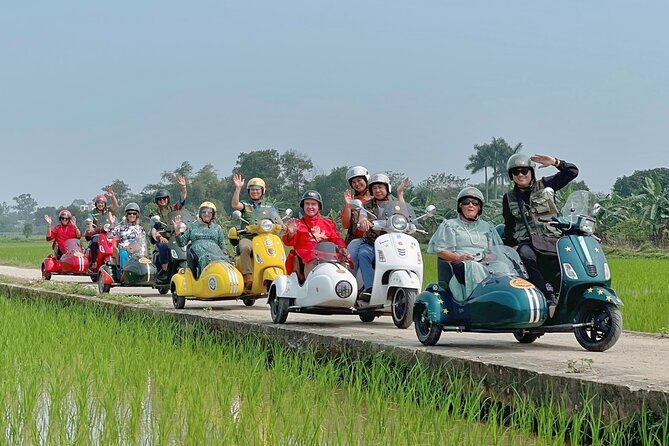
- Vespa sidecars in rural lanes: expect real wind, real speed control, and a fun way to see countryside that buses can’t reach easily
- Co Loa Citadel, rooted in 280 BC: history plus local storytelling tied to the land
- Farm life beyond postcards: rice paddies, vegetable and flower work, orchards, bonsai gardens, and livestock scenes
- Markets and handicrafts: practical glimpses of how daily shopping and making happen
- Lunch in a family home: a local meal included, timed either at the start or end depending on your tour slot
- Small group energy (max 10): more time with your guide and fewer bottlenecks at stops
The Hanoi sidecar format: why it feels different
A sidecar tour in Hanoi isn’t just transport. It changes how you experience the countryside. On a normal bus or taxi, you look through windows. On a Vespa sidecar, the countryside comes at you: wind on your face, the sound of the road, and quick bursts of scenery that would be too fast to notice any other way.
You also get a useful kind of variety in pacing. First, you’re carried out from the city in a minivan or car. Then you switch to sidecar riding where you can slow down for small roadside sights and photo stops without the pressure of a strict city schedule.
Safety is handled in practical ways. Helmets and rain ponchos are included, and the drivers are trained for this type of riding. In the guide style people mention most, safety comes from confidence plus clear instructions, not from you taking risks yourself. If you’re new to motorbikes, this tour is still a friendly entry point because the focus is countryside exploration, not stunt riding.
You can also read our reviews of more food & drink experiences in Hanoi


Getting out of the Old Quarter: the 30-minute reset
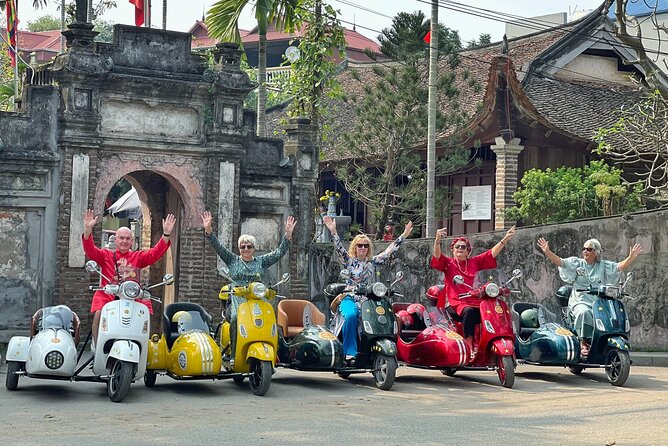
Most people start from the Old Quarter area, either picked up from your hotel or at a designated meeting point at 3b P. Hàng Tre, Hoàn Kiếm, Hà Nội. The car/minivan transfer takes about 30 minutes. That matters more than it sounds.
Leaving the city first does two things:
1) it helps you avoid rushing from street to street before you even start the tour
2) it gives your legs and brain a quick breather before the riding part begins
Once you reach the outskirts and begin the sidecar segment, the vibe changes fast. You’re moving through countryside roads where you can actually see fields, farming activities, and how people structure their day around work outside.
Timing note: the whole tour runs about 4 hours 30 minutes to 4 hours 40 minutes. It’s not a half-day where you feel stuck for hours. It’s long enough to feel like a full experience, short enough to stay energized.
Co Loa Citadel: 280 BC myths you can walk through
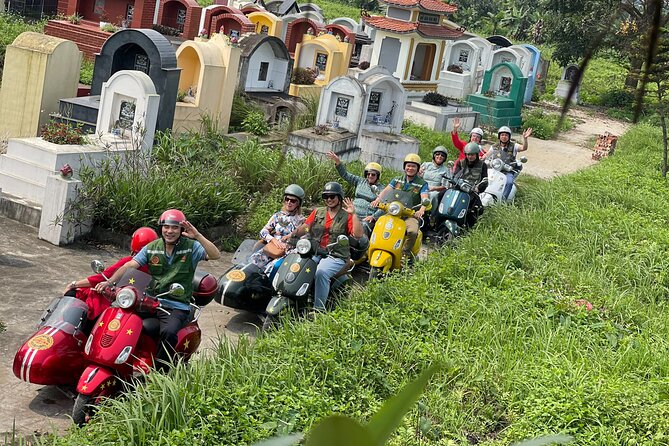
Your main destination is Co Loa ancient citadel, which dates back to 280 BC. That age gives the area a weight you can feel when you’re on site. It’s not just a photo stop. You’re there to understand Vietnamese culture and mythology in a place built to last.
What makes Co Loa especially good on this tour is how it’s paired with daily rural life, not treated like a separate museum visit. Your guide connects the historic setting to the real routines around it—wet rice farming and local market life—so the citadel doesn’t float in space. It feels attached to the land and the people who still live in the region.
You’ll likely see architecture and layouts that help you picture how the area functioned long ago. If you enjoy history but hate long, slow lectures, this format works well because it keeps you moving through meaningful stops rather than sitting in one place for a full stretch.
Rural Hanoi stops: rice paddies, orchards, and farm animals
After Co Loa, the tour’s real specialty shows up: you’re not only touring sights, you’re watching how the countryside works.
You can expect countryside scenes like:
- rice paddies and wet rice farming work
- vegetable and flower farms
- orchards and bonsai gardens
- livestock and cattle such as water buffalo, ducks, and chickens
This is where the sidecar shines. The countryside isn’t laid out for quick grabs like a city landmark circuit. You need a vehicle that can handle smaller roads and slower turns. Sidecar riding lets you move through working areas at a pace that actually makes what you’re seeing register.
If you’re a foodie, this is also where the day starts making sense. You’ll see the environment that produces many of the ingredients and flavors you end up tasting later. Even when you don’t get a scientific explanation, it helps you understand why certain foods and meals feel natural in Vietnam—not imported, but grown locally.
One practical consideration: this is a countryside day, and conditions can affect your comfort. Wear shoes you don’t mind getting slightly dusty, and be ready for the fact that farm areas aren’t designed for tourist walking paths.
Farmer markets and local handicrafts: the everyday layer
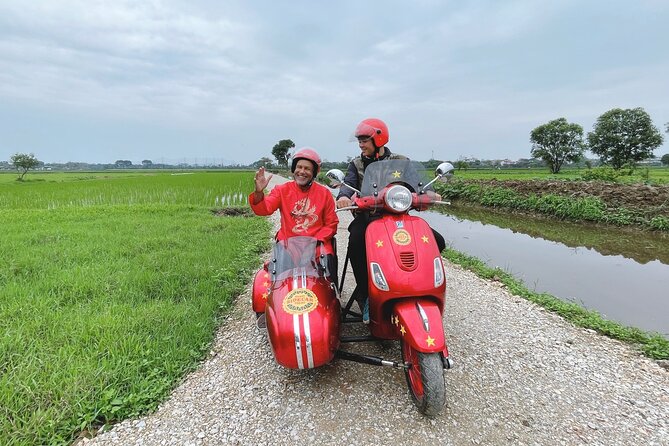
Markets can look similar from a distance, but what you’re after here is the everyday layer: how people shop, what they prioritize, and how local craftsmanship shows up as part of daily life.
This tour includes time at farmer market areas and also points you toward handicraft production moments. The value is in the contrast. Hanoi’s city center is loud and fast. Then you step into places where work continues at a human pace, and you see that the countryside isn’t a theme park—it’s someone’s real morning.
Also, markets are best when you go in with a simple mindset: observe first, ask questions second, buy only if it fits your budget and packing limits. Your guide can help with what’s worth looking at and how to approach sellers respectfully.
A few more Hanoi tours and experiences worth a look





The lunch at a local family home: where the day lands
The included lunch is one of the most important parts of the value equation. It’s served by a local family, not a restaurant that’s built for tourists. And timing depends on your departure slot: for a morning tour, lunch is at the end; for an afternoon tour, lunch is at the beginning.
Why that matters: eating at the end can feel like a reward. Eating at the beginning helps you get your energy sorted early so you can enjoy the rest of the countryside without that post-lunch wobble.
You’ll get authentic Vietnamese food, and the biggest win is the social side. This is the point where you stop being only a spectator. Even if you don’t speak Vietnamese, a family meal gives you a shared moment through routines, food, and hospitality.
A helpful expectation to set: you’re not going for fancy plating. You’re going for home cooking and a sense of how everyday meals actually look and taste.
Drivers, guides, helmets, and rain ponchos: comfort and confidence
Motorbike travel in Vietnam can be intimidating for first-timers, but this tour reduces the pressure in several ways.
First, helmets and rain ponchos are included, so you don’t waste time at the last minute hunting gear. Second, the riders are experienced and well-trained. People mention guides like John, with support from Luke, and also Joy guiding the day. That’s a good sign of a team approach where the person in front isn’t just chatting—they’s coordinating for safety and timing.
Here’s what you can control as a rider:
- Wear clothing that’s comfortable for sitting and wind
- Keep your phone secure (sidecar rides are fun, but you don’t want a dropped device)
- If it rains, poncho time helps, but still be ready for road dampness
If you have moderate physical fitness, you should be fine. The tour doesn’t ask for extreme activity, but you may need to handle uneven ground and short transfers between spots.
Price and value: what $59 really covers
At $59 per person, this tour is priced as a full package rather than a pay-for-everything day.
Included elements that drive real value:
- pickup and drop-off from your hotel area or meeting point
- Vespa sidecar rides
- English speaking guide
- admission ticket for Co Loa
- water and drinks
- helmets and rain ponchos
- all fees and taxes
- an authentic family meal
Tipping and gratuity are not included. That’s normal in this style of tour, and if you feel the service was great, you can plan to tip at the end. (It’s the kind of experience where it often feels fair because your guide is handling both safety and storytelling.)
One more value angle: the small group size (max 10 travelers). You’re less likely to feel stuck in a crowd, and your guide has a better chance to answer questions and manage the day smoothly.
Who this Hanoi sidecar tour suits best
This tour fits best if you want to see Hanoi beyond the city center without switching to a long, complicated travel plan.
I’d point you toward it if:
- you like history but prefer it connected to real life
- you want countryside views without renting a motorbike
- you’re happy with a day that includes markets, farming scenes, and a family meal
- you want a small-group experience and clear English guidance
You might choose something else if you’re chasing pure adrenaline. The sidecar part is fun, but the day’s focus is culture, countryside, and food. It’s more about the story of daily life than it is about racing down roads.
Practical tips so the day stays fun
You’ll get the helmet and poncho, but you’ll still want to plan for comfort.
Do:
- wear closed-toe shoes
- bring a light layer for wind
- bring a small towel or extra tissue in case you get caught by rain
Consider:
- moderate physical fitness is required, so avoid expecting a perfectly flat, easy stroll
- the tour requires good weather. If it can’t run as planned because of weather, you’ll be offered a different date or a full refund
Also, book with enough time. It’s commonly booked about 30 days in advance, which usually means popular slots go fast.
Should you book this Hanoi countryside sidecar tour?
If you’re deciding between a standard city tour and something that actually changes your perspective, this one’s worth serious attention. The sidecar ride gives you a sense of place that a typical car tour can’t match. The Co Loa Citadel stop adds meaning, and the family meal is the kind of included experience that makes $59 feel realistic rather than “cheap but empty.”
I’d book it if your ideal Hanoi day includes rural life, local food, and a bit of history without heavy pacing. Skip it if you want mostly indoor comfort, or if weather risk would wreck your schedule.
If you want, tell me your travel month and whether you’re going morning or afternoon. I can help you plan what to wear and how to time your meal so you enjoy the countryside, not just survive the schedule.
FAQ
How long is the Hanoi Sidecar Tour?
It runs about 4 hours 30 minutes to 4 hours 40 minutes.
Is pickup included, and where do I meet?
Yes. You can be picked up from your hotel in the Old Quarter or from the designated meeting point at Hanoi Backstreet Tours at 3b P. Hàng Tre, Hoàn Kiếm, Hà Nội. The tour ends back at the meeting point.
What is the main stop on the tour?
The main destination is the Co Loa ancient citadel, which dates back to 280 BC. An admission ticket is included.
What does the tour include for food?
You get an authentic Vietnamese family meal. For morning tours, lunch is served at the end; for afternoon tours, lunch is served at the beginning.
What sidecar and safety gear is provided?
You ride on a Vespa sidecar. Helmets and rain ponchos are included, along with water and drinks.
How much does the tour cost?
The price is $59.00 per person, and tips or gratuity are not included.
How many people are in a group?
The tour has a maximum of 10 travelers.
What if the weather is bad?
This experience requires good weather. If it’s canceled due to poor weather, you’ll be offered a different date or a full refund. You can also cancel for free up to 24 hours in advance for a full refund.