Hanoi hits hard in four hours, and this private tour keeps it focused. I like the easy hotel pickup in the Old Quarter plus the AC ride that moves you between major stops without wasting daylight, and I also like that you get a mix of state history, classic sights, and everyday street life. One thing to consider: the schedule is tight, so you’ll want comfy shoes and a bit of patience for crowds at the biggest landmarks.
You’ll see Vietnam through a few very different lenses in one morning or afternoon. And if you end up with a guide like Duc or Johnny, you’ll likely get the kind of context that makes the buildings feel like they have a pulse, not just photo backdrops.
In This Review
- Key points you’ll actually feel during the tour
- Temple Grounds to Old Quarter: How this 4-hour private Hanoi loop works
- Ba Dinh Square and Ho Chi Minh mausoleum grounds: seeing the country’s symbol up close
- Temple of Literature: Hanoi’s 1070 school that still feels remarkably intact
- Dong Xuan Market and St Joseph’s Cathedral: trade, color, and faith side by side
- Train Street in the old town: watching daily life share space with rails
- Hoan Kiem Lake and the Opera House: Hanoi’s center of gravity in two styles
- Price and what you’re really buying for $63
- Who this tour suits best
- Should you book this tour?
- FAQ
- How long is the Hanoi private half-day tour?
- Is the tour private or shared with other groups?
- Where do you get picked up?
- What major sights are included in the tour?
- Is the transportation air-conditioned?
- Is an English-speaking guide included?
- Are entry tickets included?
- Are drinks included?
- Is there an option to reserve now and pay later?
- Is the tour wheelchair accessible?
Key points you’ll actually feel during the tour
- A private car, limited to your group: less waiting around, more time looking, asking questions, and pausing for photos
- Ho Chi Minh mausoleum area plus the Temple of Literature: the “big ideas” side of Hanoi and the old-school scholar vibe
- Dong Xuan Market stop: a practical look at commerce and daily life, not just monuments
- Train Street with real tracks: you’re in the middle of how Hanoi works now
- Hoan Kiem Lake and the Opera House: symbolic heart of the city plus French-era architecture nearby
- Guides matter here: reviews highlight guides like Frankie, Lucas, Andy, and Lee for clear explanations and flexible pacing
Temple Grounds to Old Quarter: How this 4-hour private Hanoi loop works

This tour is built like a greatest-hits walk-through, but with driving that makes the time feel realistic. You start with pickup from Hanoi’s Old Quarter, then you head out for major sights and a few fast, meaningful “in-between” stops before getting dropped back off.
At 4 hours, it’s not meant to be slow travel. You’ll cover a lot, but your guide’s job is to give you the what-and-why so the stops don’t blur together.
It’s also a private group experience. That matters because it changes the vibe: you can set a comfortable pace for your legs, and your guide can tailor answers to what you care about most.
You can also read our reviews of more tours and experiences in Dong Bang Song Hong.



Ba Dinh Square and Ho Chi Minh mausoleum grounds: seeing the country’s symbol up close
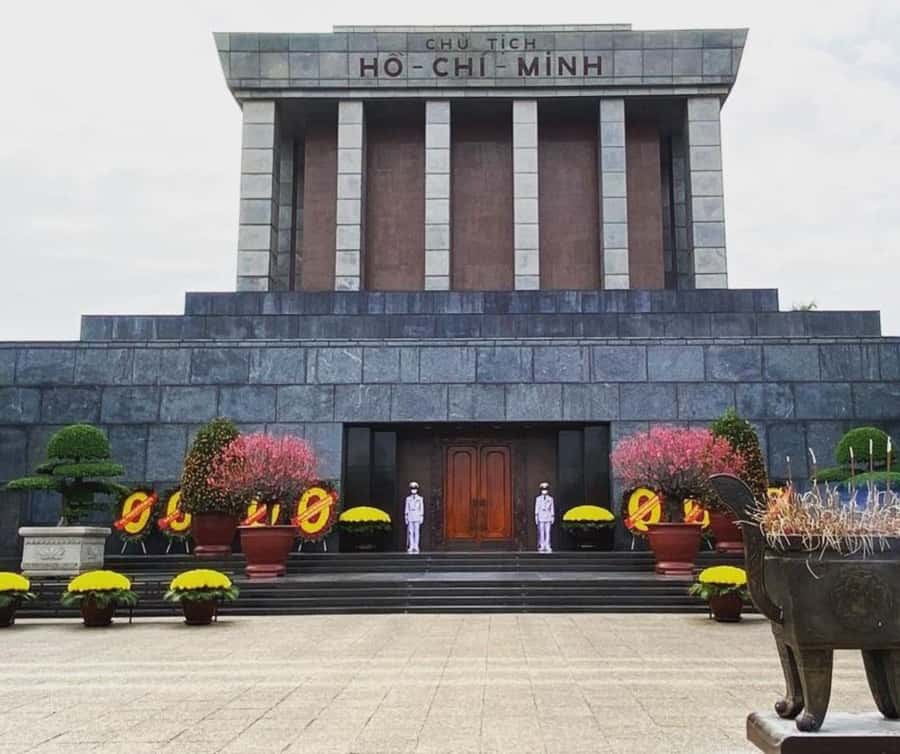
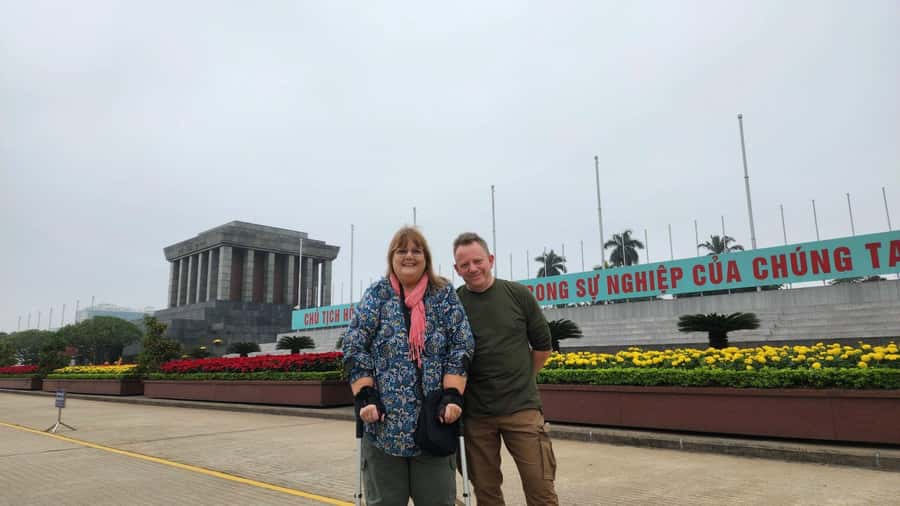
The tour begins at Ba Dinh Square, where you’ll visit the Ho Chi Minh mausoleum area and the final resting place of Ho Chi Minh—often known as Uncle Ho. You’ll see where his body is preserved in a glass case, and you’ll get the story attached to that moment.
This stop isn’t just about the building. It’s about understanding how a nation frames leadership, memory, and public space. Even if you’re not a history fanatic, you’ll feel how important this place is because everything around it is designed for ceremony and reflection.
A practical heads-up: the mausoleum itself may not always be accessible. In the field, I’ve seen situations where the surrounding grounds are open even when the actual mausoleum is shut for maintenance. If that happens on your day, you’ll still have plenty to see at the complex.
Dress code can be a factor at formal religious and state sites. One guide named Frankie was able to help resolve a dress code situation, which is a reminder to bring a layer that covers up if you’re in doubt.
Temple of Literature: Hanoi’s 1070 school that still feels remarkably intact
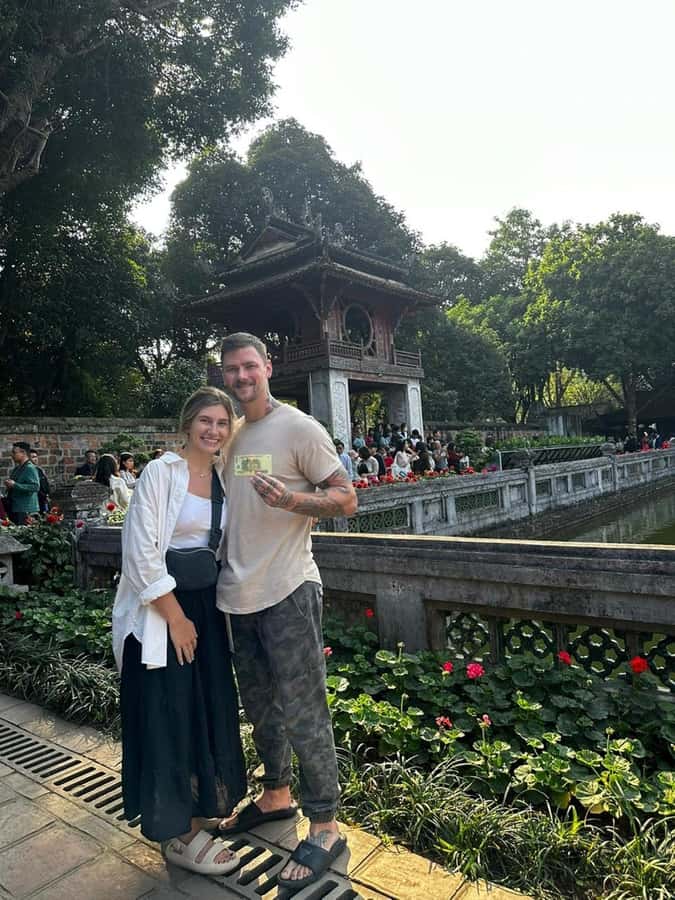
Next comes the Temple of Literature, one of Hanoi’s most photogenic and historically important sites. It was originally built as a university in 1070, dedicated to Confucius and scholars, and the site is known for being extremely well preserved.
Here’s why this stop works so well on a half-day tour: the buildings aren’t just pretty. They’re the physical proof of how education, philosophy, and Vietnamese identity got shaped over centuries. As you move through courtyards and halls, you can actually see why people call it one of the most elegant examples of traditional Vietnamese architecture.
What I appreciate most is the clarity your guide can bring. With a strong guide, you stop seeing it as a ticketed attraction and start reading it like a story—scholarship, respect, and the role of study in society.
If you’re pressed for time, you can still enjoy this place without “museum mode.” The layout is designed for wandering at a steady pace, and you’ll have the time to pause for photos in the standout areas.
Dong Xuan Market and St Joseph’s Cathedral: trade, color, and faith side by side
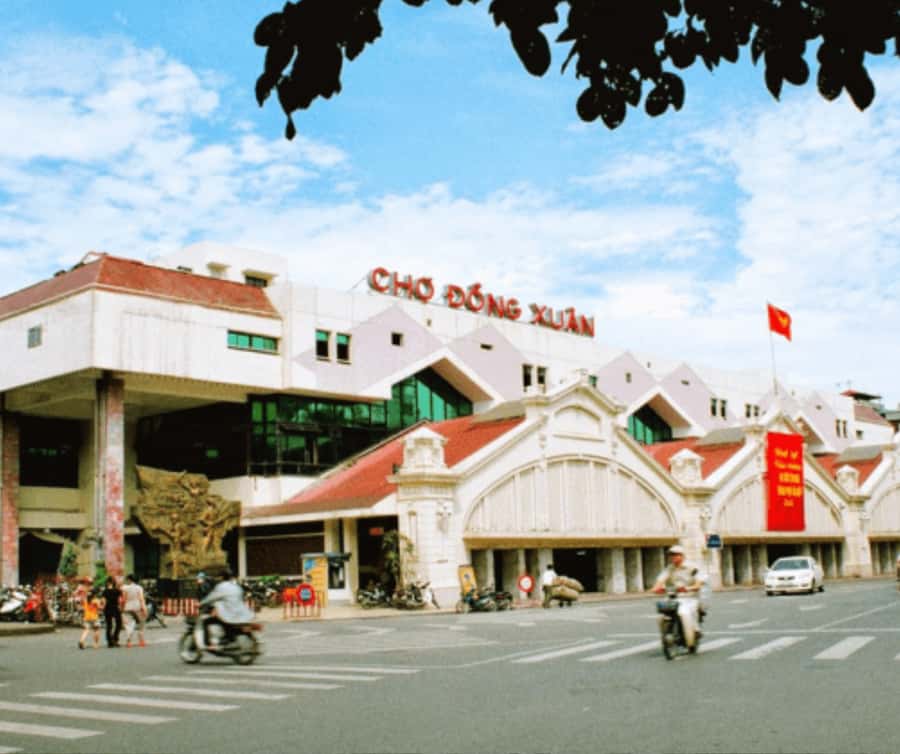
From old scholar halls to everyday Hanoi: you’ll head to Dong Xuan Market, described as Hanoi’s largest wholesale market, dating back to 1889. This is where you’ll see commerce in action—fabric, clothing, local handicrafts, souvenirs, and plenty of street-food energy around the edges.
This stop can be a little overwhelming if you’re looking for quiet. But that’s also the point. Hanoi is not only temples and lakes. It’s also how people buy, sell, snack, and move through their day.
Your guide makes this easier. In reviews, guides such as Frankie helped negotiate good deals at the wholesale market, which tells me your time here can be more than just wandering. You can get help reading prices, understanding what’s being sold, and moving through without getting stuck.
Then the tour shifts to faith and architecture with St Joseph’s Cathedral on Nha Chung Street. It’s a Roman Catholic cathedral in a neo-gothic style, built about 120 years ago. The contrast between the cathedral’s formality and the market’s street-level bustle is exactly why this works.
Practical tip: bring your camera, but also bring your eyes. The cathedral is a clean visual anchor, and the market is motion and detail. Together, they give you a “two-speed” view of Hanoi.
Train Street in the old town: watching daily life share space with rails
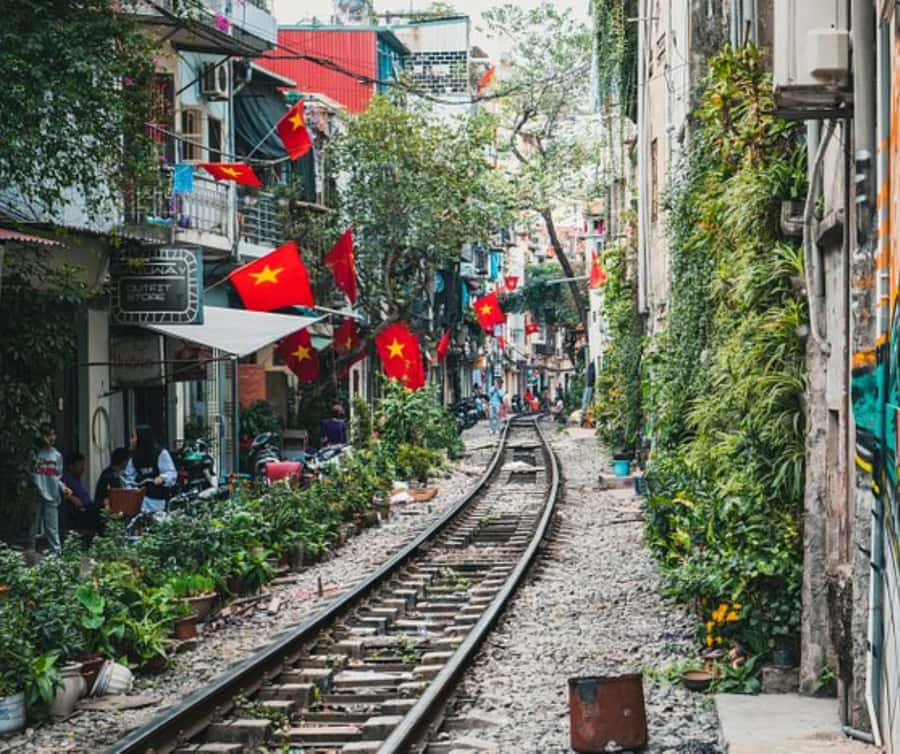
One of the most memorable parts of the tour is seeing Train Street, where a real railway line runs through the heart of the old town. You’ll literally be standing where the city’s rhythm and the track’s schedule intersect.
This is not a place to rush through. Even without getting technical, you’ll learn something just by watching how people arrange their space around the tracks.
A guide who knows the flow can help you experience it responsibly and comfortably. Since the tour includes a live guide and you’re in a private setup, you can follow instructions quickly instead of figuring out the situation on your own.
Also, give your guide a chance to point out what matters visually. Some guides are great photographers, and one review highlighted Frankie as a strong helper for capturing shots. That can be the difference between random pictures and photos that actually tell the story.
If you’re visiting on a hot day, plan for short bursts of walking. You’ll go from indoors or car comfort to street heat, then back again, so layering and water matter.
Hoan Kiem Lake and the Opera House: Hanoi’s center of gravity in two styles
Your next stop is Hoan Kiem Lake, also called the Lake of the Restored Sword. It’s described as Hanoi’s heart, both geographically and symbolically. You’ll feel that instantly because so much of the surrounding city life orbits this space.
This is a good moment to slow down. The tour is still moving, but the lake gives you breathing room. It’s where you get the sense of what keeps people coming back: calm water, temple energy nearby, and the feeling that the city’s identity is written into the layout.
From there, you’ll head toward the Hanoi Opera House, built by the French colonial administration between the early 1900s and 1911. The Opera House is the kind of landmark that makes you stop and look because it brings a different architectural language into the mix.
The pairing works well on a half-day: the lake gives you Hanoi’s symbolic core, and the Opera House shows the later layer of influence and ambition. Together, they make the city feel like it’s stacked in time rather than frozen in one era.
You’ll also pass by Ta Hien Corner in the Old Quarter, then say goodbye to your guide and head back to your hotel. That final pass is useful because it connects the historic loop you just toured to the living neighborhood where Hanoi keeps moving.
Price and what you’re really buying for $63
At $63 per person for about 4 hours, the value is strongest if you want structure without sacrificing comfort. You’re not just paying for a route. You’re paying for:
- Air-conditioned transportation between sites
- An English-speaking guide (other languages cost extra)
- Entry tickets
- A bottle of water
Add it up and the price starts to make sense if you’re trying to pack in a lot on limited time. If you’ve ever tried to DIY Hanoi’s major stops, you know the hidden costs: time spent finding transportation, lining up, and trying to understand what you’re looking at once you’re there.
Also, the tour is designed as private, limited to just your group. That reduces coordination stress and makes the experience feel less rushed and more human.
What it doesn’t give you is slow exploration. If your ideal day is long lunches and minimal sightseeing, you might find this tour a bit fast. But if your goal is to hit the strongest anchors of Hanoi and learn what you’re seeing, this is a solid fit.
Who this tour suits best

This is a great match if you:
- Have limited time and want a reliable hit list without getting lost
- Prefer a guide-led explanation over guessing at history and architecture
- Want a comfortable private car in the middle of Hanoi’s traffic
- Like mixing famous sights with everyday places like Dong Xuan Market and Train Street
It’s also a good “first day in Hanoi” option. You get bearings fast: formal history at Ba Dinh, scholar-era Hanoi at the Temple of Literature, then the city’s street-level reality with markets and tracks.
Should you book this tour?
I’d book it if you want a guided, efficient introduction to Hanoi that doesn’t feel like a checklist. The biggest wins are the combination of Ho Chi Minh’s resting place area, the Temple of Literature, and the genuinely different urban moments like Train Street and Dong Xuan Market—all in a private half-day format with AC and entry tickets included.
Skip it (or consider a different style) if you:
- Want a slower day with lots of free wandering
- Don’t like tight pacing and frequent stop-and-go
- Are hoping for a deep, hours-long exploration at just one site
If you do book, pack comfy shoes, bring something that covers your shoulders and legs just in case, and don’t be shy about asking your guide to adjust the pace. A good guide can turn a fast tour into a memorable one—and the strong ratings tied to guides like Duc, Johnny, Andy, Lucas, Lee, and Frankie suggest you’ll have help doing exactly that.
FAQ
How long is the Hanoi private half-day tour?
It runs for 4 hours.
Is the tour private or shared with other groups?
It’s private, limited to just your group.
Where do you get picked up?
Pickup and drop-off are at hotels in Hanoi’s Old Quarter.
What major sights are included in the tour?
You’ll visit places including Ba Dinh Square/Ho Chi Minh Mausoleum grounds, the Temple of Literature, Dong Xuan Market, St Joseph’s Cathedral, Train Street, Hoan Kiem Lake, and the Hanoi Opera House.
Is the transportation air-conditioned?
Yes. Air-conditioned transportation is included.
Is an English-speaking guide included?
Yes. An English-speaking tour guide is included, and other languages may cost extra.
Are entry tickets included?
Yes, entry tickets are included.
Are drinks included?
No. Drinks are not included.
Is there an option to reserve now and pay later?
Yes, it offers reserve now & pay later.
Is the tour wheelchair accessible?
Yes, the tour is wheelchair accessible.