REVIEW · HANOI
Hanoi: Long Dress Village or Incense Village, Hat Village
Book on GetYourGuide →Operated by GREEN VIETNAM TRAVEL · Bookable on GetYourGuide
Paint, then perfume the air.
If you like hands-on craft, this Hanoi trip is a strong pick because you’ll go beyond watching. I’m especially taken by two parts: the chance to decorate your own conical hat in Chuong, and the incense lessons in Quang Phu Cau, where you see how families make sticks up close. It also helps that you’re guided by real local craft people, and I’m glad the photo moments are treated like a priority, not an afterthought.
One thing to keep in mind: this is a working village day, so there’s walking and moving between stops, and the villages sit outside central Hanoi. If you’re short on time or tired easily, build in a calm mindset for the travel legs and village footpaths.
That said, the price-to-time ratio is hard to beat. For around $14 and about 6 hours, you’re getting pickup in the Old Quarter area, a professional local guide, entrance fees, and even some materials you’ll use to make your own souvenirs.
In This Review
- Key points to know before you book
- Hanoi Craft Villages: What Makes This 6-Hour Trip Worth $14
- Chuong Conical Hat Village: Painting Your Own Souvenir
- Quang Phu Cau Incense Village: From Hand-Dyed Sticks to Factory Scale
- Trạch Xá Village and the áo dài: Meaning in Every Panel
- Optional Train Street Drop-Off: Easy Choice, No Pressure
- Private vs Half-Day Options: Picking the Right Fit
- Half-day group tour (about 6 hours)
- Private tour (áo dài + incense)
- Logistics You Should Know Before You Go (Pickup, Timing, Walking)
- What You’ll Bring Home (And What It Costs You in Time)
- Who This Tour Suits Best
- Should You Book This Hanoi Crafts Tour?
- FAQ
- How long is the tour?
- What villages are included in the half-day group tour?
- What villages are included in the private tour?
- Are meals included?
- What’s included for souvenirs?
- How far are the villages from Hanoi?
- What languages are available for the guide?
- Is there any extra cost for Lunar New Year?
Key points to know before you book
- Make-your-own souvenirs included: a free conical hat to paint, plus some free incense sticks after you make incense yourself
- Small-group feel available: private or small groups keep the pace human, not factory-fast
- Two very different crafts: hats (painting and shaping) plus incense (dyeing, making, and factory scale)
- Áo dài meaning, not just fabric: you’ll hear symbolism and see careful sewing methods in Trạch Xá
- Photography gets supported: Quang Phu Cau is built for pictures, and the guide support can help you get great shots
- Optional Train Street stop is flexible: you can get dropped there, or stay on the bus if you’d rather skip it
Hanoi Craft Villages: What Makes This 6-Hour Trip Worth $14
This tour’s value comes from how it’s structured. You’re not just chauffeured to a single viewpoint—you’re sent into three craft worlds, with time to meet artisans and try a little making yourself.
At about $14 per person, what you’re really paying for is transport plus a guide plus entry into workshop areas. The included souvenirs (hat-painting and incense you make) turn it from a sightseeing day into a practical memory you can take home.
The schedule is also friendly for Hanoi timing. You’ll do it as a half-day option in the morning (about 7:45 to 13:30) or afternoon (about 11:45 to 17:30), so you can still keep your evenings free for lakeside wandering, street food, or a second craft stop.
You can also read our reviews of more tours and experiences in Hanoi.


Chuong Conical Hat Village: Painting Your Own Souvenir
Chuong is the classic conical hat craft area, famous for making hats for over 300 years. In this part of the experience, you’ll see how the hats are produced and learn how the process turns raw materials into something light enough to fold, carry, and wear.
Then comes the fun, practical bit: you’ll decorate a conical hat by painting it. The tour includes one free hat for painting, and you can take it home as your personalized souvenir. It’s the kind of keepsake that feels more meaningful than a random postcard, because it’s literally your hand on the craft.
Expect this stop to be visual and workshop-focused. The goal isn’t a lecture—it’s you watching the making, then doing a bit of your own decoration with guidance.
Quang Phu Cau Incense Village: From Hand-Dyed Sticks to Factory Scale

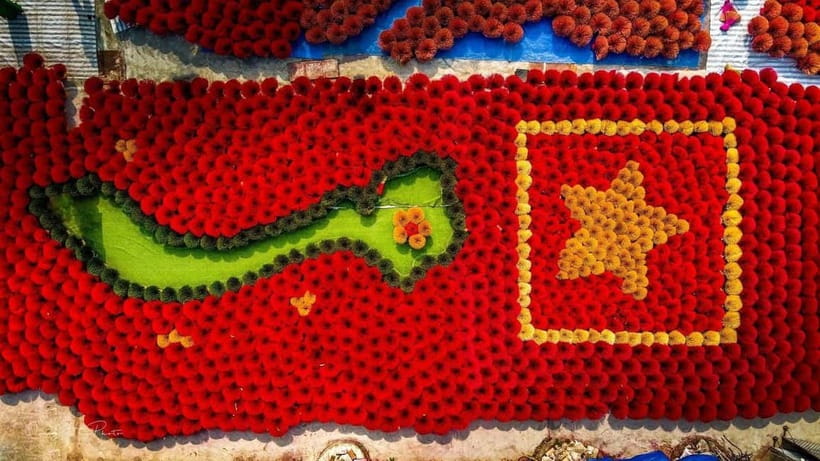
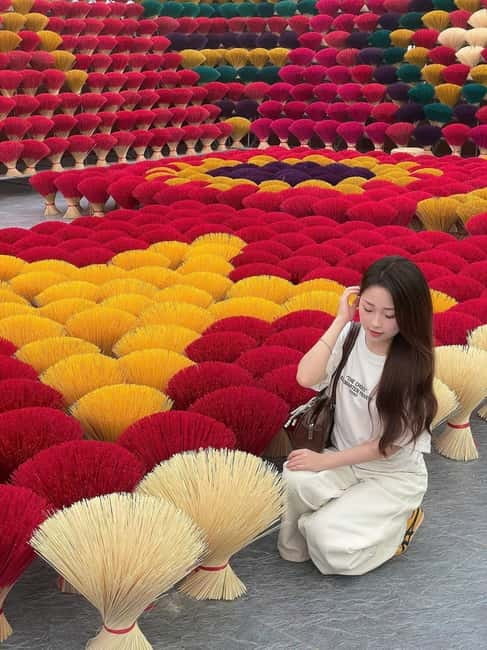
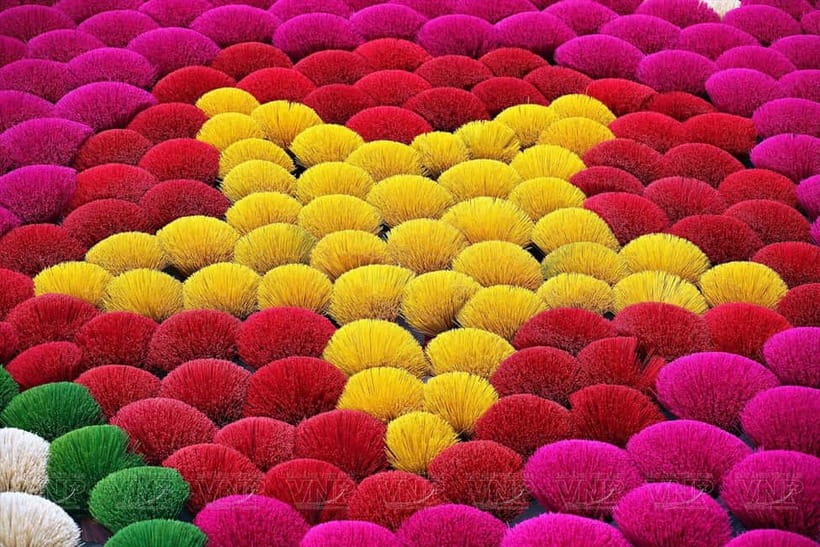
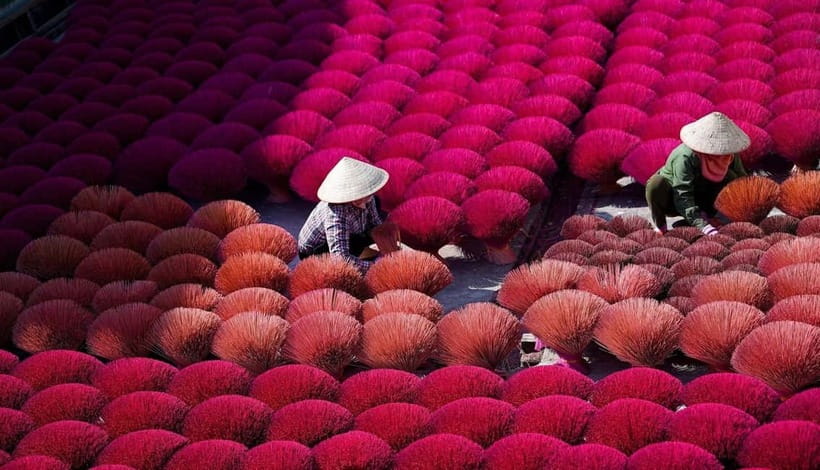
If Chuong gives you shapes, Quang Phu Cau gives you scent—and color. This incense village has been producing incense for more than 100 years, and you’ll walk through the center of the village to see how people produce incense on a family-scale setup.
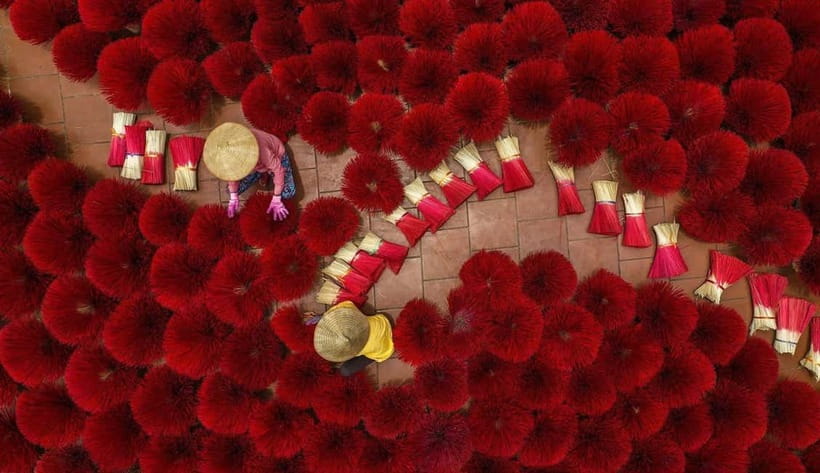
What makes this stop especially interesting is the variety of what you’ll be shown. You’ll see local makers working and you’ll meet a family that specializes in dyeing incense sticks, which is where the bundles of incense can look almost art-like. The tour then levels up from household work to a nearby factory, where you can see how incense is made from scratch and learn what manual workers’ lives look like behind the scenes.
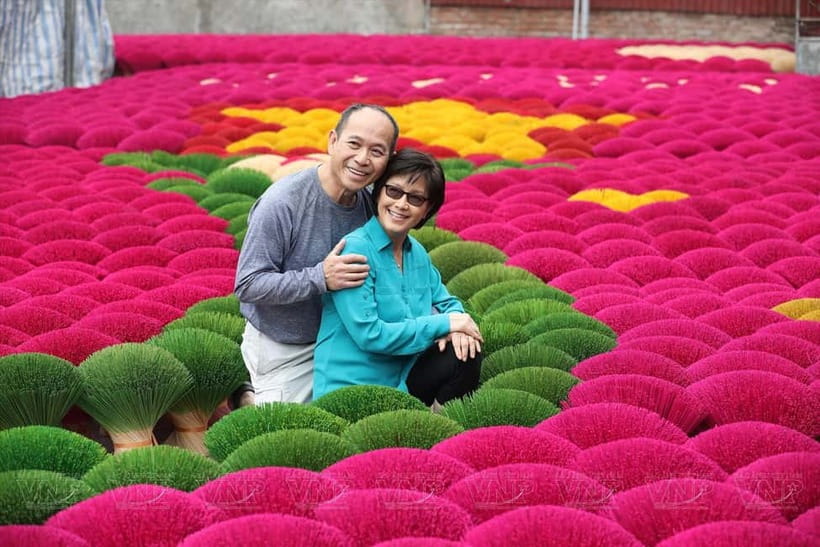
If you’re the kind of traveler who likes to understand how a product actually happens—materials, steps, labor—this is the part that satisfies that curiosity. And yes, it’s also a great photo location. The scene is made for pictures, especially when you’re standing near the colorful incense bundles.
You’ll also get a little “try it yourself” time: the tour includes some free incense sticks after you made incense yourself. That’s not just a giveaway—it’s proof you participated, even briefly.
Trạch Xá Village and the áo dài: Meaning in Every Panel
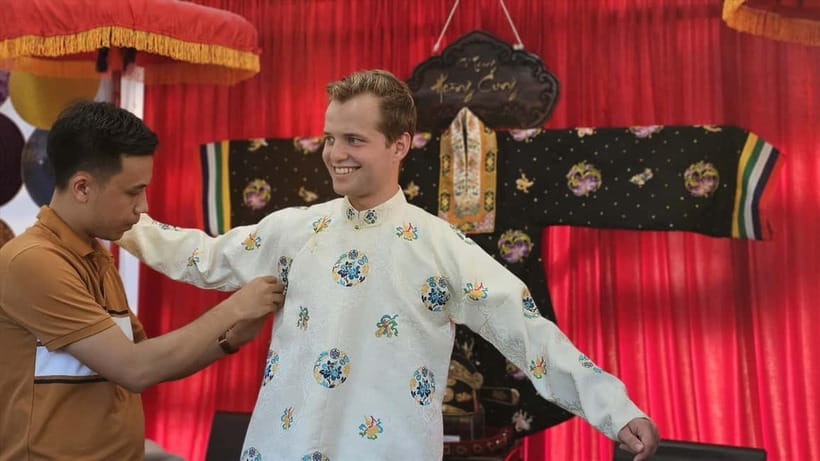
If you choose the private option, you’ll trade hats for áo dài craftsmanship. Trạch Xá is known for preserving the art of making the traditional Vietnamese long dress, the áo dài, and you’ll travel about 60 km from central Hanoi to reach it.
This stop is built around meeting artisans and watching real sewing work. You’ll see how an artisan meticulously sews each layer of fabric, and you’ll learn why the áo dài isn’t just “pretty clothes.” The symbolism matters here: the four outer panels represent family members (father, mother, father-in-law, mother-in-law), and the inner panel represents the wearer.
Technique is also part of the story. You’ll be shown the importance of sewing alignment and the goal of small, even, concealed thread lines. The tone is practical, not theoretical—focused on how they keep the traditional design consistent even with modern pressures.
One artisan name stands out in the workshop setting: you’ll visit Đỗ Minh Tám’s workshop. That personal connection is a big reason people enjoy this stop, because it turns the craft into a human story instead of a general description.
Optional Train Street Drop-Off: Easy Choice, No Pressure
The half-day group option includes an optional Train Street drop-off in Hanoi. It’s designed with a simple choice: you can get dropped there, or you can wait on the bus if you’d rather not do it.
So if you’re curious, it’s there. If you’d rather protect your time and energy for the craft villages, you can treat it as optional background noise.



Private vs Half-Day Options: Picking the Right Fit
You basically have two ways to shape your day:
Half-day group tour (about 6 hours)
This version focuses on conical hats and incense, plus the optional Train Street stop. It’s a strong match if you want a balanced craft sampler without committing to a full-length day.
The morning slot runs around 7:45 to 13:30, and the afternoon slot runs around 11:45 to 17:30. That flexibility can be a lifesaver if your hotel time, breakfast habits, or other plans are already set.
Private tour (áo dài + incense)
The private option swaps the hat village for Trạch Xá, the áo dài craft village, and pairs it with Quang Phu Cau incense. It’s about reaching two crafts that are both deeply traditional, but very different in feel: clothing symbolism and fine sewing, plus incense-making and scent production.
Trạch Xá is about 60 km away, and Quang Phu Cau is about 35 km away. If you like your schedule to feel purposeful—one clothing craft and one incense craft—this pairing makes a lot of sense.
Logistics You Should Know Before You Go (Pickup, Timing, Walking)

Pickup and drop-off are handled around Hanoi’s Old Quarter area, which keeps the start simple. You’ll have an easy time finding the transport, and the overall rhythm tends to feel organized, not chaotic.
Still, treat it like a real village day. The villages are outside central Hanoi and you should plan for walking between workshop areas. Wear comfortable shoes, and keep your phone ready—Quang Phu Cau in particular is a “photos will happen” kind of place.
The tour also supports multiple languages through the local guide, including English plus several others (Chinese, French, German, Italian, Spanish, Vietnamese, Russian, Portuguese, Thai, Indonesian, Korean). That makes it easier to ask questions and get explanations you can actually use.
What You’ll Bring Home (And What It Costs You in Time)
This is one of those tours where “souvenir” doesn’t have to mean “junk.” You’ll have two included make-and-take items:
- a free conical hat to paint in the hat village
- some incense sticks after you make incense yourself
You can also choose to buy extra souvenirs from artisans. The tour encourages supporting local makers, and honestly, that’s where your spending can feel more direct—money goes back into the craft chain you just watched.
Time-wise, you’re not stuck in long shopping detours. You’ll get guided visits and photo stops, with the village work taking center stage. The pacing is designed to keep you moving, but not rushed through every stop.
Who This Tour Suits Best
This is a great fit if you want cultural travel that’s hands-on. You’ll enjoy it most if you:
- like learning how everyday items are made
- prefer workshops and artisan conversations over museum hallways
- enjoy photo-friendly village settings (especially in Quang Phu Cau)
- want a day trip that still feels personal, not mass-produced
It’s also a good option if you’re traveling with someone who’s torn between “history” and “activities.” Áo dài symbolism covers meaning, incense covers process, and the conical hat covers creativity.
And if you’re the type who hates being rushed, look for the small-group or private format. The experience is built around letting you ask questions and take pictures without being pushed along like luggage.
Should You Book This Hanoi Crafts Tour?
I think you should book it if you want a practical craft day that doesn’t feel like a drive-by. The included make-your-own items give the tour a real “I did something” feeling—especially the hat painting and the incense you make.
Choose the half-day version if you want maximum variety in minimal time: hats plus incense, with an easy optional extra at Train Street. Choose the private version if you’re drawn to áo dài for its symbolism and sewing details, and you still want incense as a second craft focus.
One last tip: pack light, bring comfortable shoes, and plan on smelling incense on your clothes for a bit. It’s a sign you didn’t just watch the craft—you took part in it.
FAQ
How long is the tour?
It runs about 6 hours (half-day options) and is offered for dates with available starting times.
What villages are included in the half-day group tour?
The half-day format includes conical hat (Chuong) and incense (Quang Phu Cau), with Train Street optional.
What villages are included in the private tour?
The private option includes Trạch Xá Village (áo dài) and Quang Phu Cau Incense Village.
Are meals included?
No meal information is listed as included, so plan for your own snacks or lunch if needed.
What’s included for souvenirs?
You get one free conical hat to paint in the hat village, and you also receive some free incense sticks after making incense yourself.
How far are the villages from Hanoi?
Trạch Xá is about 60 km from central Hanoi, and Quang Phu Cau is about 35 km away (the other craft stop is also outside central Hanoi).
What languages are available for the guide?
The guide can be English plus many others, including Chinese, French, German, Italian, Spanish, Vietnamese, Russian, Portuguese, Thai, Indonesian, and Korean.
Is there any extra cost for Lunar New Year?
Yes. There is a Lunar New Year surcharge (250,000 VND per person) from 16/02/2026 to 19/02/2026.