REVIEW · HANOI
Hanoi: Conical Hat Village & Incense Village SMALL GROUP
Book on GetYourGuide →Operated by GREEN VIETNAM TRAVEL · Bookable on GetYourGuide
A conical hat village trip feels oddly satisfying. You’ll watch Vietnamese craftspeople turn palm leaves, bamboo, and silk into something elegant, then switch gears to incense making in a workshop-factory world. Small-group pacing keeps it human, and you get a hands-on souvenir—a conical hat you paint—instead of just standing in line for photos. One note: the drive and village time mean you’ll want solid shoes and a bit of patience if your transport day is longer than expected.
I especially like the way this tour explains how things are made. You’re not just hearing facts—you’re seeing the stages, meeting a maker (Thao is the name I kept hearing), and learning why the hat’s parts matter: leaves plus a frame.
The main consideration is the incense village experience can feel more “production-focused” than “scene-stuff-your-camera-with-everything.” If you want a full-scale incense village aesthetic, you might find parts of it less open-air and more workshop-and-walls than you’d hope.
In This Review
- Key things I’d zoom in on
- Conical Hat Village: the craft you can actually see
- Thao’s 40-year hat craft: leaves + frame, done carefully
- Chuong Village market and the 10th of the third lunar month festival
- From family workshops to a factory in Quang Phu Cau incense village
- What you do: paint-your-own hat and try incense steps
- Small-group pace and guide quality (including English support)
- Hotel pickup, train-street drop-off, and how to plan your afternoon
- Does $15 deliver real value, or is it mostly a souvenir stop?
- Time and stamina: what to bring so your day feels easy
- Who should book this, and who should skip?
- Should you book? My practical decision guide
- FAQ
- Is lunch included on this half-day conical hat and incense tour?
- What do I get to take home from the tour?
- Where are the conical hat and incense village stops located?
- Do the market and festival happen every day?
- Will I be able to get dropped off somewhere besides Hanoi Train Street?
- What should I bring for a comfortable day?
Key things I’d zoom in on
- Watching conical hat makers work: bamboo prep, leaf drying, and silk finishing, step by step
- Meeting Thao at her Chuong Pagoda-area home after decades of hat making
- A market or festival on specific lunar dates tied to Chuong Village traditions
- Quang Phu Cau incense village’s scale: family-level work plus a nearby factory visit
- Hands-on souvenirs: paint a hat and make incense sticks for takeaway
- Hotel Old Quarter pickup and a common train-street drop-off so you can keep exploring after
Conical Hat Village: the craft you can actually see
Conical hats in Vietnam aren’t costume props. They’re practical and symbolic at the same time, shaped by sun, rain, and daily life. On this tour from Hanoi, the best part is how quickly you get past the idea and into the process.
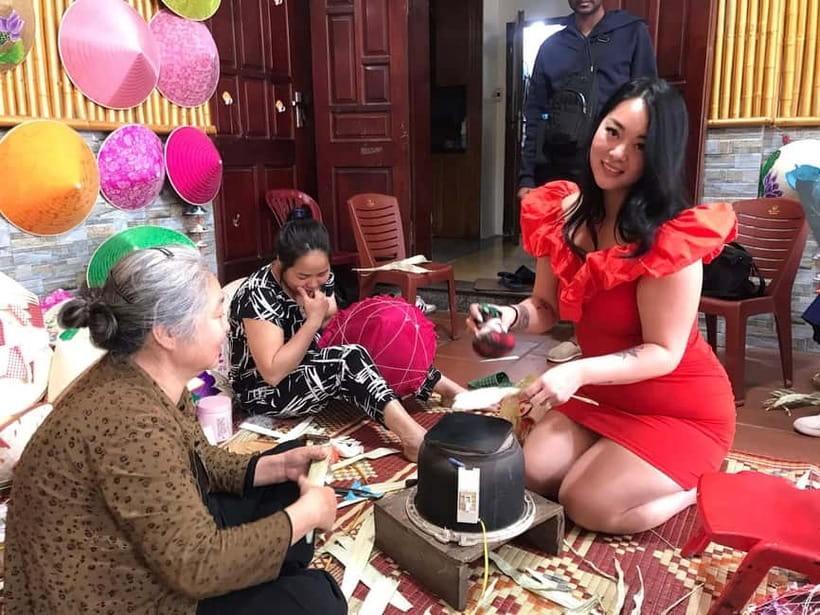
Chuong Village is known for producing Non La (conical hats) with high quality, and you’ll see artisans creating them by hand. It’s the kind of activity that makes you slow down, because the details are the point. The guide’s job here is crucial: they connect the handwork to the cultural meaning—how these hats once protected people from weather, and how they later became a fashionable accessory for Vietnamese women.
The experience also moves with good rhythm. You start by observing, then you shift into learning what each stage changes. That keeps the trip from becoming a shopping stop disguised as a tour.
You can also read our reviews of more tours and experiences in Hanoi.



Thao’s 40-year hat craft: leaves + frame, done carefully
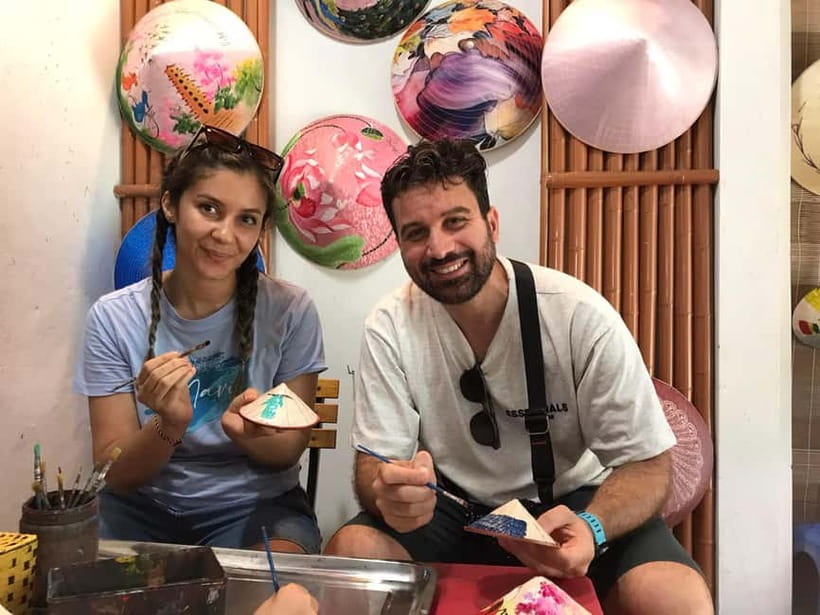
One reason this tour sticks with me is the specific maker story. You meet Thao, crafting conical hats for 40 years, and you learn she grew up around them. The message is simple: in Chuong Village, conical hats aren’t a hobby. They’re a family skill passed through generations.
Thao explains the hat in a way that makes it easier to understand what you’re looking at. A conical hat has two primary parts: the leaves and the frame. That’s a big deal, because quality comes from how well those parts are prepared and matched.
Here’s what you can expect to learn during the process:
- Bamboo gets split into long, thin parts, then soaked, and dried in the sun.
- Green palm leaves are processed and dried across the dry season.
- Men add silk—often red or pink—and sometimes decorate with embroidery like flowers and birds.
You’ll likely notice how much of the work is timing and preparation, not just decoration. The materials have to be treated right before assembly. That’s why good hats don’t look rushed, and why the final result holds its shape.
Chuong Village market and the 10th of the third lunar month festival
This tour is especially interesting if you travel with some flexibility, because the village market and festival don’t happen every day.
Chuong Village has a market on certain lunar dates, and there’s also a special festival tied to the 10th day of the third lunar month. If you’re there on the right date, you’re not only seeing daily craft work—you’re seeing the craft’s role in village life and celebration.
What does that mean for you on the ground? Expect more movement and more people around the hats—more buying, more talking, and more chance to compare styles and materials. It’s also a good time to notice what finishes and colors are common, and which designs artisans put effort into when there’s extra demand.
If you’re visiting outside those dates, you’ll still get the craft observation and the workshop learning. You’ll just miss that extra “festival energy.” Either way, it’s a meaningful stop because hats are one of those Vietnamese items that feel ordinary until you see what it takes to make them.
From family workshops to a factory in Quang Phu Cau incense village
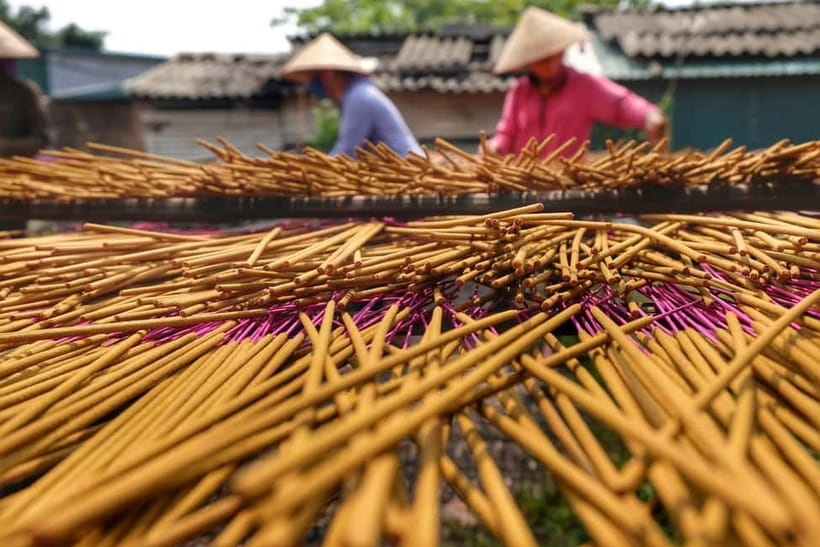
Then you shift from hats to incense, which is a great contrast. Conical hats feel shaped by sunlight and outdoor drying; incense feels shaped by scent-making and production workflow.
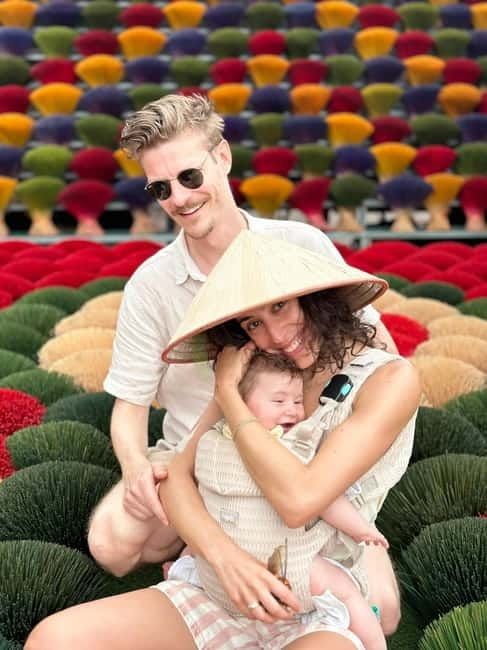
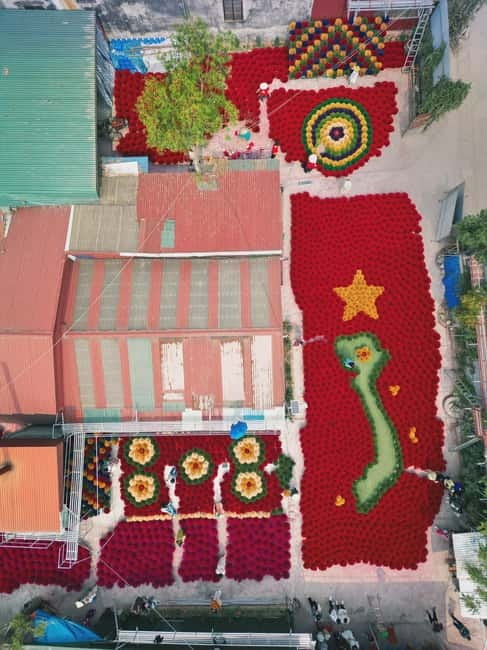
In Quang Phu Cau incense village, incense production is said to go back more than 100 years. You’ll take a walk through the village center and see locals making incense in an artisanal, family-scale way. This is where you’ll spot the color and variety—especially colorful bundles of incense made through specialized steps.
You can meet a family specializing in dyeing incense sticks. The visuals here are practical, not just aesthetic. When you see the dye process, you understand why incense bundles can look like bright cords of color rather than just one plain scent product.
After that, the tour levels up with a visit to a nearby factory. You’ll learn how incense is made from scratch and you’ll see the production environment where manual workers do their jobs at scale. The factory segment helps you connect the dots: village workshops are one world; a factory line is another, both built from the same core idea—turning raw materials into something people use for prayer, fragrance, and rituals.
What you do: paint-your-own hat and try incense steps

This is not a purely watch-and-leave tour. You get to make something, and that changes the whole feeling.
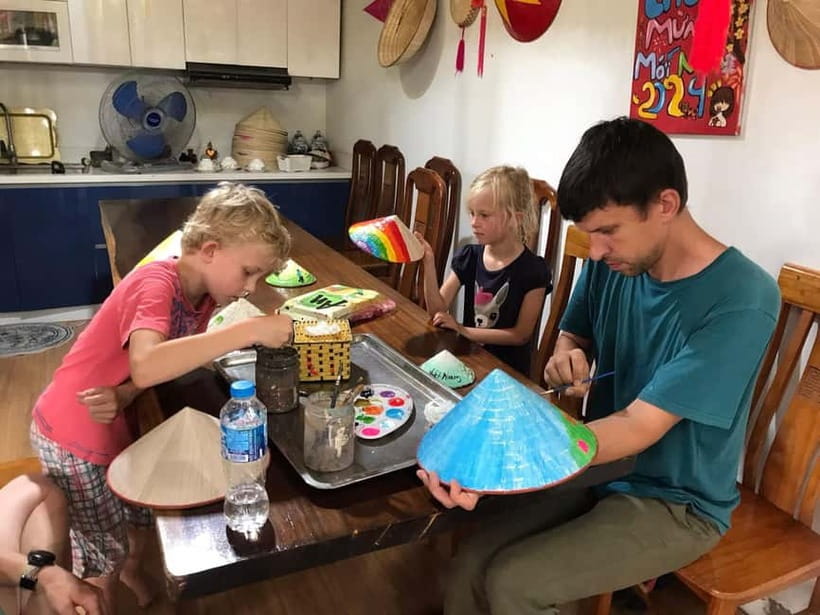
In the hat village, you receive one free conical hat for painting. It’s a personalized souvenir you can take home without needing to negotiate or hunt for “the right one” at a shop. Even if your painting skills are basic, the value is in doing it yourself while your brain is still full of what you learned about materials and design.
For incense, you get some free incense sticks after you make incense sticks yourself. That’s the best kind of souvenir: small enough to pack, but it gives you a story you can tell beyond the purchase price. You also get a clearer sense of labor—because when you try the steps, you realize it’s work, not magic.
A practical bonus: someone on your tour might take lots of photos. One guide name that shows up in the experience data is Hue, and the feedback points to him being helpful with photos. If you want easy memories, this is the kind of tour where it helps to have a guide who understands the best angles and the right timing.






Small-group pace and guide quality (including English support)

This is listed as a small-group experience, and that matters. In groups, you usually lose time to crowd flow. Here, the idea is that you can ask questions and get explanations while you’re standing near the work, not just at the end during a handout moment.
Guide quality is clearly a big variable, and names show up in the experience data:
- Henry is mentioned with strong English ability and an attentive approach, and you’ll want that kind of guide because the craft details are the whole point.
- Hue is another guide name associated with lots of helpful pictures.
If your schedule includes pickup, your guide will be the translator and the interpreter between what you’re seeing and what it means.
Language coverage is broad: English, Vietnamese, Chinese, French, Italian, Japanese, Portuguese, and Spanish. That’s useful if you’re traveling with someone who doesn’t want the language barrier to slow the day.
Hotel pickup, train-street drop-off, and how to plan your afternoon
The tour includes hotel pickup and drop-off in Hanoi Old Quarter. That’s a comfort factor you don’t want to underestimate. Hanoi traffic can be chaotic, and craft villages are exactly the kind of place where arriving on time matters.
At the end, there’s a first drop-off at Hanoi Train Street. If you love that area and want to keep exploring, you can just stay there and grab a taxi or Grab back to your hotel when you’re ready.
If you’d rather avoid the train-street energy, the note says you can wait on the bus and skip the drop-off there. Either way, plan for a day that continues after you leave the villages.
Also, remember this is a half-day option in the format described, and it does not include lunch. I recommend eating before you go or packing snacks so you don’t feel wiped out mid-afternoon. With villages plus travel, hunger turns into crankiness fast.
Does $15 deliver real value, or is it mostly a souvenir stop?

At about $15 per person, this tour is one of those deals that can feel almost too good—until you look at what’s included and think about what you’d otherwise pay for:
- Visits to Chuong Village and Quang Phu Cau incense village
- Observation of artisans at work
- Entrance fees
- A professional local guide
- Bottled water
- Hotel Old Quarter pickup/drop-off
- A free conical hat to paint
- Incense sticks you make yourself
That combination—transport + guidance + hands-on materials—is what makes it good value. The key is that you’re getting active participation, not just guided scenery. If you’re the type who learns best by doing, the price starts to make sense quickly.
One tradeoff: because it’s half-day, it’s not a long, slow meander. You’ll move through several stops with purpose. If you like long lunches and long conversations, this format might feel a bit efficient. But if you want craft knowledge plus souvenirs, it’s a solid deal.
Time and stamina: what to bring so your day feels easy
You’ll want to treat this like a warm-weather hands-on day.
Bring:
- Comfortable shoes (you’ll be walking and standing near workshops)
- A sun hat (dry sun exposure comes into play during hat processing)
- A camera (there are plenty of moments where you’ll want details)
And mentally plan for heat and time on the road. One piece of feedback from the experience data mentions a driver who was very slow and didn’t speak English, and there wasn’t an easy toilet stop opportunity. That’s not guaranteed, but it’s a smart consideration: on any craft-and-village day, use the bathroom when you have the chance, and don’t assume you’ll be able to interrupt the schedule.
Who should book this, and who should skip?
This tour is a great fit if you:
- Like seeing how everyday Vietnamese items are made
- Want a small-group craft day with a guide doing real explanation work
- Care about taking home something you made, not just something you bought
- Enjoy cultural context, not only product displays
It’s less ideal if you:
- Want a fully open-air “movie set” incense village with no factory/workshop feel
- Dislike any schedule that includes road time and a set drop-off (like the Train Street option)
- Need a guaranteed long lunch break (half-day format doesn’t include lunch)
If you’re traveling in the Hanoi Old Quarter and want a meaningful half-day that feels local instead of touristy-in-the-worst-way, this hits that target.
Should you book? My practical decision guide
If you want a craft day where you learn real process details and leave with a hat you painted plus incense you made, I’d book this. The value isn’t just the price—it’s the combination of observation + hands-on steps + thoughtful cultural explanation.
I’d pay attention to the lunar-date part too. If you can align your trip with market days or the 10th of the third lunar month festival, the experience can feel more alive and community-centered.
And if you get a strong guide—names like Henry and Hue show up with positive feedback for English and picture support—you’ll get more out of the day. Even with a less talkative day, the hands-on hat and incense make it worthwhile.
FAQ
Is lunch included on this half-day conical hat and incense tour?
No. The half-day option does not include lunch, so eat beforehand or bring snacks.
What do I get to take home from the tour?
You get a free conical hat to paint in the hat village, and you also receive some incense sticks after making incense sticks yourself.
Where are the conical hat and incense village stops located?
The tour visits Chuong Village for conical hats and Quang Phu Cau incense village for incense making, from Hanoi.
Do the market and festival happen every day?
No. The Chuong Village market and the special festival occur only on specific lunar dates, including a festival on the 10th of the third lunar month.
Will I be able to get dropped off somewhere besides Hanoi Train Street?
The standard drop-off includes a first stop at Hanoi Train Street. If you prefer not to get off there, you can wait on the bus and continue as arranged.
What should I bring for a comfortable day?
Bring comfortable shoes, a sun hat, and a camera. Water is provided, and the tour runs in the afternoon format described for this half-day option.