Train Street in Hanoi is unreal. This private half-day route strings together key sights and off-the-beaten-path streets, so you get more than a checklist. I especially like the private-group pace and the way guides turn each stop into a story you can actually use while walking around Hanoi.
You also get the practical stuff that matters day-of: hotel-area pickup and round-trip transfers (when you’re in the Old Quarter) plus included entrance fees and a pause with tea or egg-coffee at Train Street. The only real catch is timing: Ho Chi Minh’s mausoleum has tight opening rules and you may only view it from the outside if you’re there outside the morning window.
In This Review
- Key things to know before you go
- Why this Hanoi half-day feels efficient without feeling rushed
- Price and value: what you’re actually paying for at $52
- Logistics that make or break the day
- Ho Chi Minh’s Mausoleum: the stop where timing really matters
- One Pillar Pagoda and the Temple of Literature: spiritual and scholarly Hanoi
- One Pillar Pagoda
- Temple of Literature & National University
- Dong Xuan Market and Long Bien Bridge: where Hanoi feels like Hanoi
- Dong Xuan Market
- Long Bien Bridge
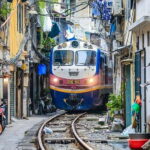
- Train Street: the headline stop with real-world rules
- Hanoi Opera House: French architecture without the long wait
- What makes the guides here a big deal
- How to choose your morning vs afternoon slot
- What to expect day-of (and what to pack)
- Who should book this tour?
- Should you book it?
- FAQ
- How long is the Hanoi city half-day private tour?
- Is this tour private or shared?
- Do I get hotel pickup in Hanoi’s Old Quarter?
- Where does the tour meet and end?
- Which stops are included in the itinerary?
- Are entrance fees included?
- Is Train Street included, and how long do you spend there?
- What food or drink is included?
- What are the key rules for visiting Ho Chi Minh’s Mausoleum?
- What happens if the weather is bad?
Key things to know before you go
- A private half-day plan: your group stays together, with a flexible morning or afternoon start time.
- Hotel-area transfers in the Old Quarter: hassle-free getting around, not you-and-your-map energy.
- Train Street with a real stop: includes entry time and even a tea/egg-coffee break there.
- Temple of Literature plus markets: you’re not stuck only on big monuments.
- Mausoleum timing rules: plan around opening hours and weekly closures.
- French-era architecture stops: you’ll get the outside look at the Opera House, plus the historical context.
Why this Hanoi half-day feels efficient without feeling rushed
Hanoi can be big, layered, and a bit chaotic if you’re moving on your own. This tour is designed for the opposite: quick orientation, strong context, and enough variety to make your first days in town make sense. In roughly 4 to 5 hours, you cover a political landmark, ancient religious sites, a major education heritage area, a major market, and the famous Train Street zone.
The best part is how the tour flows thematically. You start with Vietnam’s modern political story, then slide backward to older spiritual and scholarly Hanoi, and then you land in daily life at the market and train corridor. The day ends with French colonial-era architecture vibes. If you like understanding a city while you walk it, this format works.
You’ll also appreciate the private-group setup. The pace is easier for photos and questions, and you won’t feel like you’re forced to sprint between places just to keep up.
You can also read our reviews of more city tours in Hanoi



Price and value: what you’re actually paying for at $52

At $52 per person, the headline cost is straightforward. The better question is what’s included so that you’re not paying extra “surprise fees” all afternoon.
Here’s what’s covered in the package you should mentally budget around:
- An English-speaking guide
- Entrance fees for the listed stops
- Private transfers for the whole tour
- Tea or egg-coffee while visiting Train Street
That matters because some of Hanoi’s best-known sites do have tickets, and getting them paid for in advance is one less task. Plus, the transportation part can be a big deal in Old Quarter traffic.
If you’re comparing against DIY, remember that Hanoi isn’t just sights—it’s streets, timing, and knowing where the bottlenecks are. A good guide saves time in the form of fewer wrong turns and better timing at places that get crowded.
Logistics that make or break the day
This is a private tour limited to your group. That sounds like marketing, but it’s felt in small ways: you’re not stuck behind a different group’s pace, and your guide can adjust timing if the heat hits or if a site is slower than expected.
Meeting point is Thang Long Water Puppet Theatre at 57B Đinh Tiên Hoàng, Hàng Bạc, Hoàn Kiếm, Hà Nội. The tour ends back at the meeting point.
Pickup is offered from hotels in Hanoi’s Old Quarter as part of round-trip transfers. If your hotel is close to Noi Bai airport instead, you’ll need to start from the meeting point or coordinate with the local operator for details. If anything about your pickup spot feels unclear, contact the operations team on WhatsApp: +84-982-804-399.
One practical note: you’ll be doing a “half-day” not a “sit-down day.” Bring water, wear shoes you don’t mind getting crowded next to, and expect some walking across different styles of streets.
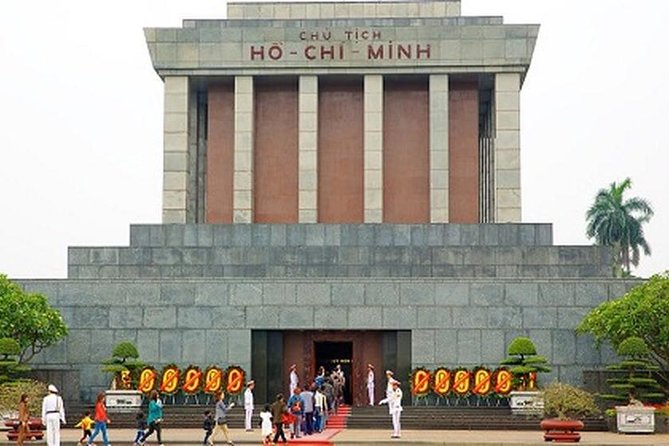
Ho Chi Minh’s Mausoleum: the stop where timing really matters
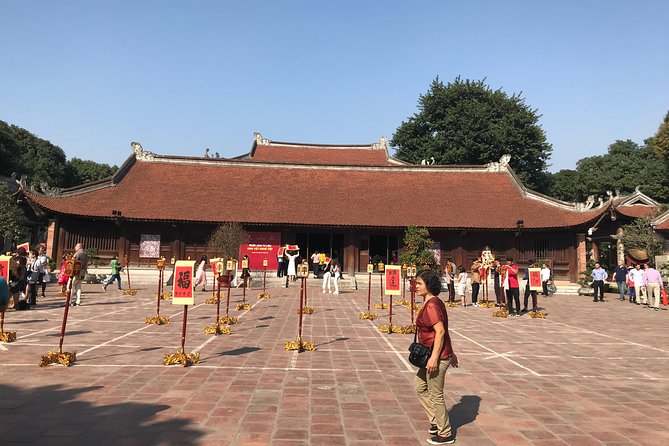
Ho Chi Minh’s Mausoleum is included, and it’s also the one stop that can change based on the day and time.
Key rules:
- Open only in the morning, from 8:00 AM to 11:30 AM
- Closed weekly on Monday and Friday
- If your tour day falls on a Monday/Friday or you arrive after the cutoff, you may visit the area outside rather than the full mausoleum experience
- It’s closed every year from June 10 to August 12 for maintenance
Dress matters too. For entry, shoulders must be covered and shorts should be knee length.
This isn’t meant to scare you—just to help you plan. If your schedule is flexible, a morning tour usually makes this stop more complete. If you’re going in the afternoon, treat the mausoleum as a viewpoint + context stop and don’t expect the same indoor access.
One Pillar Pagoda and the Temple of Literature: spiritual and scholarly Hanoi
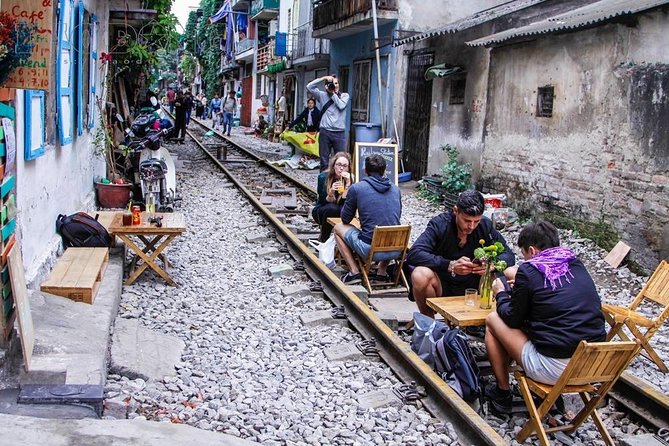
After the political landmark, the route pivots to Hanoi’s older layers.
You can also read our reviews of more private tours in Hanoi
- Doris Cruise 5 star cruise 2 days visiting Halong Bay Lan Ha Bay private balcony
★ 5.0 · 2,338 reviews






One Pillar Pagoda
This pagoda is built around a legend: Emperor Ly Thai T envisioned a baby son after a dream, with Avalokiteshvara arriving on a lotus flower. It’s short on time—about 30 minutes—but the value is in what a guide explains while you’re standing there. You get more meaning than just seeing an iconic shape.
A good strategy here: use the photo moments early, then ask your guide what the symbolism connects to in Vietnamese beliefs. That turns a quick stop into something that sticks.
Temple of Literature & National University
This is one of the most photogenic and historically significant sites in Hanoi, originally built in 1070 as a university devoted to Confucius. Plan for about an hour here.
You’ll likely walk through courtyard-style spaces and learn how scholars were trained and honored. The practical win is that you’ll start seeing Vietnam’s education legacy as part of the country’s wider cultural identity, not a separate “tourist attraction.”
Dong Xuan Market and Long Bien Bridge: where Hanoi feels like Hanoi

Not every tour includes real local-life areas. This one puts you at Dong Xuan Market and then connects you to Long Bien Bridge for a quick historical look.
Dong Xuan Market
Dong Xuan Market is described as Hanoi’s largest wholesale market, built in 1889. You only get about 20 minutes here, so it’s not a slow browse. But that’s actually a plus. In a short time, you can see how goods are organized and how people move through the space.
One nice touch: some guides bring small tastings, like fruit to try at the market. If you want that kind of experience, ask your guide what’s available that day and what’s worth trying.
Long Bien Bridge
Long Bien Bridge is included as a quick photo and context stop. It was constructed after the French conquered Hanoi and completed in the early 1900s (timeline details are part of the guide narration). It also has a history tied to bombing events and later resilience.
Even if you’re not a history nerd, the bridge works as a break from crowds and gives your brain time to process what you’ve already learned.
Train Street: the headline stop with real-world rules
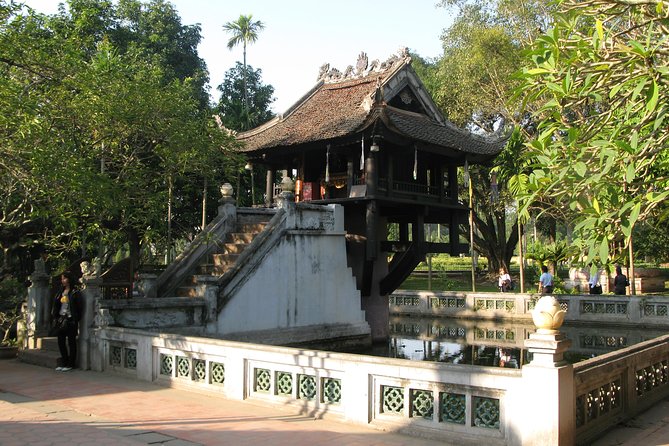
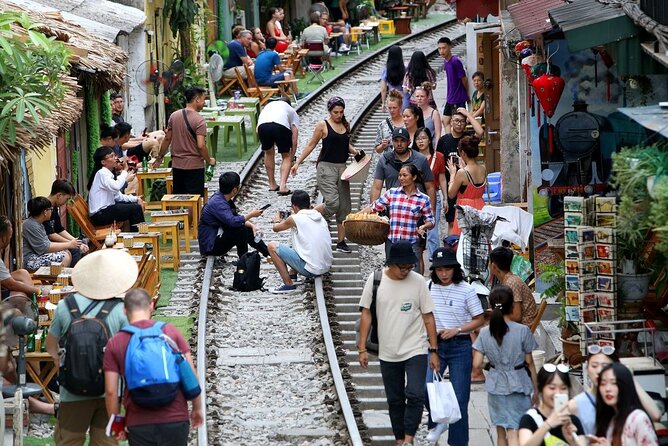
Hanoi Train Street is the reason a lot of people book this tour. And yes, it’s dramatic: real railway lines run through what would otherwise be a street.
This stop runs about 40 minutes and includes an entrance ticket. You’ll also get tea or egg-coffee while you’re there, which helps because this area can feel hot and crowded, depending on the time and day.
A useful way to think about Train Street:
- It’s not just a photo. It’s a look at how daily life adapts around trains.
- The experience is short by design. If you stay too long without a plan, it turns into standing around.
Also, crowds are real. Some days are extremely busy at the sites, and Train Street can be part of that rush. If you care most about the train moment, ask your guide where to position yourself and when to move closer.
Hanoi Opera House: French architecture without the long wait
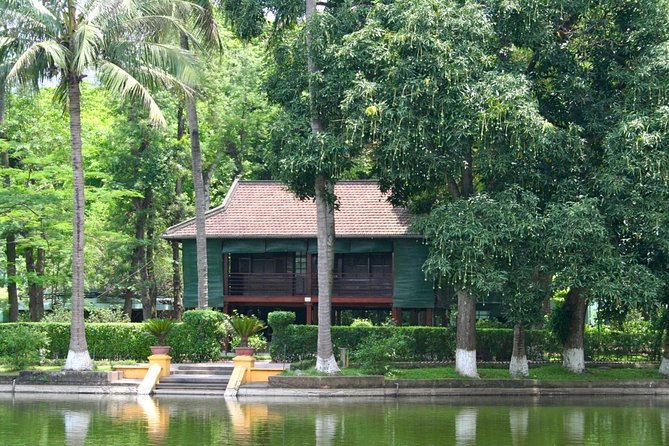
The tour includes Hanoi Opera House, but you’re visiting mainly for the exterior look and the historical story around it. Visits are described as outside-focused because the opera house is closed most of the time and open to the public only for ceremonies and special events.
This means the value is in the explanation: French colonial administration built it between 1901 and 1911, and the building’s design is part of the mixed cultural history of Hanoi.
You won’t lose hours here, so it works as a clean final “style shift” after Temple of Literature and Train Street.
What makes the guides here a big deal
This tour earns high scores for one main reason: the guides tend to do more than point and read. They connect dots.
You’ll likely hear strong explanations at each stop, and you can usually ask questions as you go. Guides like Ken, Linh, Lan, Sam, Andy, Anna, Khanh, and Lihn come up often in feedback for being friendly, funny, and quick to answer questions—sometimes even tailoring the route when you want something different.
A practical tip: if you have specific interests, say them at the start. Want stronger history? Ask. Want more time for photos at a particular site? Ask. If you’re traveling with teenagers, the best guides know how to keep them engaged with short, real-life explanations instead of lectures.
Also, drivers matter here. The tour includes private transfers, and you’ll feel the benefit of someone who understands Old Quarter routes. One guide-driver pair is even joked about for safety-first driving, which tells you the overall vibe.
How to choose your morning vs afternoon slot
You can choose morning or afternoon, and start time can fit your schedule. Here’s the simplest way to decide:
Morning slot:
- Better odds for Ho Chi Minh’s Mausoleum to be more complete
- Often easier for your energy before heat builds
Afternoon slot:
- Still covers almost everything
- Mausoleum is more likely to be outside-only depending on timing and closures
If your schedule forces an afternoon start, don’t treat it as a disappointment. You’ll still get the political context and you won’t miss the other core stops: pagodas, Temple of Literature, market, bridge, Train Street, and French-era architecture outside the Opera House.
What to expect day-of (and what to pack)
This is a half-day walking-and-riding plan. You’ll do short stints at each major stop, with photo time and guide narration woven in. Expect:
- Some waiting around crowded areas
- Busy streets during peak times
- A mix of stone, temple courtyards, and market footpaths
Pack basics:
- Water
- Sun protection
- Comfortable shoes
- Something to cover shoulders if you’re doing the mausoleum portion
- Light layer in case the weather changes
The tour also needs good weather. If it’s canceled due to poor weather, you’ll be offered a different date or a full refund.
Who should book this tour?
This tour is a good fit if you:
- Have limited time in Hanoi and want a high hit-rate of highlights
- Want a guide to explain what you’re seeing instead of just taking photos
- Prefer private pacing over group bus crowd control
- Like variety: politics, temples, scholarship, markets, and a famous modern street moment
It may not be ideal if:
- You only care about one or two sites and want a slow, deep personal day
- Your schedule makes it impossible to hit the mausoleum opening window and you feel disappointed if it’s outside-only
Should you book it?
I’d book this Hanoi half-day tour if you’re arriving with questions and want your first day to make sense quickly. The value comes from the mix of included entrances, hotel-area transfers, and the Train Street moment paired with context you can carry into the rest of your trip. Add a guide who can answer questions well, and it turns into more than a photo stop—it becomes a useful map of Hanoi in your head.
FAQ
How long is the Hanoi city half-day private tour?
It runs about 4 to 5 hours.
Is this tour private or shared?
It’s a private tour limited to your group only.
Do I get hotel pickup in Hanoi’s Old Quarter?
Pickup and round-trip transfers are offered from hotels in Hanoi’s Old Quarter.
Where does the tour meet and end?
It starts at Thang Long Water Puppet Theatre, 57B Đinh Tiên Hoàng, Hàng Bạc, Hoàn Kiếm, Hà Nội, and ends back at the same meeting point.
Which stops are included in the itinerary?
The tour includes Ho Chi Minh’s Mausoleum, One Pillar Pagoda, Temple of Literature & National University, Dong Xuan Market, Long Bien Bridge, the Hanoi Train Street entrance, and a stop at Hanoi Opera House (outside).
Are entrance fees included?
Yes, entrance fees are included for the listed sites.
Is Train Street included, and how long do you spend there?
Yes. The itinerary includes the Hanoi Train Street entrance and about 40 minutes there.
What food or drink is included?
Tea (or egg-coffee) is included while visiting Train Street.
What are the key rules for visiting Ho Chi Minh’s Mausoleum?
It opens only in the morning from 8:00 AM to 11:30 AM, and it is closed weekly on Monday and Friday. It also has a dress requirement: shoulders covered and shorts to knee length.
What happens if the weather is bad?
The experience requires good weather. If it’s canceled due to poor weather, you’ll be offered a different date or a full refund.