REVIEW · HANOI
Hanoi: 4 Hour Hop on Hop off Bus Tour
Book on GetYourGuide →Operated by ANH VIET HOP ON - HOP OFF VIET NAM · Bookable on GetYourGuide
Four hours is enough to get your bearings. This Hanoi one thousand years tour uses an open-top, hop-on hop-off bus so you can pace the sightseeing and follow the story with onboard audio commentary. I like how it bundles big-name stops with enough freedom to linger where you care most, not where a schedule demands.
What I especially like is the clear multi-language audio guide (with a strong sound system) that helps you understand what you are about to see. I also appreciate the practical onboard extras—water plus a conical hat and a rain coat—so a surprise drizzle or sun feels less annoying.
The main drawback is time pressure. The ticket is valid for 4 hours from first activation, and the service is a day loop that stops hop-on/hop-off after 5:00 pm, so starting late can shrink your usable sightseeing window.
In This Review
- Key things I’d plan around
- Why this Hanoi hop-on hop-off fits real travel days
- Price and what you actually get for about $13
- Timing, meet points, and the simple loop plan
- Where you meet
- How the audio guide makes the route easier (and more satisfying)
- Languages you can listen in
- Your half-day route: where you hop off and what each stop is for
- Hoan Kiem Lake: start with Hanoi’s pulse
- Saint Joseph Cathedral: a striking landmark on the route
- Hanoi Flag Pole: a quick stop with modern symbolism
- Ho Chi Minh Mausoleum: the political center of the story
- Quan Thanh Temple: religion and old streets in one view
- Tran Quoc Pagoda: a calmer pause on the loop
- Cua Bac Church: architecture lovers get a treat
- Imperial Citadel of Thang Long: the historic backbone
- Temple of Literature: learning, not just sightseeing
- Hoa Lo Prison: heavy history, important context
- Vietnam Women’s Museum: culture with a focused lens
- Hanoi Opera House: the stop you’ll likely build around
- Hanoi Post Office: finish with a historic walking-friendly landmark
- On board: what to do once you’re sitting up top
- Small rules that keep your day smooth
- Who this tour suits best
- Should you book this Hanoi 4-hour hop-on hop-off bus?
- FAQ
- How long is the tour ticket valid?
- What hours do the buses run?
- How often do the buses depart?
- Where do I meet the bus on weekdays versus weekends?
- What stops are included on the route?
- Is an audio guide included, and what languages are available?
- Is food included in the price?
- Can I hop on and off after 5:00 pm?
Key things I’d plan around

- Audio-first touring: The bus commentary is timed to each stop, so you get context before you hop off
- 4-hour ticket, daily cutoff: You can hop for 4 hours, but hop-on/hop-off ends after 5:00 pm
- A 1-hour loop with frequent buses: The full loop is about 1 hour, and buses run about every 30 minutes
- Two different meet points: Weekdays start at Hoan Kiem Lake area, weekends at Hanoi Opera House
- Comfort basics included: Water, conical hat, rain coat, and free Wi‑Fi are part of the deal
Why this Hanoi hop-on hop-off fits real travel days

Hanoi can feel like two cities at once: busy street life outside, then layers of history when you slow down. This 4-hour hop-on hop-off format is a smart way to stitch it together without booking separate tours for every single landmark. You ride the top level for broad views, then hop off only where you want more time.
What makes it work well is the pacing. You can do a quick pass to orient yourself, then return to 2–3 stops for a deeper look on your own time. That flexibility is the whole point of hop-on hop-off, and this one keeps the plan simple.
The audio guide is another big reason it feels more like a guided experience than just transport. You can listen in multiple languages as the bus moves between major historic and cultural sites, so you’re not guessing what you’re looking at.
You can also read our reviews of more tours and experiences in Hanoi.



Price and what you actually get for about $13
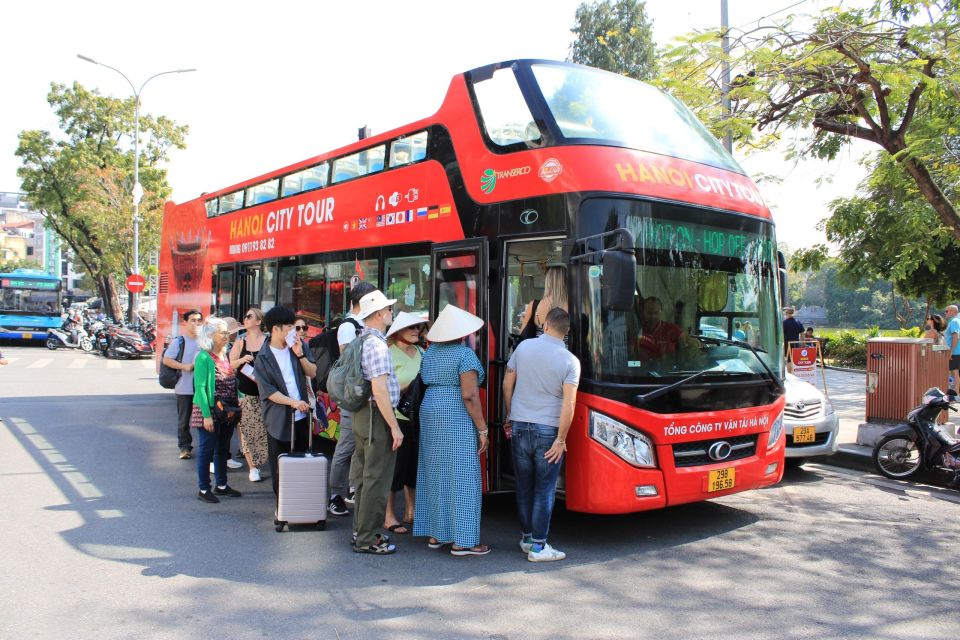
At $13 per person, this tour is good value mainly because it combines four things most visitors otherwise piece together separately: transport, landmark explanations, time flexibility, and on-board comfort items.
Here’s what you get that adds real value:
- City tour bus ticket valid for 4 hours (from first activation)
- Audio guide in multiple languages (the listed options include English, French, German, Spanish, Russian, Japanese, Korean, Chinese, and Vietnamese)
- Map plus free Wi‑Fi
- Water, conical hat, and rain coat on board
- Mobile e-ticket acceptance and staff help when you board
- Insurance on the bus
You also get a practical advantage: the info you have says you can skip the ticket line. That matters in Hanoi, especially at popular stops where lines can eat into your limited half-day.
Foods are not included, so you’ll still want to plan lunch or snacks elsewhere. But for a short sightseeing window, you’re paying mostly for getting around and understanding what you’re seeing.
Timing, meet points, and the simple loop plan

This is a day tour with running hours listed as 8:30 am to 5:00 pm daily. Buses leave every 30 minutes, and the full loop is about 1 hour.
The key detail for planning: your ticket is valid for 4 hours from the first activation. If you activate near the end of the day, you’ll lose sightseeing time because hop-on/hop-off is not available after 5:00 pm. I’d treat the last hour as extra buffer, not your main window.
Where you meet
Your starting point changes by day:
- Monday to Friday: meet near Hoan Kiem Lake, looking for the red double-decker bus and the ticket booth (the meeting point is listed at Dong Kinh Nghia Thuc Square, 7 Dinh Tien Hoang)
- Saturday and Sunday: meet at Hanoi Opera House, again looking for the red double-decker bus
The tour ends back at the meeting point, which is handy when you want everything to feel low-stress.
How the audio guide makes the route easier (and more satisfying)
The best part of this bus isn’t just the views. It’s what happens before you reach each landmark: you get audio context tied to the stop. The sound system is described as clear, and the commentary is set up to help you understand what you’re about to see rather than letting you hop off and hope.
I find that’s the difference between riding a loop and actually learning something useful. When you know the basics—what a building is, what period it represents, and why it matters—you walk through sites with purpose, even if you only spend 20–30 minutes at each one.



Languages you can listen in
The tour info lists audio in several languages. Depending on the version you encounter, you’ll see options such as English, French, German, Spanish, Russian, Japanese, Korean, Chinese, and Vietnamese. Even if your language isn’t perfect, you usually get enough structure to follow the story and make better choices about where to hop.
Your half-day route: where you hop off and what each stop is for
Below are the major stops included in the route. Your exact order can shift based on the bus schedule and traffic, but these are the highlights on the route list.
A useful strategy: ride once without hopping, just to familiarize yourself. Then hop off for two or three stops where you want time to wander. Because the loop is about 1 hour and buses run every 30 minutes, you can recover if you change your mind.
Hoan Kiem Lake: start with Hanoi’s pulse
Hoan Kiem Lake is one of the city’s best meeting points because it’s recognizable and walkable. It also sets the tone for the tour: you start near a central landmark, then move through religious, political, and cultural sites across the city.
If you like getting your bearings fast, this is where you do it. You’ll also be close to food and coffee if you decide to break your 4-hour window with a quick snack.
Saint Joseph Cathedral: a striking landmark on the route
Next up is Saint Joseph Cathedral. It’s a visual stop that helps you understand Hanoi’s mix of eras and influences, not just the oldest layers.
If you hop off here, plan for some photos and a short walk rather than expecting a full deep visit. The audio helps you decide how much time to spend based on what you care about.
Hanoi Flag Pole: a quick stop with modern symbolism
The route includes the Hanoi Flag Pole, a smaller but meaningful stop. It works best when you treat it like a checkpoint between bigger sites.
On a hop-on/hop-off day, these short stops are useful because they keep the story moving without forcing long waits.
Ho Chi Minh Mausoleum: the political center of the story
The bus also visits Ho Chi Minh Mausoleum. This is one of those places where the audio context matters because it frames the site within Vietnam’s 20th-century history.
The practical takeaway for you: use this stop for understanding and orientation. If you’re the type who likes to see how modern power shapes a city layout, you’ll enjoy it.
Quan Thanh Temple: religion and old streets in one view
Quan Thanh Temple brings the tour into a more religious and historic feel. A temple stop is where you can slow down—look around, notice details, and take in how these sites sit alongside daily life.
For a short hop-on day, you can keep it simple: step out, listen to the commentary, and spend enough time to feel the atmosphere.
Tran Quoc Pagoda: a calmer pause on the loop
Tran Quoc Pagoda is another major cultural stop. Pagodas are often where you feel the contrast between Hanoi’s motion and slower rhythms of devotion.
This is a good candidate for your longer hop-off time if you want one reflective moment during your day.
Cua Bac Church: architecture lovers get a treat
The route includes Cua Bac Church. This stop is about architecture and street presence—something you can enjoy quickly and still get a lot out of.
If you like photographing buildings, you’ll probably end up spending more time here than you planned. That’s normal on a self-paced loop.
Imperial Citadel of Thang Long: the historic backbone
You’ll also ride past the Imperial Citadel of Thang Long. This is where the tour theme—Hanoi’s long timeline—becomes very real.
Treat it as a major anchor stop. Even if you don’t spend hours, stepping off with context from the audio helps you connect what you see to the city’s historical role.
Temple of Literature: learning, not just sightseeing
Next is Temple of Literature. A place tied to education and scholarship works best when you slow your pace and actually read what you can, even if it’s brief.
On a 4-hour day, I like pairing this with either the Citadel or Hoa Lo Prison, so you get a theme shift: old governance and learning, then a different kind of history later.
Hoa Lo Prison: heavy history, important context
The route includes Hoa Lo Prison. This is likely to be one of the most emotionally serious stops on your day.
Because it’s a museum-type experience, you’ll want to manage your time. Spend enough to understand the basics, then move on so you don’t let this one site squeeze the rest of your loop out of your schedule.
Vietnam Women’s Museum: culture with a focused lens
Also on the route is the Vietnam Women’s Museum. It’s a good stop if you want your sightseeing to include social history, not only political and religious landmarks.
For this kind of museum, the best use of a hop-on day is to spend what you can, then let the audio and your own interests guide the rest.
Hanoi Opera House: the stop you’ll likely build around
The route includes Hanoi Opera House, and the tour info specifically says you can get off the bus at Hanoi Opera House. That makes sense because it’s a classic central landmark and an easy place to regroup.
If you’ve saved time for your best photos or a longer break, this is where you do it.
Hanoi Post Office: finish with a historic walking-friendly landmark
Finally, the route includes Hanoi Post Office. After a day of major institutions, this stop is a good way to end with something that feels more approachable for browsing and photos.
It’s also a nice “wrap” moment: you’ve been moving through history themes, and now you’re back in a place with daily-life relevance.
On board: what to do once you’re sitting up top
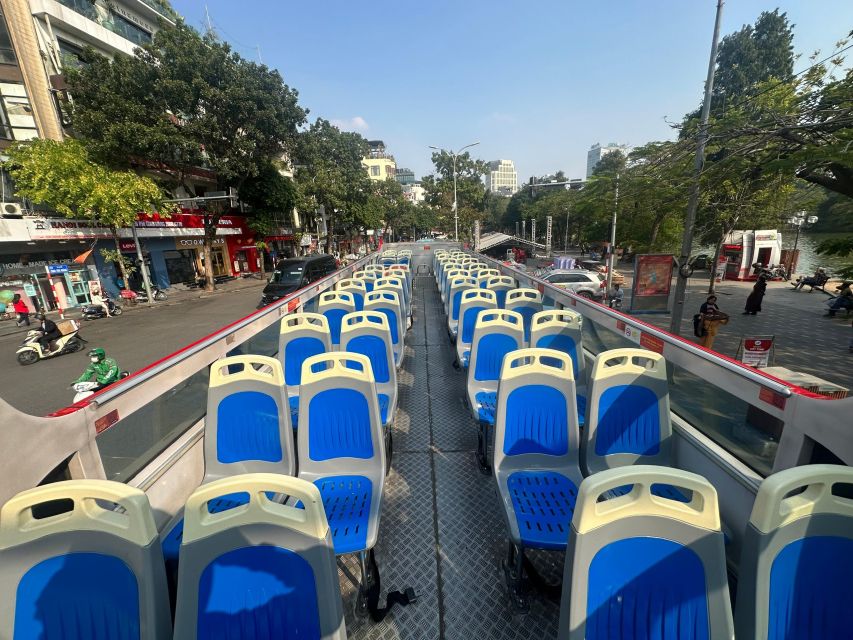
This is an open-top, red double-decker bus with excellent views from the top floor. If you care about photos, sit upstairs when the weather is good and the light looks right.
The tour includes some comfort items that are more useful than they sound:
- Free water
- Conical hat
- Rain coat
- Free Wi‑Fi
That means you can avoid carrying a ton of sun and drizzle gear. It also helps on hot days, because even short breaks between stops feel more bearable.
You’ll also be using a mobile ticket: the info says mobile e-ticket acceptance is supported. When you board, show your ticket or mobile ticket for staff.
One more practical note from the info: the loop lasts about 1 hour, so your best use of time is to hop off intentionally. Don’t treat every stop like a full visit. Pick your top 2–3 and enjoy the rest as guided orientation.
Small rules that keep your day smooth
This bus has a list of things that are not allowed on board. The big ones to know: no pets, no weapons or sharp objects, no drones, no smoking in the vehicle, and no bikes or scooters. There’s also a clear no-food-and-drink vibe listed as drinks in the vehicle not allowed.
If you’re traveling with anything bulky, be ready for the bus to restrict oversize luggage. Keeping your pack small and easy to manage will make boarding quicker.
Who this tour suits best

This tour is a strong match if you:
- Want a fast way to see top sights without juggling taxis
- Like audio explanations as you travel between stops
- Prefer choosing your own time at each place
- Have only a half-day and need a sane plan
It’s also good for rain or heat, since you can stay on board between hops. And the included rain coat and water make it less annoying if weather turns.
If your style is full-on museum immersion with long stays and timed entry plans, a hop-on bus may feel a little light. But if you want a structured introduction plus freedom, it’s an easy win.
Should you book this Hanoi 4-hour hop-on hop-off bus?
I think you should book it if you value efficiency and clarity. For $13, you get a 4-hour sightseeing loop, multi-language audio that helps you understand each stop, and practical extras like water, hat, rain coat, plus free Wi‑Fi. It’s one of the simplest ways to cover major historic and cultural highlights in a limited time.
I’d skip or pair it with something else if you already know you want to spend most of your day in just one or two museums. In that case, you might spend less time riding and more time doing.
If you do book: start early enough to fully use your 4-hour window before 5:00 pm. Then ride the loop once, choose your top 2–3 stops (my usual picks are Tran Quoc Pagoda, Temple of Literature, and one of the history museums like Hoa Lo Prison), and hop with intention.
FAQ
How long is the tour ticket valid?
Your ticket is valid for 4 hours, starting from the time you first activate it.
What hours do the buses run?
The operating schedule is listed as 8:30 am to 5:00 pm daily.
How often do the buses depart?
Buses leave every 30 minutes.
Where do I meet the bus on weekdays versus weekends?
Monday to Friday, the meeting point is near Hoan Kiem Lake (Dong Kinh Nghia Thuc Square, 7 Dinh Tien Hoang). On Saturday and Sunday, the meeting point is Hanoi Opera House.
What stops are included on the route?
The route includes stops such as Hoan Kiem Lake, Saint Joseph Cathedral, Hanoi Flag Pole, Ho Chi Minh Mausoleum, Quan Thanh Temple, Tran Quoc Pagoda, Cua Bac Church, Imperial Citadel of Thang Long, Temple of Literature, Hoa Lo Prison, Vietnam Women’s Museum, Hanoi Opera House, and Hanoi Post Office.
Is an audio guide included, and what languages are available?
Yes. Audio guide is included, with multiple languages offered, including English, French, German, Spanish, Russian, Japanese, Korean, Chinese, and Vietnamese.
Is food included in the price?
No. Food is not included.
Can I hop on and off after 5:00 pm?
No. This is described as a day tour, and after 5:00 pm buses run without stopping, so you can’t hop on and off.