REVIEW · HANOI
Hanoi: 24 Hour Hop on Hop off Bus Tour
Book on GetYourGuide →Operated by ANH VIET HOP ON - HOP OFF VIET NAM · Bookable on GetYourGuide
Hanoi from the open-air bus feels like movie magic. I love the top-deck views and the 8-language audio guide, which makes the big landmarks easier to place fast. You get a flexible full-day city tour rhythm without being locked into one schedule.
The main thing to watch is the timing: after 5pm the buses run without stopping, so you’ll want your key get-off plans done earlier.
In This Review
- Key things to know before you ride
- Entering Hanoi by bus: why this hop-on hop-off tour fits
- Where you catch the bus: Hoan Kiem Lake vs Hanoi Opera House
- Price and what you actually receive for $20
- Riding top deck: using the audio guide like a pro
- Landmark by landmark: what to do at each big stop
- Hoan Kiem Lake: start with the most central scene
- Saint Joseph Cathedral: classic stone church energy
- Hanoi Flag Pole: quick look, then decide
- Ho Chi Minh Mausoleum area: the big political landmark
- Quan Thanh Temple: a quieter spiritual pause
- Tran Quoc Pagoda: a lakeside-feeling landmark
- Cua Bac Church: another architectural contrast
- Imperial Citadel of Thang Long: the historical backbone
- Temple of Literature: when learning history feels practical
- Hoa Lo Prison: heavy subject, powerful context
- Vietnam Women’s Museum: a respectful culture stop
- Hanoi Opera House: the drop-off moment
- Hanoi Post Office: old-world convenience
- How many stops should you actually plan?
- Day-to-night strategy: don’t waste your best get-off time
- Comfort and weather tricks for open-air Hanoi
- Who should book this bus tour?
- Should you book this 24-hour hop-on hop-off bus?
- FAQ
- Where is the meeting point for the tour?
- How long is the ticket valid?
- Can I hop on and off at night?
- What’s included with the ticket besides bus rides?
- What languages are available for the audio guide?
- Is hotel pickup or drop-off included?
- Is food included?
- What should I bring with me?
- Is there Wi‑Fi on the bus?
- Is the bus wheelchair accessible?
Key things to know before you ride
- Open-top Hanoi views: you can see the Old Quarter vibe from the bus and get great outlooks while moving
- 8-language audio guide: English plus French, German, Spanish, Russian, Japanese, Korean, Vietnamese, and Chinese
- 24-hour ticket with day and night coverage: you can keep riding for a full day from first activation
- A landmark route built around major sights: Hoan Kiem Lake, Thang Long Citadel area, Temple of Literature, Hoa Lo Prison, and more
- No-hop after 5pm: plan your museum and photo stops before evening if you want to actually get off
Entering Hanoi by bus: why this hop-on hop-off tour fits

If you’re short on time, this kind of Hanoi sightseeing beats aimless back-and-forth. You start near Hoan Kiem Lake and ride a loop that connects the city’s biggest cultural and historical anchors. The freedom is real: you can stay on the bus for an easy overview, or get off at the stops that match your mood.
I also like that the route focuses on landmarks most first-time visitors want. You’re not just driving through generic streets—you’re moving between recognizable names like Ho Chi Minh Mausoleum, Tran Quoc Pagoda, Temple of Literature, Hoa Lo Prison, and the Hanoi Opera House area. With the audio guide running as you ride, those places make more sense even if you don’t have time for long museum reading sessions.
The vibe is also practical. The bus is open air, so you’re not stuck behind glass, and there’s onboard free Wi‑Fi plus water, a conical hat, and a rain coat.
You can also read our reviews of more tours and experiences in Hanoi.



Where you catch the bus: Hoan Kiem Lake vs Hanoi Opera House
You’ll need to know the start point for your day/time, because it changes.
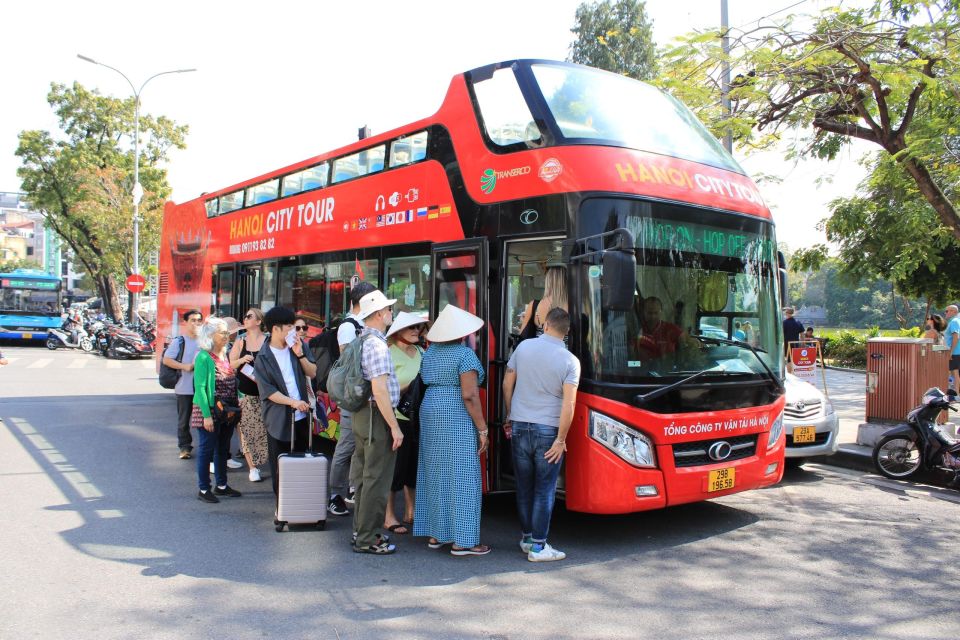
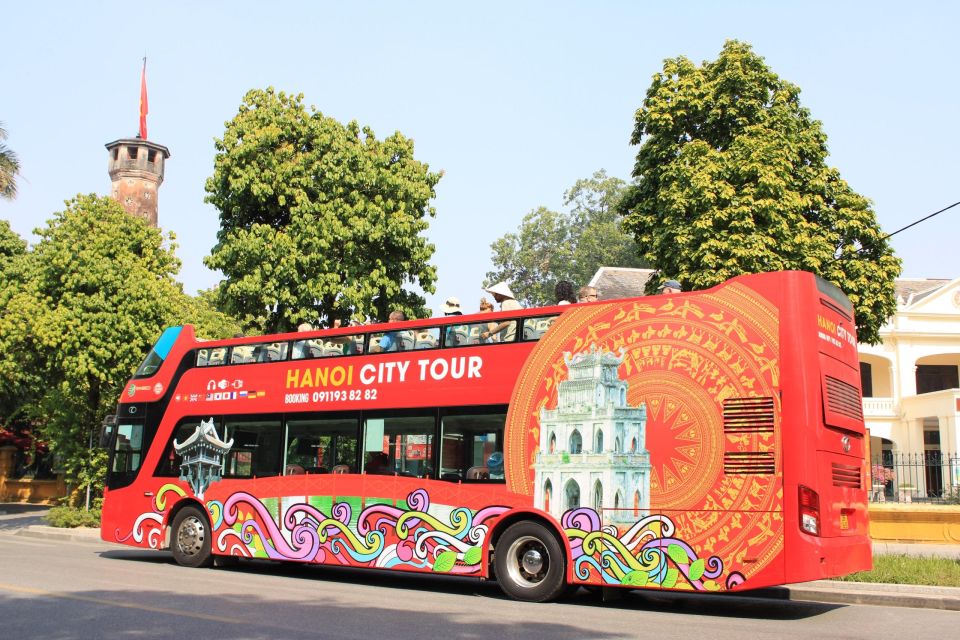
- Mon 8:30 AM to Fri 7:00 PM: start at Hoan Kiem Lake (No 7 Dinh Tien Hoang Str.). Look for the red double-decker Hanoi City tour bus at the ticket booth.
- Fri 7:30 PM to Sun: start at Hanoi Opera House.
The route ends back at the meeting point you started from. That matters for your planning—set yourself up so you’re not far from where you’ll want to finish the evening.
Price and what you actually receive for $20
At $20 per person for a 24-hour ticket, the value comes from two things: time flexibility and built-in extras.
You’re not just buying seats. Your ticket includes:
- city tour bus access valid for 24 hours (day and night)
- city map
- free water, conical hat, and rain coat
- free Wi‑Fi
- mobile e-ticket acceptance and skip-the-ticket-line entry
- audio guide for local landmarks in multiple languages
- insurance on the bus
You do not get hotel pickup or drop-off, and food isn’t included. So think of this as your transportation + orientation tool for a day (and part of the night), then budget meals separately.
If you’d otherwise spend the day hopping by taxi or scooter, this often pencils out. Even if you only get off at a handful of stops, you’re still getting an easy way to connect them in one go—with the bonus of narration while you ride.
Riding top deck: using the audio guide like a pro
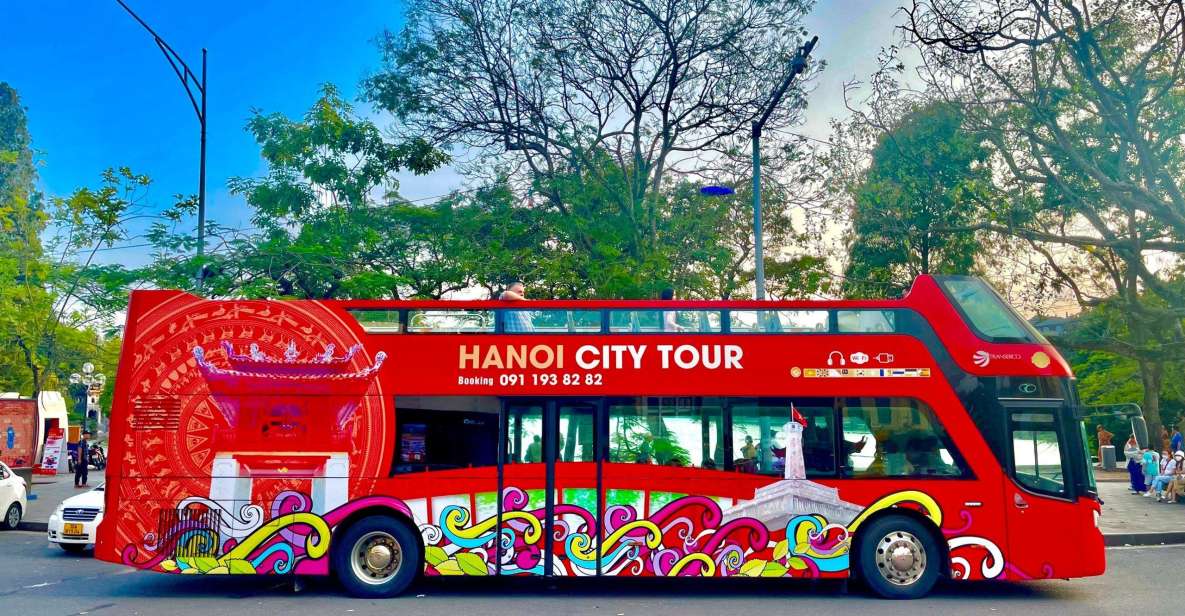
This tour is at its best when you treat it as a rolling “preview.” Stay on the bus for a segment when you want context, then get off for the places you care about most.
Here’s a practical approach you can use:
- Put the audio on as soon as you board so the first big sights start clicking in your head.
- Use the city map to spot where each stop fits into your day. The map helps you avoid the classic mistake of getting off, walking the wrong direction, and losing time.
- If rain hits, use the provided rain coat. Hanoi weather can change quickly, and having the gear on hand is a real comfort perk for an open-air bus.
The audio languages listed include: Chinese, English, French, German, Japanese, Korean, Spanish, Russian, Vietnamese. That’s a lot of coverage, so most people should find a language they can follow without struggling.
Landmark by landmark: what to do at each big stop
The route connects a set of major names—some colonial-era, some revolutionary, some classic temple and literature history. Below is how I’d think about each stop so you can choose what’s worth your time.






Hoan Kiem Lake: start with the most central scene
You begin at Hoan Kiem Lake, which is a smart choice. It’s a convenient hub and an easy place to orient yourself. Before you ride, take a few minutes to look around so you understand where the lake sits relative to the rest of the tour.
If you get off here later, it’s also a good anchor point for photos and atmosphere without needing a long museum commitment.
Saint Joseph Cathedral: classic stone church energy
One of the stops on the route is Saint Joseph Cathedral. This is a solid get-off if you like recognizable architecture and want a visual break from purely memorial or temple sites. Even if you keep it short, it’s a good contrast stop.
Hanoi Flag Pole: quick look, then decide
The Hanoi Flag Pole stop works best as a “see it, then move” moment. If that’s not your priority, you don’t need to linger. Use it as a visual marker while the audio guide explains what you’re seeing.
Ho Chi Minh Mausoleum area: the big political landmark
Ho Chi Minh Mausoleum is one of the headline stops. Even if you only spend a short time here, it helps to have the audio playing so the site has context.
Practical tip: treat this as a time-sensitive stop. If you want photos and a careful look, plan to arrive earlier in the day when it’s easier to move around.
Quan Thanh Temple: a quieter spiritual pause
Quan Thanh Temple gives you a different tone than the heavy political history. It’s a chance to slow down and connect with the religious side of Hanoi.
If your day is feeling rushed, this is a stop where a brief visit can still feel meaningful.
Tran Quoc Pagoda: a lakeside-feeling landmark
Tran Quoc Pagoda stands out because it’s a well-known spiritual site tied to the broader Hanoi waterfront scenery. This is a good place to take a bit longer, especially if you want to combine temple viewing with calm walking.
Because it’s a major name, having the audio guide helps you understand why it’s important without having to hunt for information on the spot.
Cua Bac Church: another architectural contrast
Cua Bac Church is your second big church stop on the tour. If you like architecture or want variety in what you see, this is a good switch-up from temples and memorial areas.
Imperial Citadel of Thang Long: the historical backbone
The route includes the Imperial Citadel of Thang Long area. This is where you start to feel the layered history of Hanoi—more than one “era story,” all stacked in one place.
If you enjoy history but don’t want to spend hours reading, this stop pairs nicely with the audio guide. Get off, orient yourself, then decide if you want more time on the ground.
Temple of Literature: when learning history feels practical
The Temple of Literature is another anchor point on the list. I like placing this stop mid-day, when you’re mentally ready to switch from sightseeing photos to cultural context.
Even a short visit is useful because it’s a famous symbol of education and scholarly tradition in Vietnam. Use the audio to get the big picture, then focus on what grabs your attention on-site.
Hoa Lo Prison: heavy subject, powerful context
Hoa Lo Prison is a major stop, and it’s not a light topic. It can be emotionally intense, so plan your timing thoughtfully.
If you’re taking a break from serious sites, you can keep your visit shorter. If you want to understand it well, use the audio guide while you ride so you arrive with the background that helps the experience make sense.
Vietnam Women’s Museum: a respectful culture stop
The Vietnam Women’s Museum gives you a different kind of history lens. It’s a strong option when you want cultural context beyond politics and architecture.
If your schedule is tight, you can do it fast. If you have time, it’s worth giving yourself enough space to actually read and absorb.
Hanoi Opera House: the drop-off moment
The tour includes Hanoi Opera House, and it’s also listed as a key get-off point. If you want a memorable finish to your day portion of sightseeing, this is a great area.
The starting/route timing also ties here on weekends (Fri-Sun starts at the Opera House), so it’s a convenient reference point no matter what day you ride.
Hanoi Post Office: old-world convenience
The Hanoi Post Office is one of the best stops for classic Hanoi vibes. It’s the kind of place where you can enjoy the atmosphere without needing a long timeline. Also, it fits perfectly with a photo break between heavier sites.
How many stops should you actually plan?
The tour includes a lineup of major landmarks, and you can hop on and off where you want. My suggestion: pick 5–7 stops you truly care about and treat the rest as bonuses you might catch if the timing works. Hanoi traffic and moving through crowded areas can eat time, so having a small plan keeps the day fun instead of stressful.
Day-to-night strategy: don’t waste your best get-off time
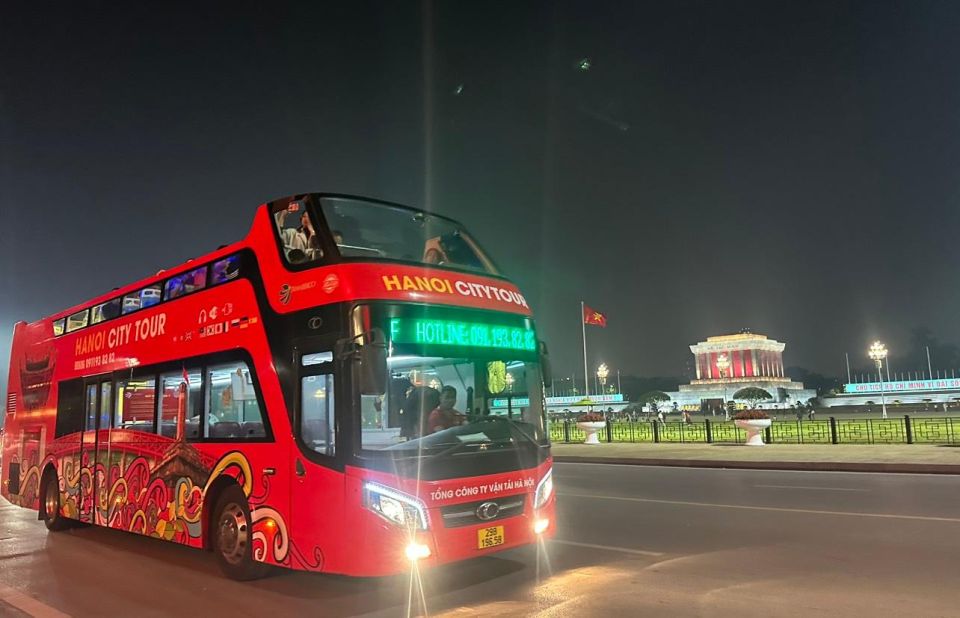
Here’s the key schedule detail: even though your ticket is valid for 24 hours and includes day and night tour riding, after 5pm the buses run without stopping. That changes how you should plan.
So do this:
- Plan your museum visits and any stop where you’ll want to walk around before 5pm.
- Use the evening riding as a scenic wrap-up. You can still stay on the bus for the night views, but you won’t be hopping off to explore new stops after that cutoff.
This rule is the difference between a tour that feels flexible and one that feels annoying. The good news: if you plan around it, you still get a long window of sightseeing.
Comfort and weather tricks for open-air Hanoi

Open-air is part of the fun, but Hanoi weather can be a plot twist. The operator provides:
- conical hat
- rain coat
- free water (refill-friendly setup)
You should also bring a reusable bottle. The tour notes that they supply a water container to cut plastic waste, and they provide paper cups. That makes it easy to refill without buying water every time you’re thirsty.
One more practical note: the bus route and schedule can shift due to traffic, public holidays, weather, or unforeseen circumstances. The service aims for smooth operation, but build in a little buffer so you don’t feel rushed if something changes.
Who should book this bus tour?

This is a great fit if you want:
- a first-time orientation to Hanoi without locking into a full guided walking tour
- flexibility to choose the stops that match your energy level
- a low-effort way to see major landmarks in one day
- audio narration in your language, including Chinese and several other options
- open-air city views with a simple hop-on hop-off structure
It may be less ideal if you expect lots of off-bus exploration late in the evening, because of the after-5pm no-stopping rule. It also may not feel right if you prefer slow, neighborhood-by-neighborhood walking days.
Should you book this 24-hour hop-on hop-off bus?
Yes, I’d book it if your goal is to connect Hanoi’s top sights with minimal hassle. The price is reasonable for what you get: 24-hour access, audio guide across many languages, free water and practical weather gear, and onboard Wi‑Fi.
But be smart with your timing. Treat the afternoon as your exploration window, do your walking stops before 5pm, and use the evening for a ride-and-recover plan. If you match your day to that rhythm, this tour is one of the simplest ways to see a lot of Hanoi without turning your trip into a constant scramble.
FAQ
Where is the meeting point for the tour?
From 8:30 AM Monday to 7:00 PM Friday, the start is at Hoan Kiem Lake, No 7 Dinh Tien Hoang Str. From 7:30 PM Friday to Sunday, the start is at Hanoi Opera House.
How long is the ticket valid?
Your ticket is valid for 1 day, starting from first activation. It includes day and night tour riding.
Can I hop on and off at night?
You can ride for the day and night portions, but after 5pm the buses run without stopping, so you cannot hop on and off after that time.
What’s included with the ticket besides bus rides?
Included items are a city map, free water, conical hat, rain coat, free Wi‑Fi, mobile e-ticket acceptance, audio guide, and insurance on the bus.
What languages are available for the audio guide?
The audio guide is available in Chinese, English, French, German, Japanese, Korean, Spanish, Russian, and Vietnamese.
Is hotel pickup or drop-off included?
No. Hotel pickup and drop-off are not included.
Is food included?
No. Food is not included.
What should I bring with me?
Bring a reusable water bottle. The tour provides water refills using a supplied water container, and paper cups are available.
Is there Wi‑Fi on the bus?
Yes, free Wi‑Fi is included.
Is the bus wheelchair accessible?
Yes, the activity is wheelchair accessible.