REVIEW · HANOI
Hai Phong City Historical and Food Tour
Book on Viator →Operated by SONDAX TRAVEL · Bookable on Viator
Hai Phong by train feels like a story you can taste. This is a long day trip from Hanoi that strings together old landmarks and very specific local snacks—so you’re not just sightseeing. You’ll also get the practical parts handled: pickup, a guided flow, and lunch included.
Two things I really like about it are the step-by-step food stops (not random bites) and the pairing of street food with meaningful places like Du Hang Pagoda and Hai Phong’s historic station. One thing to consider is the schedule is packed—about 13 hours total—so if you want lots of free time to wander on your own, this may feel tight.
In This Review
- Quick reasons this day tour is a good deal
- Why this Hai Phong train-and-food day works
- Pickup from Hanoi Opera House and the Long Biên start
- Train ride storytelling: what the guide adds on the way to Hai Phong
- Crab soup lunch on Cầu Đất: fueling up the right way
- Du Hằng Pagoda: one hour that adds meaning fast
- Bánh Mỳ Que Cột Đèn and Tam Bạc Lake’s fermented pork rolls
- Hai Phong landmarks: Opera House, Le Chân statue, and the railway vibe
- Sat or Cát Bi Market and Bánh Đa Cua: the day’s food peak
- Heading back: Ga Hải Phòng station and the Hanoi arrival
- Price and logistics: what $69 buys you
- Who should book this Hai Phong tour?
- What to watch for: weather, pacing, and food choices
- Should you book it?
- FAQ
- How long is the Hai Phong City Historical and Food Tour?
- Where do I meet the tour in Hanoi?
- Is hotel pickup included?
- What does the tour include for meals and fees?
- What food stops should I expect?
- Which market does the tour visit?
- How do I get to Hai Phong?
- What’s the cancellation rule if plans change?
Quick reasons this day tour is a good deal

- Train time with context: you’re not stuck staring out the window; the guide uses the ride to explain the culture and the city.
- Lunch plus classic Hai Phong dishes: crab soup and other local favorites are built into the day.
- Pagoda visit included: you get a deeper cultural stop, not just food on the move.
- Market choice: Sat or Cát Bi: you’ll see how locals shop and eat, with the guide helping you order and understand what you’re seeing.
- Major sights on one loop: Opera House, the Le Chân statue, and the railway station get worked into the route.
Why this Hai Phong train-and-food day works
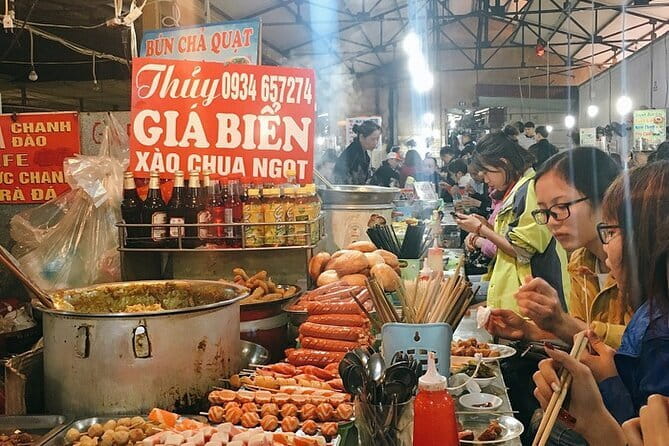
This tour is built around a simple idea: get you to Hai Phong in comfort, then show you the city through food you can name and places you can point to on a map. A lot of food tours end up being random. Here, the day is organized so you try signature items like crab soup and Bánh Đa Cua, then connect them to the city that made them.
The other smart move is pacing. You start with the train, then move into Hai Phong with lunch, then a mix of religion, snacks, lakeside food, and big public sights. That balance matters. You get texture (markets), meaning (pagoda), and visuals (opera and station), without spending the entire day in one single area.
If you’re going to Hai Phong for the first time, this is a strong “orientation day.” You’ll leave with a clearer sense of where things are and what Hai Phong does well.
You can also read our reviews of more food & drink experiences in Hanoi


Pickup from Hanoi Opera House and the Long Biên start
The day begins at the Hanoi Opera House meeting point (1 Tràng Tiền, Hoàn Kiếm area). That matters because it’s easy to use as a reference point, and you don’t have to figure out train logistics on your own.
From there, you head to Long Biên station to depart for Hai Phong by train. The tour duration counts travel time, and the train leg is about two hours outbound. You’re also doing a door-to-station style transfer, which saves time versus trying to navigate it solo.
Practical tip: wear shoes you don’t mind walking in. Even when you’re not covering huge distances, the day includes several short strolls and market segments where you’ll want solid footing.
Train ride storytelling: what the guide adds on the way to Hai Phong

The train portion is more than just transit. In a past group, the experience stood out because the guide used the ride to share context about Vietnamese people and culture. If you get a guide like Geni, expect the story-telling to continue while you roll toward Hai Phong.
This is one of the quiet advantages of a structured day trip. You get “destination information” during the journey, so when you arrive, the places start to make sense faster. You also get a smoother rhythm: you’re not arriving and immediately trying to interpret everything on your own.
If you’re the type who likes learning while traveling—history, daily life, why certain foods matter—this part will feel like the warm-up to the rest of the day.
Crab soup lunch on Cầu Đất: fueling up the right way

Lunch happens in Hai Phong at 195 Cầu Đất, centered on a Hai Phong specialty: crab soup. This is a key stop, because it’s the meal that sets your expectations for the flavors you’ll keep seeing later.
A good practical choice here is to come hungry. Between the train ride and the next snack stops, you’ll want your lunch to be satisfying, but not so heavy that it makes the rest uncomfortable. The tour is designed so you’re eating in order—one signature item leading to the next.
Also, having lunch organized for you is real value. With a day trip this long, hunting for the right place can easily turn into time loss or awkward decision-making when you’re tired.
Du Hằng Pagoda: one hour that adds meaning fast

Next up is Du Hằng Pagoda, described as one of the oldest pagodas in Hai Phong. You get around an hour here, which is a good length for a first visit: enough time to see the main areas and learn what makes the place culturally significant, without turning it into an endless stop.
This is where the tour avoids a common pitfall: being only about food. The pagoda gives you a sense of continuity—how the city’s spiritual and community life shapes its identity over time. Even if you’re not a hardcore temple-goer, this stop tends to give a useful frame for the rest of the day.
Wear something comfortable. Pagoda visits often involve respectful movement and walking, and you’ll likely spend some time looking around.
A few more Hanoi tours and experiences worth a look


Bánh Mỳ Que Cột Đèn and Tam Bạc Lake’s fermented pork rolls

After the pagoda, the tour switches to snacks, and it does it in a very Hai Phong way.
First is Bánh Mỳ Que Cột Đèn, a famous breadstick-style snack associated with Hai Phong. You’ll get about 20 minutes for this bite, so it’s quick—think of it as a taste marker. If you like snacking, this short stop is perfect.
Then you move to Tam Bạc Lake, where you try Vietnamese fermented pork rolls. This is another classic flavor profile for Hai Phong. The hour here is long enough for you to walk near the lake and eat without feeling rushed the moment the food hits the table.
Two practical notes:
- If fermented foods are not your thing, tell your guide early so they can guide your choices without making you feel awkward.
- If you’re sensitive to smells, eat at your own pace and take short pauses when needed. Lakeside air can help.
Hai Phong landmarks: Opera House, Le Chân statue, and the railway vibe

Later, you’ll see several of Hai Phong’s major points of interest during a couple of hours. This portion focuses on public architecture and city identity, including the Hai Phong Opera House, the statue of female general Lê Chân, and the train station area.
This is valuable even if you’re not an architecture person. These spots help you understand why the city feels the way it does: built form, public space, and how Hai Phong presents itself. The train station also connects directly to the theme of your day—rail travel isn’t just how you get there, it’s part of the story.
If you want photos, you’ll get them here. Just don’t expect every stop to be long. This is a “see it, get the context, move on” style segment.
Sat or Cát Bi Market and Bánh Đa Cua: the day’s food peak

Now comes one of the most memorable parts: Sat or Cát Bi Market. You’ll spend about three hours here, and the point isn’t just to look. The guide helps you engage with vendors and understand what you’re seeing, which turns the market from a photo stop into an actual food lesson.
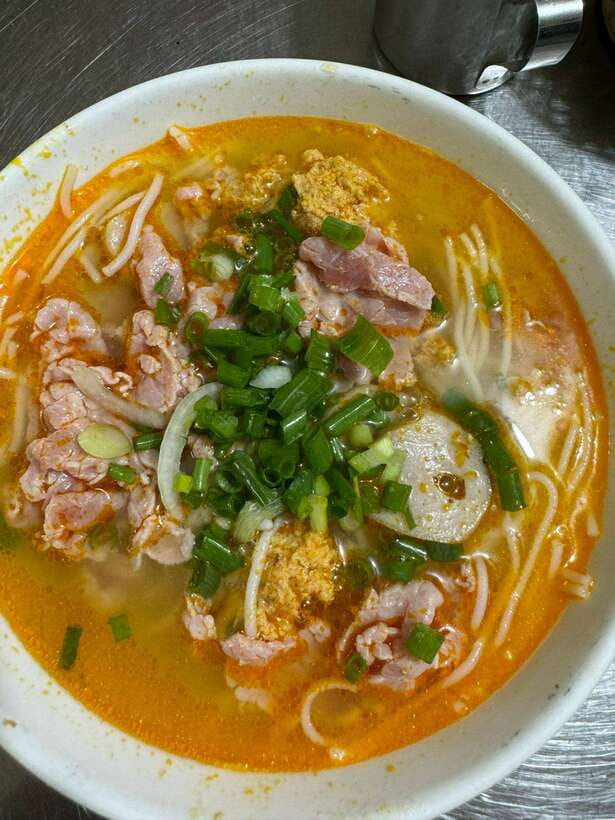
In the middle of this, you’ll also try Bánh Đa Cua—a crab noodle soup style dish associated with Hai Phong. It’s a strong “final evolution” of the day’s crab theme. You started with crab soup at lunch, and here you get the city’s other crab-based signature in a different format.
Market food is where having a guide pays off. Even if you’ve eaten street food before, markets can be noisy and confusing when you don’t know what’s popular, what’s fresh, and what you can safely order. You’ll spend more time eating and learning, less time guessing.
Practical tip: bring small bills or be ready for whatever payment method your guide uses during the meal service (the tour includes fees and taxes, but markets can still involve extra purchases if you want them).
Heading back: Ga Hải Phòng station and the Hanoi arrival
After the market, you’ll head to Ga Hải Phòng Railway Station. This stop is short—about 30 minutes—but it’s timed well so you can board with minimal stress.
Then it’s back by train to Hanoi, with the return listed at about 2.5 hours. The day ends back at the meeting point area in Hanoi, after you arrive at Hanoi station and wrap up.
If you get motion sickness on trains, consider bringing your usual remedy. This isn’t a short bus ride where you can stretch your legs often, and the day’s total travel time adds up.
Price and logistics: what $69 buys you
At $69 per person, the big value isn’t only that you’re paying for a tour. It’s what’s included: lunch, all fees and taxes, guided stops, and air-conditioned vehicle support for transfers. The itinerary is designed so your time doesn’t get eaten up by figuring out entrances, meal spots, and how long each segment should take.
You’re also getting a structured private experience—your group only—so you’re less likely to get lost in a crowd when you want to ask questions about food or locations.
That said, this is a long day. If you’re the type who likes slow mornings and long pauses, you might feel like you’re always moving from one highlight to the next. I’d call it best for people who enjoy “packed but not chaotic” travel: enough structure to make sense, enough stops to feel like a real day out.
Who should book this Hai Phong tour?
This tour is a good match if:
- You want a one-day introduction to Hai Phong without handling transport and meal planning.
- You like food that has clear local identity—crab dishes and snack stops with names you’ll remember.
- You enjoy history stops that don’t require hours of museum time, like Du Hằng Pagoda.
- You want someone to explain what you’re seeing while you walk and eat.
It may be less ideal if you:
- Hate early starts or long transit days.
- Prefer lots of independent time after each stop.
- Have strong restrictions around fermented foods or want to avoid any crab-based dishes.
What to watch for: weather, pacing, and food choices
A key line in the tour details is that this experience requires good weather. If conditions aren’t right, the tour may be offered on a different date or refunded. For a market-and-walk day, weather changes comfort fast.
Pacing is another consideration. Even though each stop is relatively short, you’ll be on your feet more than you might expect: train day, pagoda walk, snack breaks, lakeside time, market time, station, and the return ride.
Finally, food. The day includes crab soup and Bánh Đa Cua, plus fermented pork rolls. If you’re unsure about fermented flavors, it’s worth telling your guide early so your experience stays enjoyable.
Should you book it?
I think you should book this tour if you want an organized, food-forward day trip that still includes meaningful places like Du Hằng Pagoda and Hai Phong’s historic public landmarks. The value comes from the combination: train logistics handled + lunch + named local dishes + guided context.
Skip it if you want a slow travel day, or if crab and fermented items don’t sound good to you. Otherwise, this is the kind of day that makes Hai Phong feel understandable, not just photographed.
FAQ
How long is the Hai Phong City Historical and Food Tour?
The total duration is about 13 hours, including travel time.
Where do I meet the tour in Hanoi?
The tour starts at Hanoi Opera House, 1 Tràng Tiền, Phan Chu Trinh, Hoàn Kiếm, Hà Nội, Vietnam.
Is hotel pickup included?
Pickup is offered, including pickup at your hotel in the Hanoi Old Quarter.
What does the tour include for meals and fees?
Lunch is included, along with all fees and taxes. The tour also includes guided tours and entrance fees as part of the experience.
What food stops should I expect?
You’ll have crab soup for lunch, and you’ll also try Hai Phong specialties such as Bánh Mỳ Que Cột Đèn, fermented pork rolls near Tam Bạc Lake, and Bánh Đa Cua at the market.
Which market does the tour visit?
The tour visits Sat or Cát Bi Market (Chợ Sắt or Chợ Cát Bi).
How do I get to Hai Phong?
You travel from Hanoi to Hai Phong by train, and you return to Hanoi by train as well.
What’s the cancellation rule if plans change?
You can cancel for a full refund up to 24 hours before the experience starts. If you cancel less than 24 hours before, the amount paid isn’t refunded.