REVIEW · HANOI
Full-Day Hop On Hop Off Bus Tour in Hanoi
Book on Viator →Operated by ANH VIET HOP ON - HOP OFF VIET NAM · Bookable on Viator
A great bus day in Hanoi starts with timing. This full-day hop-on hop-off loop is a practical way to string together major landmarks in one go, with English audio, an air-conditioned ride, and multiple stops where you can get off (and come back later). I like the format for travelers who want flexibility, plus the way the route mixes big-ticket history with quieter temples. The main thing to watch is that several major sights require extra admission fees, and the schedule can shift with traffic and conditions.
This tour also gives you tools to handle Hanoi weather. You get a city map, Wi‑Fi on board, and even a conical hat and rain coat, plus bottled water with a plan to reduce plastic waste. Still, double-check that your bus stop is the right one, because bus timing and stop handling can be inconsistent on busy days.
In This Review
- Key points to know before you ride
- Price and value: $20 covers transport, not all tickets
- Your day plan: how to use hop-on hop-off without losing time
- Stop-by-stop route: what you’ll get from each major landmark
- 1) Dong King Nghia Thuc Square (meeting point) and the ticket handoff
- 2) St. Joseph Cathedral: a free French-era landmark
- 3) Vietnam Military History Museum and the Flag Tower area
- 4) Ho Chi Minh’s Mausoleum: the political heart of the city
- 5) One Pillar Pagoda: iconic shape, free entry
- 6) Tran Quoc Pagoda: ancient age on the water side
- 7) Cua Bac Church: part of the cathedral trio
- 8) Quan Thanh Temple: Taoist protection in the four-directions plan
- 9) Imperial Citadel of Thang Long: layers under your feet
- 10) Temple of Literature & National University (Van Mieu): learning made physical
- 11) Hoa Lo Prison: from French rule to the Hanoi Hilton era
- 12) Vietnamese Women’s Museum: social change through everyday material
- 13) Hanoi Opera House: French colonial performance architecture
- 14) Hanoi Post Office near the lake: a neoclassical icon
- What’s included on board (and why it matters in Hanoi)
- Audio, timing, and route changes: the real-world tradeoffs
- Who this tour fits best
- Should you book this Hanoi hop-on hop-off bus?
- FAQ
- Where does the tour start?
- Is the tour audio available in English?
- Are there free attractions on the route?
- Do I need to pay extra for the major sites?
- What’s included with the bus ticket?
- Is hotel pickup included?
Key points to know before you ride

- English audio helps you move fast between cultural sights without needing a guide for every stop
- A/C + Wi‑Fi + rain gear means fewer “why did I wear this” moments in Hanoi
- Free-entry highlights include St. Joseph Cathedral and One Pillar Pagoda
- Bring cash/VND for add-on tickets at places like the Mausoleum, Thang Long Citadel, Hoa Lo Prison, and the Women’s Museum
- Expect route tweaks on weekends, and plan a little buffer for traffic
Price and value: $20 covers transport, not all tickets

This is a straightforward pay-for-mobility deal. For about $20 per person, you’re buying one full day (approx.) of hop-on hop-off bus access across central Hanoi, with an English audio experience and onboard comfort perks.
What’s included matters because it reduces your daily friction:
- Air-conditioned vehicle (important in Hanoi heat and humidity)
- Wi‑Fi on board
- Insurance for passengers on the bus
- Conical hat and rain coat
- City map
- Bottled water, with the operator also supplying a 20-liter water container and paper cups so you can refill your reusable bottle
Then there’s the part you must budget separately: entrance fees. The tour does not include admission for several stops, including:
- Ho Chi Minh’s Mausoleum
- Flag Tower area
- Tran Quoc Pagoda
- Quan Thanh Temple
- Imperial Citadel of Thang Long
- Temple of Literature & National University
- Hoa Lo Prison
- Vietnamese Women’s Museum
So the best value play is to treat the bus ticket as your transportation backbone, and plan your day around which paid sights you really want to do in-person. If you’re aiming to see most of the major attractions listed, your total day cost will rise quickly—but you’ll be covering a lot of ground without constant taxi rides.
A few more Hanoi tours and experiences worth a look
- Ninh Binh Full-Day Tour from Hanoi to Hoa Lu, Tam Coc & Mua Cave Via Boat & Bike
★ 5.0 · 4,384 reviews



Your day plan: how to use hop-on hop-off without losing time
Hop-on hop-off works best when you plan it like a route, not like a casual stroll. You’ll get the most from this tour if you:
- Start early at the meeting point (ticket box at the first stop)
- Pick 2–4 “must-do” sights and accept that the rest are “see it and decide”
- Use your waiting time smartly (stay near the stop, not across the street)
The meeting point and ticket box are at Dong King Nghia Thuc Square – No 7 Dinh Tien Hoang (Stop 1). From there, you’ll move across the city core, hitting major landmarks in a loop.
A practical caution: the operator notes the route and schedule can change due to traffic, public holidays, weather, or unforeseen circumstances. That’s normal for Hanoi. The trick is to build in buffer time, especially if your paid attraction has a specific opening window.
Stop-by-stop route: what you’ll get from each major landmark
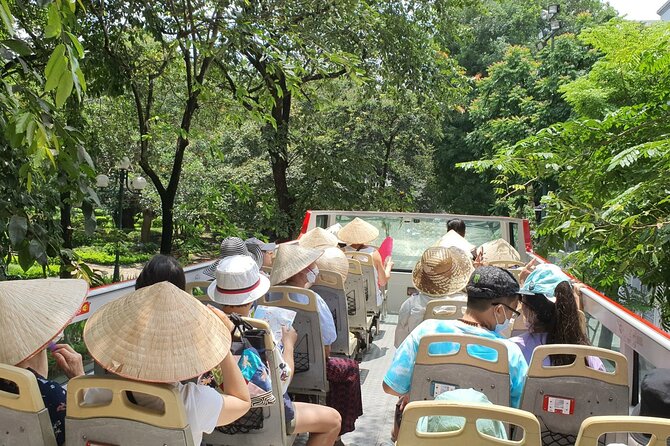
This bus day is built around Hanoi’s “layers”: French-era structures, revolutionary sites, imperial-era remnants, classic pagodas, and modern museums. Here’s what each stop offers—and what to think about when you get off.
1) Dong King Nghia Thuc Square (meeting point) and the ticket handoff
You’ll begin at 7 P. Đinh Tiên Hoàng with the ticket box in Dong King Nghia Thuc Square. This is where the day can go smoothly—or where you should allow extra minutes if you’re checking in during a busy period.
One useful mindset: keep your phone ready for your mobile ticket, and be patient if staff need time to verify bookings carefully. It’s not the type of thing you want to rush.
2) St. Joseph Cathedral: a free French-era landmark
At St. Joseph Cathedral, you’re looking at a building tied to French colonial history. It was built in 1884, opened in December 1886, and is described as the oldest church in Hanoi. The architecture echoes Notre Dame de Paris in style.
The big win here is practical: no entrance fee. That makes it an easy stop for photos and atmosphere, without worrying about timing or ticket lines. It’s also a good “breather” after getting oriented at the start of the route.




3) Vietnam Military History Museum and the Flag Tower area
Next up is the Vietnam Military History Museum area, with a focus on the Flag Tower of Hanoi—an unusually preserved architectural work linked to the Hanoi Citadel complex.
The Flag Tower’s survival is part of the story: it was spared from destruction by French domination administration in the late 1800s (as noted in the tour information). Even if you don’t go inside every museum space, this stop is a quick way to connect Hanoi’s defenses to its later political and military narratives.
4) Ho Chi Minh’s Mausoleum: the political heart of the city
This is a major stop at Ba Dinh Square, with Ho Chi Minh’s Mausoleum described as his resting place. The site is also tied to the Declaration of Independence on 2 September 1945 (as noted in the tour info).
Important money note: the tour does not include the Ho Chi Minh Mausoleum fee (listed as 25,000 VND). If you plan to go in, be prepared to pay at the site.
Also, allow extra time. This is the kind of stop where delays—traffic, crowds, or bus handling—can shrink your time budget. If you’re trying to do multiple paid sights today, keep your plan flexible.
5) One Pillar Pagoda: iconic shape, free entry
One Pillar Pagoda is one of Hanoi’s most recognizable temples. The structure is famously described as a building on a single pillar, first built in 1049 and perfected in 1105 after additions.
Good news for your itinerary math: no entrance fee. That makes it a strong “drop-in” stop even if you don’t want to spend hours. It’s also one of the best places to pause and notice how old design ideas survive through centuries of change.
6) Tran Quoc Pagoda: ancient age on the water side
Tran Quoc Pagoda is noted as the oldest pagoda in Hanoi, originally constructed in the sixth century. The tour information places it during the reign of Emperor Ly Nam De (from 544 to 548), which puts its age at over 1,500 years.
This one costs a bit extra today: Chua Tran Quoc fee is listed as 5,000 VND. If you want an easy cultural stop and don’t mind a small admission, this is worth it. If you’re trying to keep your spending tight, treat it as a photo stop and decide on entry once you see the flow of crowds.
7) Cua Bac Church: part of the cathedral trio
The bus also stops near Cua Bac Church, built in 1932 by the French administration as part of an urban plan supervised by Ernest Hébrard (as described in the tour information). It’s grouped with Ham Long Church and Saint Joseph Cathedral as one of Hanoi’s three major churches.
The value here is quick context. You’re not just hopping from one landmark to another—you’re seeing how Hanoi’s French-era planning left architectural fingerprints across different religious sites.
8) Quan Thanh Temple: Taoist protection in the four-directions plan
Quan Thanh Temple is dedicated to Tran Vu, a Taoism deity of the North, with serpent and turtle symbolism tied to power (as stated in the description). The temple was established under Emperor Ly Thai To (1010–1028) and is part of a four-direction protective temple concept meant to guard the capital from malevolent spirits.
There’s an extra admission cost: Quan Thanh Temple fee is listed as 10,000 VND. If you’re someone who likes symbolism and belief systems, this is a rewarding stop. If you’re more “see it, move on,” you can still appreciate the setting without lingering for long.
9) Imperial Citadel of Thang Long: layers under your feet
The Imperial Citadel of Thang Long is described as an 11th-century construction linked to the Ly Dynasty, built on remains of an earlier Chinese fortress (dating back to the 7th century), with land reclaimed from the Red River Delta in the Hanoi area.
This stop is for people who like the feeling of continuity—how one era builds on another. But there’s a fee: Imperial Citadel of Thang Long is listed at 30,000 VND. Plan your time at this one carefully. If you only have 20–30 minutes, you might not get the full sense of the site.
10) Temple of Literature & National University (Van Mieu): learning made physical
Van Mieu is dedicated to Confucius and also hosted the Imperial Academy, described as Vietnam’s first national university. The temple was built in 1070 under Emperor Ly Thanh Tong.
This is the cultural stop that makes Hanoi feel academic as well as political. The fee is listed at 30,000 VND for Temple of Literature & National University. If you want to do it properly, give it enough time to walk through at an unhurried pace. If you’re racing, aim for the key structures and signage first.
11) Hoa Lo Prison: from French rule to the Hanoi Hilton era
Hoa Lo Prison has a complicated past. The tour info explains it was originally used by French colonists for political prisoners and later by North Vietnam for U.S. POWs, becoming known to American POWs as the Hanoi Hilton.
There’s a fee here too: Hoa Lo Prison is listed at 30,000 VND, and the tour notes that the prison was demolished in the 1990s while the gatehouse remains as a museum.
This is heavy subject matter, so pace yourself. If your day is getting too full, it’s okay to do just the gatehouse and key exhibits rather than rushing every room.
12) Vietnamese Women’s Museum: social change through everyday material
The Vietnamese Women’s Museum opened to the public in 1995 and is run by the Vietnam Women’s Union. The tour info highlights a collection of more than 40,000 materials and artifacts, plus themed exhibitions using a social anthropology approach, focusing on changes in contemporary society and on vulnerable groups.
The admission fee is listed at 40,000 VND. For many visitors, this stop is the most “human scale” moment of the day because it shifts focus from monuments to people.
13) Hanoi Opera House: French colonial performance architecture
The Hanoi Opera House (also called the Grand Opera House) was erected by the French colonial administration between 1901 and 1911. The tour info also notes French built other opera houses in Indochina, including Haiphong and a municipal theatre in Ho Chi Minh City.
This is a great stop for architecture lovers or anyone who wants a different type of Hanoi scene—one that feels designed for public gatherings and ceremonies.
14) Hanoi Post Office near the lake: a neoclassical icon
The final listed landmark is the Hanoi Post Office (at 75 P. Đinh Tiên Hoàng), described as more than 100 years old. It’s presented as the capital’s symbol, designed by Henri Vildieu from 1894 to 1899 in a neoclassical style, with the familiar name Post office by the lake.
Even if you don’t buy anything, it’s a strong end-stop. You’ve seen a full arc of Hanoi—from revolutionary politics to imperial education to daily civic life.
What’s included on board (and why it matters in Hanoi)
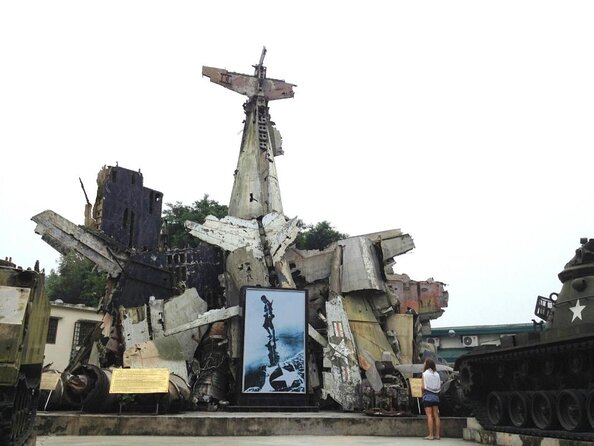
This tour isn’t just about getting from A to B. It’s built around keeping you comfortable on a long city day.
On the bus, you can expect:
- Wi‑Fi, which is handy for checking your next stop and map landmarks
- Air-conditioning, which becomes more important the longer you’re out
- Insurance for passengers on the bus
- Conical hat and rain coat, which is practical rather than cute
- Water designed to be more sustainable: bring your own reusable bottle and refill from the operator’s large container
One little tip: keep your reusable bottle accessible. When you do refills, you’ll save time compared with hunting for shops later.
Audio, timing, and route changes: the real-world tradeoffs
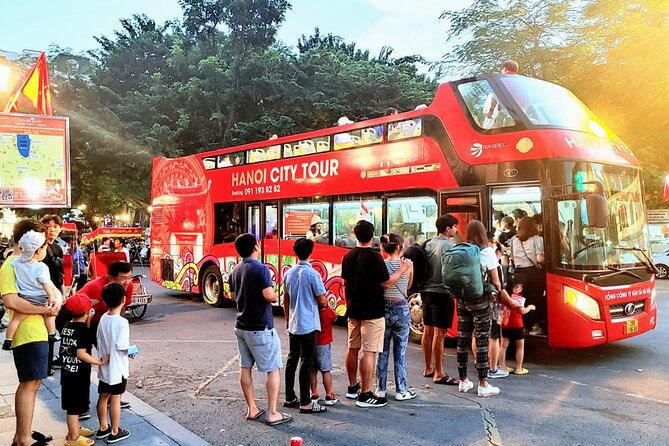
This kind of bus works best when you treat it like a helpful tool, not like a rigid timetable.
The tour information says the schedule and route can change quickly due to:
- traffic issues
- public holidays
- weather conditions
- unforeseen circumstances
That lines up with real travel logic. Hanoi roads can turn into bottlenecks. So I recommend you:
- don’t stack too many paid admissions back-to-back
- allow extra time for the most central or crowded stops like the mausoleum area
- keep an eye on your exact stop name before you hop off
There have also been occasional complaints about audio sync and bus issues (like cleanliness or working audio). That’s not something you can fully predict. The best defense is to be flexible: if one bus’s audio is off, you can still enjoy the physical landmarks and simply follow your map while you ride.
On weekends, there can be slight route changes, so don’t be surprised if your stops feel a bit different.
Who this tour fits best
This hop-on hop-off format is ideal if you:
- want a big overview without booking separate guided tours for every site
- are short on time and want to hit many categories in one day (cathedral, pagodas, imperial sites, museums)
- like choosing what to spend time on rather than following a strict script
- prefer a comfortable ride with water and rain gear included
It may be less ideal if you:
- are very time-sensitive and hate schedule uncertainty
- plan to do every paid attraction inside the day window
- need everything to run perfectly on time, stop-by-stop
Should you book this Hanoi hop-on hop-off bus?

If your goal is to get your bearings fast and see the major landmarks that define Hanoi, I think this is a solid value. For a single day ticket, you get comfortable transport, English audio, and enough stops to build a memorable route with minimal planning stress. The free entry at St. Joseph Cathedral and One Pillar Pagoda helps a lot, too.
Book it if you’re smart about planning: choose your paid “must-dos,” keep buffer time for traffic, and use the map to confirm your stop. Skip or consider a different option if you want a highly controlled, clock-perfect schedule or if you dislike paying multiple separate site fees.
In short: this bus is best as your backbone for a first or second day in Hanoi—when you want coverage, flexibility, and a day that feels like it’s moving even when Hanoi traffic tries to slow everything down.
FAQ
Where does the tour start?
The meeting point and ticket box are at Dong King Nghia Thuc Square – No 7 Dinh Tien Hoang in Hanoi.
Is the tour audio available in English?
Yes. The tour is offered in English and uses a mobile ticket system.
Are there free attractions on the route?
Yes. St. Joseph Cathedral has no entrance fee, and One Pillar Pagoda also has no entrance fee.
Do I need to pay extra for the major sites?
Yes. Several stops list entrance fees that are not included, including the Ho Chi Minh Mausoleum, Hoa Lo Prison, Imperial Citadel of Thang Long, Temple of Literature & National University, Quan Thanh Temple, Vietnamese Women’s Museum, and Tran Quoc Pagoda.
What’s included with the bus ticket?
You get air-conditioned transport, Wi‑Fi on board, insurance for passengers on the bus, a city map, conical hat and rain coat, and bottled water. The operator also provides a large water container for refills.
Is hotel pickup included?
No. The tour does not include hotel pickup and drop-off (and it also does not include airport pickup/drop-off).

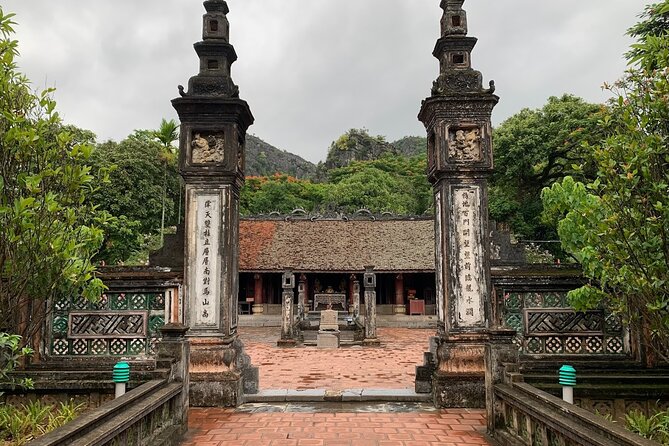

More Full-Day in Hanoi
- Ninh Binh Full-Day Tour from Hanoi to Hoa Lu, Tam Coc & Mua Cave Via Boat & Bike
★ 5.0 · 4,384 reviews