REVIEW · HANOI
Full-day Guided Meditation Experience in Ha Noi
Book on Viator →Operated by The Bodhi Journey · Bookable on Viator
A quiet pagoda can change your pace fast. This full-day guided meditation experience in Hanoi pairs calm instruction with real practice, so you spend more time learning how to live with Buddhist teachings than simply watching a show. You’ll also get a hands-on spiritual routine that includes focused sitting, loving-kindness-style rituals, and light qigong movement.
What I like most is the way the guide turns big ideas into something you can actually try during the day, not just admire from afar. I also like that the setting stays grounded in temple life, with time to walk the grounds and hear explanations about the pagoda’s history and architecture before you settle in for meditation.
One thing to consider: at $85 for about eight hours, it can feel pricey if you’re expecting a simple sightseeing-style tour with lots of free time. And because the focus is spiritual practice, it’s not the best fit for you if you want only casual, secular activities.
In This Review
- Key highlights worth your attention
- Your morning starts at a Hanoi pagoda, not a hotel lobby
- The pagoda walk: history, architecture, and getting your bearings
- Main hall teachings: Buddha’s life and doctrines you can apply
- The meditation method: guided instruction plus real practice time
- Loving-kindness and compassion rituals: training your attitude
- Qigong movements: meditation plus gentle body work
- The fun parts: fish releasing and exercise-style meditation
- Food, timing, and how to plan your breaks
- Price and value: where $85 makes sense and where it might not
- Practical etiquette and mindset tips (so you get the most)
- Who should book this Hanoi meditation experience
- Should you book it? My practical take
- FAQ
- What time does the guided meditation experience start?
- How long is the full-day meditation session?
- Where do I meet the guide in Hanoi?
- How much does it cost, and is a mobile ticket included?
- What is included in the price, and what about meals?
- Is there free cancellation?
Key highlights worth your attention
- Licensed, English-friendly teaching: Guides like Naya, Hung, and Hieu are repeatedly praised for patience and clear explanations.
- Pagoda orientation first: You start with a guided walk, then move into the main hall to learn Buddha’s life and core doctrines.
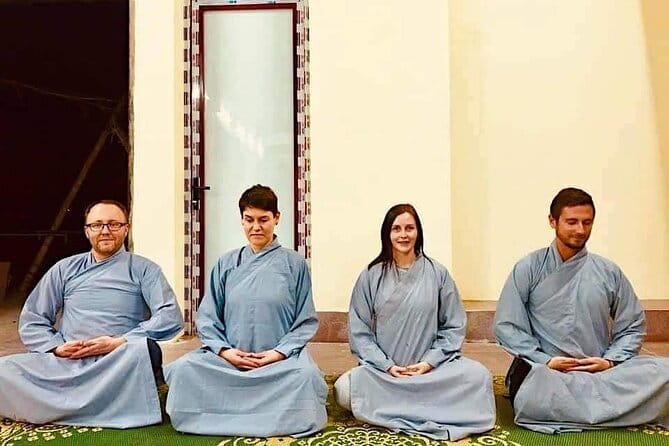
- Meditation you practice, not just hear about: You get the method, then time to sit and focus your mind.
- Loving-kindness and compassion rituals: The day is built around attitudes you can repeat in your own life.
- Qigong movement included: Light exercise supports mental and physical well-being alongside meditation.
- Day-to-day group size can vary: You might get a more intimate experience on quieter days, which makes questions easier.
Your morning starts at a Hanoi pagoda, not a hotel lobby
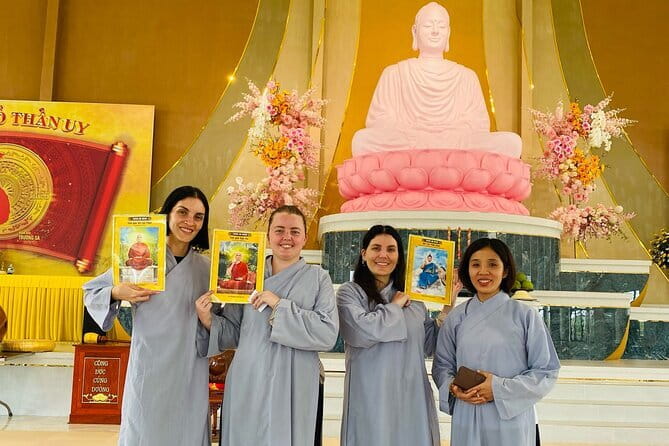
This is an eight-hour experience that begins at 8:00am and ends back near the start point. The meeting place is Ngõ 68 Phố Quan Nhân, Trung Hòa, Cầu Giấy, Hanoi. It’s not “downtown tourism,” and that’s part of the appeal. You’ll arrive at the pagoda, meet your guide, and then get oriented right away.
You should plan on a structured day, not a flexible wander session. Even if you’re someone who likes to roam, the flow here is deliberate: temple introductions first, then lessons, then guided meditation, then rituals and movement. If you like clear pacing and want your mind to slow down on purpose, you’ll probably appreciate that.
The day is also designed for most people to participate, so you don’t need to be experienced with meditation beforehand. That said, meditation can be physically and mentally challenging for some. If you’re recovering from injury, have serious mobility limitations, or get anxious sitting quietly for long stretches, you’ll want to pace yourself and be honest with your guide early.
You can also read our reviews of more guided tours in Hanoi



The pagoda walk: history, architecture, and getting your bearings
Before sitting meditation begins, your guide meets you and gives a quick introduction to how the day will unfold. Then you’ll walk around the pagoda to learn about its history and architecture. This matters more than it sounds.
When you understand what you’re looking at—where people gather, what the main spaces are for, and how the site is meant to support practice—you naturally engage more during the later teaching. It also helps you respect temple etiquette without guessing. In a place of worship, that respectful “first contact” sets the tone for everything that follows.
This is where you’ll also start feeling the difference between a meditation workshop and a quick spiritual stop. The guide doesn’t rush you. The best-rated parts of the day center on patient explanations, especially for beginners.
Main hall teachings: Buddha’s life and doctrines you can apply
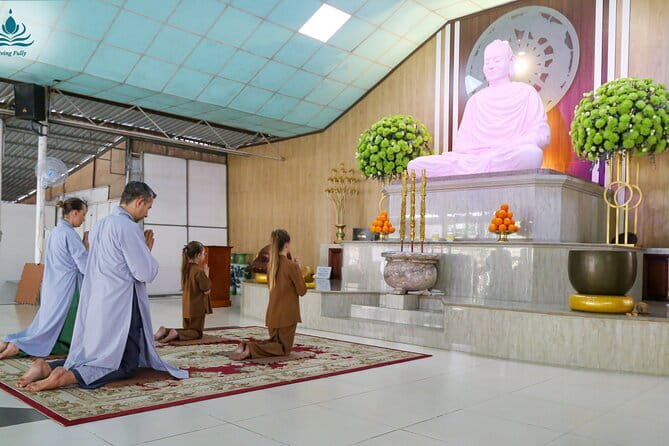
After the grounds tour, you head into the main hall. This is where you learn about the life of Buddha and the Buddhist doctrines, with the emphasis on how these lessons connect to daily living.
I like this approach because it keeps the day from turning into only posture and breathing. The point isn’t just to feel calm for an hour. It’s to understand why compassion and gratitude show up in Buddhist practice and how they can be trained.
Your guide will explain teachings that you can apply to your own life. That’s a big claim, but the structure here supports it: you learn a concept, then you later practice meditation based on Buddha’s teachings, then you take part in rituals tied to loving-kindness and compassion. It’s one reason people describe the day as peaceful and informative, not vague or abstract.
If you’re at a crossroads, dealing with stress, or just trying to make sense of spirituality in a practical way, this “teach-then-practice” rhythm can feel like it gives you handles for real life.
The meditation method: guided instruction plus real practice time

Here’s the core of the experience: you’ll hear the meditation method based on Buddha’s teachings, and then you’ll practice. The day is built around guided sessions and then time to sit and focus your mind in tranquility.
The practical win is that you’re not left on your own after one quick explanation. You get instruction, then time to try. That helps especially if you’re new to meditation and worried you’ll do it wrong.
From what you can expect, meditation isn’t presented as a mystical one-off event. Your guide explains how peace of mind achieved through meditation matters more than worldly treasures. It’s spiritual language, but the intent is plain: your attention and mental habits are trainable.
Also, the guides for this experience get strong marks for answering questions. Names that come up often include Naya, Hung, and Hieu—people who are described as friendly, patient, and thoughtful when responding, even when questions pile up.
Loving-kindness and compassion rituals: training your attitude
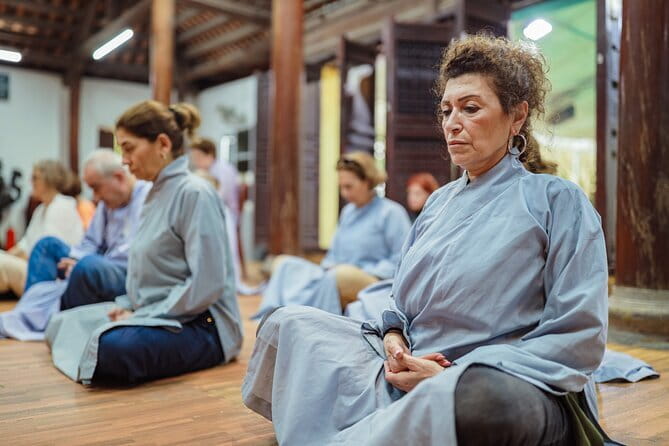
After you’ve had a chance to sit, the day shifts toward cultivating loving-kindness and compassion through rituals. This part is significant, because it moves the goal from personal calm to how you treat yourself and others.
In practice, loving-kindness work tends to feel different from just “relaxing.” It nudges you to generate care intentionally, even if you’re tired or distracted. If your mental state has been rough—burnout, grief, or stress—this kind of training can feel grounding.
The experience also mentions practicing rituals tied to gratitude, loving-kindness, and compassion. That trio matters. Gratitude can soften resentment, loving-kindness reduces harsh self-talk, and compassion expands your sense of connection. Even if you don’t fully believe the framework yet, repeating a compassion-focused ritual during a quiet day can leave you with something tangible you can carry home.
A few more Hanoi tours and experiences worth a look
- Ninh Binh Full-Day Tour from Hanoi to Hoa Lu, Tam Coc & Mua Cave Via Boat & Bike
★ 5.0 · 4,384 reviews




Qigong movements: meditation plus gentle body work

The schedule doesn’t stop at sitting. You’ll also do qigong movements to enhance health alongside meditation.
I like that this is included because it’s a built-in “reset” for your body. Meditation can be heavy when your mind feels alert but your body feels stuck. Gentle movement helps your breathing and can make the day feel less like nonstop stillness.
Qigong also gives you a pathway to continue after you leave. Even if you forget the exact steps, you may remember the idea: mental training and body awareness support each other.
The fun parts: fish releasing and exercise-style meditation

Not every moment is purely silent. Some participants mention additional activities such as fish releasing and exercise-style meditation. Those bits can make the day feel more alive and less like a lecture.
If you prefer structured calm with no surprises, keep in mind the day can include multiple activities. If you like a balanced mix of seriousness and light practicality, these moments may be a welcome change of pace.
Food, timing, and how to plan your breaks
The experience runs about eight hours. Lunch and dinner are not listed as included, so you should plan to eat on your own unless your booking confirmation states otherwise.
In real life, a long spiritual day can make food feel awkward if you’re not ready. You might find that you don’t want to eat too much right before meditation. So I’d suggest you plan simple, light meals around the day’s timing, and bring water if that’s allowed where you’re practicing.
One useful way to think about this day: it’s not only about time spent inside the temple. It’s about training your attention across the full day. That means your energy and stomach matter too.
Price and value: where $85 makes sense and where it might not
The price is $85.00 per person for roughly eight hours. Parking fees and a licensed guide are included, and you’ll use a mobile ticket.
Is it worth it? For the right person, it can be. You’re paying for:
- Temple-based teaching that starts with context (pagoda orientation),
- Guided meditation instruction plus practice time,
- A spiritual framework (loving-kindness/compassion rituals),
- Qigong movement,
- And a guide who can answer questions in a calm, patient way.
The main drawback is straightforward: it can feel overpriced if you’re expecting a casual cultural tour. One comment specifically calls it overpriced, and another “relaxed feel” shows that the day can still feel gentle. The takeaway for you is to set expectations: this is a meditation-and-Buddhism day, not a sightseeing-only package.
Also, the group size cap is up to 100. In practice, your group size can still affect how interactive it feels. On quieter days, it can become more intimate and question-friendly, which makes the guide’s quality more valuable.
Practical etiquette and mindset tips (so you get the most)
I’d treat this like a real temple day, not just an activity. That means:
- Dress modestly and comfortably for long hours (temple spaces often require more conservative clothing).
- Keep your phone use minimal where you’re practicing.
- Be ready to sit and focus, even if you’re not good at silence yet.
If you’re new to meditation, your mindset should be simple: show up, try the method you’re given, and ask questions. Many people find the teachings click because the guide explains them clearly and then lets you practice immediately.
And if you’re coming with big life stress—burnout, grief, confusion—this day can serve as a reset point. Not a magic fix. More like a way to slow your mind down enough to choose your next step.
Who should book this Hanoi meditation experience
This experience fits best if you want:
- A guided day grounded in Buddhist teachings, not just a generic mindfulness talk
- A mix of learning, sitting meditation, rituals, and gentle movement
- Clear instruction from a patient guide who answers questions
It’s also a great choice if you’re spiritually curious but want structure. The day’s flow gives you context first, then practice, then attitudes like compassion and gratitude.
If you’re the kind of person who gets restless during quiet sessions, this may feel like too much stillness. Consider whether an eight-hour spiritual practice day matches your energy right now.
Should you book it? My practical take
If you’re in Hanoi and you want one day that genuinely slows your mind and gives you something repeatable, I think you should strongly consider booking. The strongest parts are the teaching clarity and the way the guide supports practice—especially with guides like Naya, Hung, and Hieu showing up in positive experiences for patience and thoughtful answers.
But book with realistic expectations: this is for people who are okay with a structured, spiritual day where meditation is central. If your idea of a great day is mostly walking streets, hopping cafes, and spontaneous sightseeing, you might feel impatient.
One more smart move: decide what you want most—information, practice, or a reset. This experience gives you all three, but it won’t feel good if you only wanted casual culture.
FAQ
What time does the guided meditation experience start?
The experience starts at 8:00am.
How long is the full-day meditation session?
It lasts about 8 hours.
Where do I meet the guide in Hanoi?
The meeting point is Ngõ 68 Phố Quan Nhân, Trung Hoà, Cầu Giấy, Hà Nội, Vietnam.
How much does it cost, and is a mobile ticket included?
The price is $85.00 per person, and the tour uses a mobile ticket.
What is included in the price, and what about meals?
The price includes parking fees and a licensed guide. Lunch and dinner are not included.
Is there free cancellation?
Yes. You can cancel for a full refund if you cancel at least 24 hours before the experience starts.

More Full-Day in Hanoi
- Ninh Binh Full-Day Tour from Hanoi to Hoa Lu, Tam Coc & Mua Cave Via Boat & Bike
★ 5.0 · 4,384 reviews