REVIEW · QUANG PHU CAU
Explore Hanoi Incense Village Tour & Traditional Crafts
Book on GetYourGuide →Operated by Hanoi Explore Travel · Bookable on GetYourGuide
You get more than souvenirs here. This tour pulls you into Vietnam’s incense and conical hat crafts, plus a real look at how people work day to day. I love that it mixes hands-on moments with factory-scale production, and I like that you get a guide who keeps the story clear and organized. The one thing to consider is that the schedule includes shopping stops, so if you hate markets, manage your expectations.
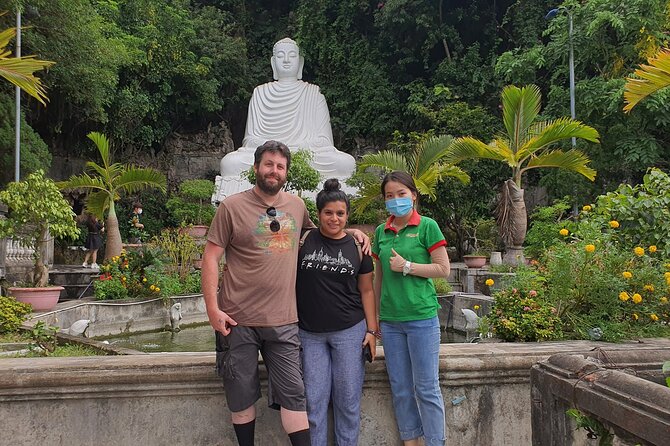
A big plus is the human side. On my trips with Hanoi Explore Travel, English guides like Rachel and Russel kept everyone together, explained the steps well, and made it easy to ask questions. You’re also not stuck in a huge crowd; the tour runs as a small group, which makes workshops feel more like a visit than a production line.
In This Review
- Quick hits before you go
- Where this tour really takes you: Thanh Oai’s craft culture
- Half-day vs full-day: choosing the right amount of craft
- Quang Phu Cau Incense Village: color, craft, and a real factory tour
- Chuong Village and nón lá: the 300-year conical hat story
- Ha Thai Village lacquer work (full day): meeting an artisan at his space
- Lunch with a host artisan: why the meal is a highlight
- The optional Hanoi Train Street stop: plan your timing, not your panic
- Price and value: what $32 gets you, and why it’s fair
- Getting to the pick-up point on time: Old Quarter matters
- Who should book this tour (and who might not)
- Should you book the Hanoi Incense Village and Traditional Crafts tour?
- FAQ
- How long is the tour?
- How much does it cost?
- Where is the pickup point in Hanoi?
- What’s included in the tour price?
- Do I have lunch on this tour?
- Is the Train Street stop required?
- What’s not included if I want to paint or buy things?
Quick hits before you go
- Quang Phu Cau incense craft: Watch how incense is made in stages, from small-scale work to a major factory.
- Chuong Village conical hats: Learn the 300-year-old process behind the classic nón lá.
- Hands-on moments (full day): You can paint your own hat, plus meet artisans at work.
- Home-cooked lunch (full day): Eat countryside-style food prepared by your host.
- Optional Train Street stop: You can jump off or just relax on the bus.
Where this tour really takes you: Thanh Oai’s craft culture
This isn’t just a drive past pretty scenery. It’s a day built around specific villages tied to specific trades: incense in Quang Phu Cau, conical hats in Chuong Village, and lacquer work in Ha Thai Village for the full day option. The value for you is simple: you see how skills get passed down, not just the finished products sitting on a counter.
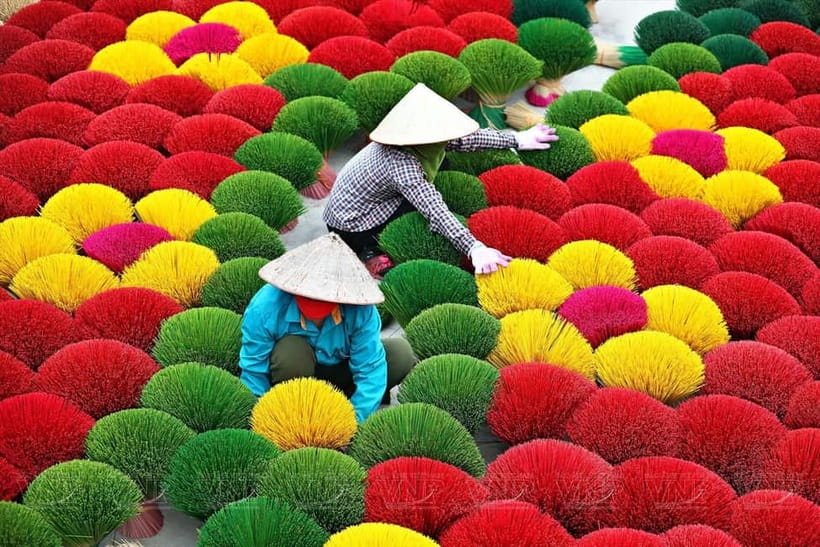
In practical terms, you’ll spend the time where the work happens—workshops, family spaces, and production areas. That’s what turns “culture” into something you can point to: the dye yard where color gets set, the steps inside an incense factory, and the conical hat process that’s been around for centuries.
The ride from Hanoi is also part of the appeal. You leave the Old Quarter feel behind and trade it for rural rhythms—less Instagram framing, more daily life. If you’re in Hanoi for a few days and want something that feels different from museums and temples, this is a strong choice.
You can also read our reviews of more tours and experiences in Quang Phu Cau.

Half-day vs full-day: choosing the right amount of craft
You’ll basically choose between two time blocks, each with a slightly different feel.
The half-day version is focused and efficient. You get Chuong Village plus Quang Phu Cau incense, with a more relaxed pace and an earlier return to the Old Quarter. It’s perfect if you want the “big two” crafts without committing to a full day in the countryside.
The full-day plan adds more variety. You’ll include Ha Thai Village lacquer work and then still fit in Chuong Village and Quang Phu Cau. It also builds in a home-hosted experience: you eat lunch with a female artisan at her home, and you may have the option to try a small cooking class. There’s also a creative component where you can paint your own nón lá.
One trade-off: the full day runs longer and includes more stops. If you’re sensitive to time in vehicles or you prefer fewer transitions, the half-day option is usually the calmer fit.
Quang Phu Cau Incense Village: color, craft, and a real factory tour
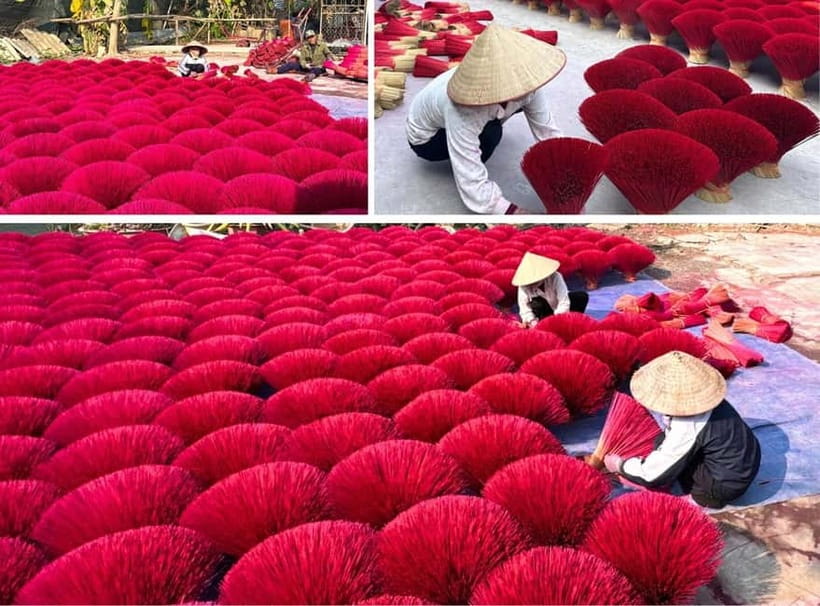
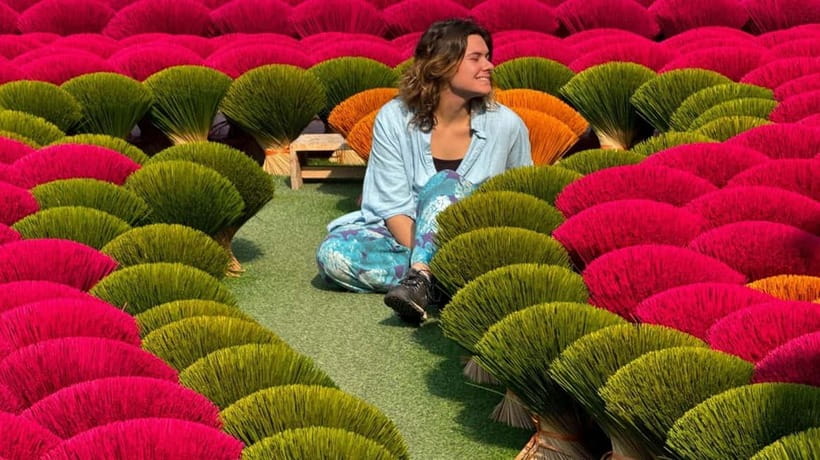
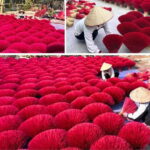
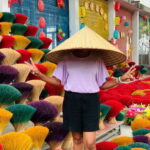
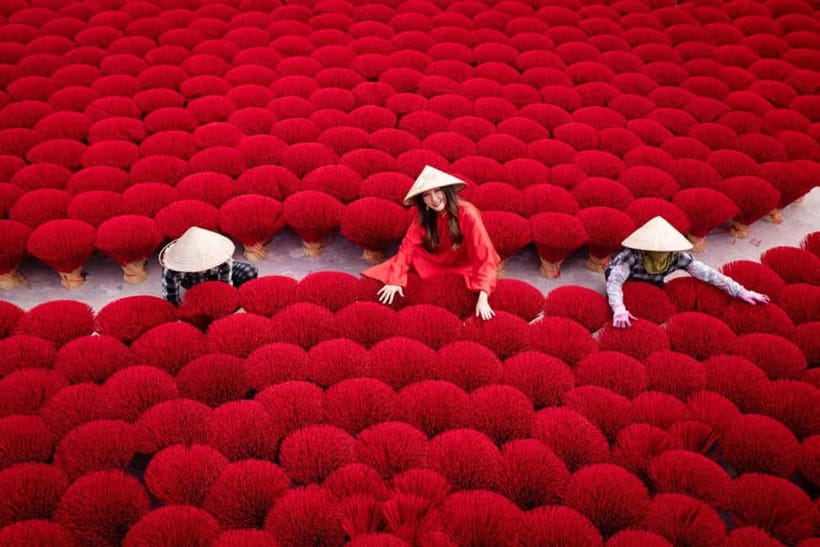
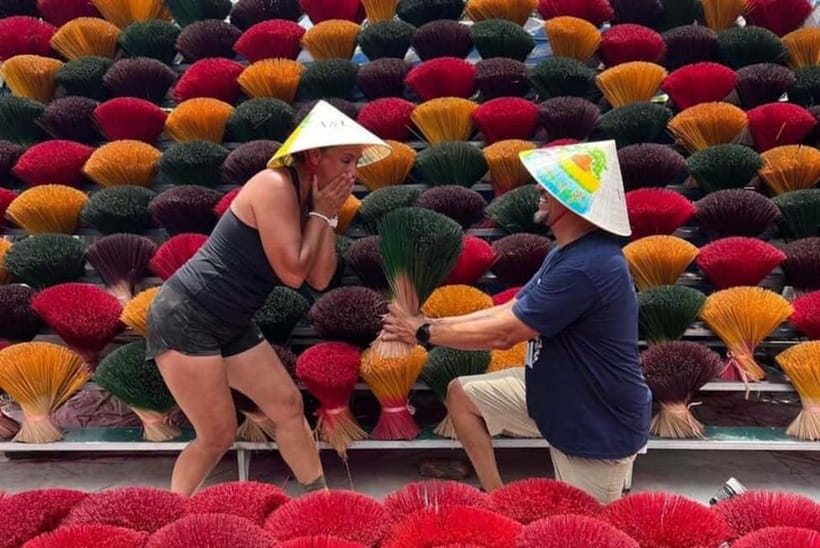
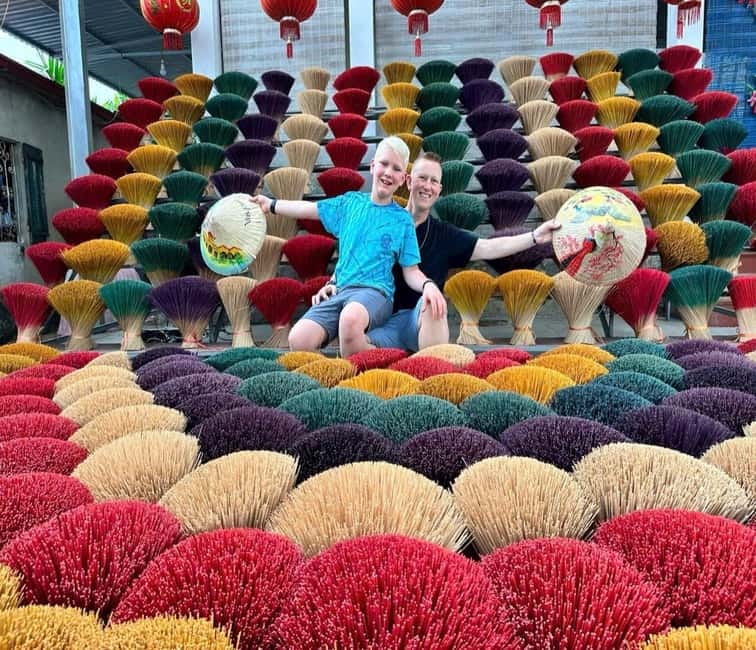
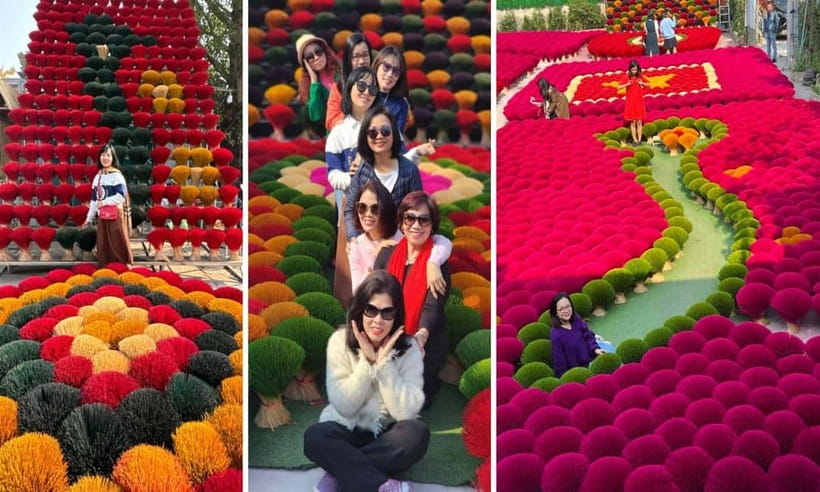
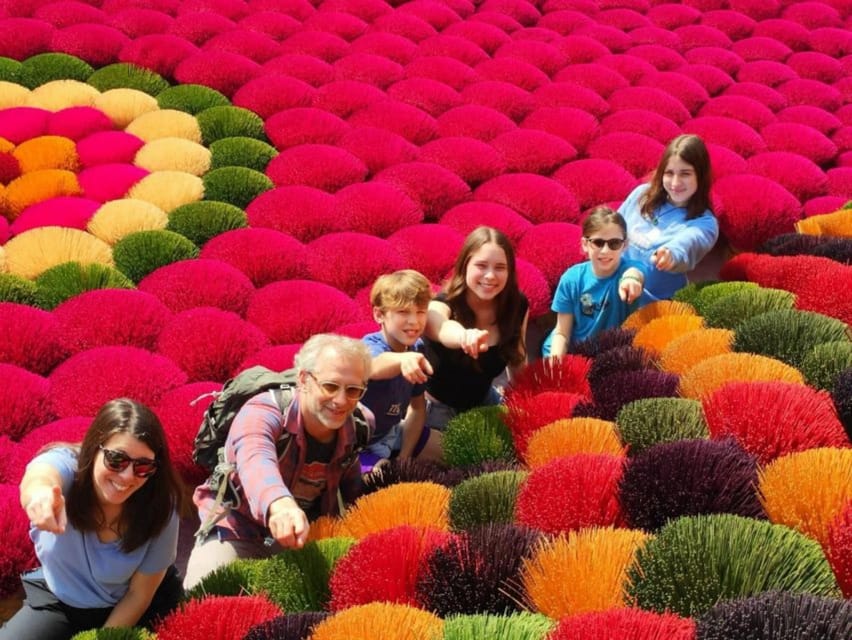
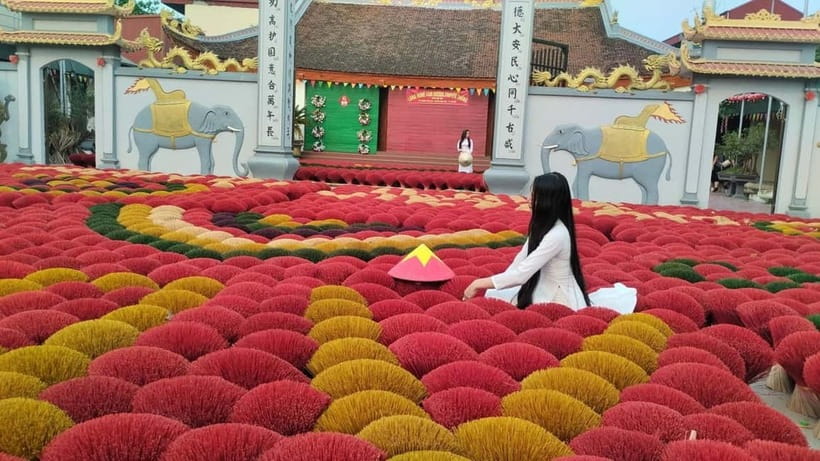
Quang Phu Cau is all about incense, and the tour structure helps you understand why. You start with the village center feel, where you can wander and see how families work on a smaller scale. Then you get a more specific workshop look at dyeing incense sticks—this is where you’ll notice those bright bundles of color up close, and you’ll have time to take photos.
After the smaller-scale views, you’ll move into something bigger: a tour at the town’s largest incense factory. This is one of the most practical parts of the day, because it explains how incense goes from raw materials to finished bundles. You also get insight into the daily lives of rural workers, not just the “wow” factor of production.
Value-wise, the factory stop matters. Watching a craft at household scale is one thing. Seeing it organized at factory scale tells you what keeps the incense trade going—how much coordination is required and how consistent production happens.
If you’re buying souvenirs, this is also where it makes sense to shop. You can pick up incense products right where they’re made, which usually means you’re not paying for the story twice—once in transportation and again in markup.
Chuong Village and nón lá: the 300-year conical hat story
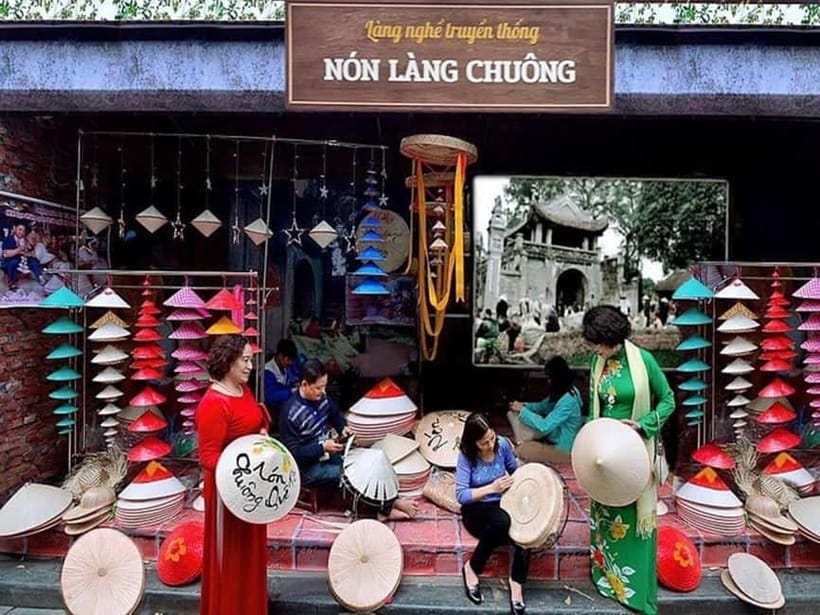
Chuong Village is where you’ll get the classic Vietnamese conical hat in context. The visit focuses on the traditional process, and you’ll meet a local artisan to observe how nón lá are crafted. The tour frames it as a practice that’s been carried for over 300 years, which helps you see the hat as more than a souvenir item.
You’ll also get a guided walk through the village area where artisans talk about their daily work. In the full-day option, you might hear stories connected to Vietnam War experiences from an older veteran, though those visits are subject to availability. That kind of personal history tends to land differently than dates on a plaque. You get a human viewpoint that connects craft and community.
For you, the key benefit is learning the “how,” not only the “what.” When you understand the steps and the tools involved, you can shop more intelligently later. You’ll notice differences in how hats look and feel, and you’ll know what questions to ask.
In the full-day tour, you even get a creative payoff: you may paint your own nón lá. And importantly, you get one conical hat per person included. (If you plan to paint, note that the lacquer piece specifically for painting is not included—so budget for that if you want to participate.)
Ha Thai Village lacquer work (full day): meeting an artisan at his space
For the full-day travelers, Ha Thai Village adds texture to the day. Instead of another factory-heavy stop, you spend time with a lacquer painting artisan in his creative space. This is a chance to see a different kind of craft process—one that’s closer to design and skill-building than quick production.
The tour doesn’t just show finished lacquer items. It gives you a meeting point with an artisan so you can ask questions about how his work is done. You’ll also get the feeling of how creative labor lives inside a village setting—work happening in an actual studio environment, not an exhibition room.
This stop is also where the day starts to feel more personal. You’re not only learning about trades; you’re meeting people who keep those trades going.
Lunch with a host artisan: why the meal is a highlight
The home-cooked lunch is one of the smartest inclusions in the full-day option. You join a female artisan in her home, and the food is prepared for you in that real household setting. This matters because meals in craft villages tend to reflect what’s practical for daily life—fresh, comforting, and tied to local routines.
If you want to go further, there’s also an option to join a small cooking class. The tour language says you can participate if desired, so you’ll want to be ready to say yes on the day if it’s offered. Even without cooking, the meal helps you slow down and reset between craft visits.
For value, this is doing double duty. It’s included in the price, and it saves you from hunting for food on your own during a countryside day. In a longer itinerary, that can be the difference between a fun day and an exhausting one.
The optional Hanoi Train Street stop: plan your timing, not your panic
The half-day and full-day versions both include a final return to the Old Quarter area, but the half-day option adds an optional stop at Train Street. The tour notes that you can handle it in two ways: you can visit Train Street, or you can relax on the bus while others go.
This is a practical choice for you. If you want photos, you’ll likely enjoy the stop. If you don’t care about that specific scene, skipping it keeps your energy for the rest of the day.
Either way, it’s good that the tour gives you the option. Train Street can be intense with crowds and tight spacing, and not everyone wants that at the end of a craft-filled day. Treat it like a bonus, not the main event.
Price and value: what $32 gets you, and why it’s fair
At $32 per person, this tour is priced like a full-day craft experience that stays close to Hanoi rather than turning into a long, expensive regional trip. What you’re paying for is more than transportation.
You get pick-up and drop-off in the Old Quarter area by comfortable bus. You also get an English-speaking guide to connect the dots between incense making, conical hat traditions, and lacquer artistry. Entrance fees are included, and you get a water bottle per person.
For the full-day option, the value jumps again: home-cooked lunch is included, plus one conical hat per person. That included hat alone helps offset what you’d probably pay if you bought it elsewhere after the tour.
The only costs to watch are personal drinks and optional purchases. Also, if you do the painting activity, remember that the lacquer piece for painting is not included—so you’ll likely pay that on site if you participate.
Overall, the price feels fair because you’re not just going to one site. You’re getting multiple craft stages plus guided explanations, with time built in for photos and questions.
Getting to the pick-up point on time: Old Quarter matters
Pickup is handled for Hanoi’s Old Quarter area by comfortable bus, with a specific timing window. For the half-day option, pickup is scheduled around 12:15 to 12:30 from the Old Quarter center. The tour also provides an address (33 Ngo Huyen Str, Hoan Kiem District) if you’re staying outside the Old Quarter center and need to meet there.
On the full-day option, pickup starts earlier, around 7:45 to 8:15. That early start is the reason the full-day schedule can fit in Ha Thai Village, Chuong Village, and Quang Phu Cau plus lunch.
This matters because workshop visits run on time. If you arrive late, you don’t just inconvenience yourself—you risk pushing the day’s flow off schedule for everyone else. So plan to be ready where they tell you, not five minutes later.
Who should book this tour (and who might not)
This tour is a great fit if you want real local crafts with guidance. It’s also ideal if you like seeing production steps—how incense is made in stages, how nón lá get crafted, and how lacquer work happens in an artisan space. If you’re the type who likes asking questions in workshops, you’ll get a lot out of the day.
It can be less satisfying if you prefer very minimal shop time. The factory tour includes time where you can shop for incense souvenirs right where they’re made, and the experience naturally overlaps with sales because these villages produce goods for everyday buyers.
You might also lean toward the half-day version if you don’t want a long countryside day. Chuong Village plus Quang Phu Cau gives you two strong crafts without the extra pace of Ha Thai Village and lunch in the middle.
Should you book the Hanoi Incense Village and Traditional Crafts tour?
If you want a Hanoi day that feels like local work—not just sightseeing—book it. The biggest reason is the structure: you see incense making from household steps to a major factory, and you connect conical hats to a centuries-old craft community. Add the small-group format and English guide support (Rachel and Russel style, with clear explanations), and it becomes an easy cultural day to enjoy without feeling lost.
Choose the half-day if you’re short on time or want a lighter schedule. Choose the full-day if you want the extra craft variety, the home-cooked lunch, and the chance to paint your own nón lá.
My one caution is mindset: go for the process, not just the product. If you treat it like a craft lesson with time for photos and shopping where it’s natural, you’ll leave happier than if you expect a purely passive tour.
FAQ
How long is the tour?
The experience runs about 5 to 10 hours, depending on which option you choose. You should check available starting times for the exact schedule.
How much does it cost?
It costs $32 per person.
Where is the pickup point in Hanoi?
Pickup is in the Old Quarter area. The half-day pickup is scheduled around 12:15 to 12:30, and the full-day pickup is around 7:45 to 8:15. If you stay outside the Old Quarter center, you may need to meet at 33 Ngo Huyen Str, Hoan Kiem District.
What’s included in the tour price?
Included are pickup and drop-off by comfortable bus in the Hanoi Old Quarter area, an English-speaking tour guide, entrance fees, and one water bottle per person. For the full day option, lunch is included, and you also receive one conical hat per person.
Do I have lunch on this tour?
Yes, lunch is included on the full day option as home-cooked Vietnamese cuisine prepared by your host artisan.
Is the Train Street stop required?
No. Train Street is included as an optional stop on the half-day plan. You can visit it or relax on the bus instead.
What’s not included if I want to paint or buy things?
Other drinks and personal expenses are not included. Also, the lacquer piece for painting is not included if you choose the painting activity. The tour also notes that appreciation for the guide and driver is not included.