REVIEW · CAT BA
Deep Water Solo
Book on Viator →Operated by Langur's Adventures · Bookable on Viator
Tides turn rock climbing into water thrills. In Cat Ba’s Lan Ha Bay, the Lan Ha Bay tide shifts create a rare setup where you climb limestone, then drop straight into the sea for a very real, very scenic payoff—deep water solo with the bay as your playground. I especially like how the trip feels guided but not rigid: you get routes and coaching, then you’re free to move your way up.
What I also really like is the guide standard. Names like Edcel, Alex, Covan, and Jack come up for a reason: they’re confident, patient, and good at helping everything click—even for nervous first-timers. The one real consideration is that timing depends on tide level and weather, so if the sea conditions are off, your day may shift or change plans.
In This Review
- Key things to know before you go
- Why Lan Ha Bay turns climbing into a tide-powered adventure
- The basket boat start and what the first hour feels like
- How guides help you climb safely without killing the fun
- Choosing your climb: grades, routes, and the confidence factor
- The jump into the bay: where thrill meets safety reality
- Half-day vs all-day: what the schedule really changes
- Where the lunch fits in (and why it’s part of the value)
- Price check: how $58 stacks up for what you get
- Who should book this deep water solo in Cat Ba
- Practical tips to help you have a smoother day
- Should you book Deep Water Solo with Langur’s Adventures?
- FAQ
- FAQ
- How long is the Deep Water Solo experience in Cat Ba?
- What does the tour include?
- Where do I meet, and where does the tour end?
- Do I need previous climbing experience?
- How big is the group?
- What happens if the weather is poor?
Key things to know before you go
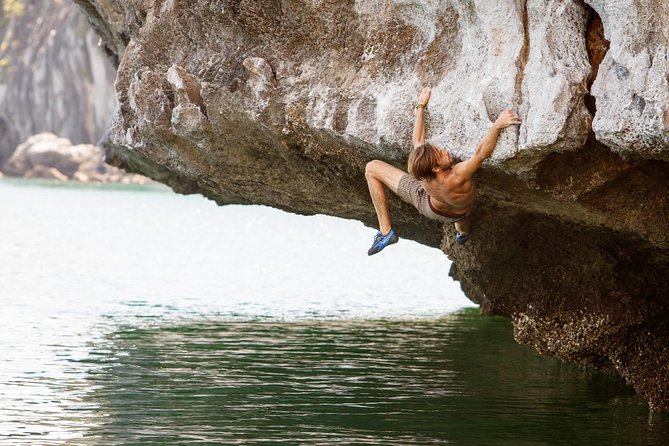
- Lan Ha Bay tidal timing matters: the half-day vs all-day schedule can change based on tide.
- You climb in climbing shoes and you’ll get route info before you start.
- Guides coach your holds and technique (some use tools like a laser pointer to show where to move).
- Group size is capped at 8, so you’re not lost in a crowd.
- It’s a real athletic challenge: you need moderate fitness and comfort with heights.
- Many days include lunch on a boat and some full-day schedules add kayaking afterward.
Why Lan Ha Bay turns climbing into a tide-powered adventure
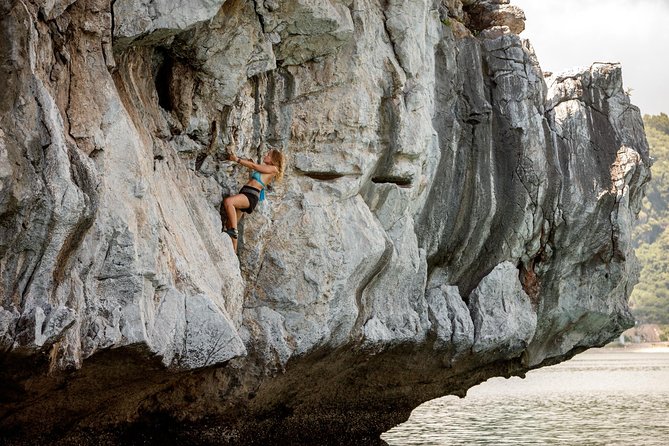
Lan Ha Bay – Cat Ba Island is famous for big tidal changes, and that’s the whole trick behind this kind of climbing. When the tide is right, limestone cliffs sit at just the right height above the water, so you can move upward without the usual ropes you’d expect from other climbing styles.
That means you’re not just sightseeing from a boat. You’re actually “in” the place—hands on rock, salt air in your face, and the bay below you. When the tide lines up, it feels like the environment is collaborating with the sport, and that’s what makes this activity so memorable.
You can also read our reviews of more tours and experiences in Cat Ba.


The basket boat start and what the first hour feels like
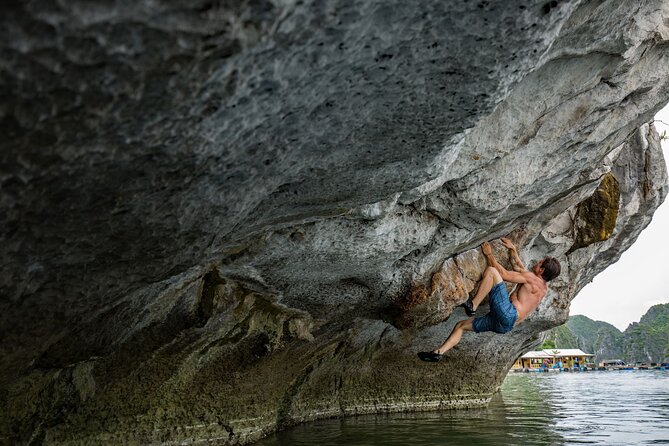
Your day begins on a basket boat heading into Lan Ha Bay. After the meet-up at Kem Tràng Tiền (224 Đường 1/4, TT. Cát Bà), the vibe is usually about settling in and getting ready for the first climb.
From there, you’ll get the climbing shoes and the route information. In practice, that matters because deep water solo can feel intimidating if you’re guessing your way through sequences—so having a plan helps you start with confidence rather than panic.
How guides help you climb safely without killing the fun
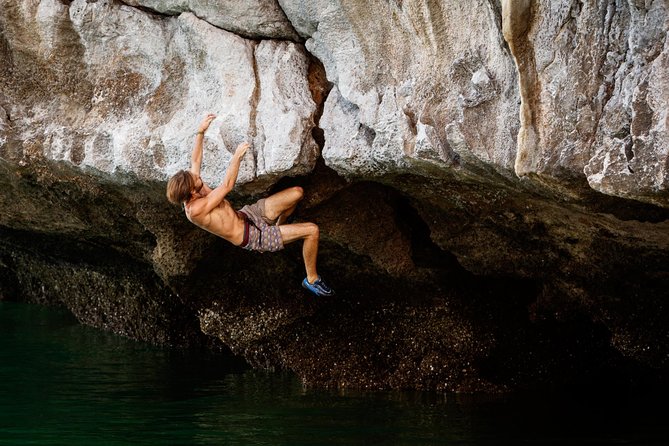
The best part of this experience is the way the guides blend instruction with encouragement. In the feedback, guides like Edcel, Alex, Covan, and Jack are described as genuinely skilled and supportive, including for people who were nervous at the start or still learning their balance and movement.
Here’s what that support looks like for you, not just in theory:
- You’ll get guidance on where to go next on the rock, not just a vague route description.
- You can ask for help if you’re stuck, and you’ll get specific movement tips.
- The group stays small (up to 8), which makes it easier for the guide to track your comfort level.
One detail I like is that different routes match different ability levels. The stories include climbers ranging from people with only a little experience to others working harder grades (one pro-level guide is noted for 8a/V11). So the day doesn’t feel like a single long grind for everyone—it’s more like options that let you progress without forcing a one-size approach.
Choosing your climb: grades, routes, and the confidence factor
Deep water solo is physical, but it’s also mental. You’re choosing holds you can’t fully “test” like you would on dry land, because the consequence of a miss is a clean drop into the sea. That’s why route variety and clear coaching matter so much.
Based on the information you’re given, you’ll have a set of route options and style variations. What that means for your experience: you can pick a problem that matches your bravery and your strength, then build from there rather than jumping straight into the hardest thing you see.
If you’re a beginner, pay attention to this: the guidance can get you safely started, and some people go for it even after only minimal climbing. At the same time, the feedback also suggests it can be better if you’ve got at least some prior climbing experience. Translation: if you already know how to use your feet confidently on rock, you’ll enjoy your time more.
The jump into the bay: where thrill meets safety reality
After each climb, you’ll jump into the blue water. That sounds simple, but the emotional rhythm of the activity is the real event. You climb, you check the next move, and then—when you finish a route—you switch from effort mode to splash mode.
The guides’ job here is huge. You should feel secure in how the day is run, including basic safety cues and pacing. In the feedback, nervous climbers reported feeling safe and supported, and even getting laughs and reassurance that helped them try again after a failed attempt.
Also, the tide isn’t just scenery. Tide level affects water position, timing, and how the climbing session plays out. So don’t assume you’ll have the exact same schedule every time—check your tour plan against the tide window the day you go.



Half-day vs all-day: what the schedule really changes
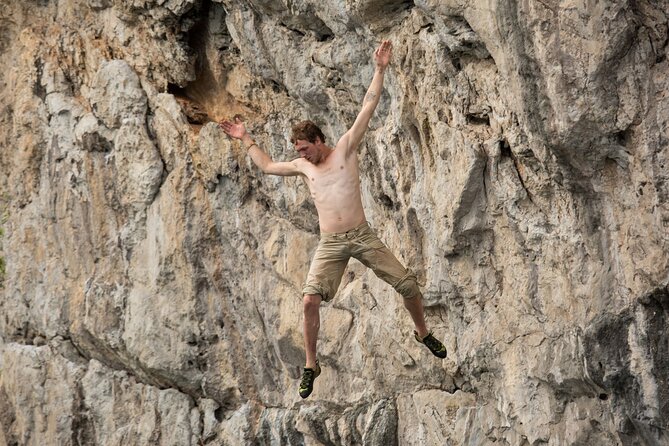
This can be set up as a half-day session (morning or afternoon) or an all-day outing. The key driver is tide level, so your operator adjusts timing to make the climbing conditions work.
On a half-day plan, you’ll focus on a smaller slice: basket boat transfer, climbing sessions, and then you’re done at the meeting point. It’s a good choice if you like intensity and you still want time for beaches, food, or kayaking on your own later.
On a full-day plan, you add more time in the bay. Lunch is included on the boat, and some full-day schedules also add kayaking in the afternoon. If you want more than one water-based activity in a day, the all-day option is the more satisfying pick.
Where the lunch fits in (and why it’s part of the value)
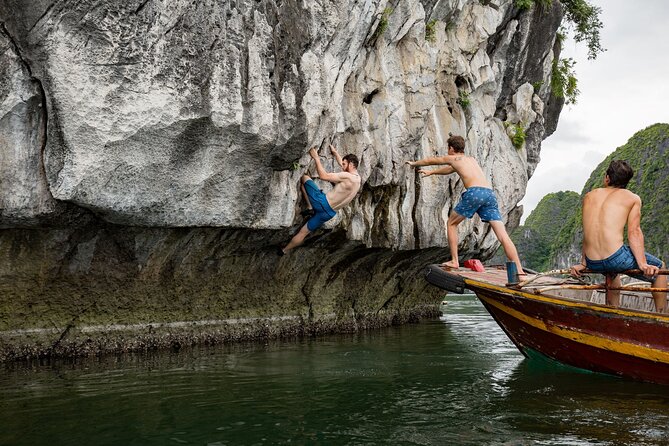
Lunch is prepared as part of the tour. In a boat-based adventure, that’s not a small detail—it prevents the common problem where a day out turns into a hunger-fueled distraction.
The lunch also breaks up the session so you can reset your legs and your head. After several climbs, even easy routes can fatigue you, especially if you’re learning new foot placements. A proper break keeps you from feeling cooked before you have a chance to enjoy the better problems.
Price check: how $58 stacks up for what you get
At $58, this is one of those activities that feels like good value because multiple things are bundled:
- Guided climbing time
- Climbing shoes
- Routes information
- Lunch (at least on scheduled plans that include it)
You’re also paying for access to the right coastline conditions at the right tide window. In places like Cat Ba, timing isn’t optional—it’s everything for deep water solo. So even if the base price seems low compared to some thrill activities, the real value is that someone is managing the conditions, the coaching, and the flow of your climb-to-jump rhythm.
One more practical angle: group size is capped at 8, so your guide attention is likely to be more focused than in big mass tours. That’s part of the value you feel during the climbs.
Who should book this deep water solo in Cat Ba
I think this tour fits best if you want a hands-on, physically active day and you’re okay with heights. The tour calls for moderate physical fitness, and that lines up with what the activity actually demands: you’ll be climbing short routes that still require balance, grip, and quick foot moves.
You’ll especially enjoy it if:
- You like trying new skills and getting coaching fast
- You want an action day rather than a passive sightseeing day
- You enjoy water-based challenges and don’t mind getting splashed
It might feel like a harder sell if you’re strongly afraid of heights or water. Deep water solo is about consequence, even though the guides are there to keep you safe. If you’re not comfortable with that basic premise, pick a gentler activity in the bay.
Practical tips to help you have a smoother day
A few things can make the difference between a stressful start and a fun rhythm:
- Check the tide timing before you go. The tour can shift between half-day and all-day based on it.
- Dress for the sea. You will be in and out of water, so plan clothes that dry reasonably and don’t restrict movement.
- Bring a calm mindset. You’ll likely fall off at least once at some point, especially as you test your feet. Treat it as part of learning.
- Pick your climbs smartly. Start with something you can finish cleanly, then build up to harder routes.
Also, pay attention to schedule details. Because the tide changes drive the plan, being punctual at the meeting point helps you get your first climbing session when it’s most effective.
Should you book Deep Water Solo with Langur’s Adventures?
If you want the most distinctive kind of active day in Cat Ba that blends limestone cliffs and direct ocean jumps, this is a strong pick. The big reason is the combination of small-group guiding and route variety—so beginners and more experienced climbers can both have a real chance to succeed.
I’d book it if:
- You want instruction, not just access to a cliff
- You’re comfortable with moderate physical effort
- You’re willing to be flexible with tide timing and weather-dependent scheduling
I’d hesitate if you’re very new to climbing and hate the idea of trying uncertain moves above water. In that case, you’ll still get support, but you may enjoy it less than someone who already understands basic climbing footwork.
FAQ
FAQ
How long is the Deep Water Solo experience in Cat Ba?
The duration is about 5 hours (approx.), with the exact timing influenced by tide conditions.
What does the tour include?
You’ll be given climbing shoes and route information, you’ll climb under guide direction, and lunch is prepared. The tour also uses a mobile ticket.
Where do I meet, and where does the tour end?
You start at Kem Tràng Tiền, 224 Đường 1/4, TT. Cát Bà, Cát Hải, Hải Phòng, Vietnam. The activity ends back at the same meeting point.
Do I need previous climbing experience?
You should have at least moderate physical fitness. The experience can work for beginners with strong guide support, but some guidance suggests it’s probably better if you have some climbing experience first.
How big is the group?
This tour has a maximum of 8 travelers.
What happens if the weather is poor?
The experience requires good weather. If it’s canceled due to poor weather, you’ll be offered a different date or a full refund.