REVIEW · DALAT
Dalat: Canyoning Extreme Adventure Vietnam
Book on GetYourGuide →Operated by Viet Challenge Tour · Bookable on GetYourGuide
Rope, water, and waterfalls—what a day. This Dalat canyoning-style adventure strings together abseiling, zipline, and water slides with the kind of professional guides who keep you calm when things get steep. You’re out in the forest and canyon for hours, and you leave with memories that are captured for you.
I also like that the experience is built around real safety coaching: you get training before the first drops, and the pace can flex. One consideration: based on accounts from past guests, it feels more like a vertical abseiling circuit than traditional canyoning with lots of technical scrambling and continuous stream time.
In This Review
- Key Things That Make This Dalat Adventure Worth Your Time
- Entering The Jungle: What the Day Feels Like in Dalat
- What $69 Actually Buys: Pickup, Lunch, Gear, and Photos
- Base Camp Training: Harnesses, Helmets, and Speed Control
- The Vertical Section: 18M Dry Cliff, 70M Zipline, and the 15M Challenge
- River Time: Lazy-River Swimming and Water Sliding
- Lunch Above the Waterfall: Picnic Baguette and Tropical Fruit
- 25M Waterfall + Washing-Machine Waterfall: The Hard Parts
- The Walk Back, Shower Time, and the Hot Chocolate Finish
- The Guides: Safety, Jokes, and Confidence Building (Names You’ll Hear)
- Small Groups and Pacing: Why You Get Real Attention
- What to Bring (So You Don’t Regret It)
- Who This Tour Suits Best (And Who Should Skip)
- Should You Book Viet Challenge Tour in Dalat?
- FAQ
- What is the price for Dalat: Canyoning Extreme Adventure Vietnam?
- What’s included in the tour price?
- Do I need to bring swimwear or canyoning shoes?
- How much training do I get before the first cliff?
- Who is this tour not suitable for?
- Is the tour offered every day, and where do you get dropped off?
Key Things That Make This Dalat Adventure Worth Your Time
- All-in pricing: pickup, drop-off, lunch, gear, wetsuit/shoes, and photos/videos are included in the $69 price.
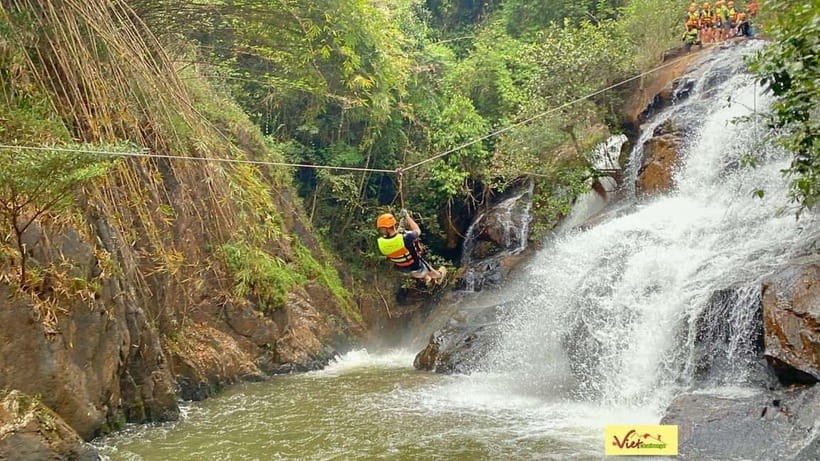
- A full vertical game plan: you’ll hit an 18m dry cliff, a 70m zipline traverse, then more drops including a 15m dry cliff.
- Swimming and sliding, not just ropes: lazy-river swimming and water sliding keep the day from feeling one-note.
- Lunch with a view: picnic-style food is served on top of the highest waterfall spot.
- Guides who manage fear in a kind way: clear instruction, jokes, and patient encouragement show up again and again.
Entering The Jungle: What the Day Feels Like in Dalat
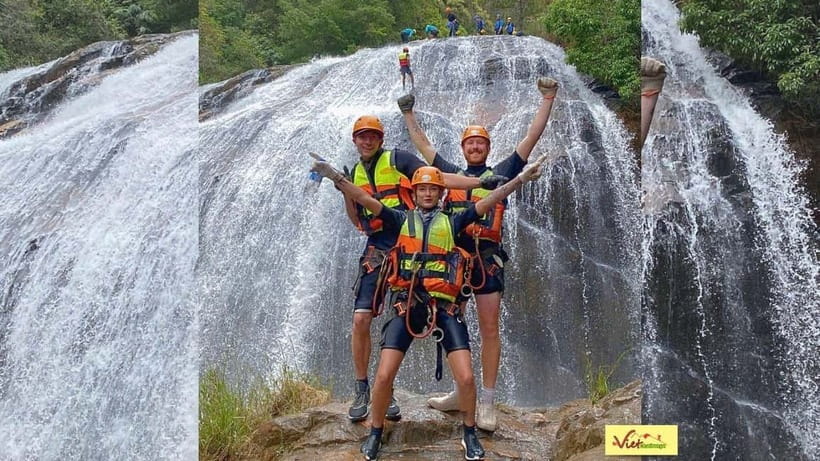
This is a full-day, adrenaline-heavy outing where you trade streets and cafes for a canyon run through forests, streams, and waterfall stops. The vibe is active and hands-on. Even if you’re new to this kind of challenge, the structure is designed to get you confident step-by-step.
I like how the day doesn’t just throw you into chaos. It starts with gear and practice, then moves into a chain of obstacles that are spaced so you can learn as you go. You’ll be in water a lot, you’ll do steep descents, and you’ll spend time walking in rugged canyon terrain between stations.
One more reality check: this is an extreme activity in the literal sense. You’ll be in wet clothing, you’ll face heights during abseiling, and you’ll do a hike back up at the end. If you handle fear best by staying focused on instructions, you’re in the right place.
You can also read our reviews of more tours and experiences in Dalat.



What $69 Actually Buys: Pickup, Lunch, Gear, and Photos
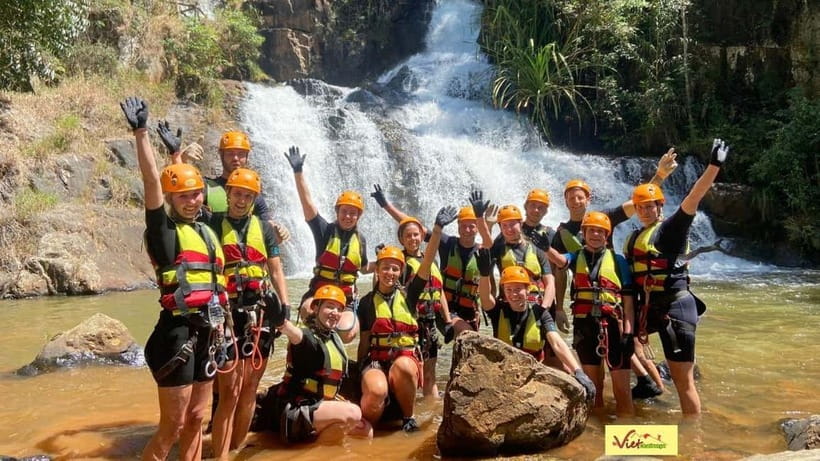
The headline price is $69 per person, but the value is what matters. This tour is built like an all-in package, so you’re not constantly paying extra once you arrive. In your cost you get pickup and drop-off, lunch (picnic-style), equipment, and wetsuits plus water shoes—plus photos captured during the activities.
For a place like Dalat, where outdoor tours can add costs quickly (gear rental, guide time, transport), I find this structure makes budgeting easier. You also get professional, English-speaking guiding, which is a big deal when you’re learning knot-free confidence on ropes and vertical cliffs.
A few extras that show up in real feedback: many people appreciate how photo/video time is handled during the tour, not as an awkward afterthought. Some mention WhatsApp delivery and even access to shared photo/video drives after the trip, and at least one person received a commemorative laminated photo.
Base Camp Training: Harnesses, Helmets, and Speed Control
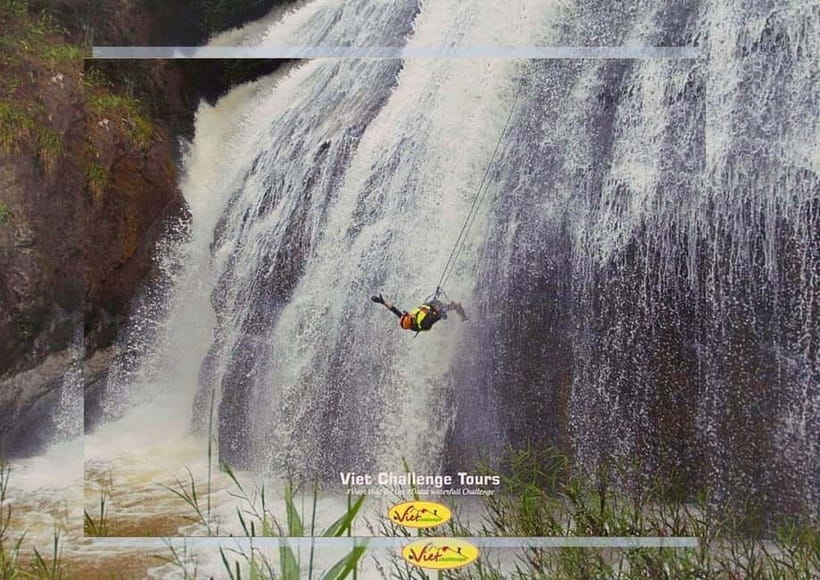
Before anything drops, you start at base camp with a proper gear setup. You’ll be fitted with harnesses, life jackets, helmets, and ropes. Then you do training with experienced guides so you understand the basic techniques and how to manage speed on the descent.
This is one of the most important parts of the day. When you’re about to go down a cliff, it’s not the waterfall that scares you first—it’s the unknown. Training helps remove that unknown fast. You’ll practice and learn what to do when you feel your brain start shouting.
The tour also includes distance through the canyon approach—over 8 km to conquer the route through the jungle and between obstacles. That’s a lot of moving, so you’re not just standing around waiting for your turn. Expect a mix of rope skills, walking stretches, and short bursts of high adrenaline.
The Vertical Section: 18M Dry Cliff, 70M Zipline, and the 15M Challenge
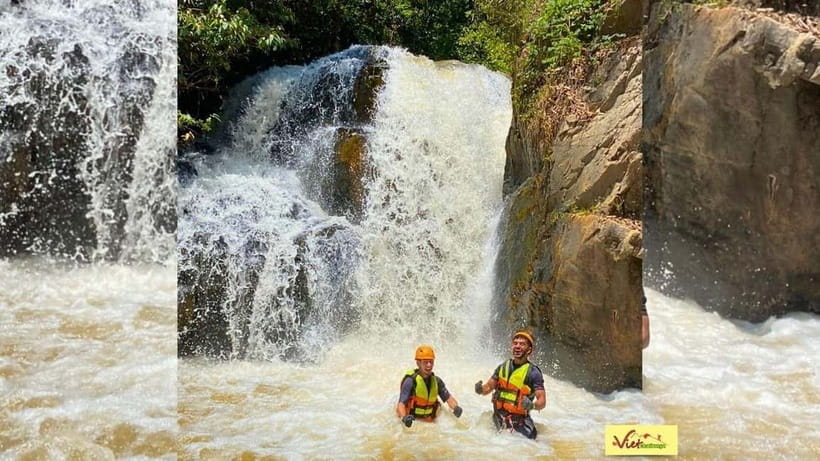
The itinerary is heavy on vertical moments, and that’s where the excitement really lands.
Dry Cliff 18M (first big test)
After training, you tackle a dry cliff around 18 meters. You’ll work with controlled abseiling—then you hit the moment where you throw yourself into the air and land safely. It can feel scary at first. The point is: you do it with guidance, and you keep moving forward to the next part of the canyon.
Zipline 70M (the long glide)
Next, you move down to a Tyrolean traverse setup—often described as a zipline where you travel down to the river. A long zipline is a great mental shift. You go from “hold on tight and descend” to “flow through the air,” and you get a second way to enjoy the canyon without a vertical rope descent again.
Dry Cliff 15M + more abseiling practice
Later, there’s another dry cliff challenge around 15 meters, paired with river activities right after. You’re still working the same core skill—staying calm, using your technique, and trusting your setup—but your body is already warmed up from earlier obstacles. That makes the second vertical stop feel less like a shock and more like a routine.
A good signal from past participants: guides keep the pacing flexible. If you’re slower climbing back up at any point, you’re not left alone—one review even singled out a guide staying behind to encourage someone through the hill at the end.
River Time: Lazy-River Swimming and Water Sliding
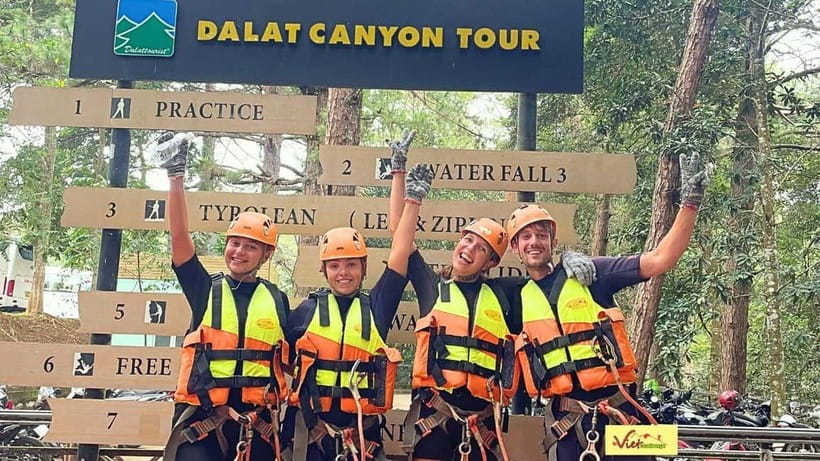
Between cliff challenges, the tour makes sure you actually enjoy being in the canyon—not only surviving it.
Lazy river swimming
After the 15m dry cliff phase, you’ll spend time swimming in a serene lazy river. This is where you reset your breathing. Instead of focusing only on ropes and speed, you get to focus on movement and staying relaxed in the water.
Water sliding from eroded rocks
Then comes water sliding. The rocks in this area are eroded by water over time, which makes it a natural sliding route. The method is taught and pretty straightforward: you lay down with arms embracing your shoulders, hold your breath, and let the river pull you down. You plunge to the bottom and come back up with that instant “I can’t believe I did that” feeling.
This combination—swimming plus sliding—makes the day more varied. It’s not just fear and adrenaline. You also get moments of playful water action that feel like a reward for completing the rope work.



Lunch Above the Waterfall: Picnic Baguette and Tropical Fruit
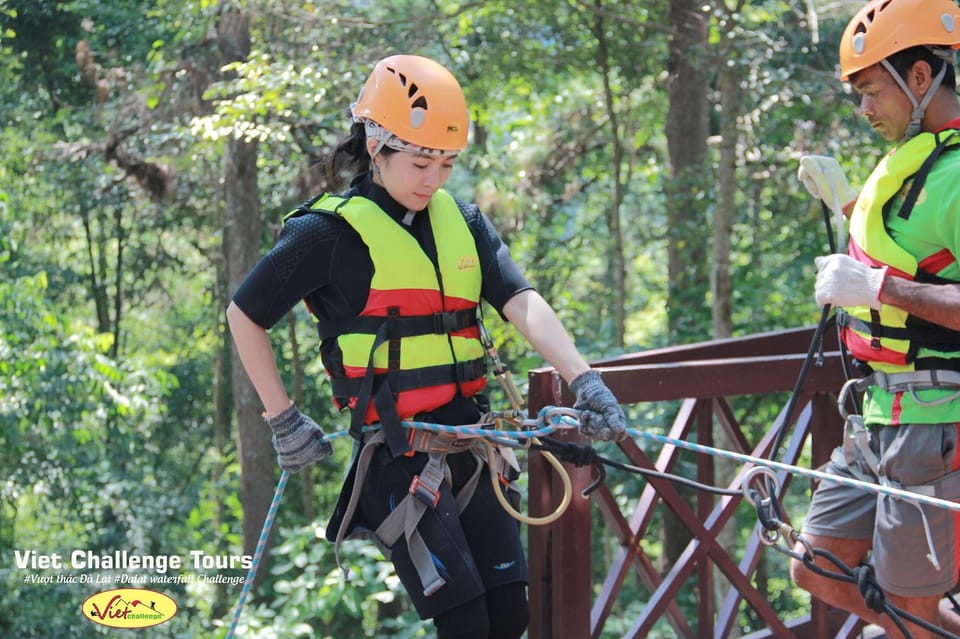
Lunch happens at the most scenic time of day. You’ll have a picnic meal on top of the highest waterfall spot. It’s not some sad boxed lunch. The tour includes Vietnamese baguette paired with tropical fruits.
I like that lunch is positioned as a reward after multiple intense obstacles. It gives you a break from the wet gear cycle while keeping you surrounded by mountains and forest scenery. If you’re counting energy, the timing matters—after steep effort, you’ll actually enjoy eating rather than just tolerating it.
One small practical note: you’ll be in a full-day wet adventure program, so you’ll want to change into dry clothes when you can. The tour later encourages you to bring extra dry clothing for the end-of-trip shower.
25M Waterfall + Washing-Machine Waterfall: The Hard Parts
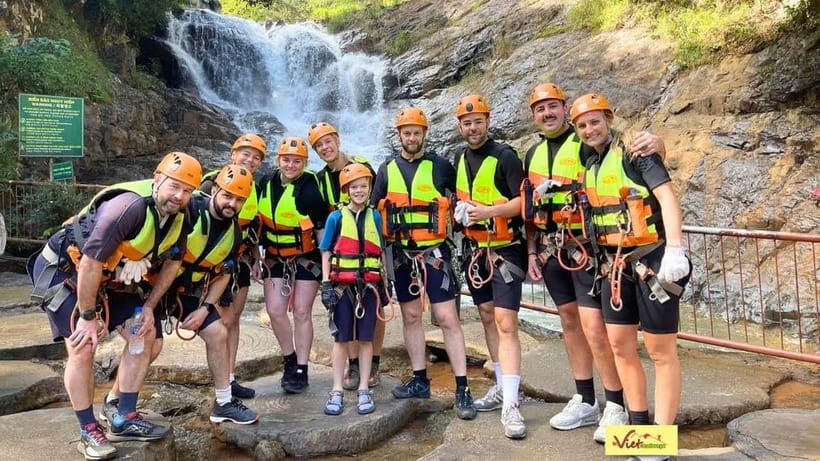
Two of the biggest “this is real” obstacles come later.
25m waterfall conquering
This is described as a difficult challenge: a waterfall around 25 meters high and about 20 meters wide. It pours massively, and the feeling can be psychological as much as physical—your mind will try to talk you out of it. The key is staying cool-headed and following your guide’s instruction.
Washing-machine waterfall (spins and pushes)
Right after, you hit the “washing machine waterfall.” The description is intense on purpose: you don’t stop here, and the water spins you around, cleans your body, and pushes you away from the cliff. The challenge is to keep moving through the moment rather than freezing in fear.
If you’re the type who likes a clear set of steps, you’ll likely do well here. The best part is that you’re not making these decisions alone. You’re following rope/line procedures with a guide beside you, and the group is managed to keep the flow controlled.
The Walk Back, Shower Time, and the Hot Chocolate Finish
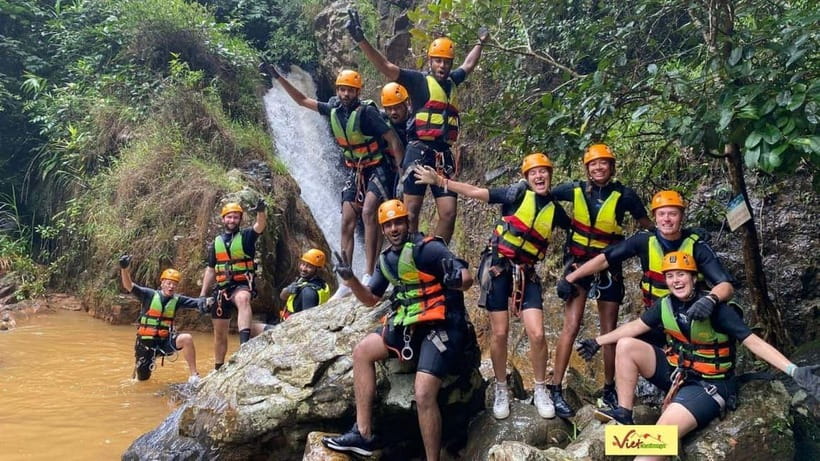
After the final waterfall obstacles, you hike up to meet the vehicle for transport back to base camp. From there, you shower and then head back to your hotel.
That hike back up can take about 15–20 minutes depending on your pace. It’s worth planning mentally: the hardest parts aren’t the only exertion you’ll do. Your legs will feel it, especially if you’re wearing water shoes and gear for the whole day.
One extra comfort detail I appreciate from the experience: some people mention a hot coco treat at the end. It’s a small thing, but it helps you warm back up after a long wet adventure.
The Guides: Safety, Jokes, and Confidence Building (Names You’ll Hear)
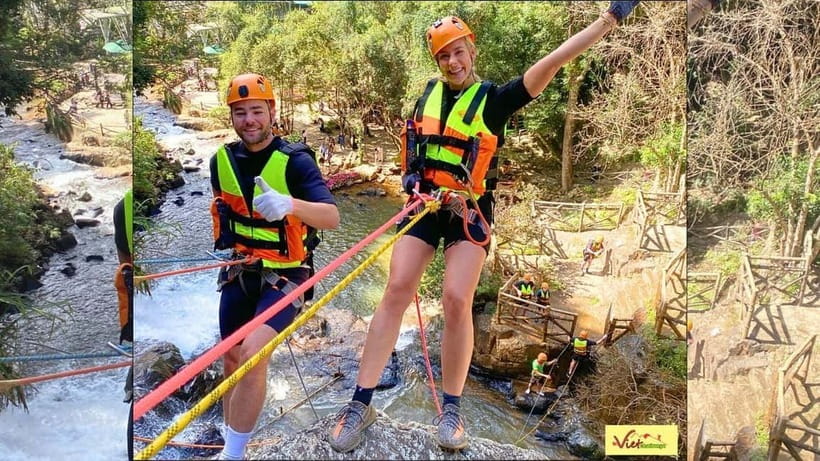
The most praised part of this tour is the guiding. Over and over, people highlight that you feel safe because instruction is clear and the guides watch the details.
You’ll commonly see names like Sin, Alex, Viet, Narli, Phat, Vinh, Fin, Lan, Naly, and Khoi. Not every group gets the same trio, but the pattern stays consistent: guides explain how to abseil, how to move, and how to handle tricky moments.
What I’d call the “good guide formula” shows up in feedback:
- Clear coaching before each obstacle
- Patient support when someone hesitates
- Encouragement without pressure
- Good English communication (many guides listed as fluent)
- Photo/video capture while you’re doing the fun parts
One review stood out for how the guide handled different pace levels, including staying back to assist someone slower on the hill at the end. That’s not just nice; it’s a safety and group-control approach.
Small Groups and Pacing: Why You Get Real Attention
This isn’t an all-day cattle-call. One person specifically mentioned a small group size of about 6–12, and that compared favorably to operators running groups of 20+. Smaller groups typically mean more time with the guide, less waiting around, and better turnaround at each station.
Even if your group size isn’t guaranteed at the exact number, the pacing described in feedback suggests your day is managed to keep you moving without rushing you past skills you haven’t learned.
If you’re nervous about heights, this matters. You need time to process what’s next. A smooth cadence also helps your energy last through all the obstacles.
What to Bring (So You Don’t Regret It)
You’ll be issued wetsuits and canyoning shoes, so you don’t need to pack those. But you still want to show up prepared, because you’ll be wet and you’ll want comfort after.
Bring:
- Change of clothes
- Sunscreen
- Insect repellent
- Socks
The tour also specifically suggests bringing one more set of dry clothes for after the hike and shower phase. If you forget, you’ll probably spend the final transport feeling damp and uncomfortable.
Also, if you’re carrying valuables, the transport offers safe luggage storage during the trip. This is a practical detail that makes the day smoother, because you can focus on the adventure instead of babysitting bags.
Who This Tour Suits Best (And Who Should Skip)
This tour fits people who want a high-adrenaline day in Dalat’s natural areas and don’t mind getting wet.
You’ll probably enjoy it if:
- You’re curious about abseiling and want a guided learning route
- You like variety: cliffs, zipline, swimming, sliding, and big waterfalls
- You want a guided setup that prioritizes safety and clear instruction
It may not be for you if:
- You’re very short or heavy beyond the limits: not suitable under 3 ft 6 in (110 cm) and not suitable over 309 lbs (140 kg)
And about expectations: one review notes the tour felt less like continuous canyoning and more like a series of abseiling moments. If your dream version of canyoning is mostly stream scrambling and technical “walk-through” canyon time, you might want to set your expectations toward vertical drops and guided rope work.
Should You Book Viet Challenge Tour in Dalat?
I think it’s a strong yes for most active travelers who want an organized extreme day without the stress of planning gear or figuring out technique on their own. The value is solid because pickup/drop-off, lunch, wetsuits/shoes, equipment, and photos are included in the base $69 cost. More importantly, the guides consistently earn top marks for safety coaching and encouraging, calm control—exactly what you want when you’re facing a 25m drop.
Book it if you can handle heights at least in the supervised, step-by-step way this tour offers. Skip or reassess if you hate heights so much that you can’t work with instruction when you’re on rope.
If you’re on the fence, think of it like this: you’re not just paying for a waterfall photo. You’re paying for a whole day where rope skills, water play, and guided confidence-building are packaged into one ticket.
FAQ
What is the price for Dalat: Canyoning Extreme Adventure Vietnam?
The price is $69 per person.
What’s included in the tour price?
It includes wetsuits and water shoes, picnic lunch with cacao and purified water, professional English-speaking guides, pickup and drop-off, all canyoning equipment, and photos. The tour also provides free photos and videos.
Do I need to bring swimwear or canyoning shoes?
You don’t need to bring wetsuits or canyoning shoes because they’re provided. You should bring change of clothes, sunscreen, insect repellent, and socks.
How much training do I get before the first cliff?
At base camp you’re equipped with harnesses, life jackets, helmets, and ropes, and you receive training from experienced guides to learn basic techniques and how to handle hypothetical situations before the more challenging sections.
Who is this tour not suitable for?
It’s not suitable for people under 3 ft 6 in (110 cm) and not suitable for people over 309 lbs (140 kg).
Is the tour offered every day, and where do you get dropped off?
Daily canyoning tours in Da Lat are available every day. The provider can also arrange direct drop-off at the bus station after the tour if needed, and there is safe luggage storage available during transport.