REVIEW · HO CHI MINH CITY
Cu Chi Tunnels – Half Day Luxury Tours
Book on Viator →Operated by Cu Chi Tunnels Tours · Bookable on Viator
Tunnels change how you picture the war. This half-day tour from Ho Chi Minh City makes the experience easier to manage with mobile tickets and no hidden costs—entrance fees and transport are covered. I like the structure here: pickup, intro, tunnel time, then period tea and cassava. One thing to consider: you’ll be exploring a tunnel system, so if you dislike tight, enclosed spaces or moving on uneven ground, plan for extra patience.
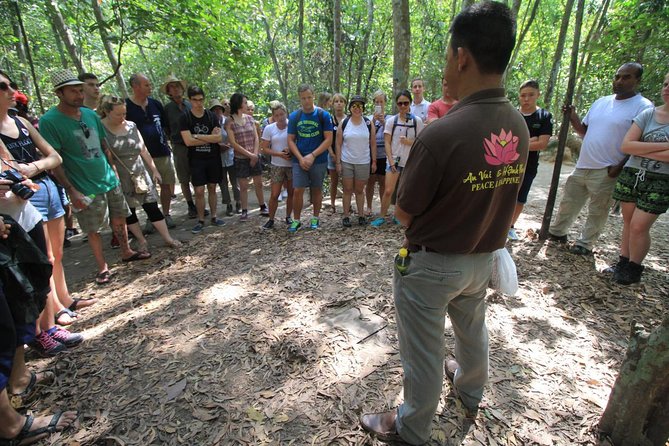
Guides help keep the experience grounded in real context. In particular, guides like Son and Jimmy #10 bring the story to life with clear history and a bit of humor, so you don’t just stand and stare at artifacts. And because this is a pre-planned trip out of the city, you’re not trying to sort out directions while also processing what you’re seeing.
If you want a memorable Cu Chi Tunnels visit that’s organized, time-efficient, and still human-scale, this is a strong fit. Expect a roughly six-hour outing over about 43 miles each way—long enough to feel like you left the city, short enough that it doesn’t eat your whole day.
In This Review
- Key Things to Know Before You Go
- From Ho Chi Minh City to Cu Chi: A Pre-Set Half-Day That Actually Fits
- The Start: Orientation Video and a Quick Game Plan Above Ground
- What You See Underground: Living Spaces, Weapons Work, Hospitals, and Command Centers
- The Shooting Range Add-On: Hands-On, But Keep It in Context
- The Return Flow: Tea and Cassava After the Heavy Part
- Price and Value: Why $35 Can Make Sense Here
- Who This Tour Suits Best (and Who Might Want Something Else)
- Quick Practical Tips to Make Your Day Easier
- Should You Book This Cu Chi Tunnels Half-Day Luxury Tour?
- FAQ
- How long is the Cu Chi Tunnels half-day tour?
- Is hotel pickup included?
- What’s included in the ticket price?
- Do I need to print a ticket?
- Is there a shooting activity during the tour?
- What happens if I cancel?
Key Things to Know Before You Go
- Mobile ticket pickup means no paper hunt once you’re in Ho Chi Minh City
- Entrance and transport included so you can budget once and relax
- Tunnel time with context starts with a short intro and an orientation video
- Living areas are explained alongside weapons-related and medical spaces
- A nearby shooting-range option adds a hands-on layer to the lesson
- Refreshments after include tea and cassava, keeping the pacing calmer
From Ho Chi Minh City to Cu Chi: A Pre-Set Half-Day That Actually Fits
Cu Chi is about 43 miles from Ho Chi Minh City, and the easiest way to handle that distance is exactly what this tour does for you. You get pickup from an inner-city hotel area and then head out by bus with the tour group. The total time comes out to about six hours, which is a sweet spot: you leave early enough to make the drive worth it, but you’re not stuck out there all day.
The group size is capped at 30 travelers, which helps the trip feel controlled. On tours that run with huge crowds, you often lose time waiting. Here, you’re more likely to get a smoother rhythm: bus → orientation → tunnels → range option → return.
One practical thing I appreciate: the tour is built around guided flow. You’re not wandering in a maze of information while trying to understand what you’re looking at. That matters because Cu Chi isn’t just scenery; it’s a well-preserved remnant connected to the Vietnam War and the way Vietcong fighters lived and fought under extreme pressure.
A few more Ho Chi Minh City tours and experiences worth a look



The Start: Orientation Video and a Quick Game Plan Above Ground
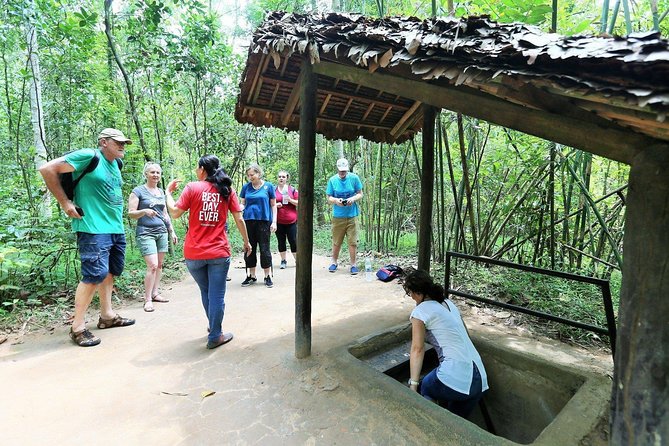
Before you head into the tunnel system, you’ll get a short introduction and then an introductory video. This matters more than people think. The tunnels can feel confusing at first—dark, repetitive, and physically demanding—so having the basics up front helps you track the story as you go.
The orientation focuses on construction and survival: how the tunnels were built, and how people endured harsh conditions. It’s also a useful mental warm-up for what comes next. Once underground, you’re not only looking at passages; you’re trying to understand how an entire support network could function below the surface.
If you’re the type who likes to connect facts to what you’re seeing, this start gives you that hook. And if you’re the type who worries you’ll miss details, the orientation helps you spot what to look for—living spaces, storage functions, medical areas, and how security worked in such a cramped environment.
What You See Underground: Living Spaces, Weapons Work, Hospitals, and Command Centers
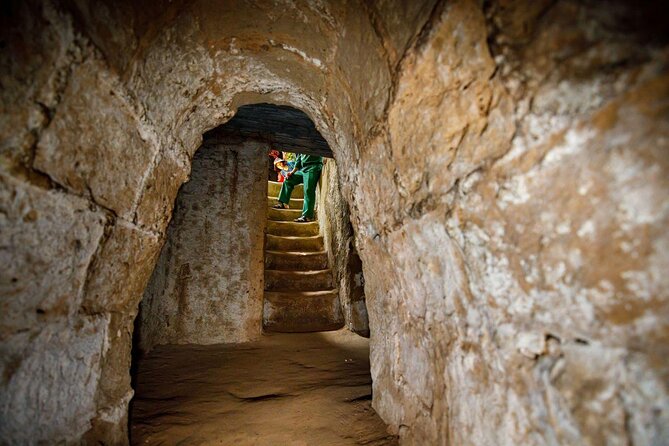
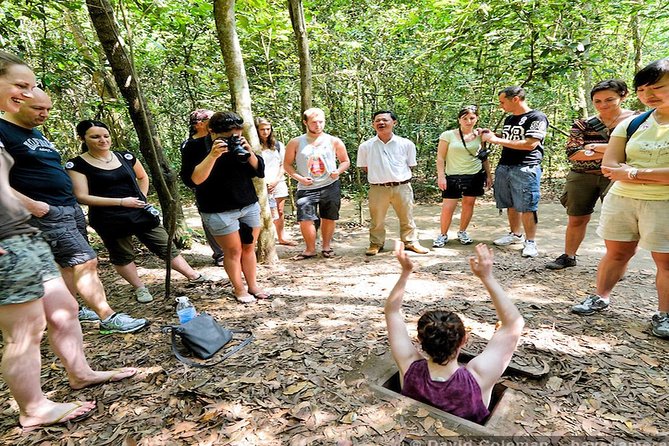
The heart of the day is the time spent exploring the remaining area and the tunnel systems. This isn’t just a crawl-through. You’ll be shown how the complex was designed to support basic life and military operations at the same time.
As you explore, you should expect to encounter constructed living areas—including kitchens and bedrooms—placed close to the spaces needed for war work. The tour’s framing makes a strong point: life and conflict were intertwined. You’re not only hearing about fighting; you’re learning about how people managed routines and necessities while still operating a hidden underground network.
You’ll also be directed toward the kinds of facilities that kept the system running:
- storage areas
- weapons-related workshop spaces (including weapons factories)
- field hospital zones
- command centers
This is one of the most meaningful parts of the tour because it changes the mental picture. Instead of thinking of tunnels as only escape routes, you start to think of them as an entire concealed infrastructure.
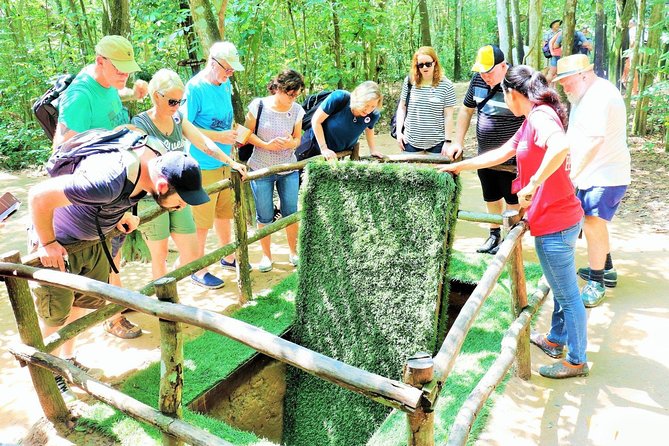
It’s also where the tour gets intense in a very literal way. The maze-like layout includes hidden trap doors and dangerous traps. You’ll need to follow the guide’s directions and stay alert to what’s safe to do and where you should be. Even when sites are curated, the point here is historical realism—this wasn’t built as a walking attraction.
The Shooting Range Add-On: Hands-On, But Keep It in Context
One of the headline highlights is the chance to try shooting at a nearby range. This turns a museum-like visit into something more physical and immediately memorable.
I like this option because it answers a question people often carry into war history: how did it actually feel to handle the tools of conflict? When it’s done as a controlled add-on, it doesn’t replace the main story of the tunnels—it complements it. It can also help you understand why practical training and weapon handling would matter so much for fighters operating under difficult conditions.
That said, keep context in mind. Cu Chi is about survival and the human cost of war. The range component is short compared to the underground exploration, and it’s best seen as one piece of a broader explanation rather than the main event.
If you’re sensitive to weapons-related activities or you’re traveling with someone who prefers strictly historical observation, you can use the rest of the tour to anchor the day. The tunnels and the explanation around them are the core.
The Return Flow: Tea and Cassava After the Heavy Part
After the tunnels, the tour shifts gears slightly with refreshments. You’ll enjoy tea and cassava, served in a way described as period-appropriate.
This sounds small, but it helps with pacing. War sites can hit hard; going straight from intense underground history into a long drive without a break can make the experience feel exhausting rather than reflective. The tea and cassava give you a simple reset: you sit, you refuel, and you let your brain catch up.
Cassava is also one of those foods that helps connect daily survival to the war story. It’s not just a prop snack—it reinforces the idea that underground life still required real, repeatable basics.






Price and Value: Why $35 Can Make Sense Here

At $35 per person, this half-day tour is priced for a straightforward reason: it bundles the biggest costs together. The ticket price covers entrance fees and transport costs, so you aren’t nickel-and-diming your day while you’re already committed to the route.
That matters because Cu Chi is not next door. If you were to DIY it, you’d likely pay for transport and then still have to handle admissions. Here, you pay once, then the day runs on rails.
It’s also supported by the inclusions that shape comfort and ease: pickup is offered, you get mobile tickets for smoother coordination, and the tour runs on a group format with a maximum of 30 people.
One more value note: group discounts are mentioned. That’s useful if you’re traveling with friends or family and want to keep the per-person cost down without sacrificing a guided experience.
Who This Tour Suits Best (and Who Might Want Something Else)
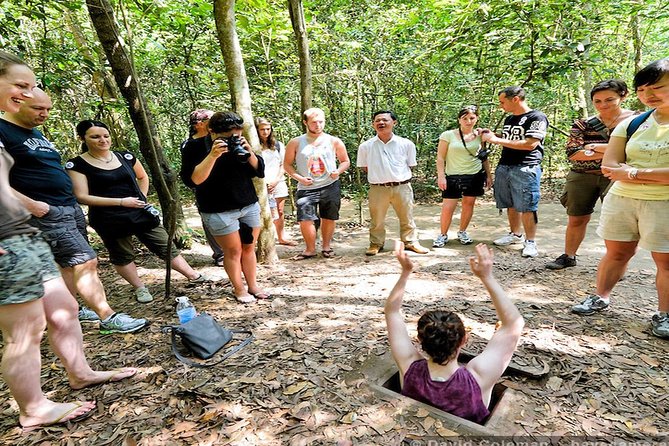
This tour fits best if you want a structured, time-efficient Cu Chi visit that doesn’t force you to plan every transport step. It’s a good option if it’s your first time in Ho Chi Minh City’s area and you’d rather spend your mental energy learning than figuring out logistics.
It’s also a strong pick for history lovers who appreciate clear explanations. The combination of orientation video, guided walkthrough of living and military spaces, and the shooting-range add-on keeps the day from feeling flat.
If you hate tight spaces, you might find the tunnel portion challenging. The tour includes exploration time deep enough that comfort and movement matter. Also, because this is war-related history, it’s not a light experience even when the guides add humor.
If you’re traveling with kids or teens, consider their comfort level first. The subject is serious, and the physical environment is real and cramped compared to open-air attractions.
Quick Practical Tips to Make Your Day Easier

- Wear shoes you can trust on uneven, possibly damp surfaces.
- Be ready to listen closely at points where trap doors and security areas are involved.
- If the range is offered to you, treat it as a short add-on and keep focus on the broader story of survival and strategy.
- Eat lightly before pickup so the refreshment break feels like a real reset rather than a random pause.
- Use the mobile ticket on your phone so you can move fast during pickup moments.
Should You Book This Cu Chi Tunnels Half-Day Luxury Tour?
I’d book it if you want a smooth, organized Cu Chi Tunnels visit with pickup, included entrance/transport costs, and guided explanations that connect living conditions to military operations. At $35, the value comes from not having to assemble multiple pieces yourself.
Skip it or consider a different style of tour if you know you’ll struggle with enclosed spaces or if the shooting-range component doesn’t match your comfort level. For most visitors, though, this is a smart way to see Cu Chi without losing time to planning—and with enough structure that you’ll understand what you’re looking at instead of guessing.
FAQ
How long is the Cu Chi Tunnels half-day tour?
The tour runs for about 6 hours.
Is hotel pickup included?
Yes, pickup is offered from inner-city hotel areas.
What’s included in the ticket price?
Entrance fees and transport costs are covered by the ticket price, and refreshments (tea and cassava) are provided.
Do I need to print a ticket?
No. You get a mobile ticket, so you can download it to your phone for easy pickup.
Is there a shooting activity during the tour?
Yes. You get the chance to try shooting at a nearby range.
What happens if I cancel?
This experience is non-refundable and cannot be changed for any reason. If you cancel or request an amendment, the amount paid is not refunded.