REVIEW · HANOI
Colors of Incense village Quang Phu Cau
Book on Viator →Operated by Momentlives Photography tours · Bookable on Viator
In This Review
- First impressions: color, craft, and a camera plan
- Key things to know before you go
- Quang Phu Cau’s incense colors: why this village photographs so well
- The early Hanoi pickup: beating crowds without losing the day
- Private 2-way transfers: comfort you’ll actually use
- Inside the incense-making process: bamboo to dye to sun-drying
- Photographer guidance that turns you into a better shooter (fast)
- Timing, duration, and what to pack for a 6-hour photo run
- Price and value: why $128 can make sense here
- Who this tour is for (and who might want a different plan)
- Should you book Colors of Incense Village Quang Phu Cau?
- FAQ
- What time does the tour start?
- How long is the experience?
- How far is Quang Phu Cau from Hanoi?
- Is pickup included?
- What’s included in the tour price?
- Do I need to buy admission tickets?
- Is this tour private?
- Is the tour suitable for most travelers?
- Is the tour weather-dependent?
- How much is the tour?
First impressions: color, craft, and a camera plan
Colorful incense starts before sunrise. This private photography outing takes you from Hanoi to Quang Phu Cau—a village known for making scented incense sticks in bright colors—and pairs the real workshop process with hands-on shooting guidance. You’ll see the work up close, including sticks made from bamboo through cutting, dyeing, and drying, while your photographer guide helps you frame shots with the right angles and timing.
What I really like is how the tour blends authentic village work with practical photo help. In the reviews, guides like James and Mike get singled out for making it easy to get strong results even if you are not a photographer. And I love that the day starts early enough to catch the village before the bigger crowds, so your photos (and patience) have breathing room.
One thing to consider: it is an early start. With a 5:15am meeting time and a roughly 6-hour day, you’ll want an efficient morning mindset—and you’ll be at the mercy of weather, since the experience requires good conditions.
Key things to know before you go
- 5:15am start helps you photograph the village before the busiest waves arrive
- Private photography focus means you get guidance, not just a quick walk-by photo stop
- You’ll see the full stick-making rhythm, from bamboo arrival to cutting/dyeing and drying
- Photographer guides (like James and Mike) help with angles and timing, even for non-pros
- 2-way private transfers from your Hanoi hotel reduce stress and save time
- Entrance fees and bottled water are covered, so you can keep the day simple
You can also read our reviews of more tours and experiences in Hanoi.
Quang Phu Cau’s incense colors: why this village photographs so well
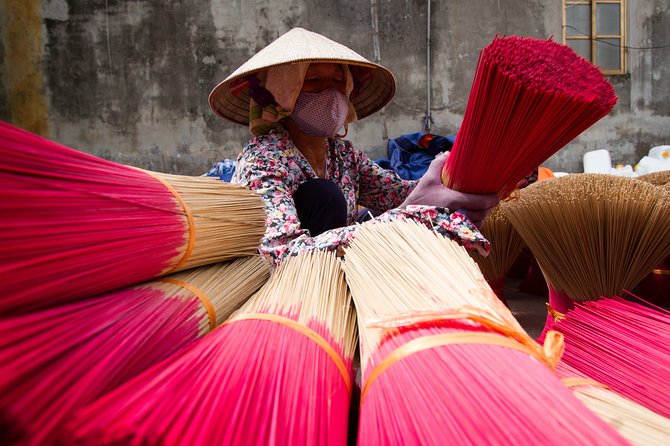
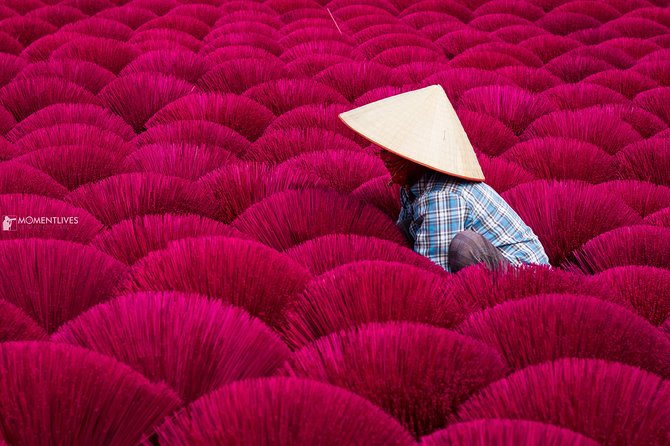
If you’re into photography, Quang Phu Cau is the kind of place that makes the camera feel useful. The incense sticks aren’t just “brown sticks.” They’re dyed in eye-catching colors and then laid out to dry in long, patterned rows. That combination—bright pigment plus repeating shapes—creates photos that look designed, even though they’re totally handmade.
The best part is that you’re not only watching the final product. You’re there while the sticks are being made. That matters because early-stage work often looks messy in the way real work looks—hands moving, materials transitioning, drying racks filling in real time. With good photo guidance, that turns into images with energy instead of static snapshots.
Also, the village has drawn attention beyond Vietnam. The day-to-day craft has been photographed and shared widely, including work that has appeared on major international outlets, and even award-level photo contests. You’re stepping into a place that already has a documented visual “signature”—and your guide will help you capture your own version of it.
The early Hanoi pickup: beating crowds without losing the day
This tour is built around an early departure, with a 5:15am start time and about a 1.5-hour drive from Hanoi to the village. That sounds brutal on paper. In practice, it’s a smart trade.
Here’s why: Quang Phu Cau is popular. Going early means you’re more likely to get cleaner scenes—less crowding around drying areas and fewer people blocking your frame. It also keeps the light more forgiving for photography and helps you photograph without fighting for space.
Your day will feel efficient. You get a long morning in the village and then a return to Hanoi later, aiming to fit everything into about 6 hours total. It’s not a “slow travel” kind of outing. It’s closer to: show up, photograph the process, learn what matters, and leave with real results.
The practical tip: set expectations that you’ll be awake early, not rested. Bring water, keep your camera batteries charged, and dress for cool-to-warm shifting weather—this is Vietnam, and mornings can feel different from midday.
Private 2-way transfers: comfort you’ll actually use
One of the quietly valuable parts of this tour is the transportation setup. You get 2-way private transfers from your Hanoi hotel, plus an air-conditioned vehicle. That means you’re not juggling taxis, street logistics, or “where do we meet?” confusion.
For photography days, reducing stress is more than convenience—it protects your time. When your schedule stays stable, you can focus on shooting instead of rushing between stops.
It’s also a private tour/activity, so you’re not competing with strangers for the same moment. That matters when you’re photographing specific parts of the production, like dyeing and drying stages where angles and spacing can make or break your shot.
One more detail I appreciate: bottled water is included. It’s small, but it helps you stay functional from the early morning to the end of the day.
Inside the incense-making process: bamboo to dye to sun-drying
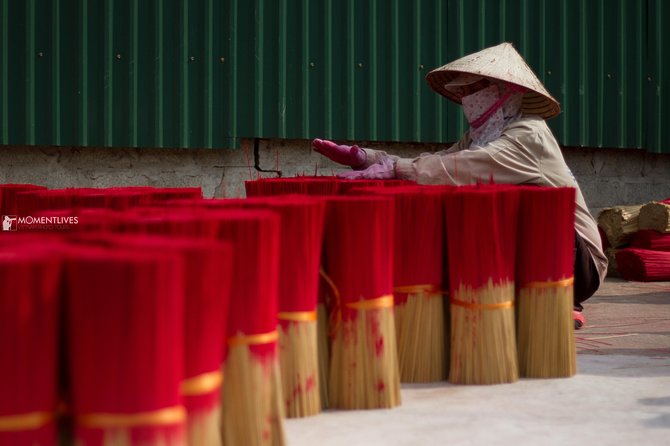
The heart of this experience is seeing how incense sticks move through stages of production. You’ll observe work that goes from the raw material stage to shaped sticks, then through cutting, dyeing, and drying in the sun.
The village gives you visual variety:
- Cutting and shaping moments often have strong hand movement and clear tool use
- Dyeing brings color to life, which is the whole point here—think pigments, gloved or bare hands, and careful steps
- Drying turns into repeating patterns across outdoor work areas, which is where your compositions can look especially striking
In the reviews, people describe how the tour shows different stages clearly, not just one quick corner of the process. That’s what you want. If you only see the final drying rows, you miss the story of how the colors got there.
And because this is a working village, the rhythm matters. Incense production is not one single event; it’s a sequence. Your photographer guide helps you time shots so you’re not always taking photos at the same “static” moment.
A small realism note: because the process is happening constantly, you won’t get a staged “everyone look here” setup. That’s a benefit, not a problem. Real work makes better images—especially if your guide is helping you notice the rhythm.
Photographer guidance that turns you into a better shooter (fast)
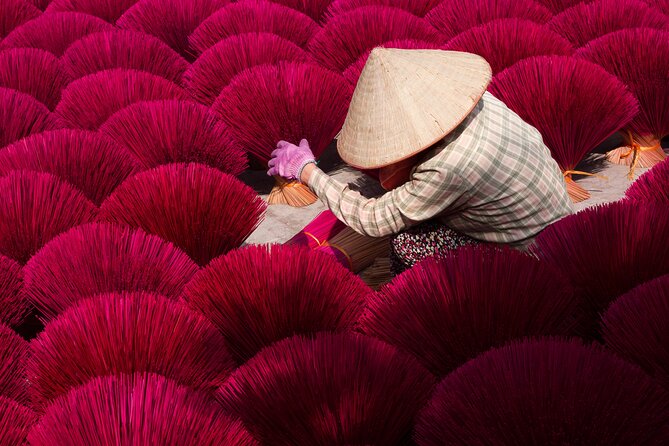
This is a photography-focused tour, but it’s not exclusive to camera experts. The guides are there to help you take better pictures, even if you feel rusty.
The most praised part of the experience is the shooting help. In the reviews, James is described as outstanding, with guidance that made a real difference for photo results. Mike also comes up in feedback, and people liked that he helped with photo recommendations and pacing through the workshop scenes.
What that usually means in plain language:
- You’re taught angles that show process clearly, not just “pretty color”
- You’re guided on the timing of movements—when hands, tools, or drying layouts create a stronger frame
- You’re helped to focus on the rhythm of how the work happens, which helps you anticipate shots
A second important benefit: your escort helps with translation and conversation. That’s not just polite. It changes your photos. When you can chat with locals—briefly but meaningfully—you often understand what you’re seeing, and that makes your images feel less random.
One reviewer highlighted chatting with villagers as a standout moment. I get it. Incense isn’t an abstract craft; it’s people doing careful, daily work with materials that eventually end up at home altars and in temples across Vietnam.
If you want practical guidance, ask your guide what to shoot next. It can be as simple as: where should I stand for the best dyeing colors, or what moment best shows the cutting process? You paid for the expertise—use it.
Timing, duration, and what to pack for a 6-hour photo run
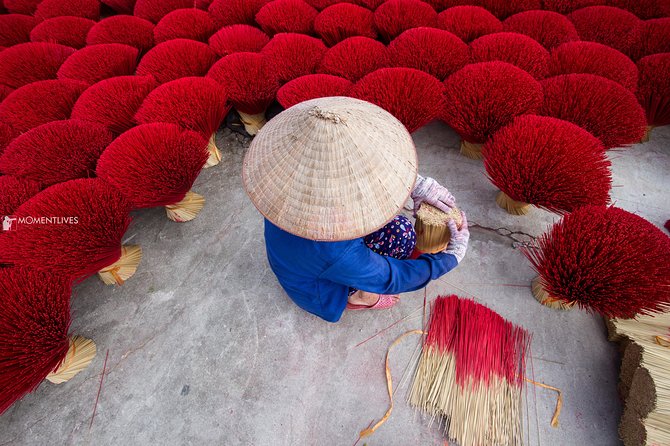
With roughly 6 hours total, this tour runs like a half-day sprint. You’ll spend enough time at each stage to photograph, but you’re not going to have long unstructured breaks.
Think of it as a guided photo workflow:
1) Early arrival and setup for photography
2) Workshop process observation through key stages
3) Photo time where your guide actively helps you place yourself and frame shots
4) Return to Hanoi later the same morning
So what should you bring?
- A camera strap you trust (you’ll move around and keep operating it)
- Spare battery and/or a charging option (early mornings drain power fast)
- Comfortable shoes for outdoor work areas and sun-drying zones
- Light layers (morning can be cooler, and you’ll be outside during drying scenes)
If you’re shooting with a phone, you can still do very well here. Color and repetition help. But the guide’s help with positioning still matters because the “right angle” is what makes these scenes look intentional.
Price and value: why $128 can make sense here
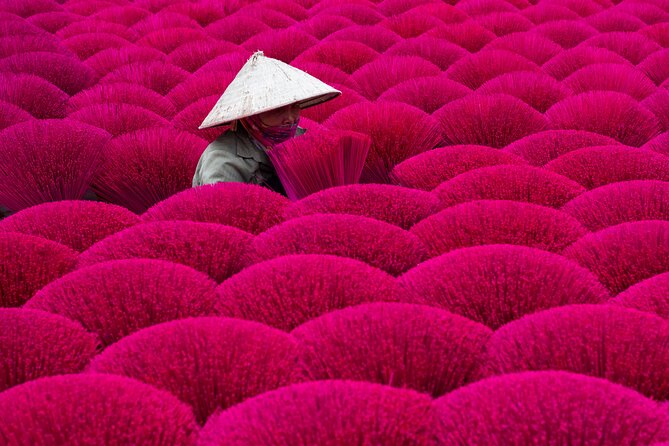
At $128 per person for about a 6-hour private photography tour, the price can feel steep at first glance—until you break down what’s included.
You’re paying for:
- Private transfers from your Hanoi hotel (2-way)
- An escorted photographer who actively guides your shots
- Entrance fees covered
- Bottled water and an air-conditioned vehicle
The value part isn’t just logistics. The biggest value is the difference between wandering and getting direction. If you show up on your own, you might see incense sticks drying and take photos. You’re less likely to know where to stand, when the hands/tool moments look best, or how to frame the process so it tells a story.
The reviews back this up. People praised how the tour exceeded expectations, especially for those who are not photographers. That tells me the guidance is genuinely useful, not just camera-talk.
One more signal: this tour is booked on average about 58 days in advance, which usually means it’s not a random schedule slot. If you want your date, planning ahead helps.
Who this tour is for (and who might want a different plan)
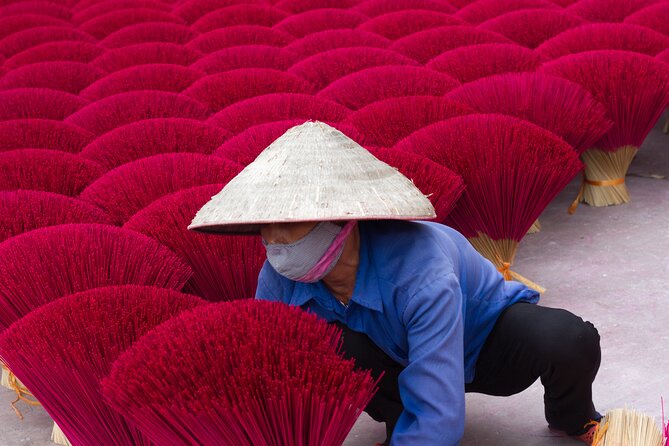
This tour is ideal if you:
- Want a hands-on photography experience, not just sightseeing
- Like crafts with clear steps and strong visual results
- Enjoy meeting locals and understanding the story behind what you photograph
- Prefer a structured plan that reduces decision fatigue
You might want to consider another option if you:
- Hate early mornings and plan to sleep in on vacation
- Want a long, unstructured day with lots of downtime
- Don’t care much about taking photos (you’ll still see the process, but the tour’s main strength is photography guidance)
That said, the guide support seems to work even for non-photographers. The best attitude is: you brought a camera, so let someone help you use it.
Should you book Colors of Incense Village Quang Phu Cau?
I’d book it if you want photos that feel grounded in real work. The combination of colorful incense-making stages, early timing, and active help from a photographer guide makes it more than a quick village stop.
You should book if:
- You can handle a 5:15am start
- You want private transfers so you stay focused
- You want guidance from real people like James or Mike, and you like the idea of learning angles and timing on the spot
Hold off if:
- Your travel dates don’t work with weather-dependent outdoor drying scenes
- You’re looking for a slow, relaxed morning with no “photo mission” vibe
Overall, this is one of those tours where the value is easy to see once you understand what’s included: transportation, photo guidance, and access to the craft process at the right time of day.
FAQ
What time does the tour start?
The meeting time is 5:15am.
How long is the experience?
It lasts about 6 hours (approx.).
How far is Quang Phu Cau from Hanoi?
It’s about a 1.5-hour drive from Hanoi.
Is pickup included?
Yes. 2-way private transfers are included from your Hanoi hotel.
What’s included in the tour price?
The tour includes an air-conditioned vehicle, an escorted photographer, entrance fees, and bottled water.
Do I need to buy admission tickets?
Entrance fees are included, so you do not need to purchase separate admission for the included parts of the tour.
Is this tour private?
Yes. It’s a private tour/activity, so only your group participates.
Is the tour suitable for most travelers?
It says most travelers can participate.
Is the tour weather-dependent?
Yes. The experience requires good weather. If it’s canceled due to poor weather, you’ll be offered a different date or a full refund.
How much is the tour?
The price is $128 per person.