REVIEW · HANOI
Incense Village Quang Phu Cau, Hat, Lacquer Hanoi Artisan Tour
Book on Viator →Operated by Vietnam Village Vibes · Bookable on Viator
Non la and incense in one half-day. This is a craft-focused photo tour that takes you from Hanoi to Chuong’s conical hat making and then to Quang Phu Cau’s hands-on incense process—perfect if you like watching slow work done carefully. You’ll spend about an hour in each village, with time to photograph artisans at their stations and learn what you’re actually seeing.
I also like the small-group feel (up to 15 people) and the guide support, with an English–Vietnamese speaking guide plus bottled water and an A/C vehicle. One thing to think about: Quảng Phú Cầu is an incense production area, so it’s not a great pick if you’re sensitive to scents.
In This Review
- Key things to know before you go
- Craft villages outside Hanoi: how this half-day works
- Stop 1: Chuong Conical Hat Village and the non la workflow
- Stop 2: Quảng Phú Cầu incense village and the factory photo scenes
- Stop 3: Duờng Tàu and a Train Street-style finish
- Guide support: small-group energy, big picture explanations
- Price and value: why this costs about $15.83
- What to expect in your day plan (and what can affect it)
- The best moments to photograph (without getting in the way)
- Who should book this tour (and who might not)
- Practical notes to make your visit smoother
- Should you book Incense Village Quang Phu Cau & Hat Making Tour?
- FAQ
- How long is the Incense Village and Hat Making Artisan Tour?
- Do they pick up passengers in Hanoi?
- What are the main stops on the tour?
- How much does it cost?
- Is lunch included?
- What’s included in the tour price?
- Are there admission fees at each stop?
- Is the group small?
- Is this tour suitable if I’m sensitive to incense smells?
- Can I cancel for a full refund?
Key things to know before you go
- Photo-friendly village access: You’ll be positioned to capture the hat and incense steps without feeling rushed.
- Two iconic crafts, one route: Non la conical hats plus incense rolling and drying in the same half day.
- Short, practical timing: Around 5 hours total, including travel from central Hanoi.
- Pickup and small groups: Pickup is offered, and the group caps at 15 travelers.
- Train Street drop-off option: You can end near Train Street or another spot you choose.
- Hands-on potential: Depending on the flow, you may have a chance to participate, like decorating/painting a hat.
Craft villages outside Hanoi: how this half-day works
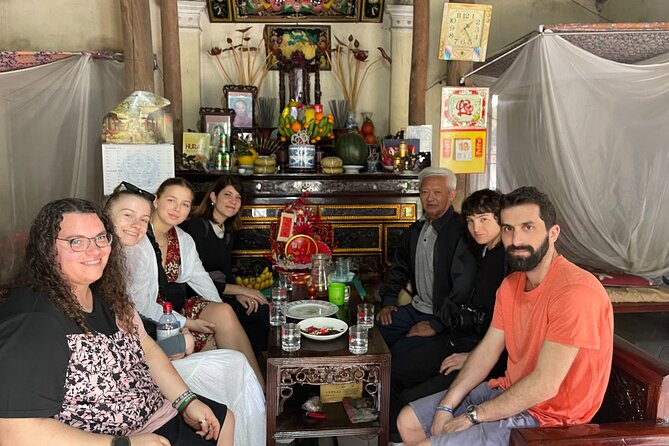
This tour is built for people who like two things at once: culture you can see with your camera and craft work you can understand with your ears. The route is simple. You get picked up in central Hanoi, ride out to a conical hat village first, then go to an incense village where the production process is the main event. You finish with a return to Hanoi, with an option to be dropped closer to Train Street if you want to keep exploring on foot.
At this price point, it’s a very “use your time” kind of half day. You’re not commuting all afternoon or paying for a long itinerary. Instead, you get two craft settings that are known for being hard to witness in a casual way—especially the incense factory side, where the work has a rhythm you can track step-by-step.
Also, the tour runs with an A/C vehicle and bottled water. That sounds basic, but it matters in Hanoi weather. When you’re walking around villages and concentrating on details for photos, you’ll appreciate not starting the day already dehydrated or overheated.
You can also read our reviews of more tours and experiences in Hanoi.



Stop 1: Chuong Conical Hat Village and the non la workflow

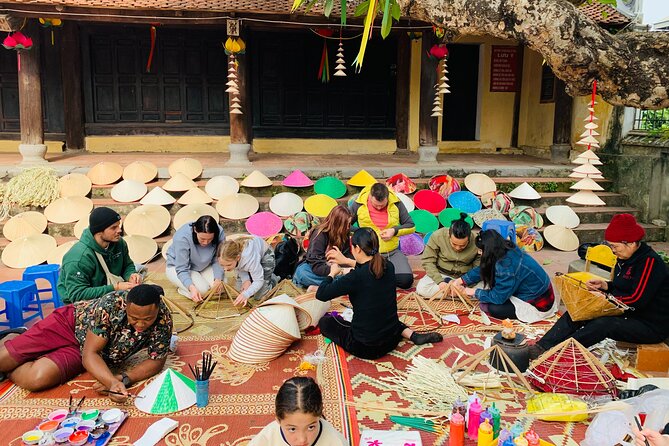
Chuong is where the non la (Vietnamese conical hat) identity turns from a souvenir into something you can watch being made. You’re there for about an hour, and that hour is what you should protect. Don’t treat it like a quick photo stop. This is the place to look at how the craft actually moves—from raw materials to the structured hat shape.
What I like about this part is how visible the process is. Conical hats aren’t just “made.” They’re built: you can spot how layers meet, how forms hold their shape, and how the final look depends on many careful steps. That’s why it’s a great first stop. Your camera brain is still in “easy to see” mode, and you’re learning the basics before you move to incense, which is more sensory.
You should also plan on photos that show work hands. When artisans are weaving or shaping, the hands do most of the talking. If you want portraits, wait for moments when a worker pauses just long enough to reset, rather than trying to force a smile.
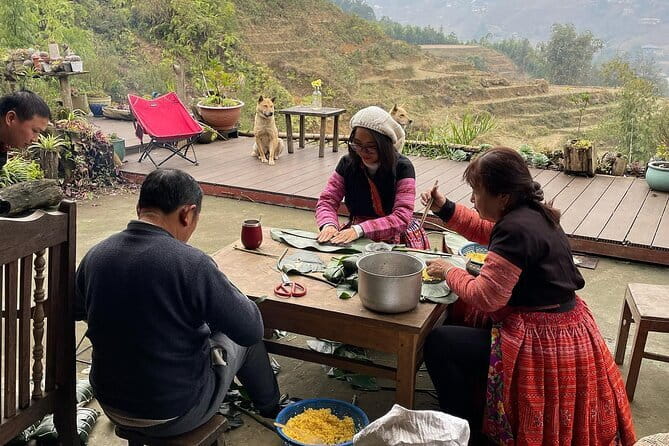
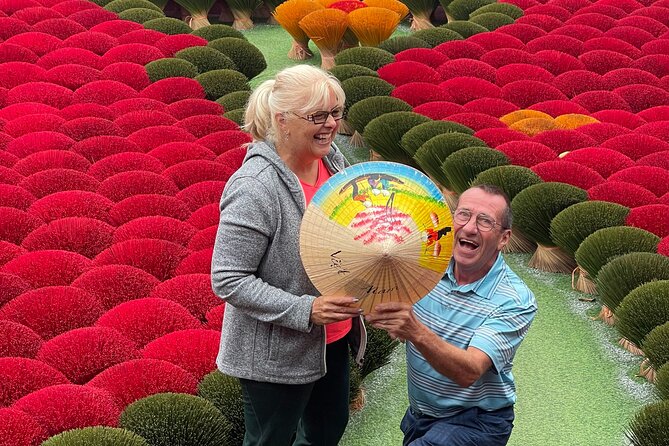
One more detail worth noting: there can be a chance for participation. In some cases, people have had time with a local family experience such as learning hat-making basics and even painting/decorating a hat. That kind of small hands-on moment turns the trip from observation into something you remember longer.
Stop 2: Quảng Phú Cầu incense village and the factory photo scenes
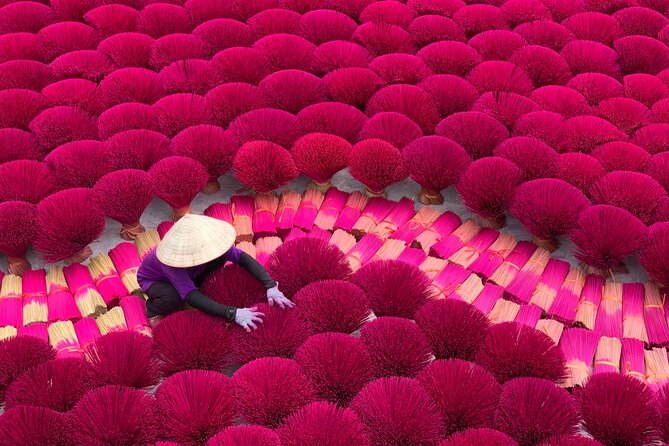
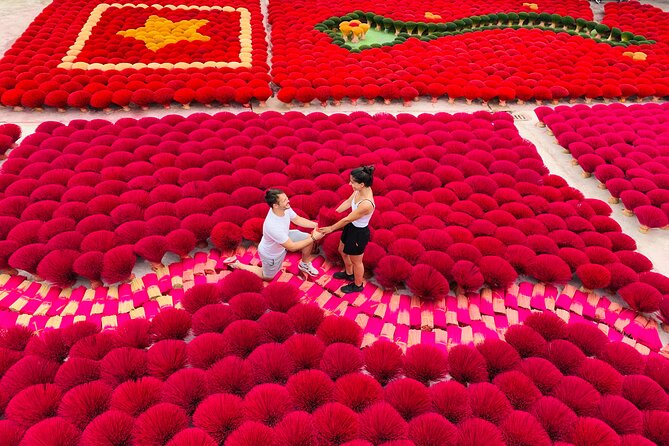
Quảng Phú Cầu incense village is the highlight if you like motion and texture in your photos. It’s been around for over a hundred years, and it’s still active—so you’re not watching a staged demonstration. You’re watching a working production environment.
You’ll get about an hour here. If you’re the type who likes taking notes or timing your photo shots, use the time to map the sequence. Incense making isn’t one step. It’s a chain. The production rhythm often includes blending aromatic ingredients, then rolling, then drying. Those three stages are visual enough to photograph, but the experience is also sensory—because the product is literally in the air.
That sensory aspect is the main consideration. This tour explicitly isn’t recommended for people who are sensitive to scents. Even if you’re generally fine with fragrance, go in with eyes open: you may smell incense strongly for the entire stop. If you’re prone to headaches with strong odors, skip this one or at least bring something to protect yourself (like a mask) and plan to step out briefly when needed.
Photography tip: incense work creates smoke or fragrant vapor at times, and that can mess with auto-focus and exposure. If your phone camera struggles, try tapping to focus on the workers’ hands rather than the haze. Also, consider shooting a few “process” frames—hands at work, tools, drying racks—before you chase portraits.
Stop 3: Duờng Tàu and a Train Street-style finish
You won’t spend much time at this final stop—about a minute in the itinerary. But the value is the option. You can end back near your meeting point, or you can ask to be dropped off at Train Street or another spot.
This is a helpful way to plan your own evening. If you’re curious and you want an easy next step, Train Street is a common follow-up. If you’d rather go somewhere calmer, you can choose a different drop-off location and head back at your own pace.
It’s also practical. A lot of Hanoi craft tours end with you back in the city with nothing mapped out. Here, the tour gives you a decision point.
Guide support: small-group energy, big picture explanations

The tour includes an English–Vietnamese speaking guide. That matters more than people expect. When you understand what you’re looking at—what tools do, what steps mean, and why artisans keep making these items the way they do—you take better photos and you feel less like you’re just collecting images.
From the range of guide names connected with this tour—Tung Tran, Leon, Huy, Sabrina, Louisa, and Rachel—you can also see that the focus tends to be storytelling plus practical photography help. You may get tips on where to stand, when to shoot close-ups, and how to interact respectfully with the workshop flow.
A good sign in the guide style is how they keep travel time from turning into dead time. Some groups get trivia and local context while riding between stops, which helps the villages feel connected rather than random.



Price and value: why this costs about $15.83
At $15.83 per person, this tour is priced like a “smart add-on” day from central Hanoi. And that’s the key: you’re not just paying for entry to a single place. You’re getting:
- A/C vehicle and bottled water
- All fees and taxes (so fewer surprise charges at the door)
- A guide who can translate between what artisans do and what you’re seeing
- Two craft villages in one half day
The trade-off is that you’re not getting lunch and you’re not staying long at any one location. That’s fine if you want focused experiences rather than a long day.
Also, since pricing can vary between platforms, it’s worth checking before you book if you see a jump. People have warned that prices can change, so don’t assume the first number you see is the best deal.
What to expect in your day plan (and what can affect it)
This is a short day: about 5 hours total including travel time. With pickups offered and a meeting point at Phe La Coffee (3B P. Lê Thái Tổ, Hàng Trống, Hoàn Kiếm), you can plan to keep your schedule flexible after the tour. You’ll likely still have energy to explore nearby streets afterward.
Group size is capped at 15. That’s big enough to meet people but small enough that you usually don’t feel swallowed by a crowd. In craft villages, that matters. Too many people at once can slow things down and make it harder to photograph hands and tools.
Weather is always a factor in Hanoi. If it rains, your route still follows the same structure, but your comfort may change—especially in outdoor drying areas. The A/C ride helps, but you still need to dress for walking.
The best moments to photograph (without getting in the way)
If you’re coming for photos, here’s how I’d prioritize your camera time:
- Hands and tools at Chuong
Look for frames where weaving or shaping is clearly visible. That’s the non la story.
- Process sequence at Quảng Phú Cầu
Try to capture one representative moment for each stage: mixing/blending, rolling, and drying. Don’t chase every action. Pick the three best “chapters.”
- Portraits only when it’s respectful and easy
Workshop settings move on their own rhythm. Wait for a natural pause or a clean angle where you’re not blocking.
- Details that tell the craft
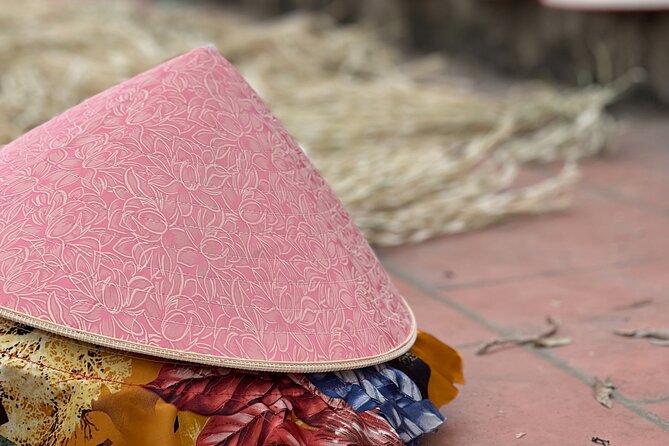
Tools, materials, stacks, drying racks, and cloth patterns often look better in photos than trying to shoot everything “wide.”
And please keep space. Craft workers are doing physical work. If you’re careful, you’ll get cleaner shots and you’ll make the experience better for everyone.
Who should book this tour (and who might not)
This tour fits you best if you:
- Want craft village experiences with a clear photo focus
- Like watching traditional steps rather than just shopping
- Enjoy short, structured half-day itineraries
- Prefer guided explanations in English and Vietnamese
You might skip it if:
- You’re sensitive to strong incense scents
- You want a long, relaxed day with lots of free time
- You expect a big “tour bus” sightseeing format with major landmarks
It’s also a strong family option. Some tours have worked well for kids because the activities and hands-on moments make the day feel interactive, not just observational.
Practical notes to make your visit smoother
A few small choices can make a difference:
- Bring a light layer even if it’s warm. You’ll be moving from rides to village spaces.
- Plan your scent sensitivity strategy before you arrive at Quảng Phú Cầu. If needed, step away briefly and drink water.
- Wear shoes you can walk in easily. Village paths and workshop edges can be uneven.
- Keep your schedule open after the drop-off. If you choose Train Street, you’ll likely want time to explore on foot.
If you’re aiming for the best photos, arrive with charged devices and a plan to free up your storage. Craft moments don’t wait for your phone to reload.
Should you book Incense Village Quang Phu Cau & Hat Making Tour?
If you want a low-cost half day that teaches you something you can actually see—non la craft structure at Chuong and incense production steps at Quảng Phú Cầu—this is a smart booking. The guide support, small group size (max 15), A/C transport, and built-in photo time make it feel efficient without rushing you to the next checklist.
Book it if you’re genuinely into the process of making things and you want photos that show work, not just places.
Skip or think twice if incense smell is a problem for you. That one factor can turn a great day into an uncomfortable one.
If you do book, set your expectations around craft observation and photography. Then you’ll leave with both: practical understanding of how these items are made and a photo set that looks like the real world, not a tourist line.
FAQ
How long is the Incense Village and Hat Making Artisan Tour?
The tour lasts about 5 hours total, including travel time between stops.
Do they pick up passengers in Hanoi?
Pickup is offered. The tour starts at Phe La Coffee in Hanoi’s Hoàn Kiếm area and ends back at the meeting point, with an option to be dropped off near Train Street.
What are the main stops on the tour?
You visit Chuong conical hat making village, then Quảng Phú Cầu incense village. The tour also includes a brief stop linked to Duờng Tàu with the Train Street drop-off option.
How much does it cost?
The price is $15.83 per person.
Is lunch included?
No. Lunch is not included.
What’s included in the tour price?
Included items are an A/C vehicle, all fees and taxes, bottled water, and an English–Vietnamese speaking tour guide.
Are there admission fees at each stop?
Admission is included for Chuong Village. Quảng Phú Cầu is listed as admission ticket free.
Is the group small?
Yes. The tour has a maximum of 15 travelers.
Is this tour suitable if I’m sensitive to incense smells?
It is not recommended if you’re sensitive to scents, since Quảng Phú Cầu is an incense production area.
Can I cancel for a full refund?
Yes, you can cancel for a full refund up to 24 hours in advance. If you cancel less than 24 hours before the start time, the amount paid will not be refunded.